Bubble coral
Plerogyra sinuosa
Also known as Grape Coral, Bladder Coral, Rounded Bubblegum Coral
SaltwaterCoral
Care at a glance
- Temperature
- 75–81°F
- 24–27°C
- pH
- 8.1–8.4
- Adult size
- 11.8 in
- 30 cm
- Minimum tank
- 11 gal
- 40 L
- Temperament
- Mostly peaceful
- Social behavior
- Solitary
- Swim level
- Bottom
- Difficulty
- Beginner
- Breeding
- Hard
- Rarity
- Very common
- Reef safe
- Reef safe
- Family
- Plerogyridae
- Origin
- Indo-Pacific and the Red Sea, from East Africa to Fiji and north to southern Japan
Overview
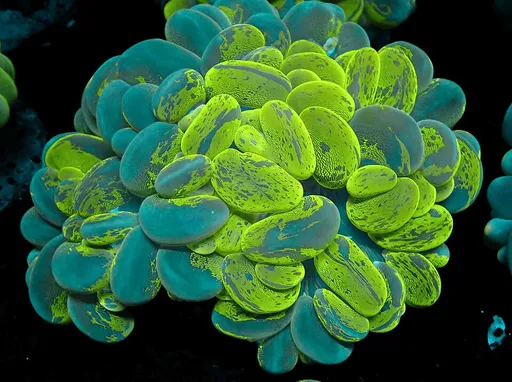
Keep light on the low side of moderate, around 100–150 PAR, since intense lighting can keep the bubbles from inflating properly or bleach the coral outright. Flow should be gentle, just enough to keep detritus from settling, because strong current can tear or deflate the vesicles. Give it a shadier lower or mid placement with a few inches of open space on every side. After the bubbles deflate at night it extends sweeper tentacles roughly 3–4 inches (7.5–10 cm) armed with a strong sting, so keep it clear of anything it could reach once the lights go out. It is not a demanding feeder and does fine on light alone, though it will take small meaty foods like mysis at night if offered.
In the wild
Plerogyra sinuosa grows in sheltered lagoons and the shaded, calmer parts of reef slopes across the Indo-Pacific and Red Sea, where it forms meandering ridges of skeleton topped with large, smooth, grape-like vesicles. Those bubbles stay inflated through the day to spread the coral's zooxanthellae toward the light and collapse down each evening. In the tank, give it a lower to mid rockwork spot in a calmer, shadier corner where the bubbles can inflate fully without bumping into rock or neighboring corals.
Good to know
Plerogyra sinuosa is a large polyp stony coral in the family Plerogyridae, a family split out specifically for the bubble corals and their close relatives. Its thin, calcified skeleton grows in winding, wall-like ridges that stay completely hidden under the daytime bubbles. The vesicles are filled with fluid rather than air, and their real job is boosting light capture for its symbiotic algae; the coral pulls them in at night to reveal its true feeding tentacles underneath.
Did you know
The bubble coral's daytime look is almost entirely a disguise: every evening the smooth, grape-like vesicles deflate and pull back to reveal sweeper tentacles that were hidden inside them the whole time.
Common questions
What size tank does a Bubble coral need?
A Bubble coral needs at least 11 gal (40 L). It spends most of its time in the bottom.
What temperature and pH does a Bubble coral need?
A Bubble coral is comfortable at 75–81°F (24–27°C) with a pH of 8.1–8.4.
How big does a Bubble coral get?
An adult Bubble coral reaches about 11.8 in (30 cm).
Related species
 9.8 in (25 cm)11 gal (40 L)75–81°F (24–27°C)
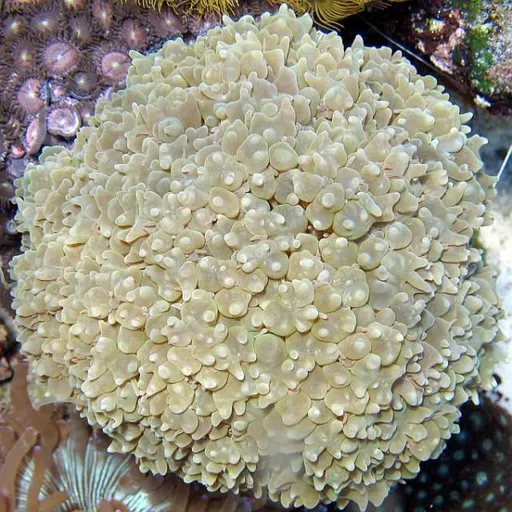
Pearl bubble coral
Physogyra lichtensteini
9.8 in (25 cm) · 11 gal (40 L)
 5.9 in (15 cm)20 gal (75 L)75–81°F (24–27°C)
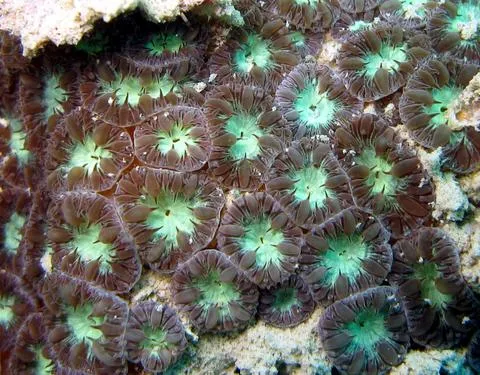
Blastomussa wellsi
5.9 in (15 cm) · 20 gal (75 L)
 11.8 in (30 cm)40 gal (150 L)75–81°F (24–27°C)
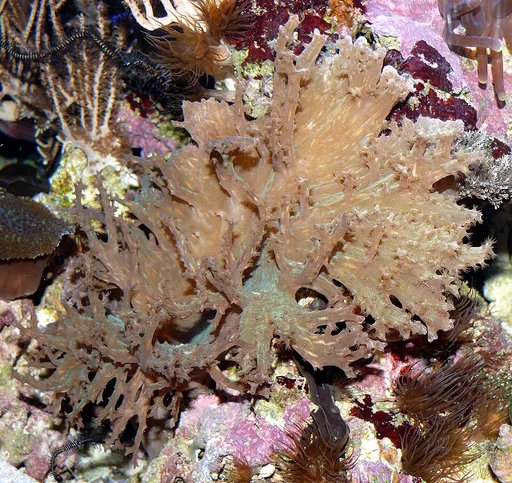
Cabbage leather coral
Sinularia dura
11.8 in (30 cm) · 40 gal (150 L)
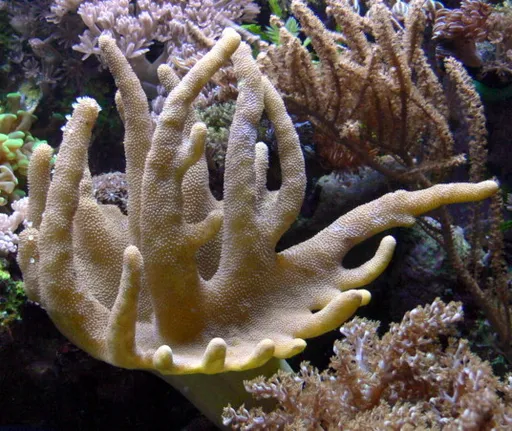 11.8 in (30 cm)40 gal (150 L)75–81°F (24–27°C)
Devil's hand leather coral
Lobophytum
11.8 in (30 cm) · 40 gal (150 L)
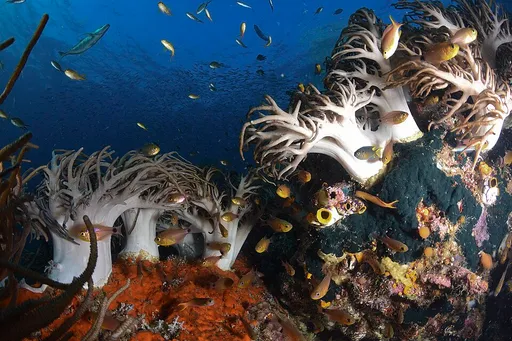 11.8 in (30 cm)40 gal (150 L)75–81°F (24–27°C)
Flexible finger leather coral
Sinularia flexibilis
11.8 in (30 cm) · 40 gal (150 L)
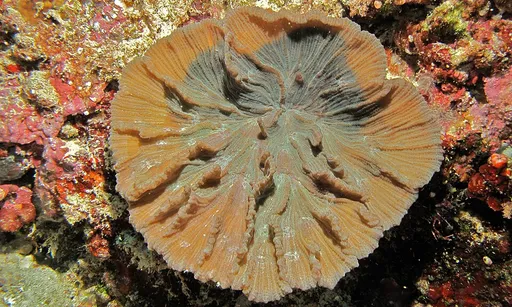 11.8 in (30 cm)20 gal (75 L)75–81°F (24–27°C)
Pectinia coral
Pectinia
11.8 in (30 cm) · 20 gal (75 L)