Maldives pavona
Pavona maldivensis
Also known as Maldivensis Pavona, Encrusting Pavona, Pavona
SaltwaterCoral
Care at a glance
- Temperature
- 75–81°F
- 24–27°C
- pH
- 8.1–8.4
- Adult size
- 7.9 in
- 20 cm
- Minimum tank
- 20 gal
- 75 L
- Temperament
- Mostly peaceful
- Social behavior
- Solitary
- Swim level
- Bottom
- Difficulty
- Beginner
- Breeding
- Easy
- Rarity
- Common
- Reef safe
- Reef safe
- Family
- Agariciidae
- Origin
- Indo-Pacific, from the western Indian Ocean including the Maldives east across to the central Pacific, on shallow reef slopes and lagoons
Overview
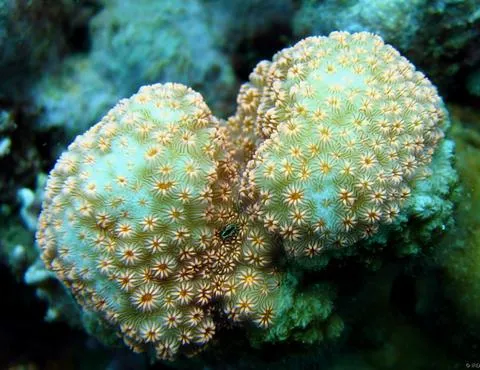
One of the easier small stony corals for a beginner, and popular as a splash of solid color since it encrusts into a low mound instead of a leafy plate. It does best under low to moderate light, as too much intensity washes out the color, with strong turbulent flow to keep it clean. Sweeper tentacles are short, so it is fairly easy to place, though it will slowly overgrow neighbors it can reach, so leave a margin of bare rock around it. Feeding is optional, but fine foods and dosed trace elements like calcium, magnesium and iodine support faster encrusting growth.
In the wild
Pavona maldivensis is found across the Indo-Pacific, from the western Indian Ocean and the Maldives out to the central Pacific, on shallow reef slopes and in lagoons. Rather than the thin folded plates of most Pavona, it grows as a stubby, encrusting to mounding coral that lays down a colored mat over the rock and thickens into short, knobby lobes, often in bright green, orange or red. In the aquarium it takes low to moderate light and strong, intermittent flow, and it will encrust its way across whatever it is placed on, so give it its own patch of rock.
Good to know
Pavona maldivensis is a colonial stony coral in the family Agariciidae, where wall-less corallites share ridged septa that give the surface its flower-like, connected look. It is zooxanthellate and takes most of its energy from the symbiotic algae in its tissue, which is why strong lighting bleaches it faster than it colors it up. It reliably keeps an encrusting to submassive form rather than shifting between plates and sheets the way its leafier relatives do.
Did you know
Unlike the leafy, plate-building Pavona it is grouped with, Pavona maldivensis grows as a stubby encrusting mound, which is why it is usually sold under its own species name rather than the shared cactus and potato chip labels.
Common questions
What size tank does a Maldives pavona need?
A Maldives pavona needs at least 20 gal (75 L). It spends most of its time in the bottom.
What temperature and pH does a Maldives pavona need?
A Maldives pavona is comfortable at 75–81°F (24–27°C) with a pH of 8.1–8.4.
How big does a Maldives pavona get?
An adult Maldives pavona reaches about 7.9 in (20 cm).
Related species
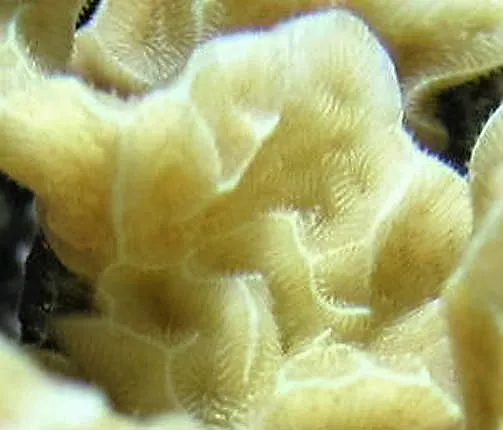 9.8 in (25 cm)20 gal (75 L)75–81°F (24–27°C)
Leaf coral
Pavona frondifera
9.8 in (25 cm) · 20 gal (75 L)
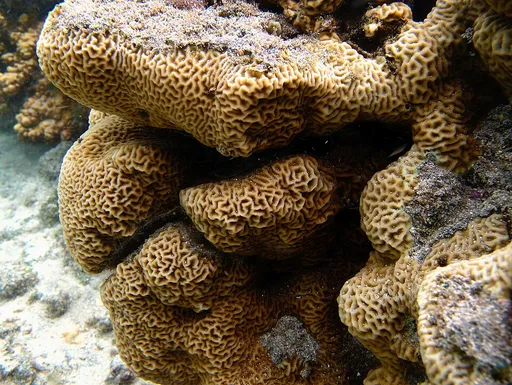 9.8 in (25 cm)20 gal (75 L)75–81°F (24–27°C)
Lettuce coral
Pavona varians
9.8 in (25 cm) · 20 gal (75 L)
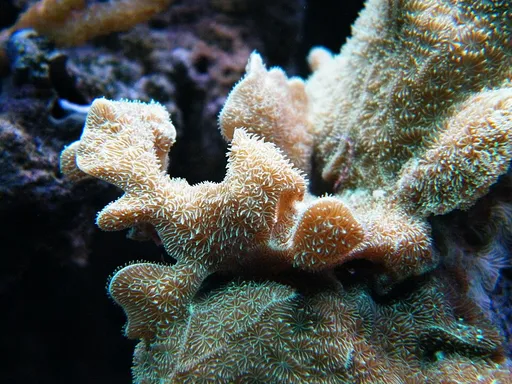 11.8 in (30 cm)20 gal (75 L)75–81°F (24–27°C)
Cactus coral
Pavona cactus
11.8 in (30 cm) · 20 gal (75 L)
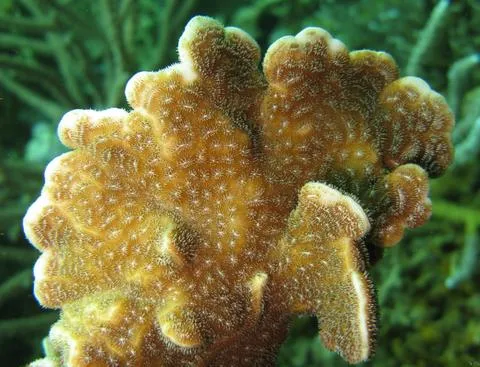 11.8 in (30 cm)20 gal (75 L)75–81°F (24–27°C)
Potato chip coral
Pavona decussata
11.8 in (30 cm) · 20 gal (75 L)
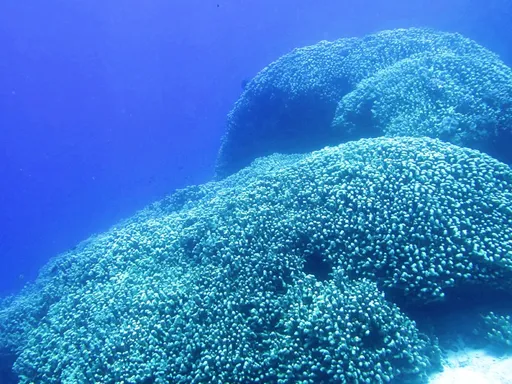 19.7 in (50 cm)26 gal (100 L)75–81°F (24–27°C)
Shoulderblade coral
Pavona clavus
19.7 in (50 cm) · 26 gal (100 L)
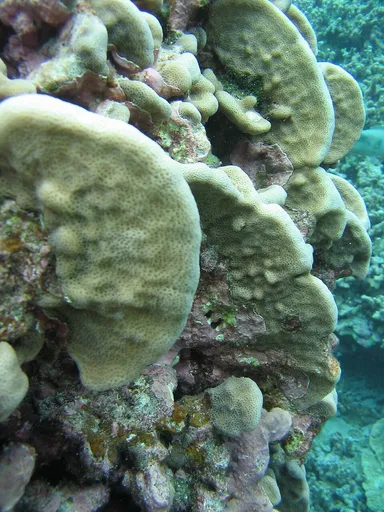 23.6 in (60 cm)26 gal (100 L)75–81°F (24–27°C)
Porkchop coral
Pavona duerdeni
23.6 in (60 cm) · 26 gal (100 L)