Shoulderblade coral
Pavona clavus
Also known as Swollen Coral, Column Pavona, Pavona
SaltwaterCoral
Care at a glance
- Temperature
- 75–81°F
- 24–27°C
- pH
- 8.1–8.4
- Adult size
- 19.7 in
- 50 cm
- Minimum tank
- 26 gal
- 100 L
- Temperament
- Mostly peaceful
- Social behavior
- Solitary
- Swim level
- Bottom
- Difficulty
- Beginner
- Breeding
- Easy
- Rarity
- Rare
- Reef safe
- Reef safe
- Family
- Agariciidae
- Origin
- Indo-Pacific and eastern Pacific, on reef slopes, flats and lagoons, from shallow water down to moderate depth
Overview
A resilient, adaptable coral that forgives a range of light and flow, which makes it an easy massive Pavona for a keeper who wants something sturdier than the thin plates. It is not aggressive and holds its columnar shape well, but its encrusting base spreads over time, so give it room on its own rock. Feeding is optional and it lives mostly on light, so its real requirement is steady water chemistry rather than a feeding routine. It is valued for how well it adapts, though it reaches the trade less often than the common leafy Pavona.
In the wild
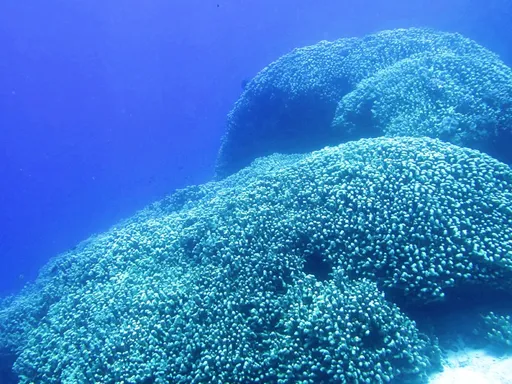
Pavona clavus is found across the Indo-Pacific and eastern Pacific, on reef slopes, flats and lagoons from shallow water down to moderate depth. It forms massive colonies of smooth, club-shaped columns, usually uniform and finger to fist thick, though it can also spread as flattened plates where conditions push it. In the aquarium it is grown as a hardy encrusting and columnar coral, taking a wide range of light and flow, which is a large part of its appeal.
Good to know
Pavona clavus is a massive, zooxanthellate stony coral in the family Agariciidae, building solid skeleton into characteristic smooth columns rather than plates or ridges. It relies on symbiotic algae for most of its energy and is a significant reef framework builder across its wide range. Growth-banding in its dense skeleton has made colonies of this species useful to scientists as long-term records of past ocean conditions.
Did you know
Pavona clavus builds colonies of smooth, uniform columns, the shoulderblade and swollen coral names both pointing at those rounded, club-like projections that set it apart from the ridged mounds of Pavona duerdeni.
Common questions
What size tank does a Shoulderblade coral need?
A Shoulderblade coral needs at least 26 gal (100 L). It spends most of its time in the bottom.
What temperature and pH does a Shoulderblade coral need?
A Shoulderblade coral is comfortable at 75–81°F (24–27°C) with a pH of 8.1–8.4.
How big does a Shoulderblade coral get?
An adult Shoulderblade coral reaches about 19.7 in (50 cm).
Related species
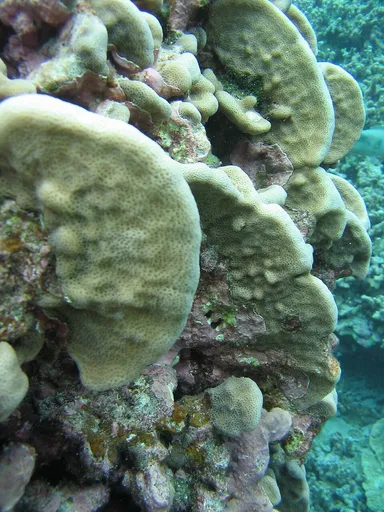 23.6 in (60 cm)26 gal (100 L)75–81°F (24–27°C)
Porkchop coral
Pavona duerdeni
23.6 in (60 cm) · 26 gal (100 L)
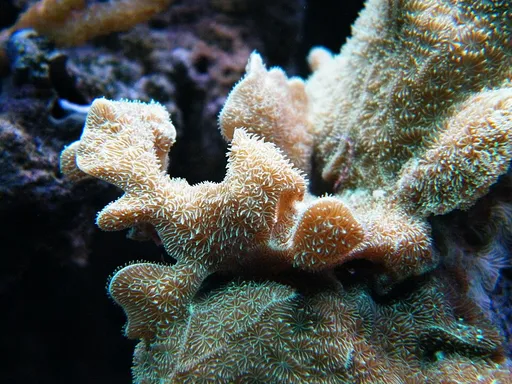 11.8 in (30 cm)20 gal (75 L)75–81°F (24–27°C)
Cactus coral
Pavona cactus
11.8 in (30 cm) · 20 gal (75 L)
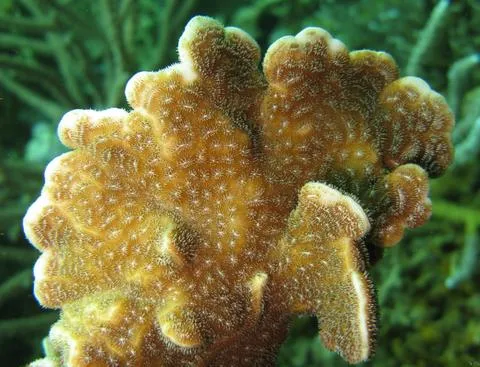 11.8 in (30 cm)20 gal (75 L)75–81°F (24–27°C)
Potato chip coral
Pavona decussata
11.8 in (30 cm) · 20 gal (75 L)
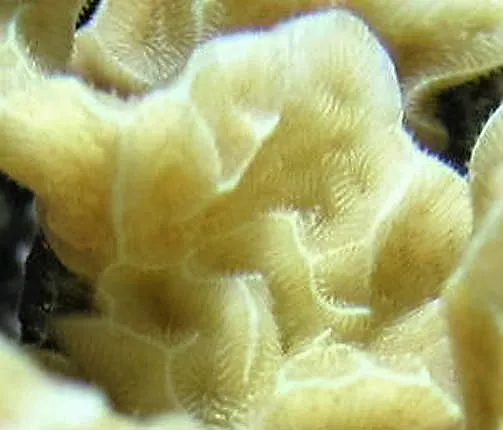 9.8 in (25 cm)20 gal (75 L)75–81°F (24–27°C)
Leaf coral
Pavona frondifera
9.8 in (25 cm) · 20 gal (75 L)
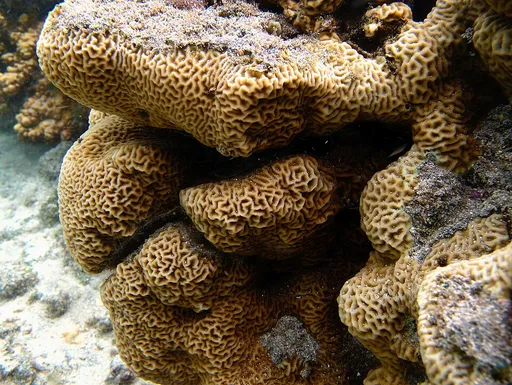 9.8 in (25 cm)20 gal (75 L)75–81°F (24–27°C)
Lettuce coral
Pavona varians
9.8 in (25 cm) · 20 gal (75 L)
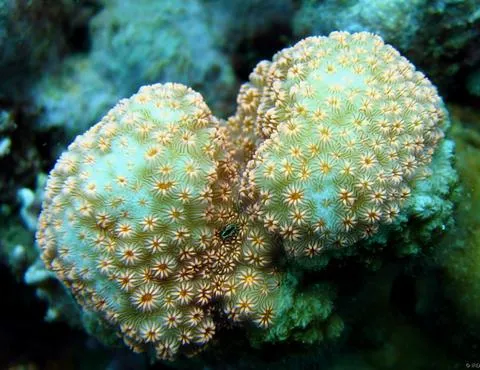 7.9 in (20 cm)20 gal (75 L)75–81°F (24–27°C)
Maldives pavona
Pavona maldivensis
7.9 in (20 cm) · 20 gal (75 L)