Ocellate river stingray
Potamotrygon motoro
Also known as Motoro stingray, Peacock-eye stingray, Ocellated freshwater stingray
FreshwaterFish

Care at a glance
- Temperature
- 75–82°F
- 24–28°C
- pH
- 6.0–7.5
- Adult size
- 19.7 in
- 50 cm
- Minimum tank
- 264 gal
- 1,000 L
- Temperament
- Mostly peaceful
- Social behavior
- Solitary
- Tankmates
- With caution
- Swim level
- Bottom
- Diet
- Carnivore
- Difficulty
- Difficult
- Breeding
- Livebearer · Hard
- Rarity
- Common
- Family
- Potamotrygonidae
- Origin
- Native to the Amazon, Parana and other South American river systems, resting on sandy substrate in slow rivers and lagoons.
Overview
The ocellate river stingray is a flat freshwater ray from South American rivers. It is an advanced fish that needs an experienced keeper.
Did you know
The ocellate river stingray sheds its venomous barb and regrows it throughout life. A healthy ray is never without a working defense.
Caring for the ocellate river stingray
An ocellate river stingray needs a wide, low tank rather than a tall one. A single adult needs a footprint giving at least 264 gal (1,000 L).
Keep the water pristine, at 75 to 82°F (24 to 28°C) and a pH of 6.0 to 7.5. Rays are very sensitive to nitrate and metabolic waste, so run powerful filtration and make frequent large water changes.
Feed earthworms, prawns, mussel and fish. It is mostly peaceful, but choose its tank mates with caution.
Its venomous tail barb can inflict a very painful, medically serious sting. Handle it with great care, and never keep one where a sting is likely.
It is a livebearer that gives birth to small litters of fully formed pups. Breeding it in captivity is hard.
Good to know
The ocellate river stingray, Potamotrygon motoro, belongs to the family Potamotrygonidae. It is also called the motoro stingray or peacock-eye stingray. It is a disc-shaped ray, patterned with orange-ringed eyespots on a brown back. It carries one or more serrated barbs on the tail. Freshwater rays are among the few sharks and rays that complete their entire life cycle in rivers.
In the wild
The ocellate river stingray is native to the Amazon, Parana and other South American river systems. It lives in slow rivers and lagoons, gliding over the sand or lying buried with only its eyes showing. It uses its wide disc to trap prey against the substrate before eating it.
Common questions
What size tank does an ocellate river stingray need?
An ocellate river stingray needs at least 264 gal (1,000 L). It spends most of its time in the bottom.
What temperature and pH does an ocellate river stingray need?
An ocellate river stingray is comfortable at 75–82°F (24–28°C) with a pH of 6.0–7.5.
What does an ocellate river stingray eat?
An ocellate river stingray eats earthworms, prawns, mussel and fish.
How big does an ocellate river stingray get?
An adult ocellate river stingray reaches about 19.7 in (50 cm).
How does an ocellate river stingray breed?
An ocellate river stingray is a livebearer that gives birth to small litters of fully formed pups. Breeding it in captivity is hard.
Related species
 21.7 in (55 cm)396 gal (1,500 L)75–82°F (24–28°C)
Bigtooth river stingray
Potamotrygon henlei
21.7 in (55 cm) · 396 gal (1,500 L)
 23.6 in (60 cm)436 gal (1,650 L)68–84°F (20–29°C)
Black devil stingray
Potamotrygon leopoldi
23.6 in (60 cm) · 436 gal (1,650 L)
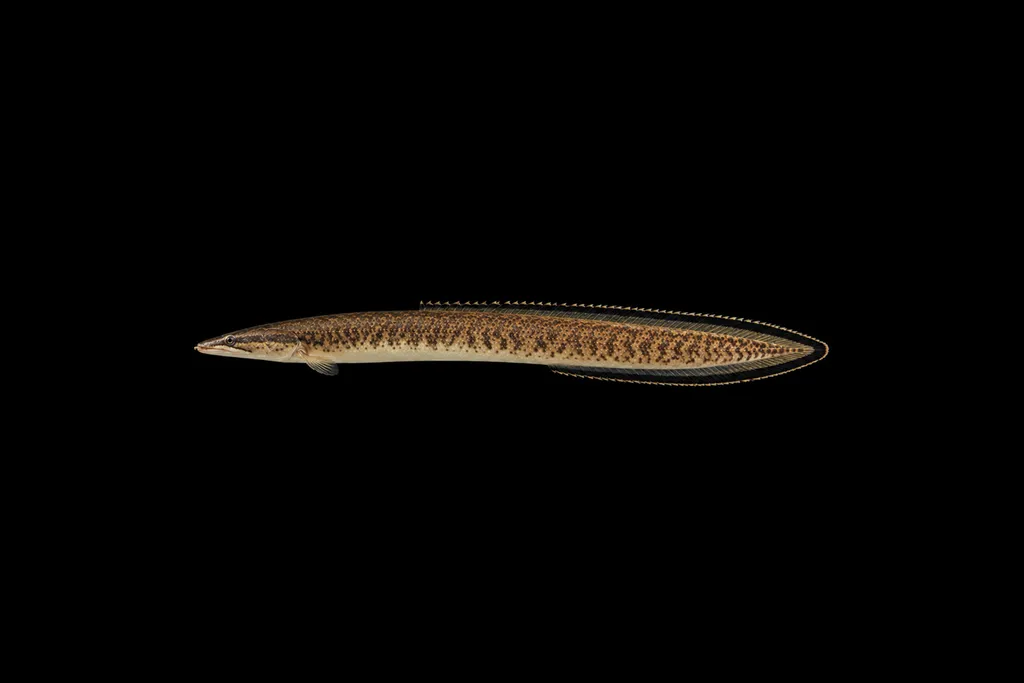 19.7 in (50 cm)106 gal (400 L)73–82°F (23–28°C)
Blackedge spiny eel
Mastacembelus nigromarginatus
19.7 in (50 cm) · 106 gal (400 L)
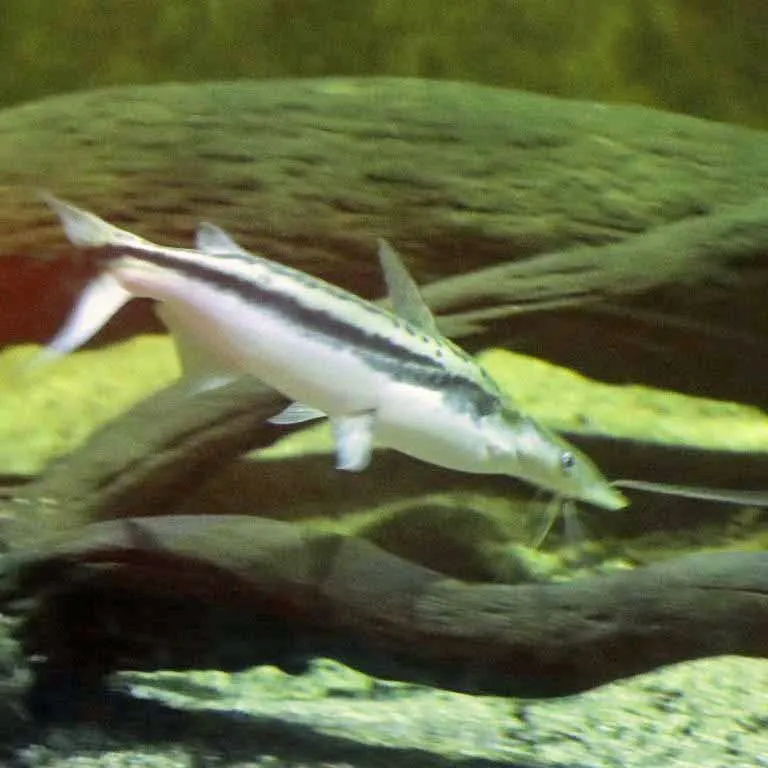 19.7 in (50 cm)190 gal (720 L)73–86°F (23–30°C)
Duckbill catfish
Sorubim lima
19.7 in (50 cm) · 190 gal (720 L)
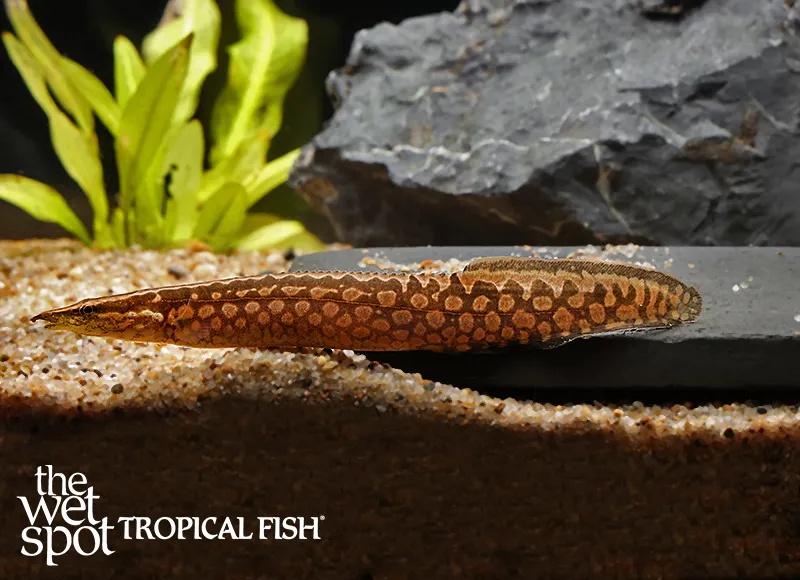 19.7 in (50 cm)119 gal (450 L)75–82°F (24–28°C)
Marbled spiny eel
Mastacembelus favus
19.7 in (50 cm) · 119 gal (450 L)
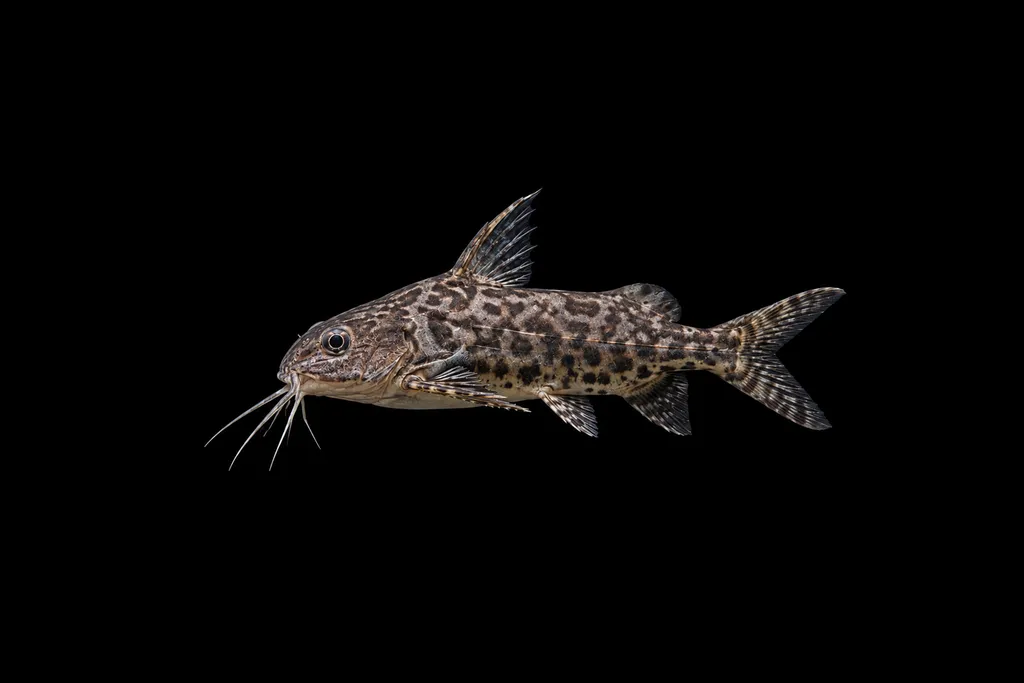 19.7 in (50 cm)159 gal (600 L)73–81°F (23–27°C)
Spiny squeaker
Synodontis acanthomias
19.7 in (50 cm) · 159 gal (600 L)