Honduran red point cichlid
Amatitlania siquia
Also known as Honduran red point, HRP cichlid, Siquia convict
FreshwaterFish
Care at a glance
- Temperature
- 73–82°F
- 23–28°C
- pH
- 7.0–8.0
- Adult size
- 3.9 in
- 10 cm
- Minimum tank
- 30 gal
- 114 L
- Temperament
- Mostly peaceful
- Social behavior
- Social
- Tankmates
- With caution
- Swim level
- Bottom
- Difficulty
- Easy
- Breeding
- Easy
- Rarity
- Common
- Family
- Cichlidae
- Origin
- Central America (Costa Rica, Nicaragua, Atlantic Honduras)
Overview
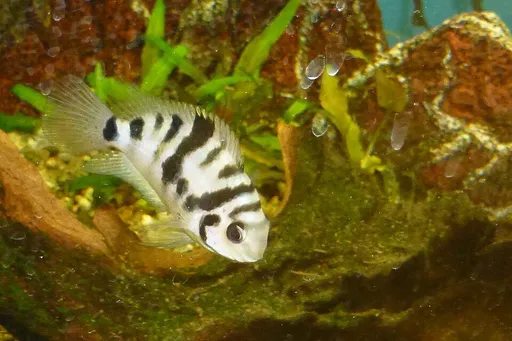
Best kept as a single bonded male and female pair, not a group and not multiple pairs crammed together, which only triggers fighting. They are not a schooling fish. A pair needs at least 114 liters, or 200 liters and up if you add other fish, with water at 23 to 28 C and a pH from 7 to 8. They spend most of their time near the bottom, digging and patrolling. The mostly peaceful rating only holds outside breeding. Once a pair spawns they turn territorial and aggressive while guarding the cave, so give tankmates room to stay clear. Feed a varied diet of pellets, flakes, and frozen foods.
In the wild
Honduran red points come from the warm streams and rivers of Central America, across Costa Rica, Nicaragua, and the Atlantic side of Honduras. They live over sand and rock, digging in the substrate and holding small territories around caves. To match that, give a pair at least 114 liters with a soft sand or fine gravel bottom, plenty of rocky caves and hiding spots, and moderate flow. Keep the water tropical with a heater, 23 to 28 C, and slightly hard and alkaline at a pH of 7 to 8. They dig and uproot rooted plants, so use hardy ones like Anubias or Java fern tied to wood or rock.
Good to know
This is Amatitlania siquia, a small dwarf cichlid in the family Cichlidae. It is very close to the convict cichlid and often confused with it, but stays smaller and is a little less aggressive. Males reach about 10 cm, females smaller at around 7.5 cm, and FishBase lists 7.9 cm standard length. It is a substrate-spawning cave breeder that pairs off and guards eggs and fry.
Did you know
They breed very readily, which makes them one of the easiest cichlids to spawn for the first time. A pair will pick a cave, clean a flat surface, and lay eggs with little prompting, then both parents guard the eggs and shepherd the fry around the tank. If you want to watch cichlid parenting up close without much fuss, this is a good place to start.
Common questions
What size tank does a Honduran red point cichlid need?
A Honduran red point cichlid needs at least 30 gal (114 L). It spends most of its time in the bottom.
What temperature and pH does a Honduran red point cichlid need?
A Honduran red point cichlid is comfortable at 73–82°F (23–28°C) with a pH of 7.0–8.0.
How big does a Honduran red point cichlid get?
An adult Honduran red point cichlid reaches about 3.9 in (10 cm).
Related species
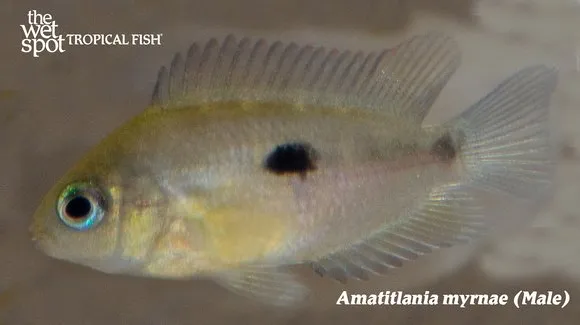 3.9 in (10 cm)42 gal (160 L)75–84°F (24–29°C)
Topaz convict cichlid
Amatitlania myrnae
3.9 in (10 cm) · 42 gal (160 L)
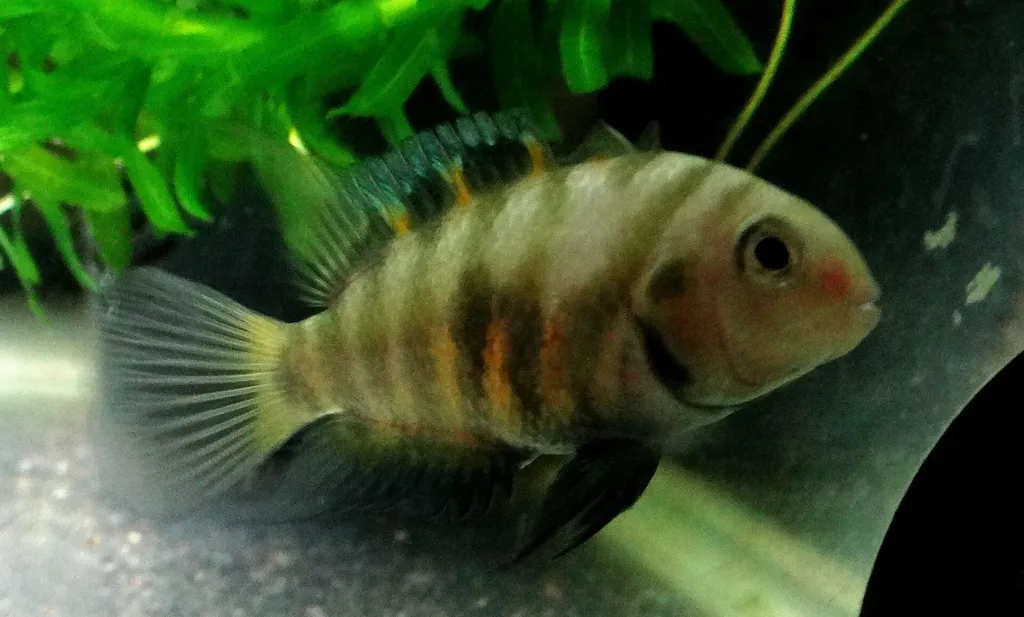 4.7 in (12 cm)42 gal (160 L)75–84°F (24–29°C)
Seven-band convict
Amatitlania septemfasciata
4.7 in (12 cm) · 42 gal (160 L)
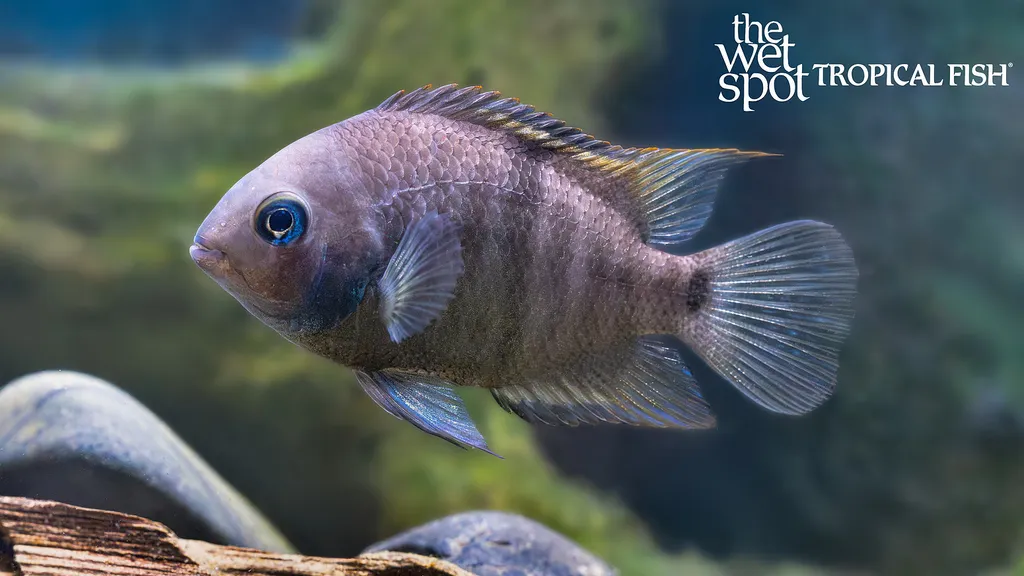 4.7 in (12 cm)40 gal (150 L)75–82°F (24–28°C)
T-bar cichlid
Amatitlania sajica
4.7 in (12 cm) · 40 gal (150 L)
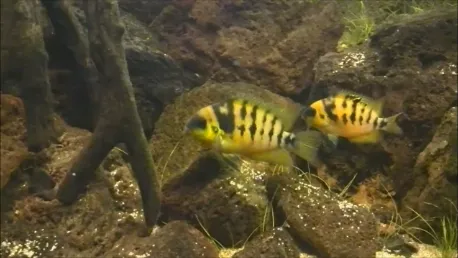 3.1 in (8 cm)29 gal (110 L)75–84°F (24–29°C)
Golden dwarf convict
Amatitlania nanolutea
3.1 in (8 cm) · 29 gal (110 L)
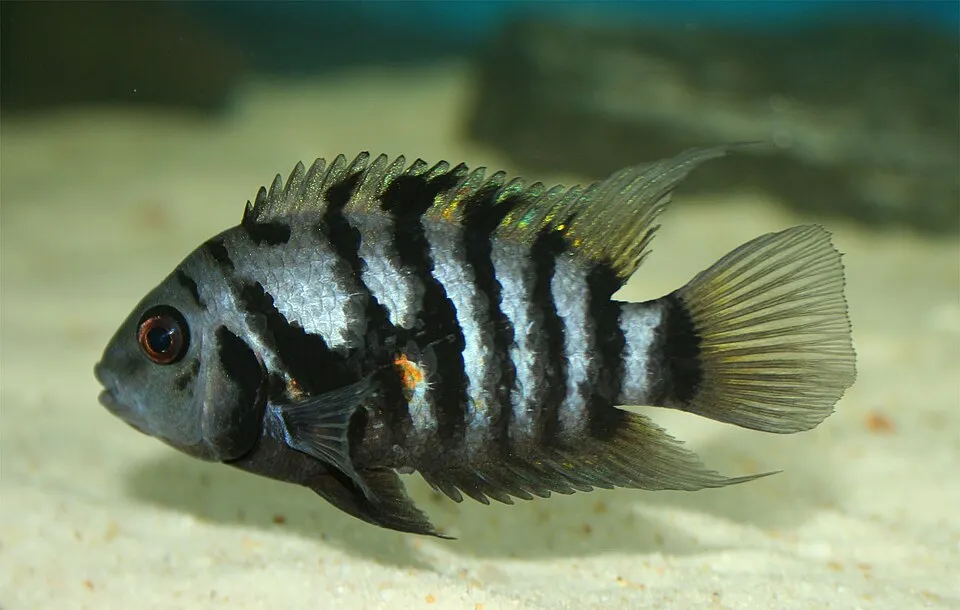 5.9 in (15 cm)25 gal (95 L)75–82°F (24–28°C)
Convict cichlid
Amatitlania nigrofasciata
5.9 in (15 cm) · 25 gal (95 L)
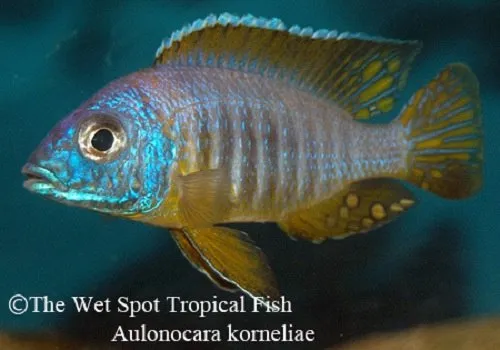 3.9 in (10 cm)63 gal (240 L)75–81°F (24–27°C)
Blue gold peacock
Aulonocara korneliae
3.9 in (10 cm) · 63 gal (240 L)