Blue gold peacock
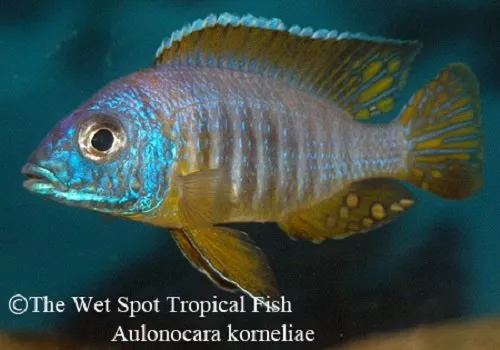
Aulonocara korneliae
Also known as Chizumulu peacock, Korneliae aulonocara, Blue and gold peacock
FreshwaterFish
Care at a glance
- Temperature
- 75–81°F
- 24–27°C
- pH
- 7.5–8.5
- Adult size
- 3.9 in
- 10 cm
- Minimum tank
- 63 gal
- 240 L
- Temperament
- Mostly peaceful
- Social behavior
- Social
- Swim level
- Bottom
- Difficulty
- Medium
- Breeding
- Mouthbrooder · Medium
- Rarity
- Rare
- Family
- Cichlidae
- Origin
- Lake Malawi, Chizumulu Island
Overview
The blue gold peacock is a small, comparatively gentle peacock cichlid from Lake Malawi. It patrols the lower part of the tank over open sand between rocks, sifting the bottom for small invertebrates. It is a fair step past beginner level.
Did you know
The species name korneliae honors Kornelia Meyer, wife of the German aquarist Manfred Meyer, who helped bring the fish to notice. The male's gold-over-blue coloring is why the trade calls it the blue gold peacock.
Caring for the blue gold peacock
Give the harem at least 63 gal (240 L), in a tank at least four feet long. Set it up with a sandy floor, scattered rock structure with caves, and open sand for foraging.
Hold the water at 75 to 81°F (24 to 27°C) with a pH of 7.5 to 8.5, and run strong filtration. Feed sinking pellets, frozen mysis, brine shrimp and cyclops in small, regular amounts.
Keep one male with several females, so his attention and mild aggression are spread across the group. It stays peaceful for a Malawi cichlid. Keep it away from larger, pushier peacocks and haps that will outshine and bully it.
Males lay a warm gold wash over deep blue flanks, while females stay plain silver-brown. Like other Aulonocara, the blue gold peacock is a maternal mouthbrooder. The female holds the eggs and fry in her mouth for around three weeks, and breeding it is of medium difficulty.
Good to know
Aulonocara korneliae belongs to the cichlid family and is small for a peacock. Peacocks are set apart by sensory pits on the head, which they use to detect small prey buried in the sand.
In the wild
Aulonocara korneliae is found only around Chizumulu Island in Lake Malawi. Males hold territories where rock meets sand, and females gather in loose schools nearby. The lake is hard and alkaline.
Weekly picks
Tank mates
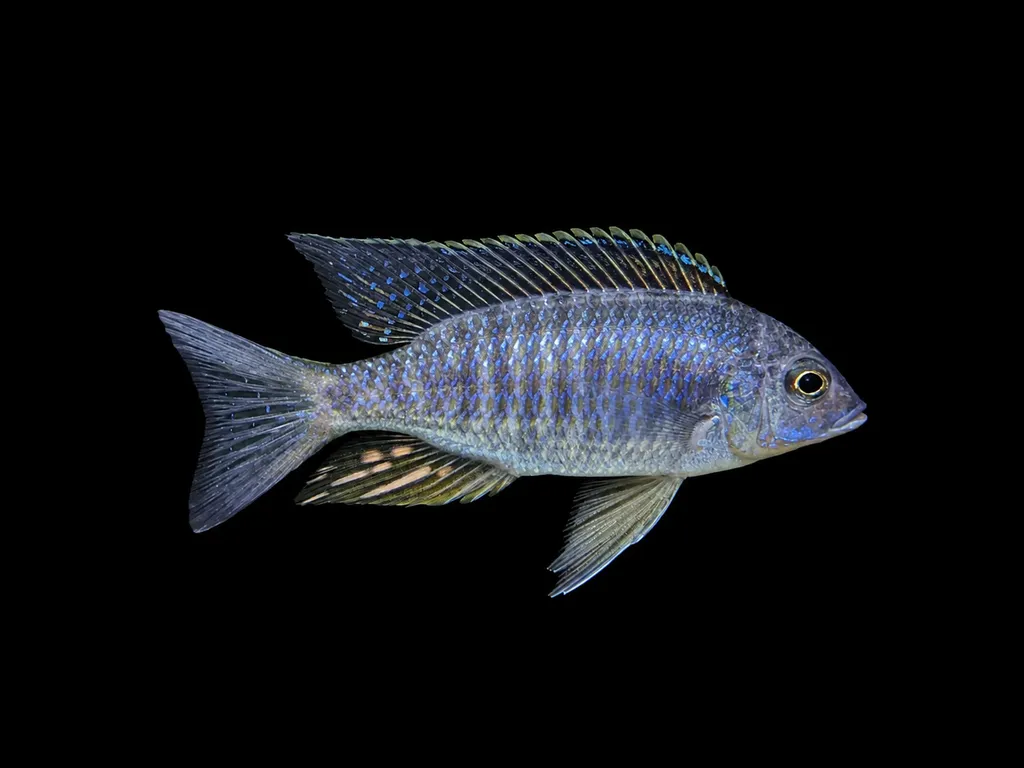
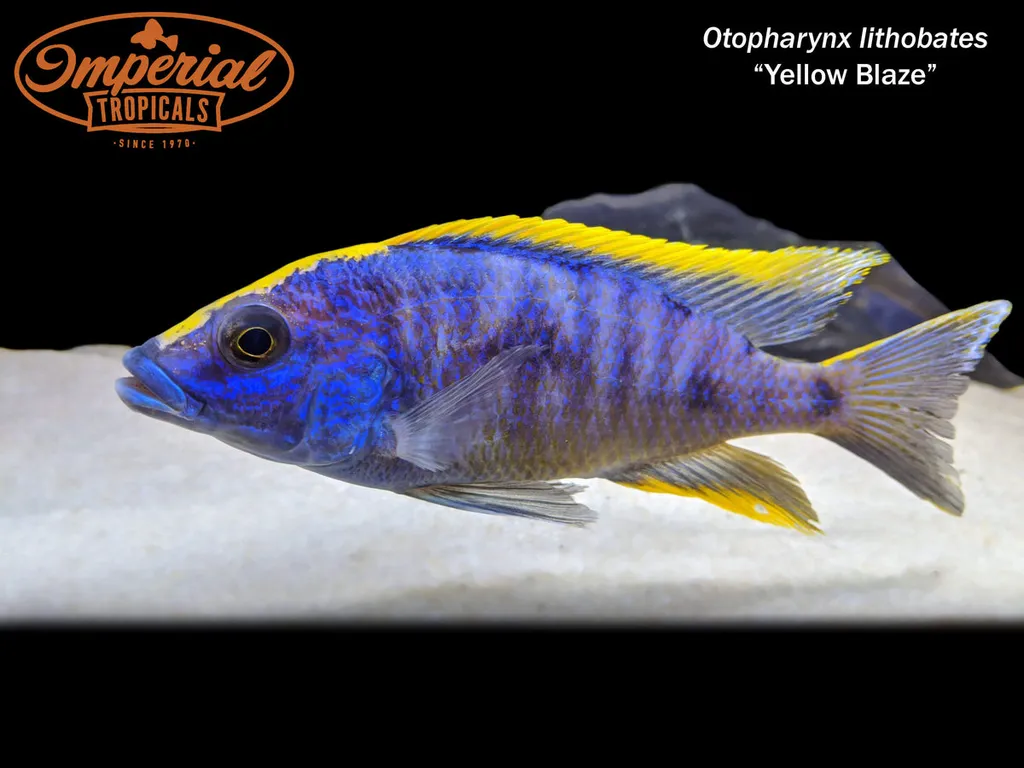
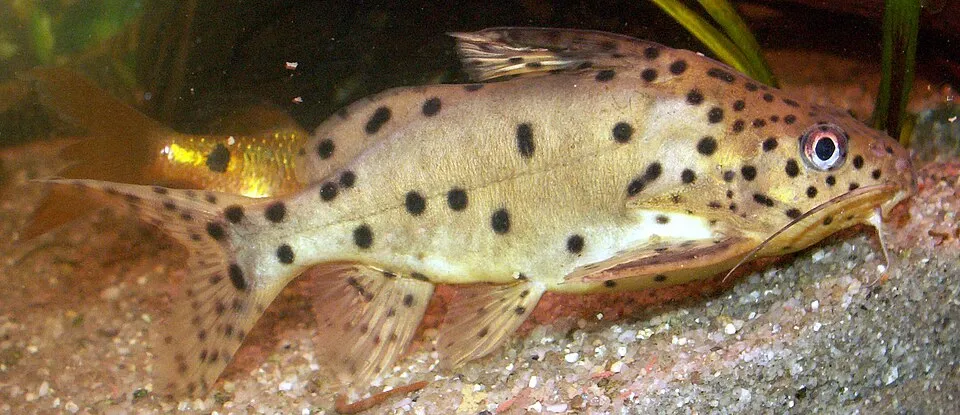
The blue gold peacock is a mostly peaceful, social species that keeps to the bottom. These picks share a community profile with it, are safe together in both directions, and overlap on water type, temperature and pH.
Common questions
What size tank does a blue gold peacock need?
A blue gold peacock needs at least 63 gal (240 L). It spends most of its time in the bottom.
What temperature and pH does a blue gold peacock need?
A blue gold peacock is comfortable at 75–81°F (24–27°C) with a pH of 7.5–8.5.
What does a blue gold peacock eat?
A blue gold peacock eats sinking pellets, frozen mysis, brine shrimp and cyclops, fed in small, regular amounts.
How big does a blue gold peacock get?
An adult blue gold peacock reaches about 3.9 in (10 cm).
How can you tell a male blue gold peacock from a female?
Males lay a warm gold wash over deep blue flanks, while females stay plain silver-brown.
How does a blue gold peacock breed?
The blue gold peacock is a maternal mouthbrooder. The female holds the eggs and fry in her mouth for around three weeks, and breeding it is of medium difficulty.
Related species
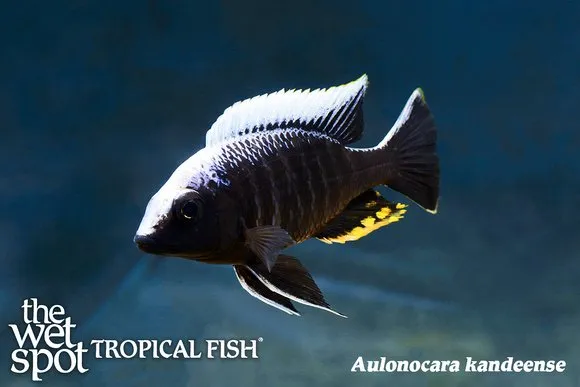 3.9 in (10 cm)63 gal (240 L)75–81°F (24–27°C)
Blue orchid peacock
Aulonocara kandeense
3.9 in (10 cm) · 63 gal (240 L)
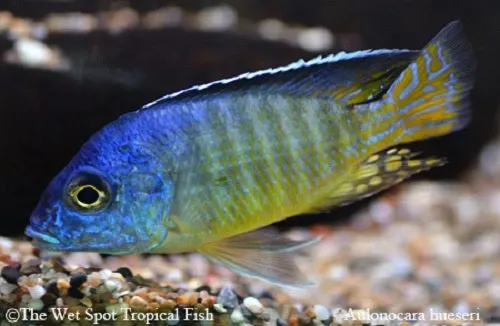 3.9 in (10 cm)63 gal (240 L)75–81°F (24–27°C)
Night aulonocara
Aulonocara hueseri
3.9 in (10 cm) · 63 gal (240 L)
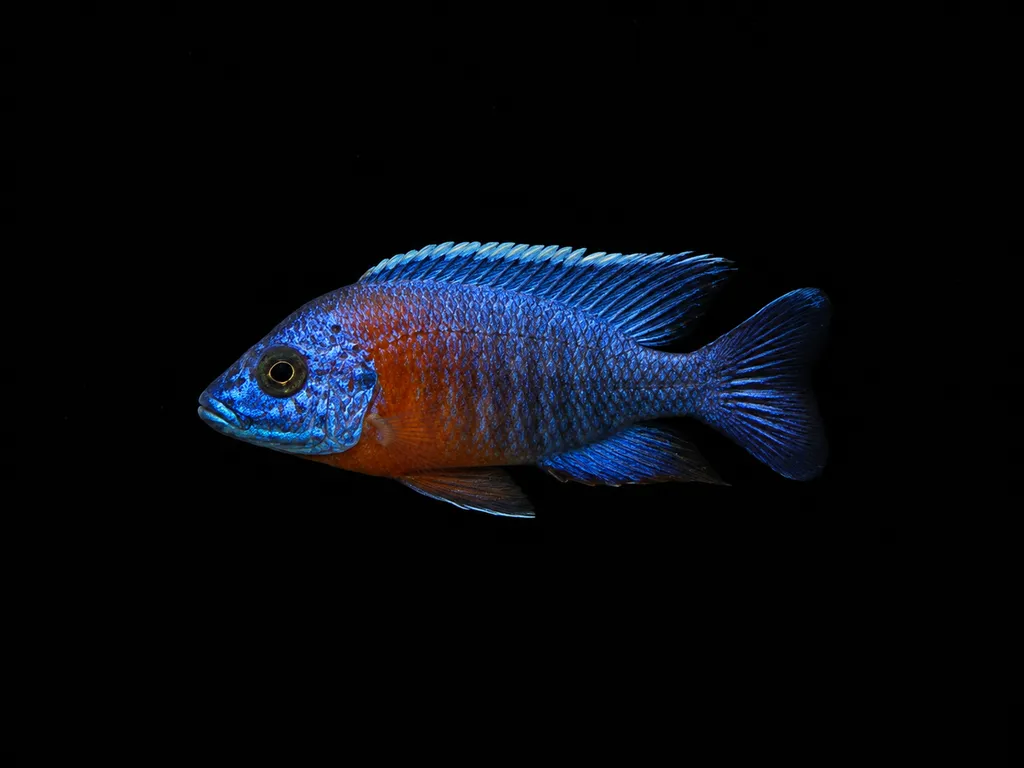 4.1 in (10.5 cm)63 gal (240 L)75–81°F (24–27°C)
Red shoulder peacock
Aulonocara hansbaenschi
4.1 in (10.5 cm) · 63 gal (240 L)
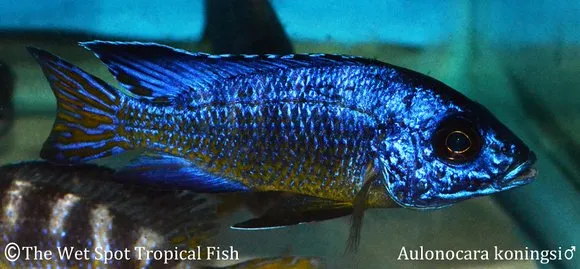 4.3 in (11 cm)63 gal (240 L)75–81°F (24–27°C)
Konings' peacock
Aulonocara koningsi
4.3 in (11 cm) · 63 gal (240 L)
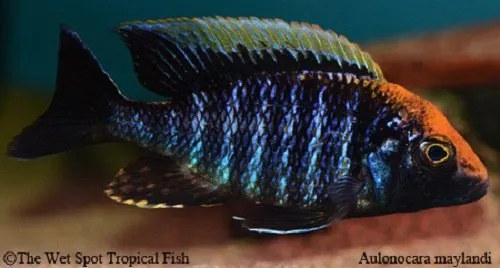 4.3 in (11 cm)66 gal (250 L)77–82°F (25–28°C)
Sulfurhead peacock
Aulonocara maylandi
4.3 in (11 cm) · 66 gal (250 L)
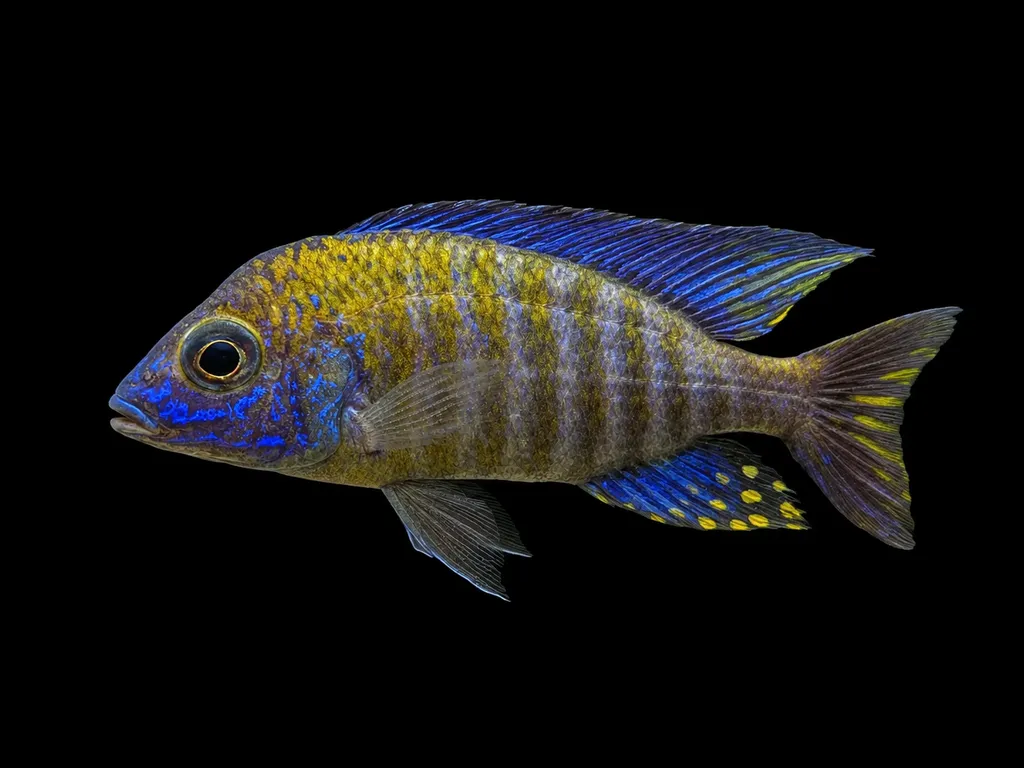 3.5 in (9 cm)63 gal (240 L)75–81°F (24–27°C)
Chitande aulonocara
Aulonocara ethelwynnae
3.5 in (9 cm) · 63 gal (240 L)