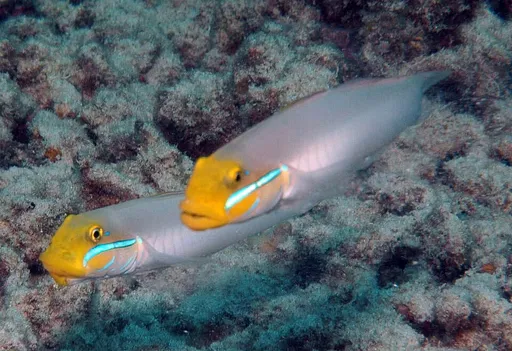
Golden head sleeper goby
Valenciennea strigata
Also known as Yellowheaded Sleeper Goby, Gold Head Sleeper Goby, Blueband Goby, Pennant Glider
SaltwaterFish
Care at a glance
- Temperature
- 73–81°F
- 23–27°C
- pH
- 8.1–8.4
- Adult size
- 5.9 in
- 15 cm
- Minimum tank
- 53 gal
- 200 L
- Temperament
- Peaceful
- Social behavior
- Social
- Tankmates
- With caution
- Swim level
- Bottom
- Difficulty
- Difficult
- Breeding
- Hard
- Rarity
- Common
- Reef safe
- Reef safe with caution
- Family
- Gobiidae
- Origin
- Indo-Pacific
Overview
Peaceful toward tankmates and considered reef safe in that it never touches corals, but it constantly showers sand onto anything sitting low in the tank, so clams and bottom corals get buried. The real challenge is feeding: many specimens deplete the sand-bed fauna and slowly starve because they will not always switch to prepared food. It is a determined jumper, so a tight lid is essential.
In the wild
Widespread across the Indo-Pacific over sandy patches next to reef, where it digs burrows under rock and rubble. It needs a deep, fine live sand bed to survive, since it spends the whole day taking mouthfuls of sand and sifting out tiny invertebrates. A productive sand bed or a refugium feeding the tank keeps its food source replenished.
Good to know
A member of the family Gobiidae, genus Valenciennea, the sand-sifting sleeper gobies. It is a monogamous pair-forming species that excavates and defends a burrow with its mate. It feeds by processing substrate through its gill openings, which slowly depletes the microfauna in an aquarium sand bed.
Did you know
Golden head sleeper gobies pair for life and can often be bought as an established male-female pair, digging and maintaining a shared burrow that they take turns guarding while the other sifts the surrounding sand.
Common questions
What size tank does a Golden head sleeper goby need?
A Golden head sleeper goby needs at least 53 gal (200 L). It spends most of its time in the bottom.
What temperature and pH does a Golden head sleeper goby need?
A Golden head sleeper goby is comfortable at 73–81°F (23–27°C) with a pH of 8.1–8.4.
How big does a Golden head sleeper goby get?
An adult Golden head sleeper goby reaches about 5.9 in (15 cm).
Related species
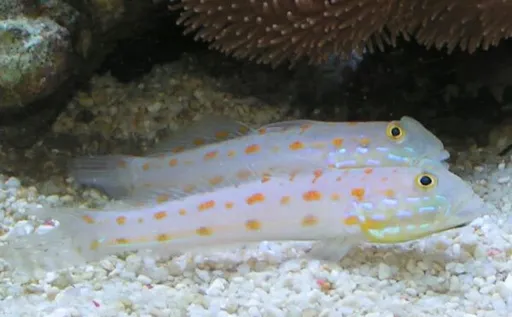 5.9 in (15 cm)55 gal (208 L)72–79°F (22–26°C)
Diamond sleeper goby
Valenciennea puellaris
5.9 in (15 cm) · 55 gal (208 L)
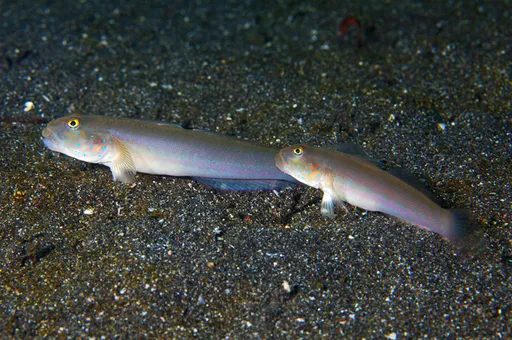 5.5 in (14 cm)40 gal (150 L)72–79°F (22–26°C)
Sixspot sleeper goby
Valenciennea sexguttata
5.5 in (14 cm) · 40 gal (150 L)
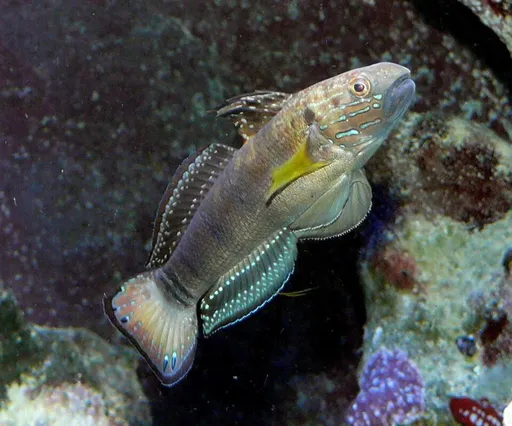 5.9 in (15 cm)30 gal (115 L)73–81°F (23–27°C)
Dragon sleeper goby
Amblygobius phalaena
5.9 in (15 cm) · 30 gal (115 L)
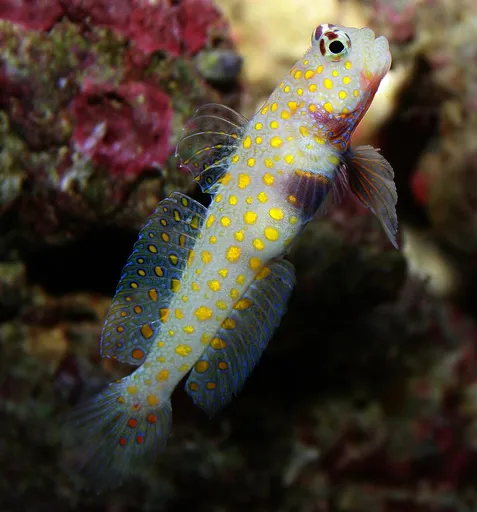 4.3 in (11 cm)30 gal (114 L)72–79°F (22–26°C)
Orange-spot prawn goby
Amblyeleotris guttata
4.3 in (11 cm) · 30 gal (114 L)
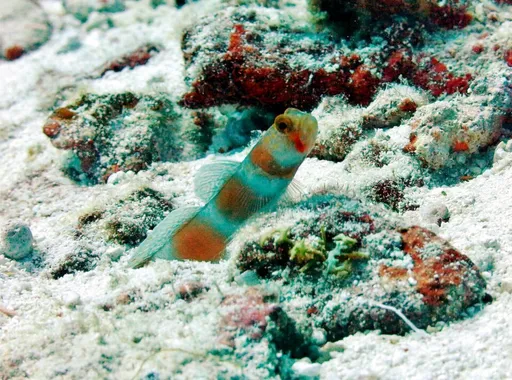 4.3 in (11 cm)30 gal (115 L)73–81°F (23–27°C)
Pinkbar goby
Amblyeleotris aurora
4.3 in (11 cm) · 30 gal (115 L)
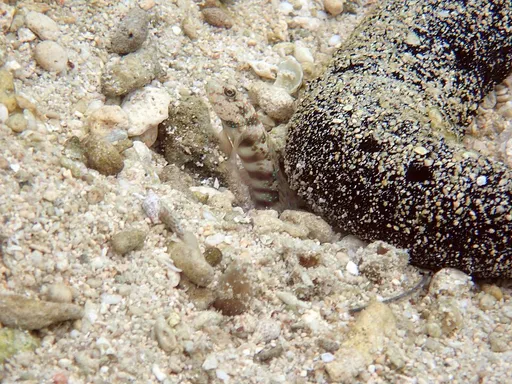 3.9 in (10 cm)30 gal (115 L)73–81°F (23–27°C)
Pink-spotted watchman goby
Cryptocentrus leptocephalus
3.9 in (10 cm) · 30 gal (115 L)