Candy basslet
Liopropoma carmabi
Also known as Deepwater Candy Basslet, Candy Bass, Carmabi Basslet
SaltwaterFish
Care at a glance
- Temperature
- 72–79°F
- 22–26°C
- pH
- 8.1–8.4
- Adult size
- 2.4 in
- 6 cm
- Minimum tank
- 26 gal
- 100 L
- Temperament
- Mostly peaceful
- Social behavior
- Solitary
- Tankmates
- With caution
- Swim level
- Bottom
- Difficulty
- Medium
- Breeding
- Hard
- Rarity
- Very rare
- Reef safe
- Reef safe
- Family
- Serranidae
- Origin
- Western Atlantic and Caribbean, in caves on deep reef walls below 30 m.
Overview
Keep it in a mature 100 litre or larger reef with abundant caves, overhangs and subdued lighting at a cooler 22 to 26 C. It is peaceful and coral-safe but will eat shrimp and crabs small enough to swallow, and it should be the only basslet in the tank. Feed small meaty foods like mysis, enriched brine and finely chopped seafood often. Provide shaded shelter so this deepwater fish settles in.
In the wild
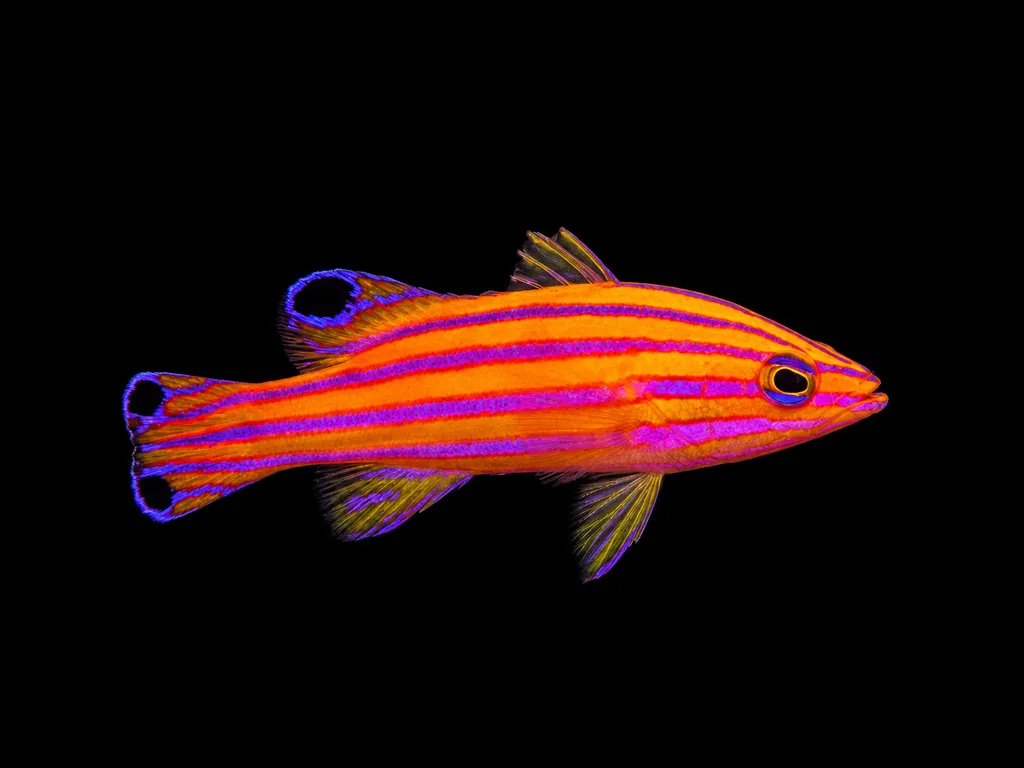
The candy basslet is a tiny, jewel-striped Caribbean basslet in orange, red and lavender lines. It lives deep on outer reef walls in caves and overhangs, far below normal diving depth. Its beauty and deep habitat make it one of the most sought-after and expensive small marine fish. It is cryptic and cave-bound in the aquarium too.
Good to know
Liopropoma carmabi grows to only about 6 cm and is collected from reef walls often below 45 m. Reaching that depth safely is difficult, which is why single specimens command very high prices. It is a close relative of the swissguard basslet.
Did you know
Divers must descend to dangerous depths to collect it, which is the main reason a single fish can cost as much as a whole tank.
Common questions
What size tank does a Candy basslet need?
A Candy basslet needs at least 26 gal (100 L). It spends most of its time in the bottom.
What temperature and pH does a Candy basslet need?
A Candy basslet is comfortable at 72–79°F (22–26°C) with a pH of 8.1–8.4.
How big does a Candy basslet get?
An adult Candy basslet reaches about 2.4 in (6 cm).
Related species
 3.1 in (8 cm)29 gal (110 L)75–81°F (24–27°C)
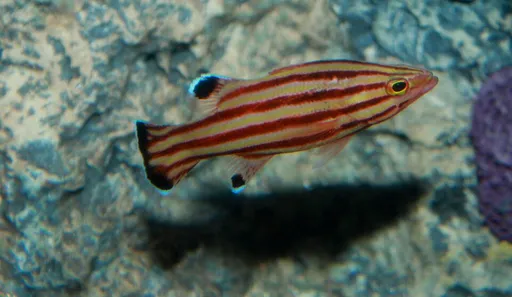
Swissguard basslet
Liopropoma rubre
3.1 in (8 cm) · 29 gal (110 L)
 5.1 in (13 cm)53 gal (200 L)73–81°F (23–27°C)
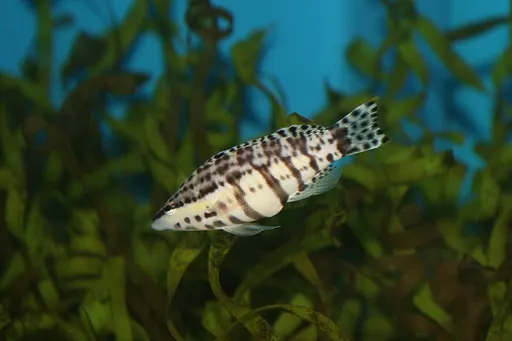
Harlequin bass
Serranus tigrinus
5.1 in (13 cm) · 53 gal (200 L)
 5.9 in (15 cm)79 gal (300 L)72–79°F (22–26°C)
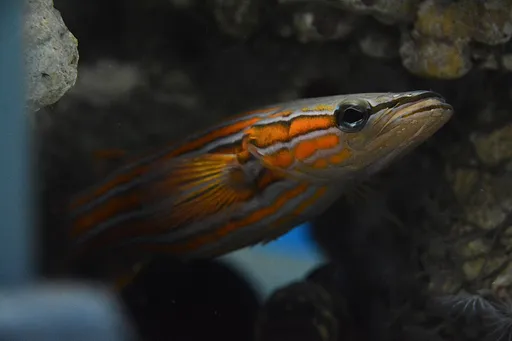
Australian flathead perch
Rainfordia opercularis
5.9 in (15 cm) · 79 gal (300 L)
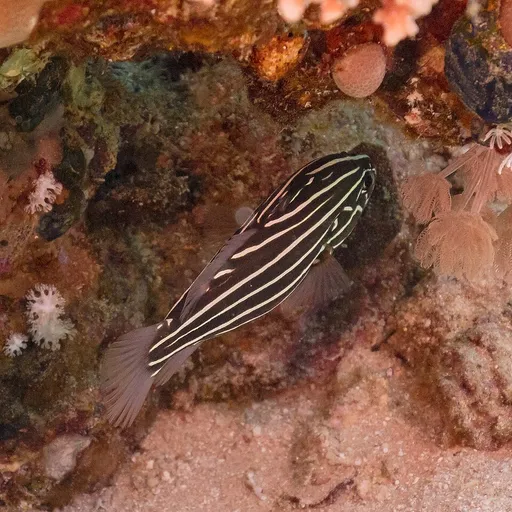 11.8 in (30 cm)53 gal (200 L)75–81°F (24–27°C)
Sixline soapfish
Grammistes sexlineatus
11.8 in (30 cm) · 53 gal (200 L)
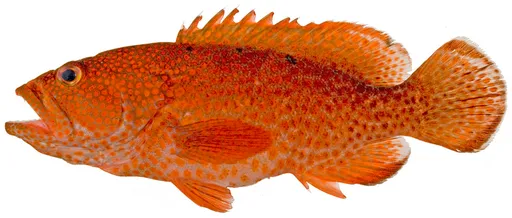 16.1 in (41 cm)106 gal (400 L)73–81°F (23–27°C)
Coney
Cephalopholis fulva
16.1 in (41 cm) · 106 gal (400 L)
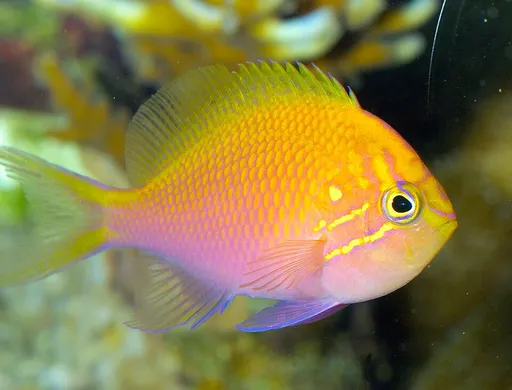 5.1 in (13 cm)70 gal (265 L)72–81°F (22–27°C)
Sunburst anthias
Serranocirrhitus latus
5.1 in (13 cm) · 70 gal (265 L)