Blue velvet damsel
Neoglyphidodon oxyodon
Also known as Bluestreak Damselfish, Java Damsel, Neon Velvet Damsel
SaltwaterFish
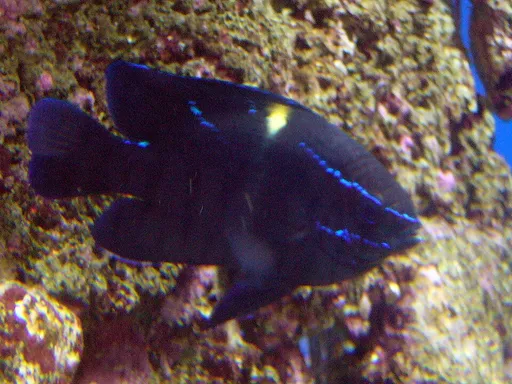
Care at a glance
- Temperature
- 75–81°F
- 24–27°C
- pH
- 8.1–8.4
- Adult size
- 5.9 in
- 15 cm
- Minimum tank
- 55 gal
- 210 L
- Temperament
- Aggressive
- Social behavior
- Solitary
- Own kind
- One per tank
- Tankmates
- With caution
- Swim level
- Middle
- Difficulty
- Easy
- Breeding
- Hard
- Rarity
- Common
- Reef safe
- Reef safe
- Family
- Pomacentridae
- Origin
- Western Pacific reefs
Overview
Blue Velvet Damsels are strikingly colored as juveniles, which is why they sell so well, but they grow into one of the most aggressive fish in this group of damsels and need to be stocked with real caution. An adult claims a large territory and challenges almost anything that enters it, including other damsels, so tankmates should be equally bold and similarly sized. It will not touch coral or sessile invertebrates and is fine in a reef tank from a coral-safety standpoint, but it will bully smaller or more peaceful fish without hesitation. Feed a varied diet of frozen mysis and brine shrimp, marine pellets, and algae-based food.
In the wild
Found on Western Pacific reefs from Indonesia and the Philippines to Ashmore Reef in the Timor Sea, where it inhabits shallow, protected lagoon and inshore reef flats. It grows larger than most aquarium damsels, so it needs a spacious tank of at least 210 liters (55 gallons) with heavy rockwork broken into separate territories. Strong water flow and stable parameters help this species stay healthy long term.
Good to know
Juvenile Blue Velvet Damsels are a vivid electric blue with black and white stripes, but the color fades to a dull brown or blackish tone as the fish matures, a change dramatic enough to catch new keepers off guard. Males clear and defend a nest site, court females to lay adhesive eggs there, and then guard the clutch alone until it hatches roughly three days to a week later, sometimes spawning with more than one female. It has no established commercial breeding program, so nearly all specimens in the trade are wild-caught.
Did you know
The juvenile's bright blue and white stripes look so different from the drab adult coloration that new keepers sometimes mistake a grown Blue Velvet Damsel for an entirely different species.
Common questions
What size tank does a Blue velvet damsel need?
A Blue velvet damsel needs at least 55 gal (210 L). It spends most of its time in the middle.
What temperature and pH does a Blue velvet damsel need?
A Blue velvet damsel is comfortable at 75–81°F (24–27°C) with a pH of 8.1–8.4.
How big does a Blue velvet damsel get?
An adult Blue velvet damsel reaches about 5.9 in (15 cm).
Related species
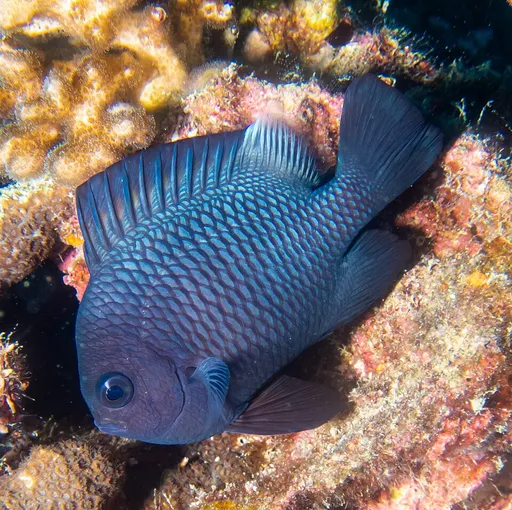 5.5 in (14 cm)55 gal (210 L)75–81°F (24–27°C)
Domino damsel
Dascyllus trimaculatus
5.5 in (14 cm) · 55 gal (210 L)
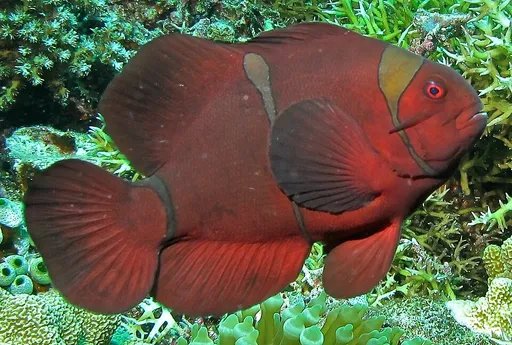 6.7 in (17 cm)40 gal (150 L)75–82°F (24–28°C)
Maroon clownfish
Premnas biaculeatus
6.7 in (17 cm) · 40 gal (150 L)
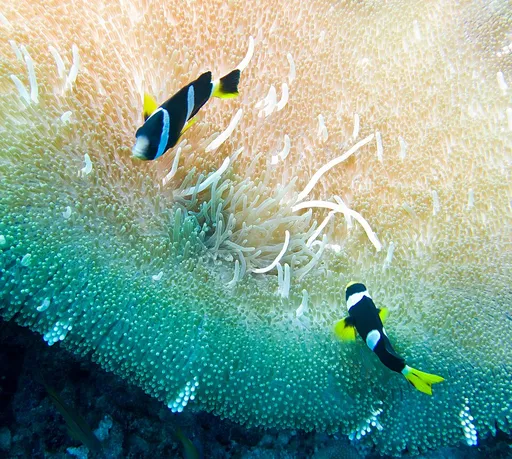 5.9 in (15 cm)30 gal (115 L)75–82°F (24–28°C)
Sebae clownfish
Amphiprion sebae
5.9 in (15 cm) · 30 gal (115 L)
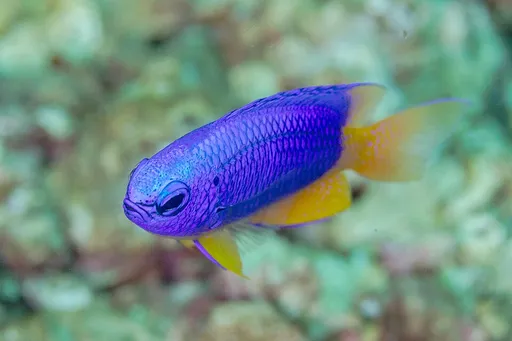 3.5 in (9 cm)29 gal (110 L)75–81°F (24–27°C)
Neon damselfish
Pomacentrus coelestis
3.5 in (9 cm) · 29 gal (110 L)
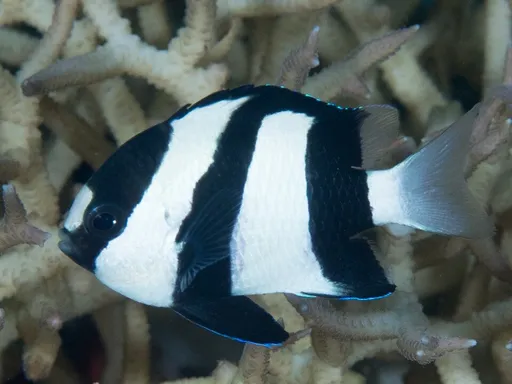 3.5 in (9 cm)29 gal (110 L)75–81°F (24–27°C)
Three-stripe damsel
Dascyllus aruanus
3.5 in (9 cm) · 29 gal (110 L)
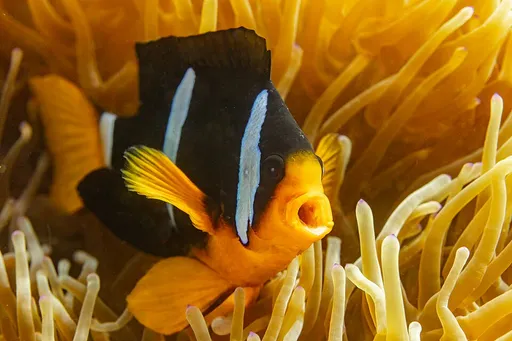 5.5 in (14 cm)30 gal (115 L)75–82°F (24–28°C)
Clark's clownfish
Amphiprion clarkii
5.5 in (14 cm) · 30 gal (115 L)