Form of Pygmy chain sword
Pygmy chain sword Broad Leaf
Helanthium tenellum 'Broad Leaf'
The named form of Helanthium tenellum · See the species →
Also known as Helanthium tenellum 'Green', Echinodorus tenellus 'Green', Echinodorus tenellus 'Broad Leaf', Helanthium tenellus 'Broad Leaf', Helanthium tenellum 'parvulum', Echinodorus parvulus, Helanthium parvulum
FreshwaterCarpetingRunnersPlantlets

Care at a glance
- Light
- Medium light
- CO2
- CO₂ beneficial
- Temperature
- 72–82°F
- 22–28°C
- Max height
- 3.9 in
- 10 cm
- Growth rate
- Medium
- Placement
- Foreground
- Type
- Carpeting
- pH
- 6.0–8.0
- Hardness
- 1–20 dGH
- Spread
- 2 in (5 cm)
- Nutrient uptake
- Root feeder
- Growth region
- Submersed or emersed
- Difficulty
- Easy
- Family
- Alismataceae
- Origin
- Eastern and southeastern United States; aquarium stock of unknown locality
Overview
Pygmy chain sword Broad Leaf forms a light green lawn in the foreground, with thicker, wider blades that look a little like dwarf sagittaria. It usually keeps that fresh green under strong light, where the common form tends to turn olive or reddish. It is an easy plant.
Did you know
A vigorous clone of this form has spread through the hobby under the wrong name Ranalisma rostrata. The true Ranalisma rostratum is an Asian plant, hard to tell apart underwater but easy to separate once it grows above water.
Caring for pygmy chain sword Broad Leaf
Rinse the gel off tissue culture cups and split the plants into small clumps. Plant the clumps 2 to 3 cm apart, and the runners will fill the gaps.
Care matches the plain species. Give pygmy chain sword Broad Leaf medium light, and add CO2 for a faster, denser spread, though it grows without it. It is a root feeder, so push root tabs into an inert substrate or grow it in a nutrient-rich soil. Keep it at 72 to 82°F (22 to 28°C).
It grows at a medium pace into a carpet about 5 to 10 cm tall under good light. New plants form along its runners, and small plantlets can be cut free once they have a few roots.
Good to know
Pygmy chain sword Broad Leaf is a trade form of Helanthium tenellum, in the family Alismataceae. Engelmann described the North American plant as Echinodorus parvulus in 1856, and botanists now include that name in H. tenellum. Tropica sells the same plant as Helanthium tenellum 'Green'. Its underwater leaves reach just over 2 mm across, with the widest point below the middle. The common trade form has narrower leaves of about 1.5 mm, widest above the middle.
In the wild
Pygmy chain sword Broad Leaf is the North American form of the species, from the eastern and southeastern United States. The exact collection site of the aquarium stock is unknown. This form was the plant sold as Echinodorus tenellus decades ago. The narrower, reddish form that most shops sell today came from the American tropics, probably Brazil.
Common questions
Is pygmy chain sword Broad Leaf a different species from pygmy chain sword?
No. Pygmy chain sword Broad Leaf is a form of pygmy chain sword, Helanthium tenellum, and it is grown the same way as the species.
Does pygmy chain sword Broad Leaf need to be planted in the substrate?
Yes. Split it into small clumps and push each one into the substrate with tweezers, leaving gaps for it to fill.
Does pygmy chain sword Broad Leaf need CO2?
No, but it helps. Pygmy chain sword Broad Leaf can grow without injected CO2, and added CO2 makes it grow faster.
How much light does pygmy chain sword Broad Leaf need?
Pygmy chain sword Broad Leaf wants medium light. A light sold for planted tanks covers it.
Does pygmy chain sword Broad Leaf need root tabs?
Yes. Pygmy chain sword Broad Leaf draws much of its food through its roots. Push root tabs in near it, or grow it in a nutrient-rich soil.
How do you propagate pygmy chain sword Broad Leaf?
Pygmy chain sword Broad Leaf propagates by runners and plantlets. New plants grow along its runners. Cut one free once it has roots and plant it. Small plantlets form on the plant and can be detached once they have a few roots.
How tall does pygmy chain sword Broad Leaf grow?
Pygmy chain sword Broad Leaf grows to about 3.9 in (10 cm) tall. It grows at a moderate pace.
Related plants
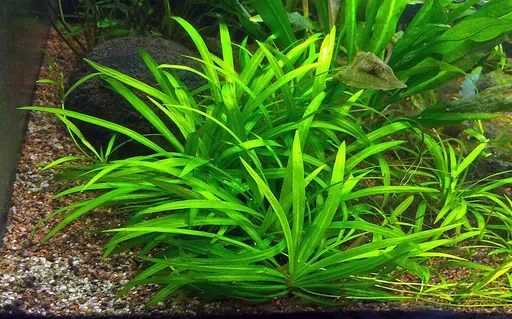 Low lightMidground5.9 in (15 cm)
Quadricostatus chain sword
Helanthium bolivianum 'Quadricostatus'
Low light · Midground
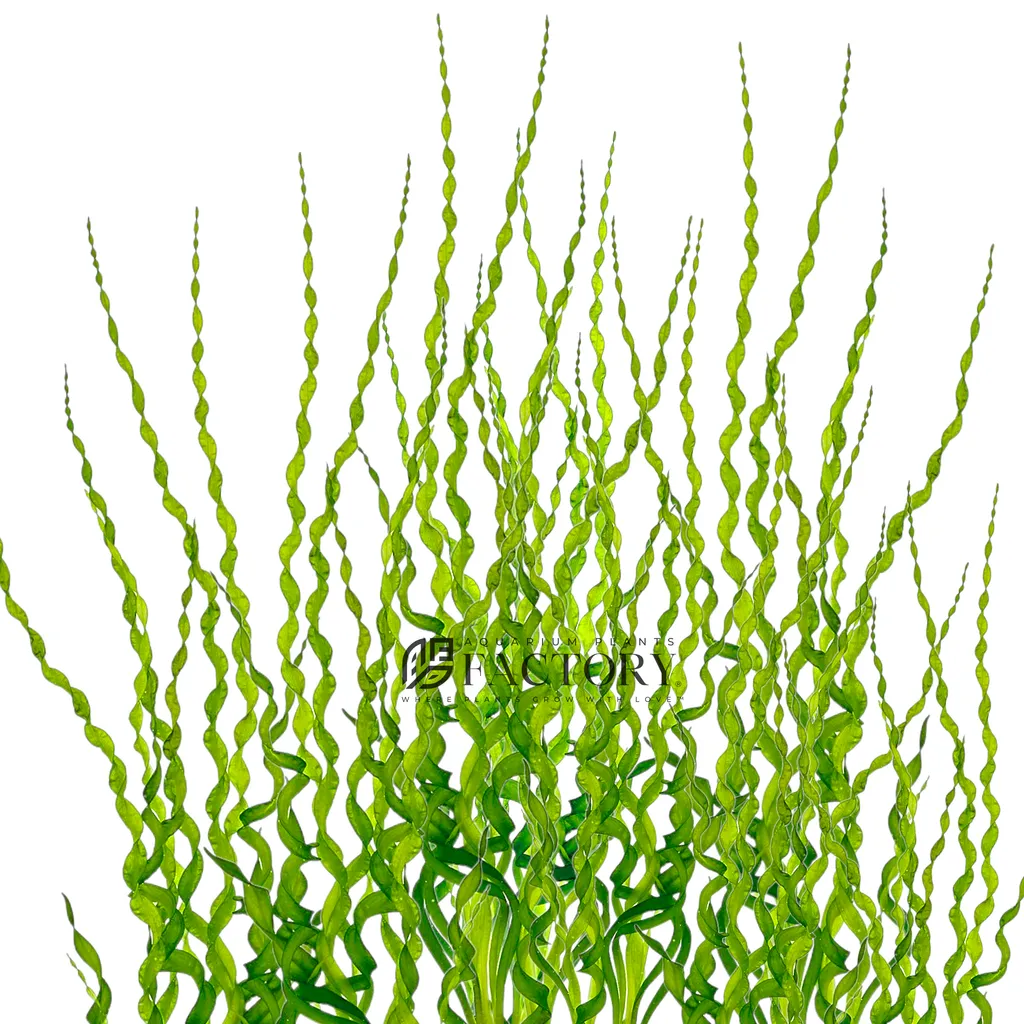 Medium lightMidground11.8 in (30 cm)
Vesuvius sword
Helanthium bolivianum 'Vesuvius'
Medium light · Midground
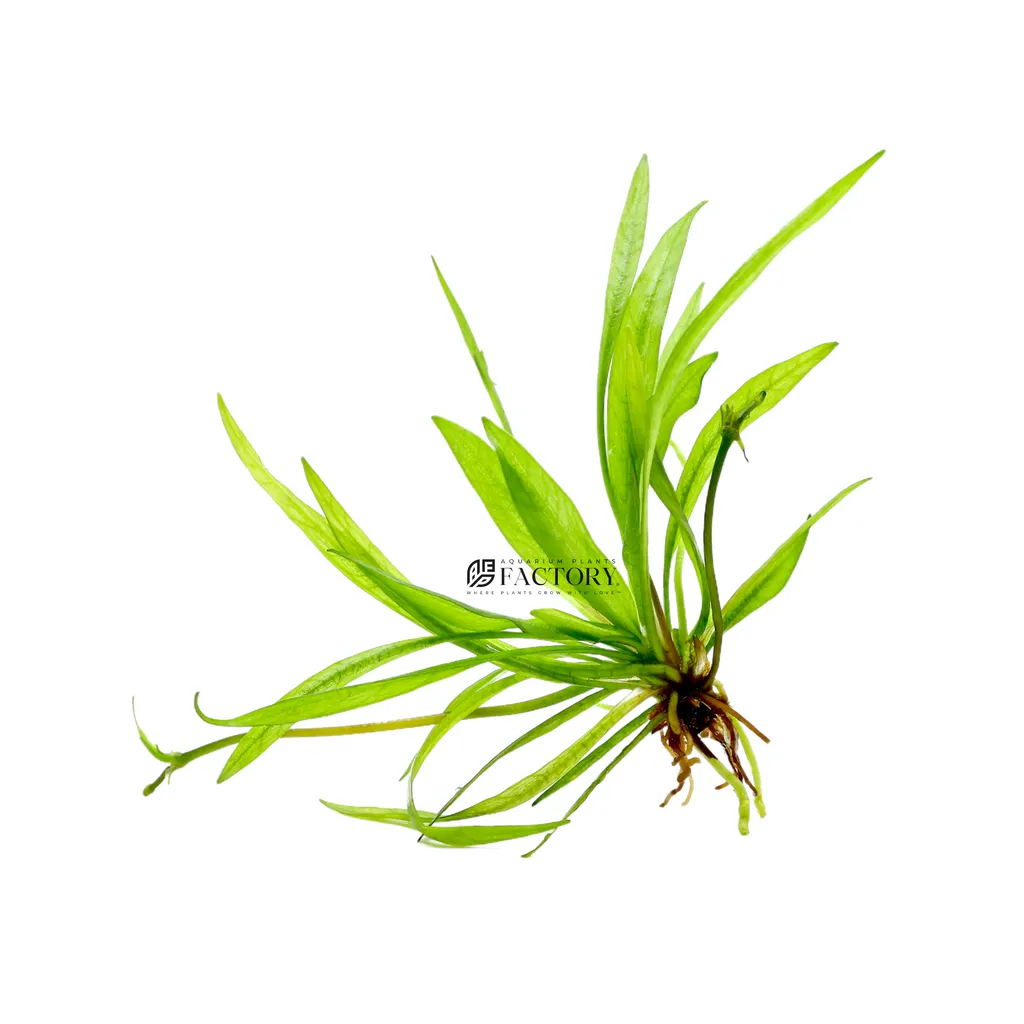 Medium lightBackground23.6 in (60 cm)
Narrow leaf chain sword
Helanthium bolivianum 'Angustifolius'
Medium light · Background
 Medium lightForeground3.1 in (8 cm)
Ranalisma rostratum
Medium light · Foreground
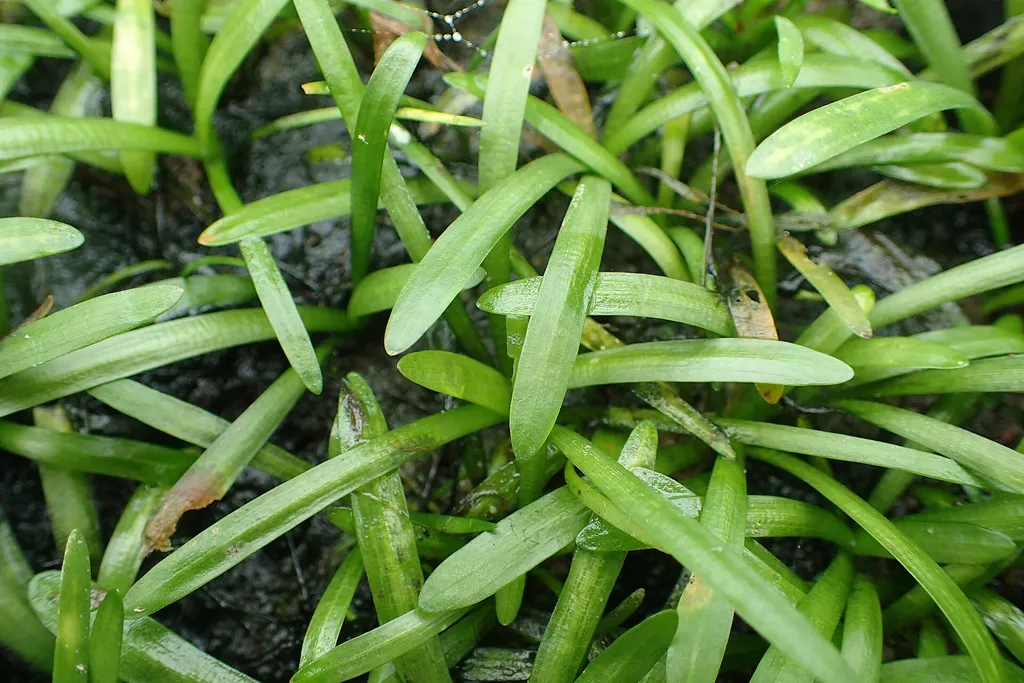 Low lightForeground11.8 in (30 cm)
Dwarf sagittaria
Sagittaria subulata
Low light · Foreground
 Medium lightMidground9.8 in (25 cm)
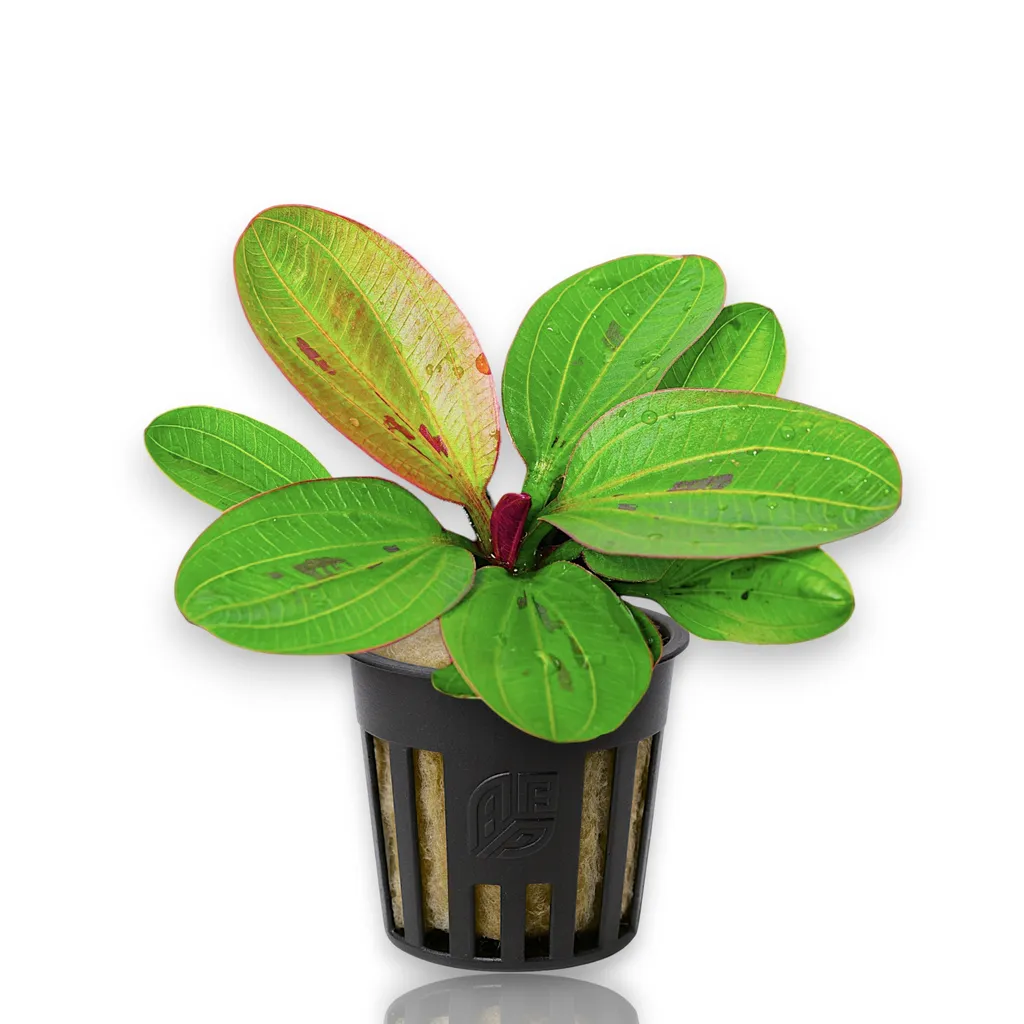
Hadi Red Pearl sword
Echinodorus 'Hadi Red Pearl'
Medium light · Midground