Vesuvius sword
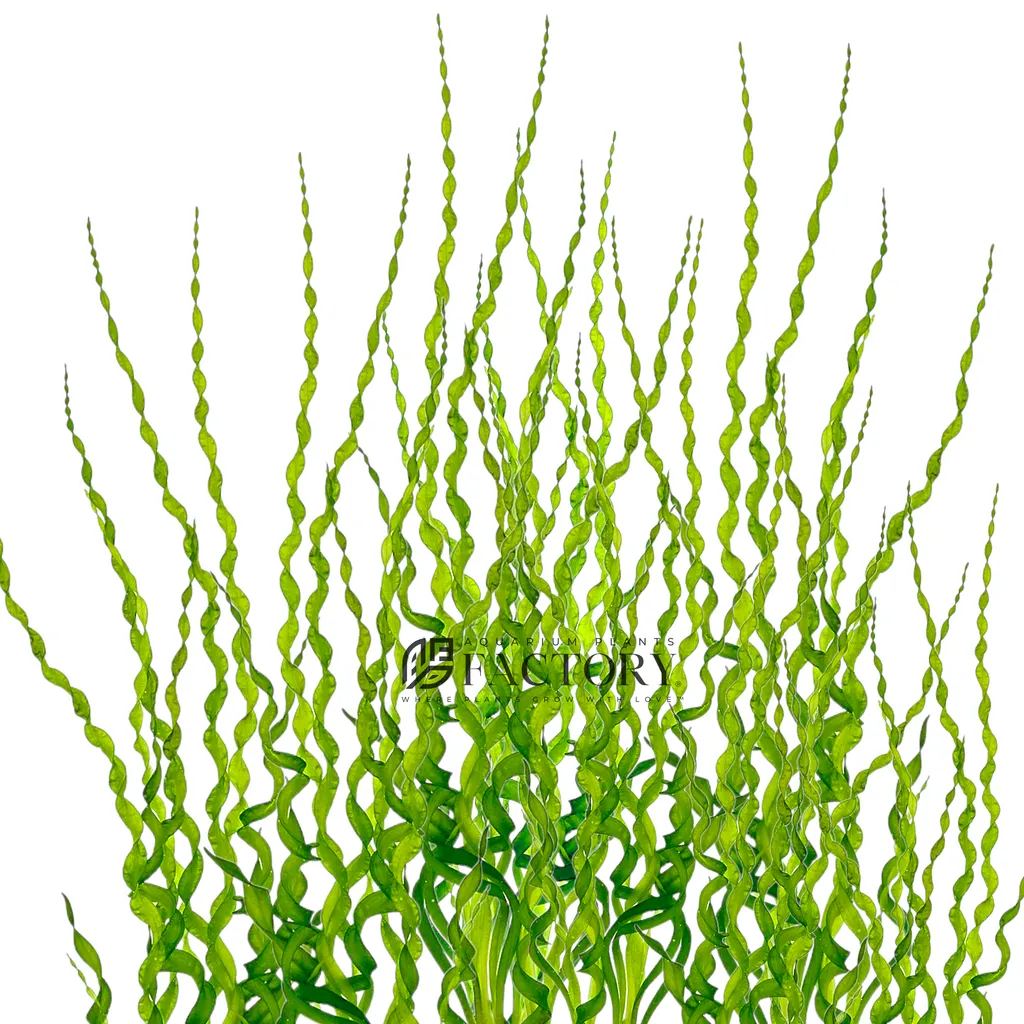
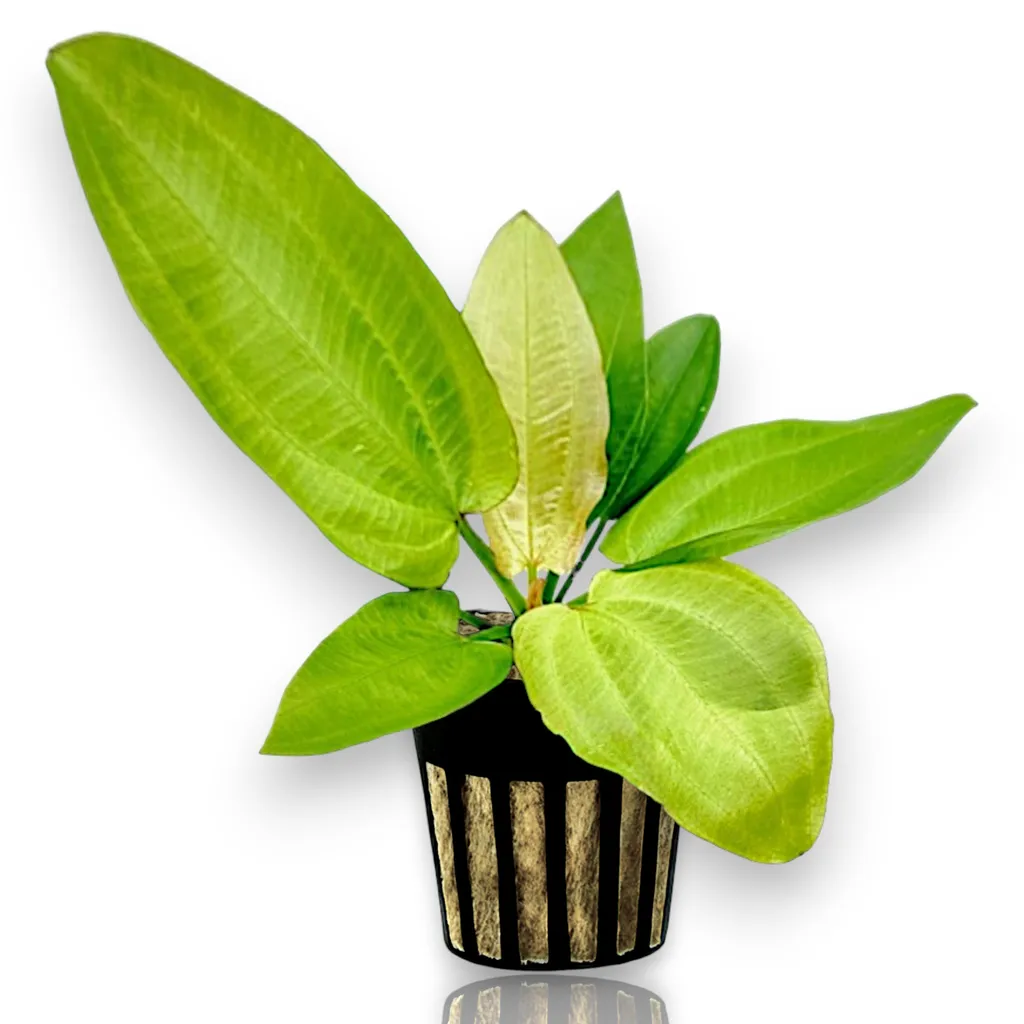
Helanthium bolivianum 'Vesuvius'
Also known as Echinodorus 'Vesuvius', Echinodorus angustifolius 'Vesuvius', Corkscrew sword, Twisted chain sword, Echinodorus sp. tortifolia
FreshwaterRosetteRunnersPlantlets
Care at a glance
- Light
- Medium light
- CO2
- CO₂ beneficial
- Temperature
- 72–82°F
- 22–28°C
- Max height
- 11.8 in
- 30 cm
- Growth rate
- Medium
- Placement
- Midground
- Type
- Rosette
- pH
- 5.5–7.5
- Hardness
- 2–18 dGH
- Spread
- 5.9 in (15 cm)
- Nutrient uptake
- Root + water column
- Growth region
- Submersed or emersed
- Difficulty
- Easy
- Family
- Alismataceae
- Origin
- Cultivar (from South American Helanthium bolivianum)
Overview
Plant it in the midground or as an accent in nano scapes where the curling leaves can be seen, rooting the rosette in fine substrate. It is easy, tolerates medium light, and does not strictly need CO2 as long as pH stays below about 7.5, though CO2 and root feeding give fuller, faster growth. Like other swords it is a heavy root feeder, so use root tabs or aquasoil. If it is thriving it pumps out runners with new plants, so trim and replant to keep it tidy.
In the wild
Vesuvius does not exist in the wild. It is a cultivated mutant selected from the narrow-leaf form of the South American chain sword Helanthium bolivianum (the 'Angustifolius' type), first propagated commercially at a nursery in Singapore. The parent species grows in shallow, seasonally flooded South American waters and spreads by runners. Vesuvius keeps that runner-forming habit while showing its distinctive corkscrew leaves.
Good to know
Its standout feature is the tightly twisted, roughly 4 mm wide leaves that spiral upward from the rosette, a stable mutation that breeds true through runners. It is sold under several names because the genus was reclassified: Echinodorus 'Vesuvius', Echinodorus bolivianus 'Vesuvius' and the informal sp. tortifolia all refer to the same plant now placed in Helanthium. Being a clonal cultivar, every Vesuvius in the trade is genetically the same selected plant.
Did you know
Did you know Vesuvius is named for its volcano-like look? The leaves erupt from a central rosette and spiral upward like a curl of smoke, which is exactly the effect the nursery was selecting for.
Related plants
 Low lightMidground5.9 in (15 cm)
Quadricostatus chain sword
Helanthium bolivianum 'Quadricostatus'
Low light · Midground
 Medium lightBackground23.6 in (60 cm)
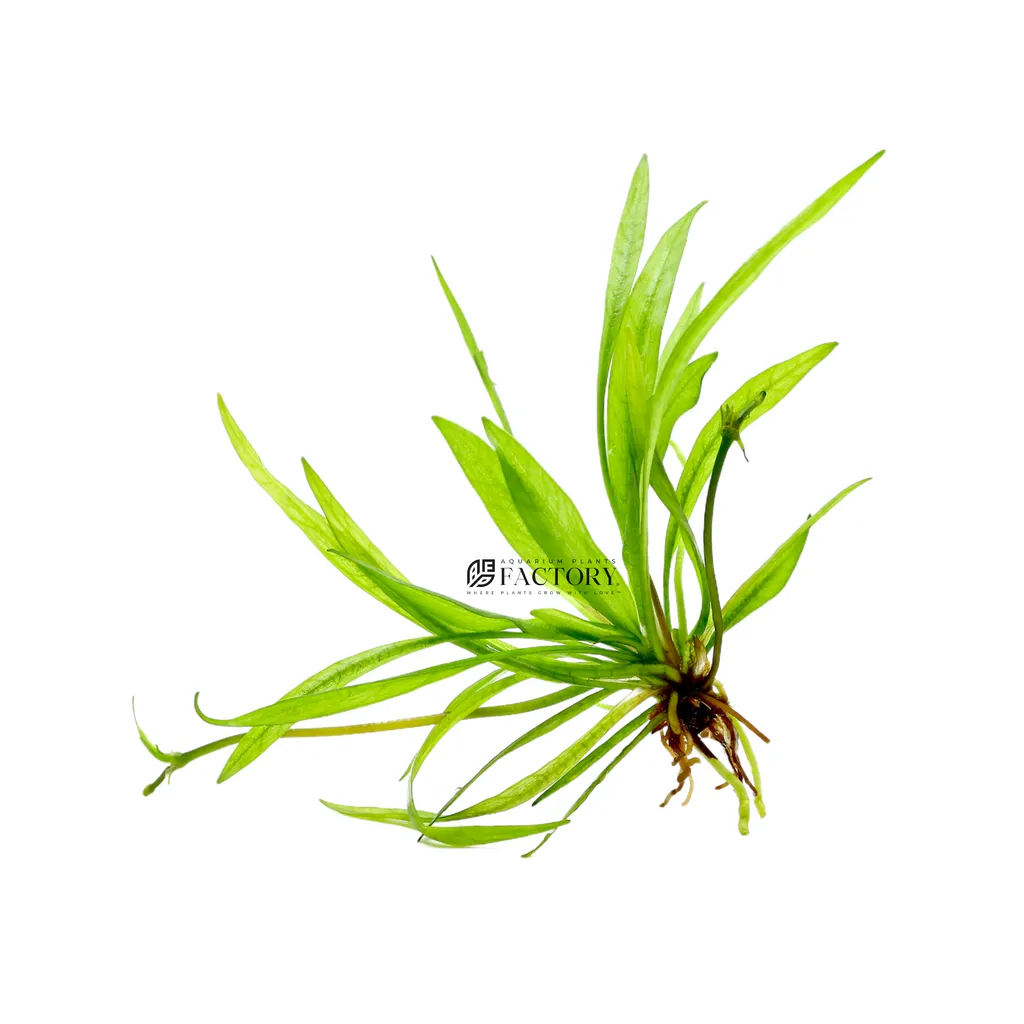
Narrow leaf chain sword
Helanthium bolivianum 'Angustifolius'
Medium light · Background
 Medium lightForeground3.9 in (10 cm)
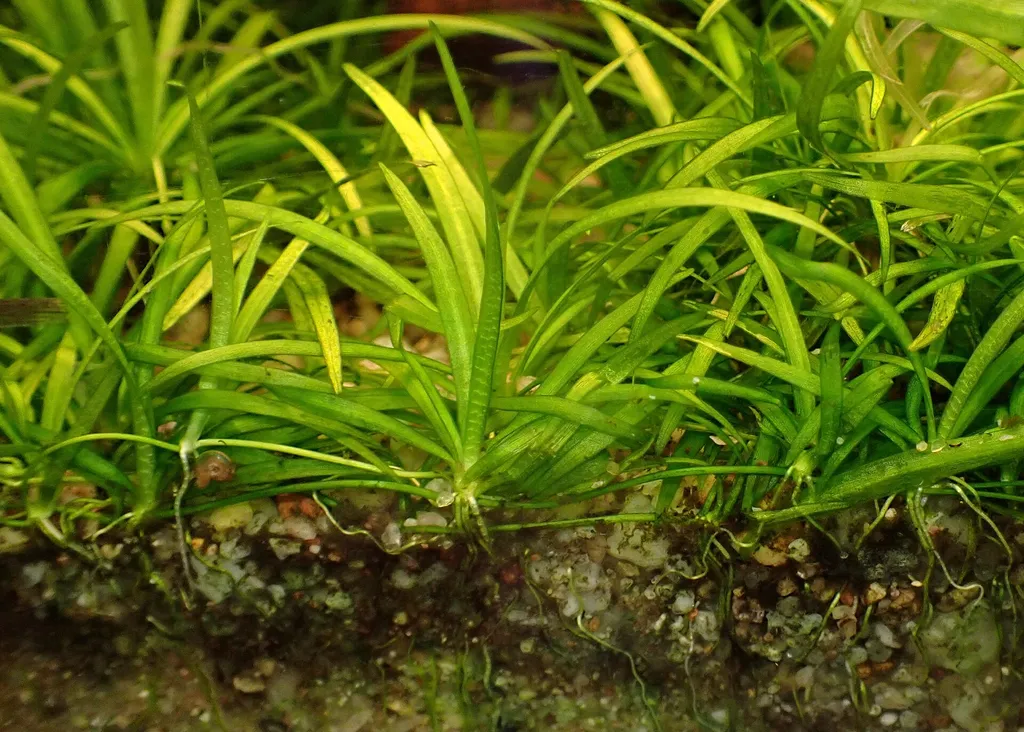
Pygmy chain sword
Helanthium tenellum
Medium light · Foreground
 High lightMidground11.8 in (30 cm)
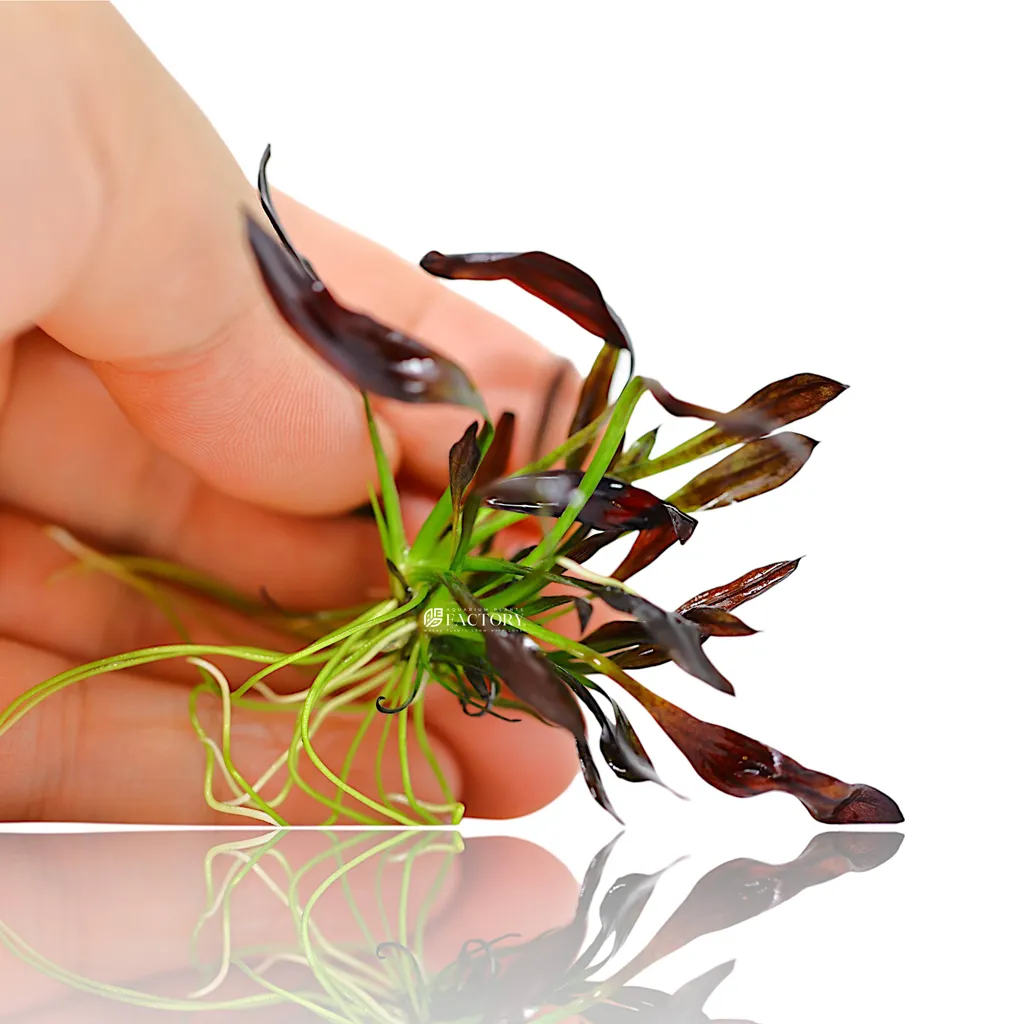
Aflame sword
Echinodorus 'Aflame'
High light · Midground
 High lightMidground11.8 in (30 cm)
Oriental sword
Echinodorus 'Oriental'
High light · Midground
- Medium lightMidground11.8 in (30 cm)
Echinodorus Red Chameleon
Echinodorus 'Red Chameleon'
Medium light · Midground