Wallago catfish
Wallago attu
Also known as Helicopter catfish, Tapah, Boal, Freshwater shark catfish
FreshwaterFish
Care at a glance
- Temperature
- 72–82°F
- 22–28°C
- pH
- 6.5–7.5
- Adult size
- 59.1 in
- 150 cm
- Minimum tank
- 528 gal
- 2,000 L
- Temperament
- Aggressive
- Social behavior
- Solitary
- Tankmates
- With caution
- Swim level
- Bottom
- Difficulty
- Difficult
- Breeding
- No record
- Rarity
- Rare
- Family
- Siluridae
- Origin
- Widespread across rivers and lakes of South and Southeast Asia.
Overview
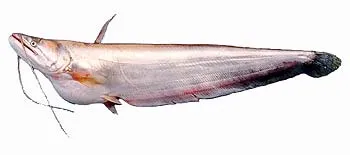
This is a genuine monster and one of the most predatory catfish kept in the hobby, growing well over a meter and needing a tank of at least 2000 liters, really a pond or a huge custom build. It is aggressive and will eat any tankmate it can catch and swallow, which for a fish this size is almost anything, so it is best kept alone. It is fast and powerful, so a very secure lid is essential. Feed meaty foods like whole fish, prawns, and earthworms, and expect a demanding, long-term animal.
In the wild
The wallago is a large, fast-swimming predator of rivers, lakes, and reservoirs across South and Southeast Asia, cruising open water and hunting other fish. It has a long body, a huge gape, and a wide mouth full of small sharp teeth. It needs a very large tank with long open swimming lanes, secure heavy lid, gentle flow, and warm water at 22 to 28 degrees C.
Good to know
Wallago attu is commonly cited as reaching well over a meter, and older records claim close to two meters, though some very large reports probably refer to the related Wallagonia leerii. It is an aggressive, voracious predator with a scaleless eel-like body and a gape that lets it swallow surprisingly large prey. Breeding is not recorded in aquariums.
Did you know
Across its range it has a fearsome folk reputation as a man-eater, and while that is exaggerated, its enormous gape and non-stop appetite make it one of the most effective fish predators in Asian rivers.
Common questions
What size tank does a Wallago catfish need?
A Wallago catfish needs at least 528 gal (2,000 L). It spends most of its time in the bottom.
What temperature and pH does a Wallago catfish need?
A Wallago catfish is comfortable at 72–82°F (22–28°C) with a pH of 6.5–7.5.
How big does a Wallago catfish get?
An adult Wallago catfish reaches about 59.1 in (150 cm).
Related species
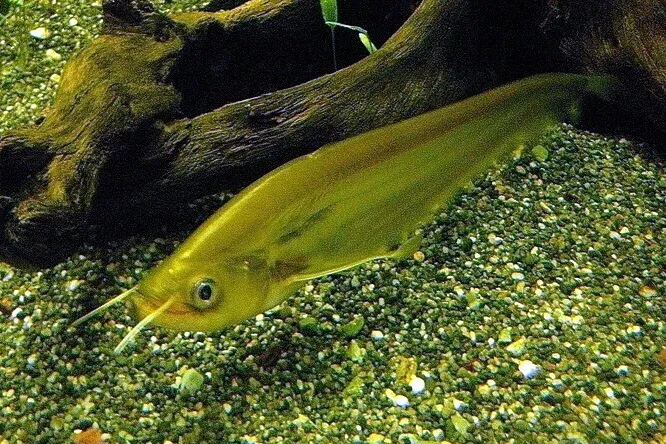 31.5 in (80 cm)238 gal (900 L)73–81°F (23–27°C)
Blue neon sheatfish
Belodontichthys dinema
31.5 in (80 cm) · 238 gal (900 L)
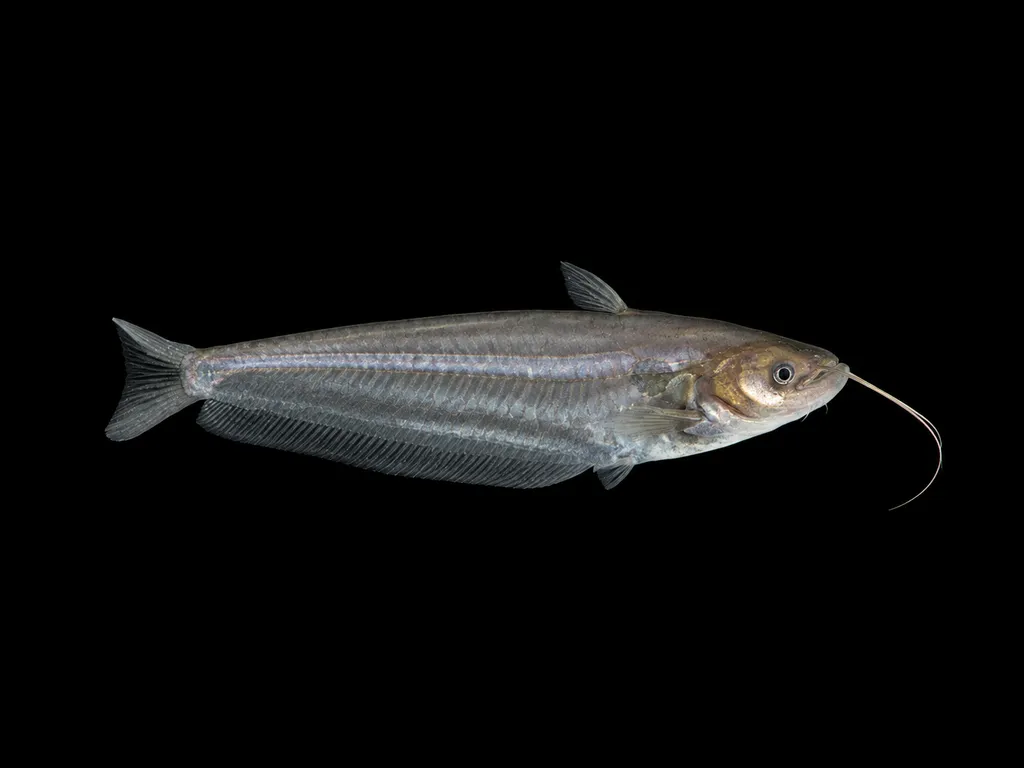 17.7 in (45 cm)53 gal (200 L)68–82°F (20–28°C)
Butter catfish
Ompok bimaculatus
17.7 in (45 cm) · 53 gal (200 L)
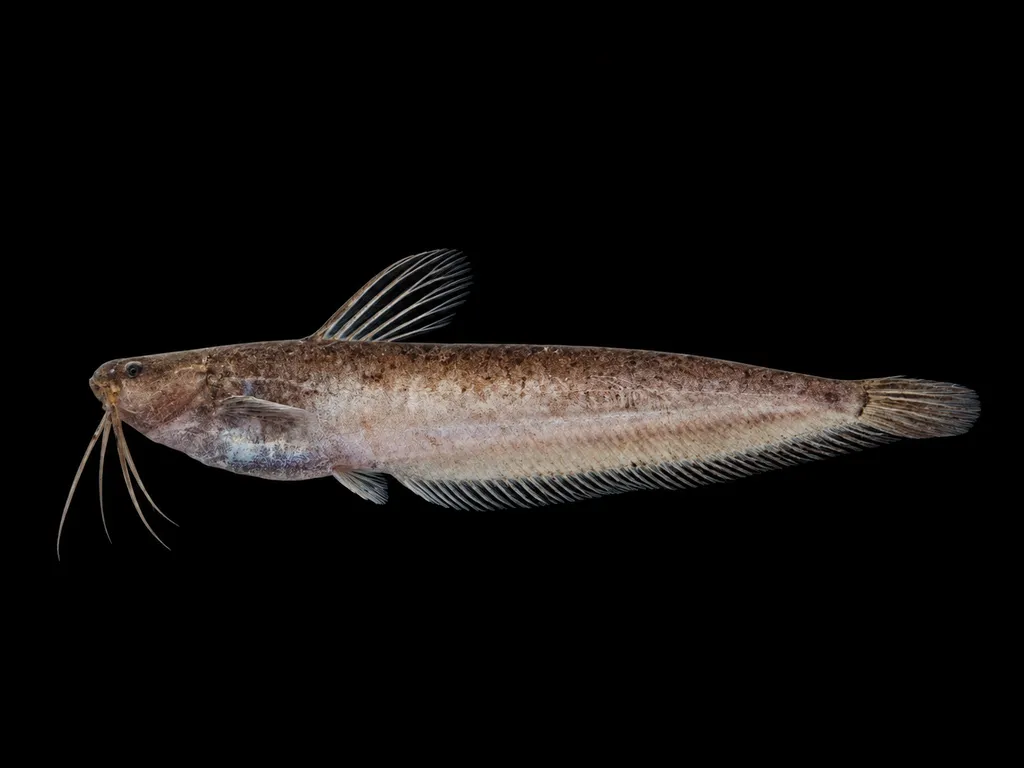 5.9 in (15 cm)29 gal (110 L)73–81°F (23–27°C)
Borneo featherfin catfish
Silurichthys phaiosoma
5.9 in (15 cm) · 29 gal (110 L)
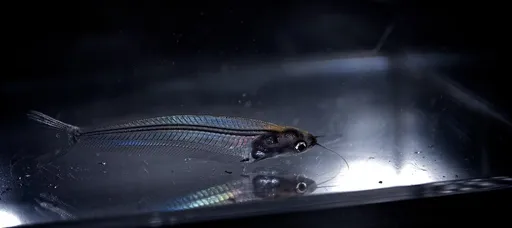 5.9 in (15 cm)26 gal (100 L)70–79°F (21–26°C)
True glass catfish
Kryptopterus bicirrhis
5.9 in (15 cm) · 26 gal (100 L)
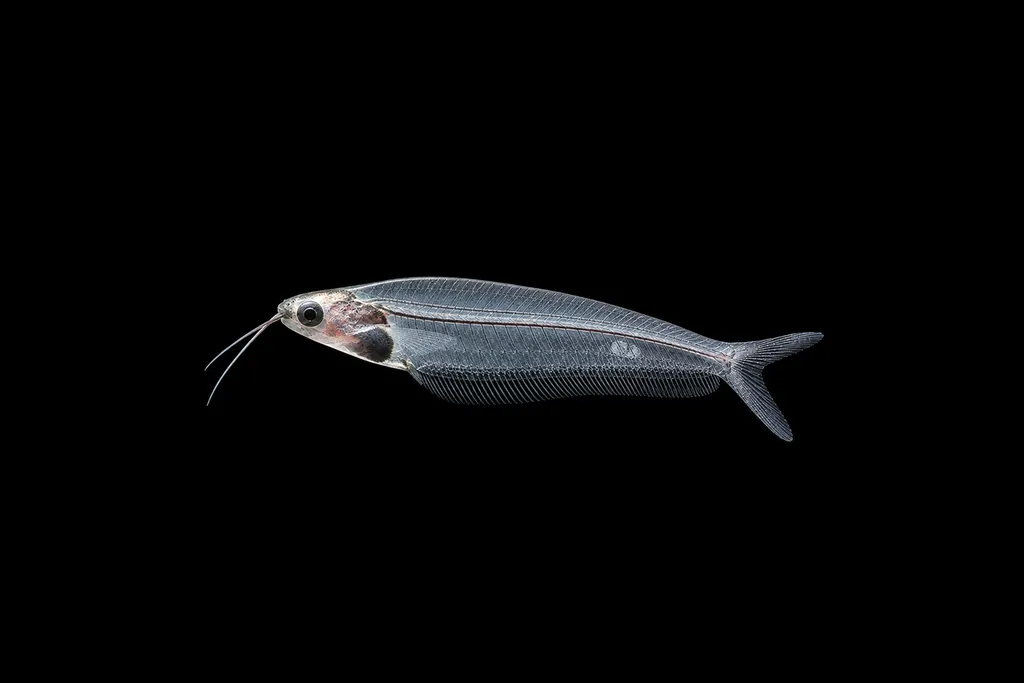 11.8 in (30 cm)119 gal (450 L)73–81°F (23–27°C)
Mekong glass sheatfish
Kryptopterus limpok
11.8 in (30 cm) · 119 gal (450 L)
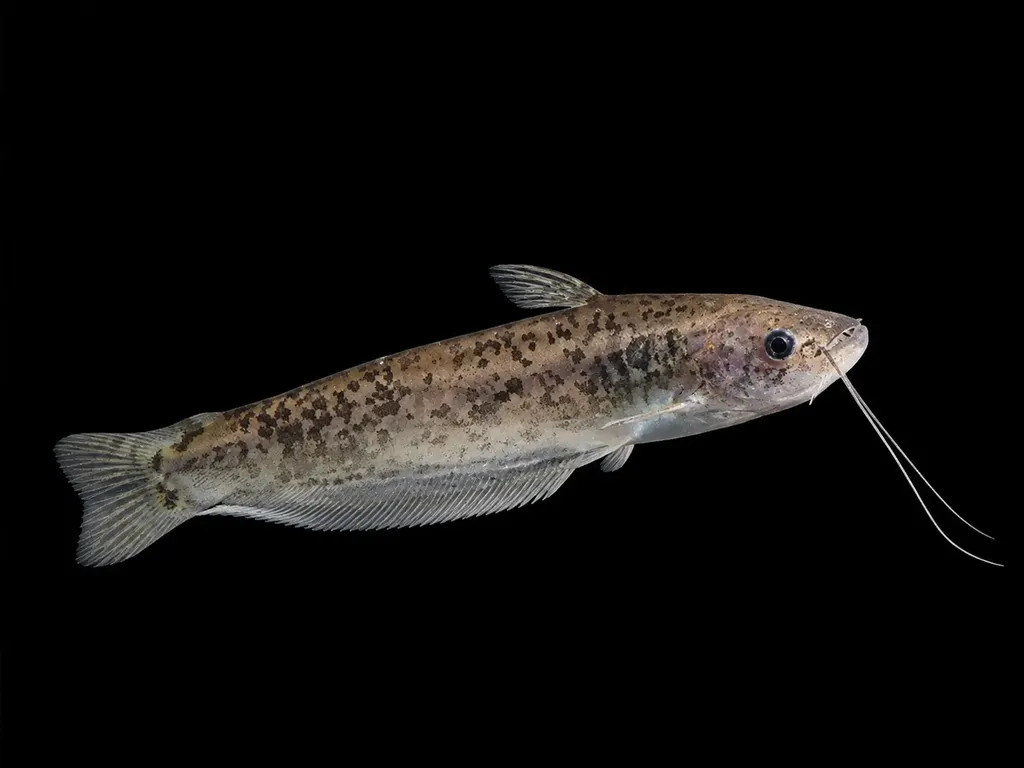 11.8 in (30 cm)106 gal (400 L)73–81°F (23–27°C)
Ompok catfish
Ompok pabda
11.8 in (30 cm) · 106 gal (400 L)