Tire-track eel
Mastacembelus armatus
Also known as Zig-zag eel, Tyre-track eel
FreshwaterFish
Care at a glance
- Temperature
- 75–82°F
- 24–28°C
- pH
- 6.5–7.5
- Adult size
- 27.6 in
- 70 cm
- Minimum tank
- 119 gal
- 450 L
- Temperament
- Mostly peaceful
- Social behavior
- Solitary
- Tankmates
- With caution
- Swim level
- Bottom
- Difficulty
- Difficult
- Breeding
- No record
- Rarity
- Common
- Family
- Mastacembelidae
- Origin
- South and Southeast Asia (India, Bangladesh, Thailand, Indonesia, Vietnam)
Overview
Keep one per tank, since this eel is territorial with its own kind and will not share space peacefully with another. It is otherwise mostly peaceful but it is a nocturnal predator that will eat any fish small enough to swallow, so house it only with robust, larger species. It is a bottom dweller that needs that 450 liter footprint, sand to dig in, water from 24 to 28 C, and a pH between 6.5 and 7.5. Feed it after lights out with meaty foods like earthworms, frozen bloodworms, and prawn. It is scaleless and copper-sensitive, so avoid copper-based medications entirely.
In the wild
Tire-track eels live across South and Southeast Asia, in rivers and floodplains through India, Bangladesh, Thailand, Indonesia, and Vietnam. They spend the day partly buried in soft riverbed, so the substrate matters more than anything else. Give them a deep bed of soft sand they can burrow into, plenty of rockwork or pipes for cover, and a tank of at least 450 liters for an adult this size. Keep the water between 24 and 28 C with a pH from 6.5 to 7.5, and run a tight, gap-free lid since they are determined escape artists.
Good to know
This is a spiny eel in the family Mastacembelidae, and it is large, commonly reaching 60 to 90 cm with adults around 70 cm. There is no reliable home breeding record for the species, so plan on it as a single long-term fish rather than a breeding project. It is a hardy, long-lived predator when its needs are met. Most fish in the trade are wild caught.
Did you know
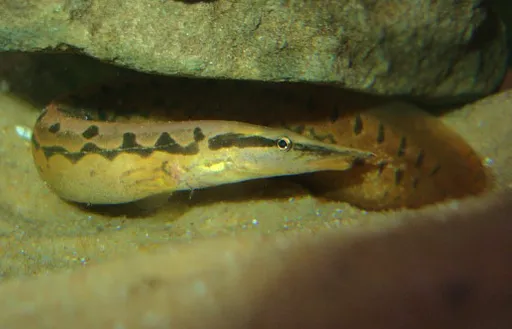
The "tire track" name comes from the wavy, broken pattern running down the body, and no two eels carry quite the same markings. The long snout works like a probe, sniffing through sand for buried food, and the eel often sits with just its head poking out of the substrate, watching the tank until it goes dark.
Common questions
What size tank does a Tire-track eel need?
A Tire-track eel needs at least 119 gal (450 L). It spends most of its time in the bottom.
What temperature and pH does a Tire-track eel need?
A Tire-track eel is comfortable at 75–82°F (24–28°C) with a pH of 6.5–7.5.
How big does a Tire-track eel get?
An adult Tire-track eel reaches about 27.6 in (70 cm).
Related species
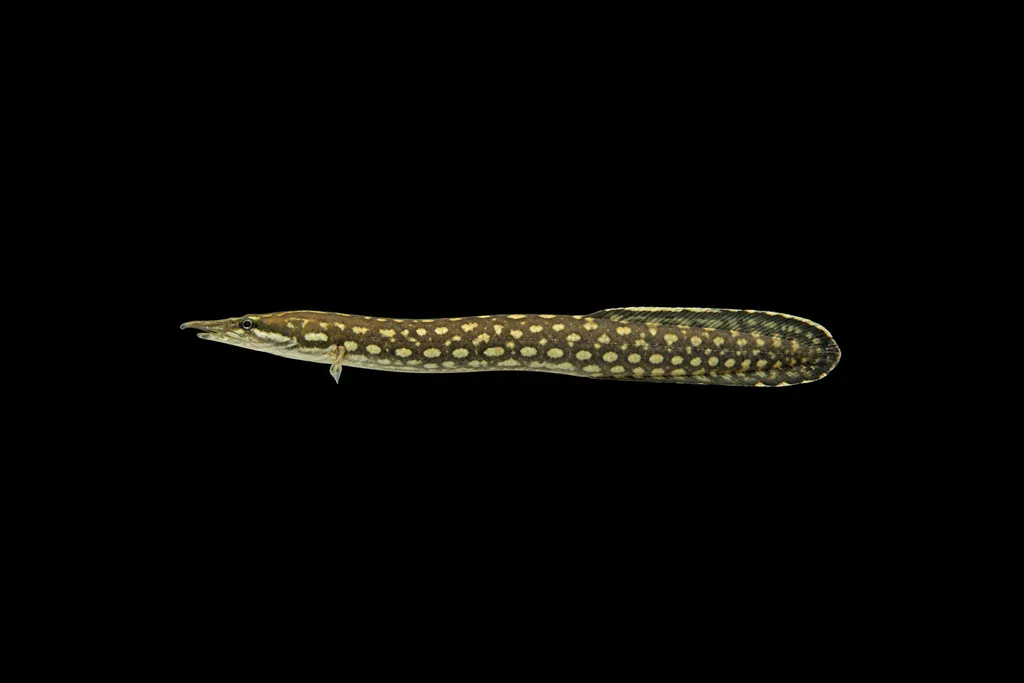 21.7 in (55 cm)119 gal (450 L)73–82°F (23–28°C)
White spot eel
Mastacembelus unicolor
21.7 in (55 cm) · 119 gal (450 L)
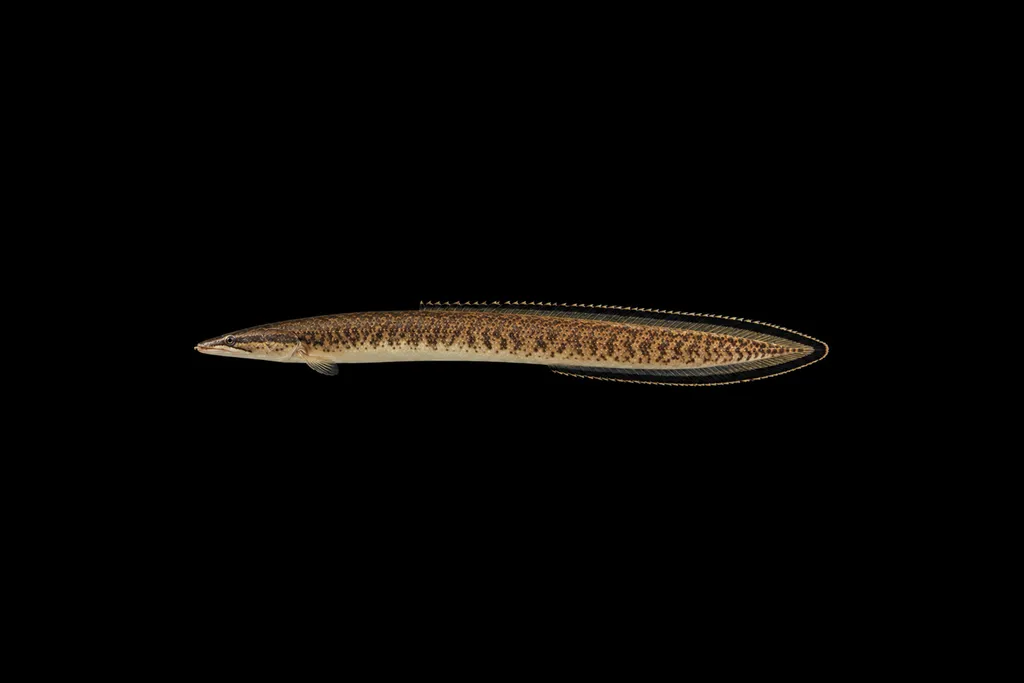 19.7 in (50 cm)106 gal (400 L)73–82°F (23–28°C)
Blackedge spiny eel
Mastacembelus nigromarginatus
19.7 in (50 cm) · 106 gal (400 L)
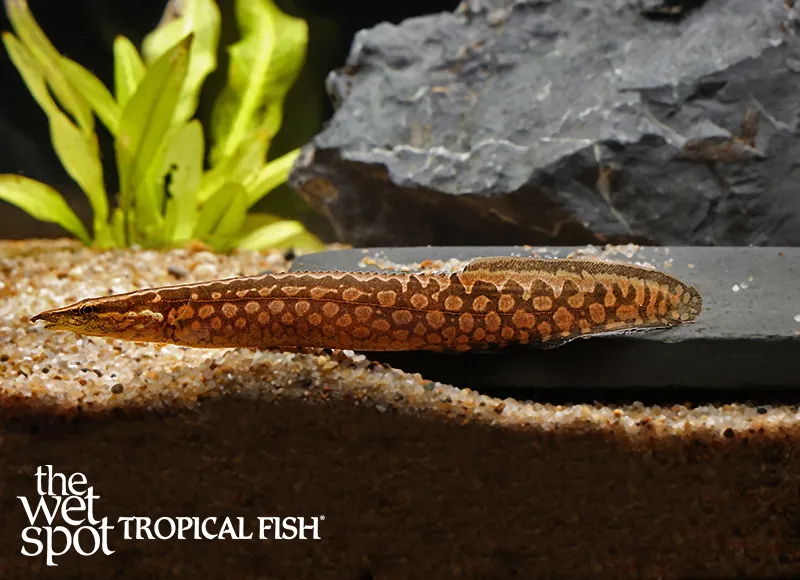 19.7 in (50 cm)119 gal (450 L)75–82°F (24–28°C)
Marbled spiny eel
Mastacembelus favus
19.7 in (50 cm) · 119 gal (450 L)
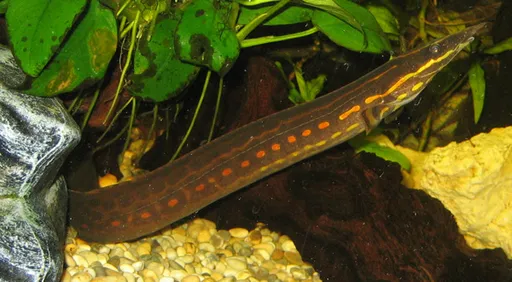 39.4 in (100 cm)132 gal (500 L)75–82°F (24–28°C)
Fire eel
Mastacembelus erythrotaenia
39.4 in (100 cm) · 132 gal (500 L)
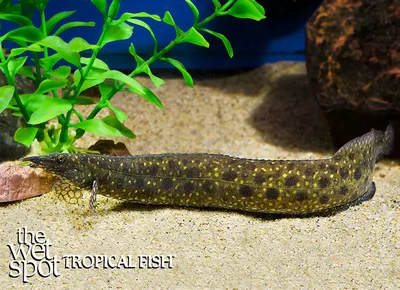 19.3 in (49 cm)106 gal (400 L)73–82°F (23–28°C)
White-spotted spiny eel
Mastacembelus alboguttatus
19.3 in (49 cm) · 106 gal (400 L)
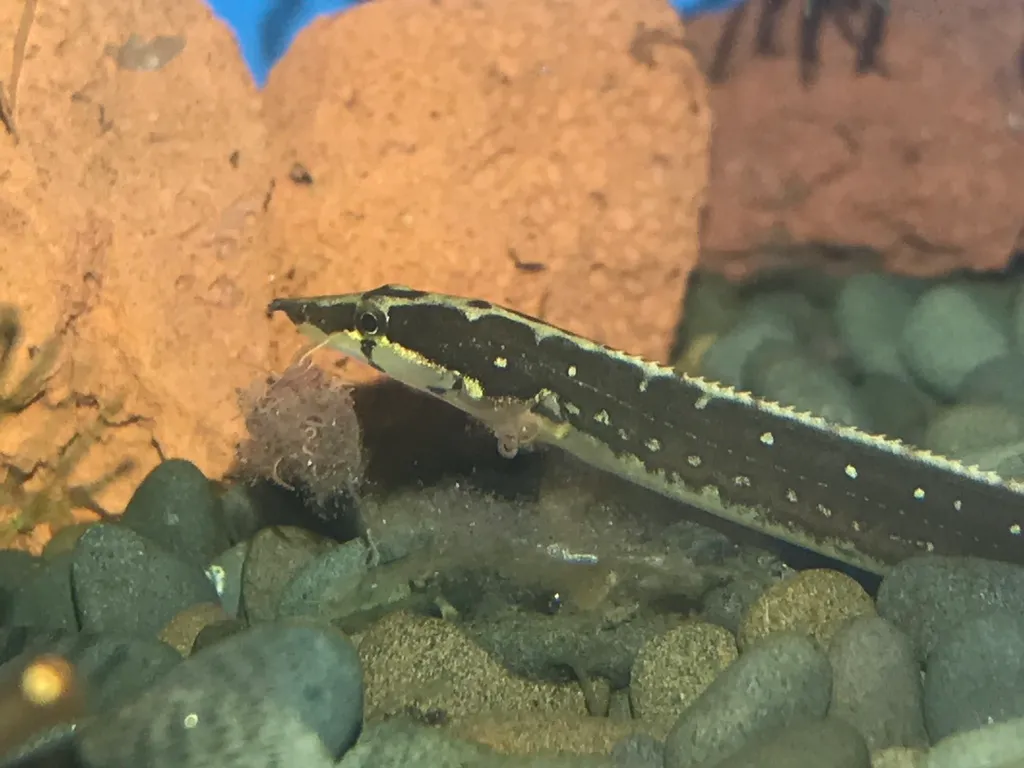 17.7 in (45 cm)106 gal (400 L)73–82°F (23–28°C)
Eyespot spiny eel
Mastacembelus notophthalmus
17.7 in (45 cm) · 106 gal (400 L)