Fire eel
Mastacembelus erythrotaenia
Also known as Fire spiny eel
FreshwaterFish
Care at a glance
- Temperature
- 75–82°F
- 24–28°C
- pH
- 6.0–7.5
- Adult size
- 39.4 in
- 100 cm
- Minimum tank
- 132 gal
- 500 L
- Temperament
- Mostly peaceful
- Social behavior
- Solitary
- Tankmates
- With caution
- Swim level
- Bottom
- Difficulty
- Difficult
- Breeding
- Hard
- Rarity
- Common
- Family
- Mastacembelidae
- Origin
- Southeast Asia (Thailand, Laos, Cambodia, Vietnam, Malaysia, Indonesia)
Overview
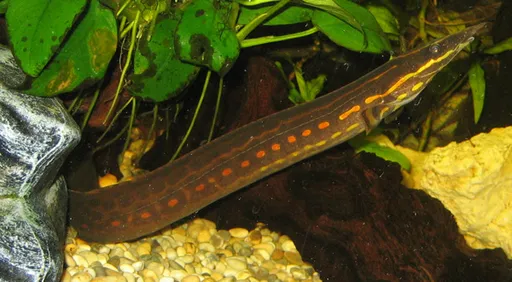
Keep one per tank, since they are solitary and will not tolerate their own kind. They are mostly peaceful but big, so only house them with fish too large to be swallowed, and give them a tank of 500 liters or more once they grow. They sit on the bottom, hide by day, and come out to hunt at night, so feed them after lights out with worms, prawns, and other meaty foods. Run the water from 24 to 28 C at a pH of 6 to 7.5, fit a tight gap-free lid because they escape, and dose any medication conservatively since they are scaleless and very sensitive to copper.
In the wild
Fire eels come from slow rivers, floodplains, and still backwaters across Southeast Asia, including Thailand, Laos, Cambodia, Vietnam, Malaysia, and Indonesia. These are warm, soft-bottomed waters where the fish spend the day buried in the substrate. A soft sand bottom is mandatory because they burrow, and sharp gravel scrapes their skin and leads to fatal infections. Give them a tank of at least 500 liters with caves and bogwood for cover, water from 24 to 28 C, and a pH between 6 and 7.5.
Good to know
This is a spiny eel in the family Mastacembelidae, and it is one of the largest, reaching up to 100 cm in the wild though most stay around 50 to 60 cm in a tank. Breeding in home aquariums is hard and rarely done, so almost every fish in the trade is wild caught. They are long-lived, often pushing well past a decade with good care.
Did you know
The fire eel is not a true eel at all. It is a spiny eel, named for the row of short defensive spines running along its back, and its long body and pointed snout just give it that eel-like look. That snout works like a flexible probe, sniffing out worms and small prey buried in the sand at night.
Common questions
What size tank does a Fire eel need?
A Fire eel needs at least 132 gal (500 L). It spends most of its time in the bottom.
What temperature and pH does a Fire eel need?
A Fire eel is comfortable at 75–82°F (24–28°C) with a pH of 6.0–7.5.
How big does a Fire eel get?
An adult Fire eel reaches about 39.4 in (100 cm).
Related species
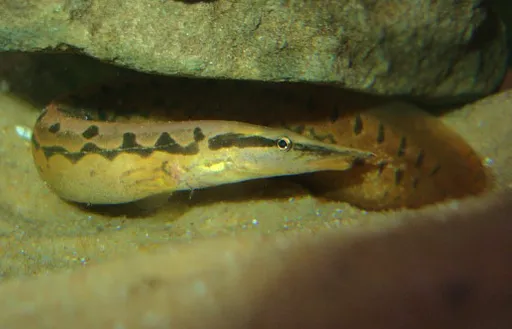 27.6 in (70 cm)119 gal (450 L)75–82°F (24–28°C)
Tire-track eel
Mastacembelus armatus
27.6 in (70 cm) · 119 gal (450 L)
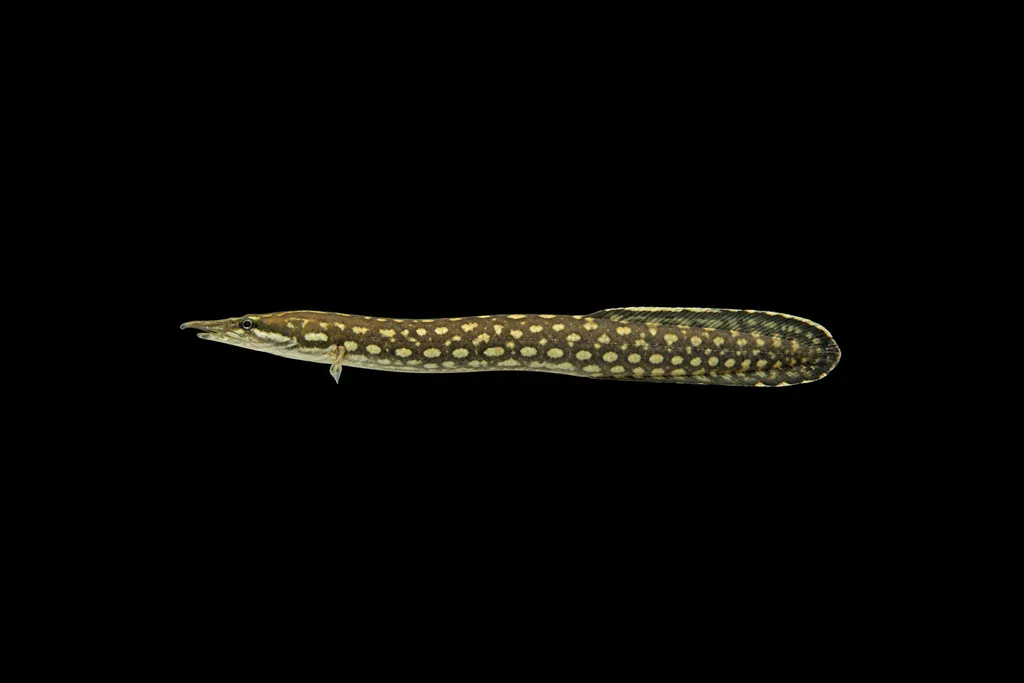 21.7 in (55 cm)119 gal (450 L)73–82°F (23–28°C)
White spot eel
Mastacembelus unicolor
21.7 in (55 cm) · 119 gal (450 L)
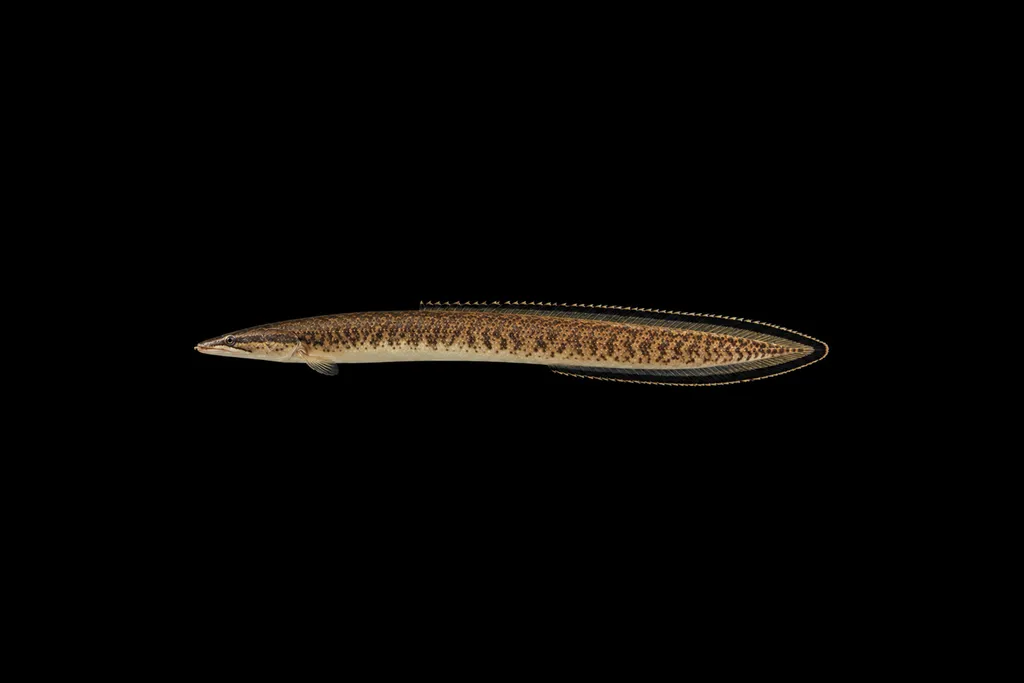 19.7 in (50 cm)106 gal (400 L)73–82°F (23–28°C)
Blackedge spiny eel
Mastacembelus nigromarginatus
19.7 in (50 cm) · 106 gal (400 L)
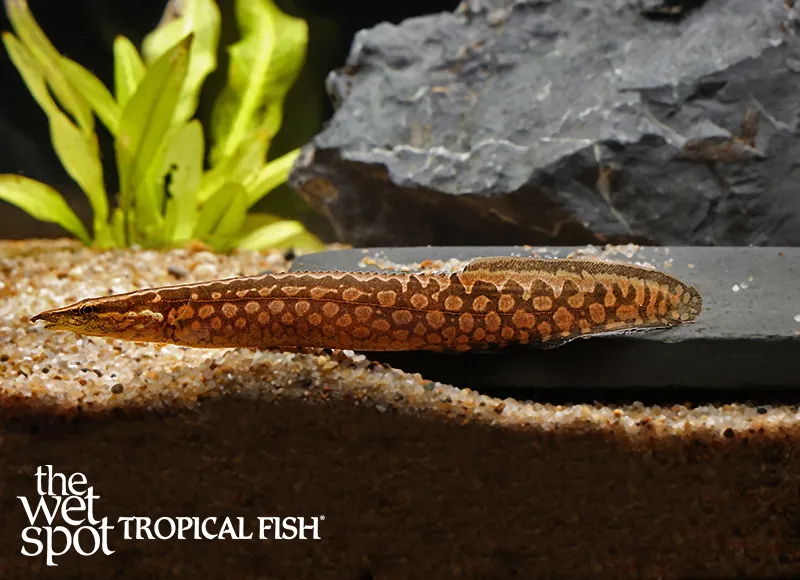 19.7 in (50 cm)119 gal (450 L)75–82°F (24–28°C)
Marbled spiny eel
Mastacembelus favus
19.7 in (50 cm) · 119 gal (450 L)
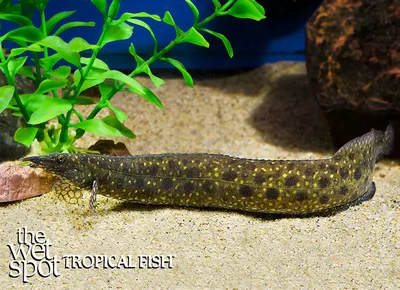 19.3 in (49 cm)106 gal (400 L)73–82°F (23–28°C)
White-spotted spiny eel
Mastacembelus alboguttatus
19.3 in (49 cm) · 106 gal (400 L)
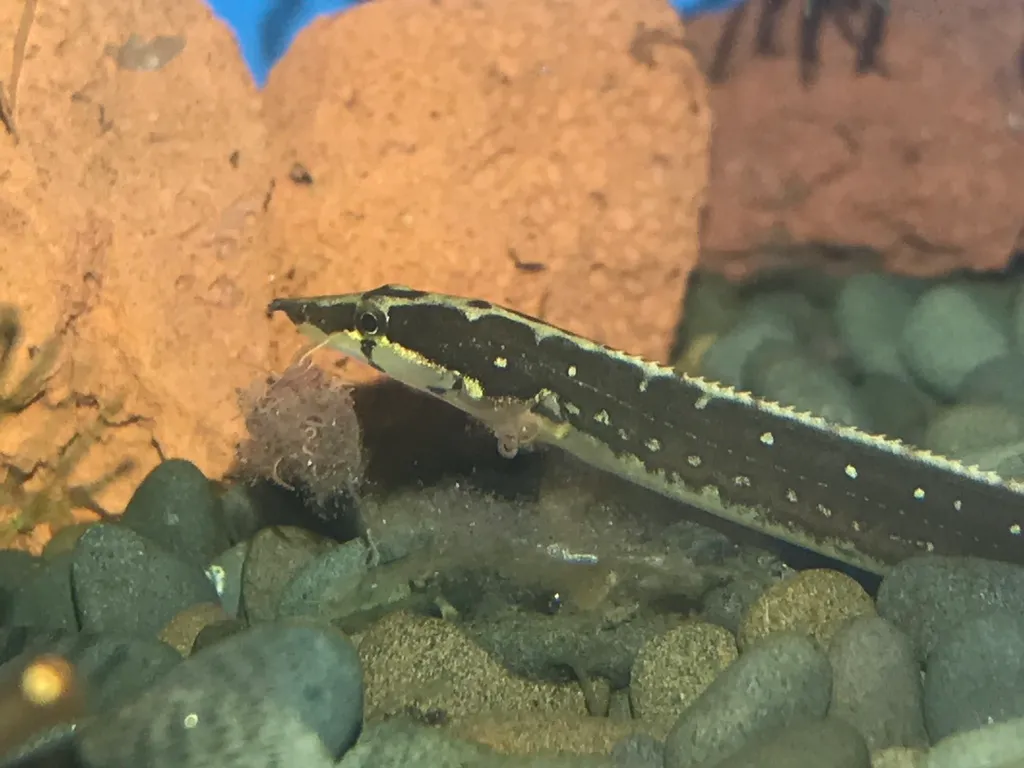 17.7 in (45 cm)106 gal (400 L)73–82°F (23–28°C)
Eyespot spiny eel
Mastacembelus notophthalmus
17.7 in (45 cm) · 106 gal (400 L)