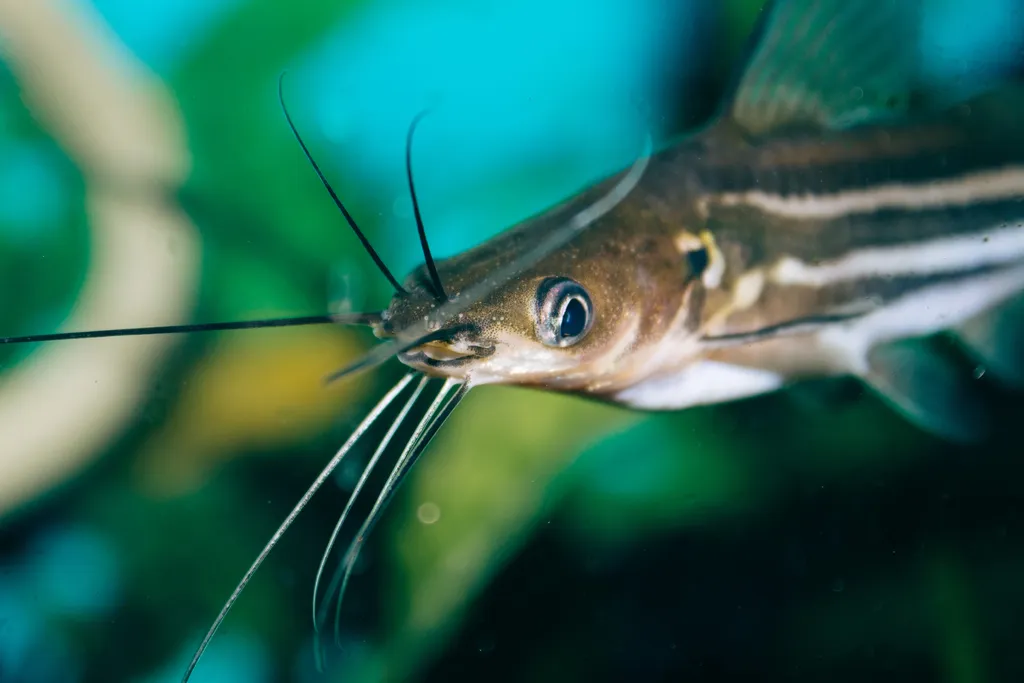
Striped mystus
Mystus vittatus
Also known as Striped catfish
FreshwaterFish
Care at a glance
- Temperature
- 72–82°F
- 22–28°C
- pH
- 6.0–7.5
- Adult size
- 8.3 in
- 21 cm
- Minimum tank
- 60 gal
- 227 L
- Temperament
- Mostly peaceful
- Social behavior
- Schooling
- Tankmates
- With caution
- Swim level
- Bottom
- Difficulty
- Medium
- Breeding
- Hard
- Rarity
- Common
- Family
- Bagridae
- Origin
- South Asia (Indian subcontinent: India, Bangladesh, Pakistan, Nepal, Sri Lanka)
Overview
Keep them in a group of five or more in a tank of 227 liters or larger, since lone fish hide away and stress. They are mostly peaceful and stay near the bottom, coming out to forage after dark. Water should sit between 22 and 28 C with a pH from 6 to 7.5, and they take a fairly wide hardness range. They are predatory toward anything small enough to swallow, so pair them with medium, robust tankmates like larger barbs, danios, gouramis, or rainbowfish. They are a freshwater fish and need no salt. Where they are not native, do not release them and check your local rules, since large catfish are restricted in some regions.
In the wild
Striped mystus comes from rivers, streams, and ponds across the Indian subcontinent, including India, Bangladesh, Pakistan, Nepal, and Sri Lanka. These are slow to moderate waters with soft beds and plenty of submerged cover. To match that, give them a sand-bottomed tank of at least 227 liters with dim lighting and lots of hiding spots, using driftwood, caves, lengths of PVC, and robust plants. Keep the water between 22 and 28 C with a pH from 6 to 7.5. They settle and feed best when the lights are low.
Good to know
This is a bottom-dwelling catfish in the family Bagridae. FishBase lists a wild maximum around 21 cm, though aquarium fish usually stop closer to 12 to 15 cm. It is an egg scatterer with no parental care and is rarely bred in home tanks. The pectoral and dorsal fins carry sharp, mildly venomous spines, so the sting is painful and net or handle the fish carefully.
Did you know
The pale stripes that give this fish its name run the length of the body, but its real working tools are the long barbels around the mouth. Being nocturnal, it relies on those whiskers to taste and feel its way over the substrate in the dark, finding food long after the tank has gone quiet for the night.
Common questions
What size tank does a Striped mystus need?
A Striped mystus needs at least 60 gal (227 L). It spends most of its time in the bottom.
What temperature and pH does a Striped mystus need?
A Striped mystus is comfortable at 72–82°F (22–28°C) with a pH of 6.0–7.5.
How big does a Striped mystus get?
An adult Striped mystus reaches about 8.3 in (21 cm).
Does a Striped mystus need a group?
Yes. A Striped mystus is a schooling species and should be kept in a group, not singly.
Related species
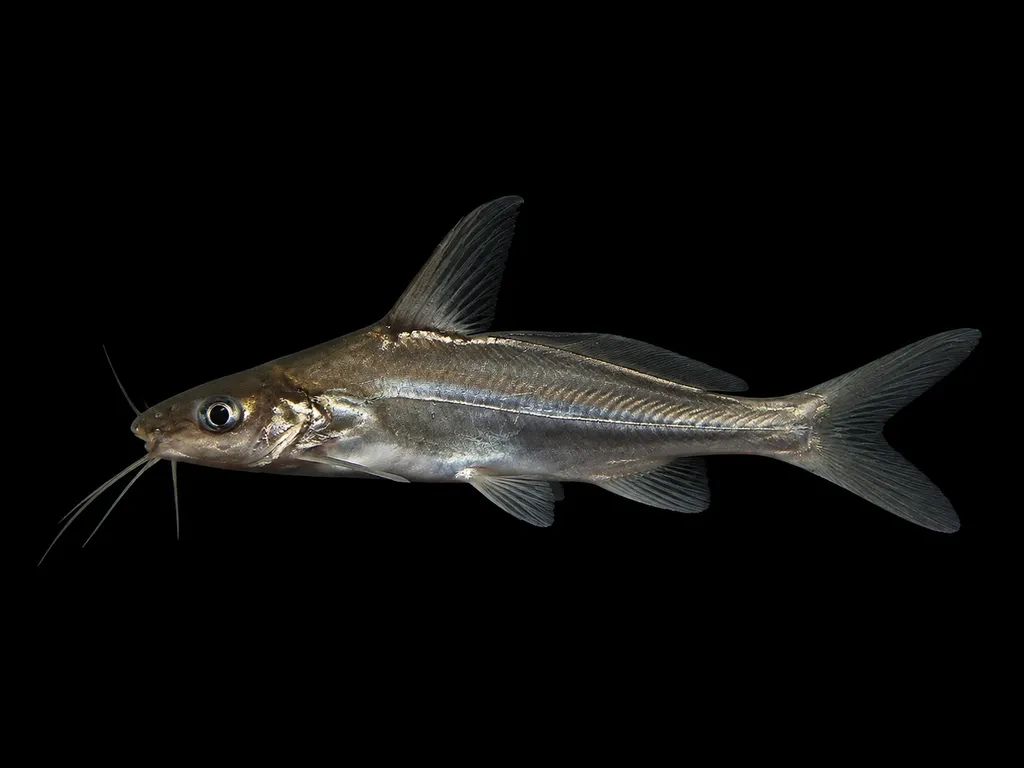 7.5 in (19 cm)79 gal (300 L)73–81°F (23–27°C)
Hi-fin mystus
Mystus falcarius
7.5 in (19 cm) · 79 gal (300 L)
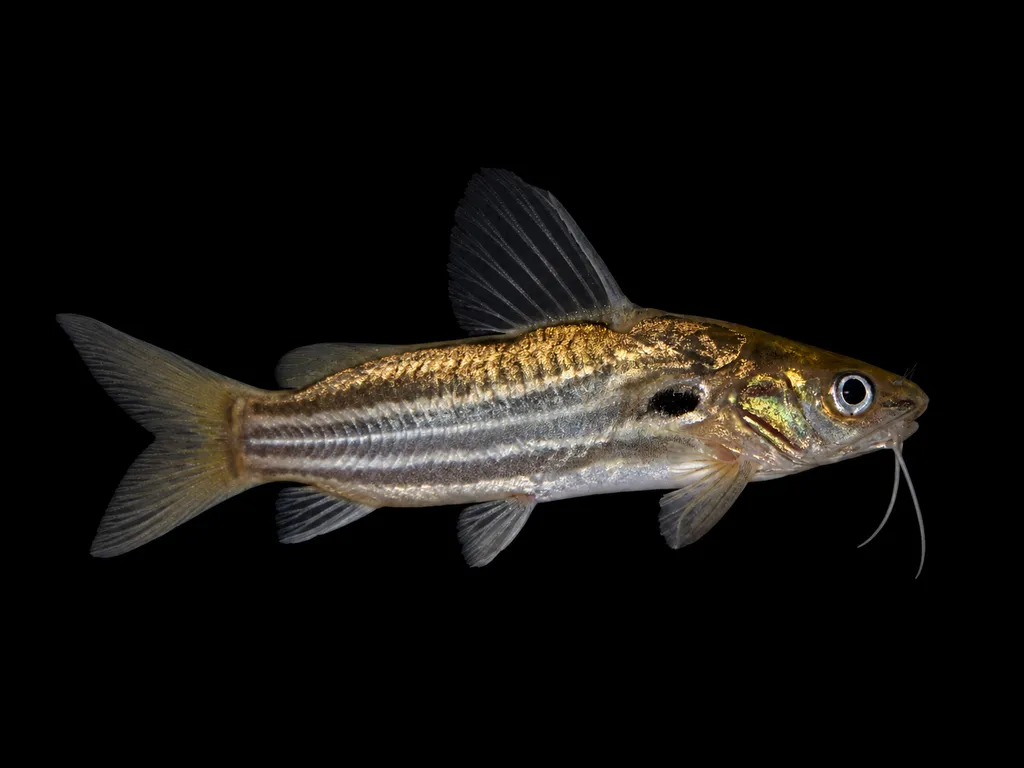 7.1 in (18 cm)42 gal (160 L)73–81°F (23–27°C)
Golden soldier catfish
Mystus tengara
7.1 in (18 cm) · 42 gal (160 L)
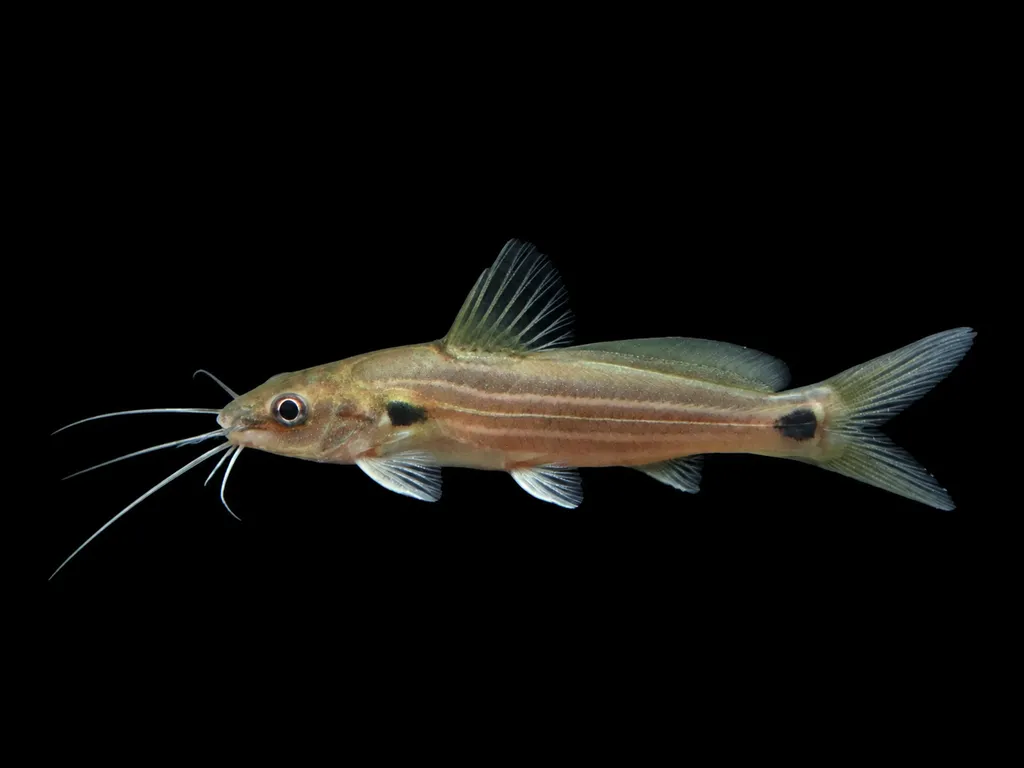 5.9 in (15 cm)66 gal (250 L)73–81°F (23–27°C)
Meetan catfish
Mystus rufescens
5.9 in (15 cm) · 66 gal (250 L)
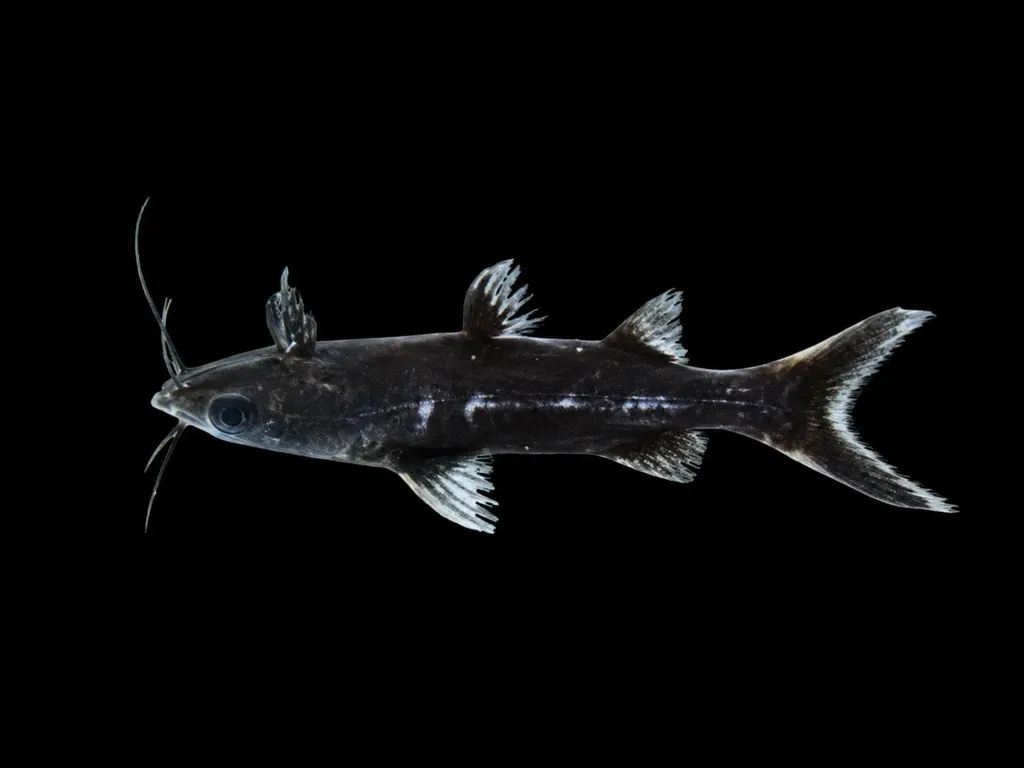 11.8 in (30 cm)50 gal (190 L)72–79°F (22–26°C)
Asian upside-down catfish
Mystus leucophasis
11.8 in (30 cm) · 50 gal (190 L)
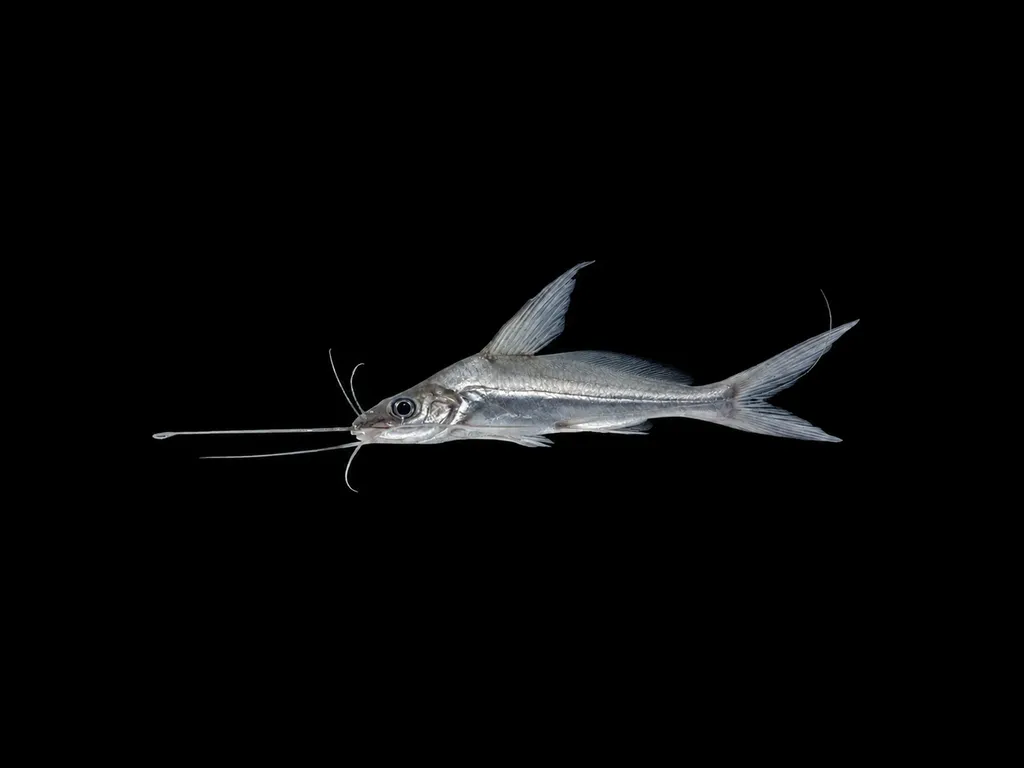 9.4 in (24 cm)106 gal (400 L)73–81°F (23–27°C)
Silver lancer catfish
Mystus bocourti
9.4 in (24 cm) · 106 gal (400 L)
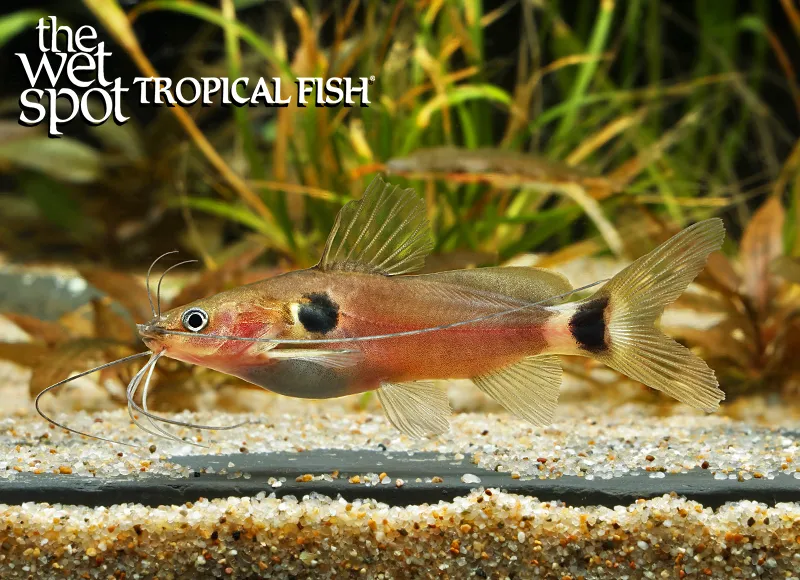 4.7 in (12 cm)30 gal (114 L)72–81°F (22–27°C)
Two-spot catfish
Mystus bimaculatus
4.7 in (12 cm) · 30 gal (114 L)