Robertson's cichlid
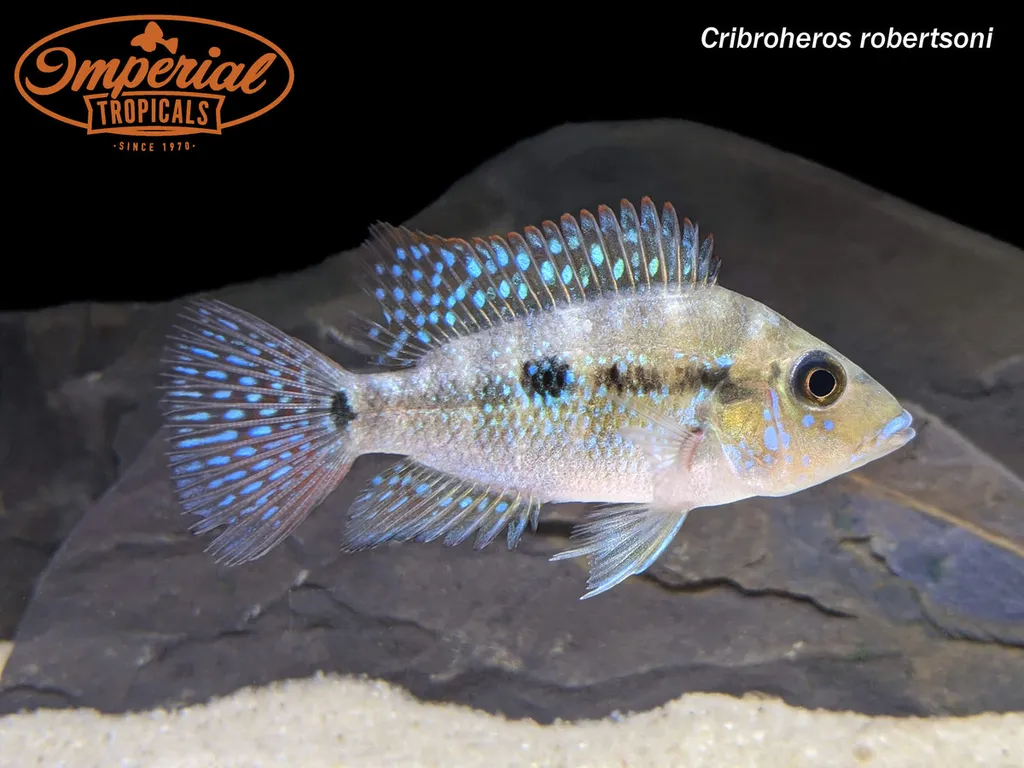
Cribroheros robertsoni
Also known as Amphilophus robertsoni, Turquoise sifter cichlid, Emerald cichlid, Blue sifter cichlid
FreshwaterFish
Care at a glance
- Temperature
- 75–84°F
- 24–29°C
- pH
- 7.0–8.2
- Adult size
- 9.1 in
- 23 cm
- Minimum tank
- 106 gal
- 400 L
- Temperament
- Mostly peaceful
- Social behavior
- Solitary
- Tankmates
- With caution
- Swim level
- Bottom
- Difficulty
- Medium
- Breeding
- Substrate spawner · Medium
- Rarity
- Rare
- Family
- Cichlidae
- Origin
- Atlantic slope, Mexico to Honduras
Overview
Robertson's cichlid is a large Central American sand-sifter that works the bottom of a big tank. It is a step up from the easiest cichlids.
Did you know
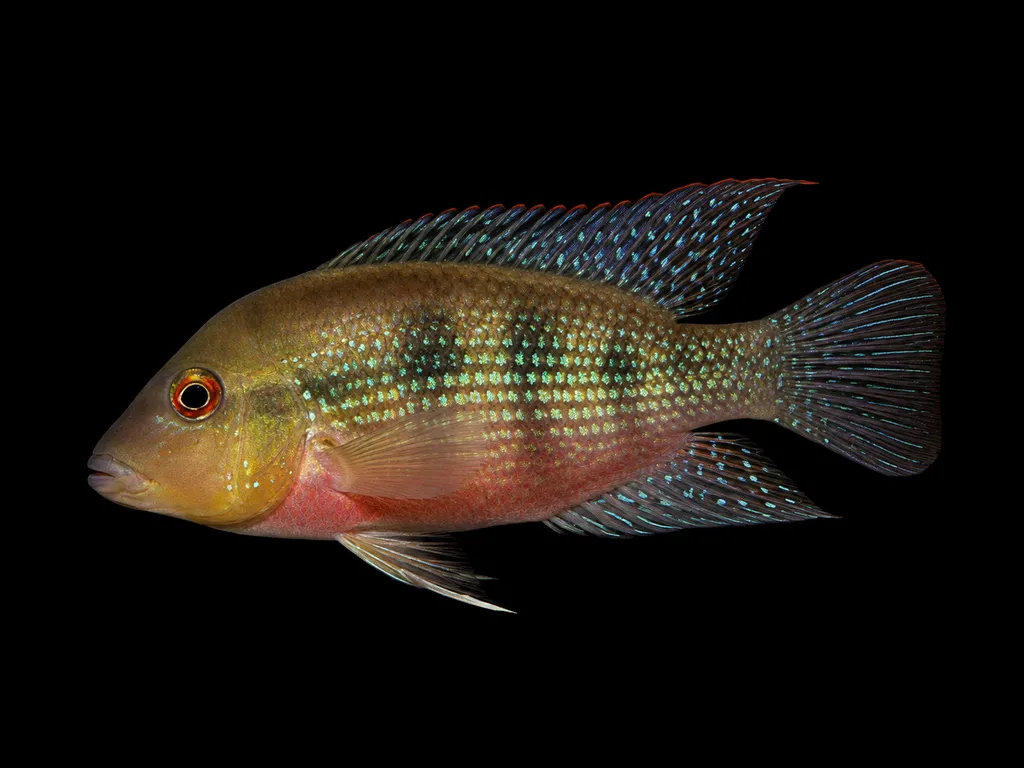
Robertson's cichlid looks as if it belongs in a different lake. It is spangled in turquoise like a Malawi peacock, but it spends the day mouthing sand and sifting it for scraps, Amazon-style.
Caring for the Robertson's cichlid
Give a Robertson's cichlid at least 106 gal (400 L), with a deep, open floor of fine, soft sand. It feeds by taking mouthfuls of sand and sifting them, so keep coarse gravel out of the tank. Add some wood and rock for structure, and run strong filtration to handle the sand it keeps stirring.
Keep the water neutral to hard, at 75 to 84°F (24 to 29°C) and a pH of 7.0 to 8.2. Feed sinking pellets and frozen foods, and let a good share reach the bottom.
Keep a single fish or a bonded pair, and treat it like a mild, large eartheater that needs room to work. It is fairly peaceful for its size but claims a bottom territory at breeding time. Choose sturdy, calm tank mates, and give it enough space to plow the sand without constant conflict.
It is a substrate spawner, and both parents guard the eggs and fry. Breeding it is moderately difficult.
Good to know
Cribroheros robertsoni is a cichlid of the family Cichlidae, and among the largest of the sieve-feeding heroes. Its genus name refers to the sieve-like way these fish strain food from the sand. It is sometimes called the false firemouth, and other names include the turquoise sifter cichlid and the emerald cichlid.
In the wild
Robertson's cichlid ranges along the Atlantic slope of Central America, from southern Mexico to Honduras. It sifts sand in slow rivers and lakes.
Common questions
What size tank does a Robertson's cichlid need?
A Robertson's cichlid needs at least 106 gal (400 L). It spends most of its time in the bottom.
What temperature and pH does a Robertson's cichlid need?
A Robertson's cichlid is comfortable at 75–84°F (24–29°C) with a pH of 7.0–8.2.
What does a Robertson's cichlid eat?
Robertson's cichlid feeds by taking mouthfuls of sand and sifting them for food. Give it sinking pellets and frozen foods, and let a good share reach the bottom.
How big does a Robertson's cichlid get?
An adult Robertson's cichlid reaches about 9.1 in (23 cm).
How does a Robertson's cichlid breed?
Robertson's cichlids are substrate spawners, and both parents guard the eggs and fry. Breeding them is moderately difficult.
Related species
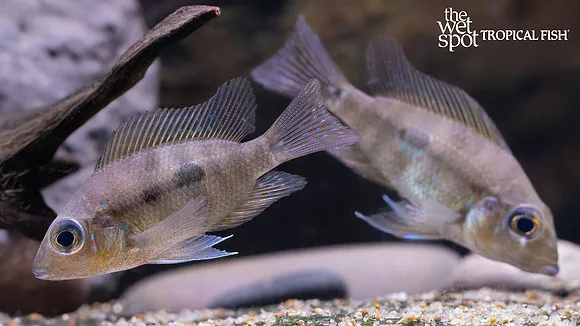 8.7 in (22 cm)106 gal (400 L)75–84°F (24–29°C)
Rostratus sifter cichlid
Cribroheros rostratus
8.7 in (22 cm) · 106 gal (400 L)
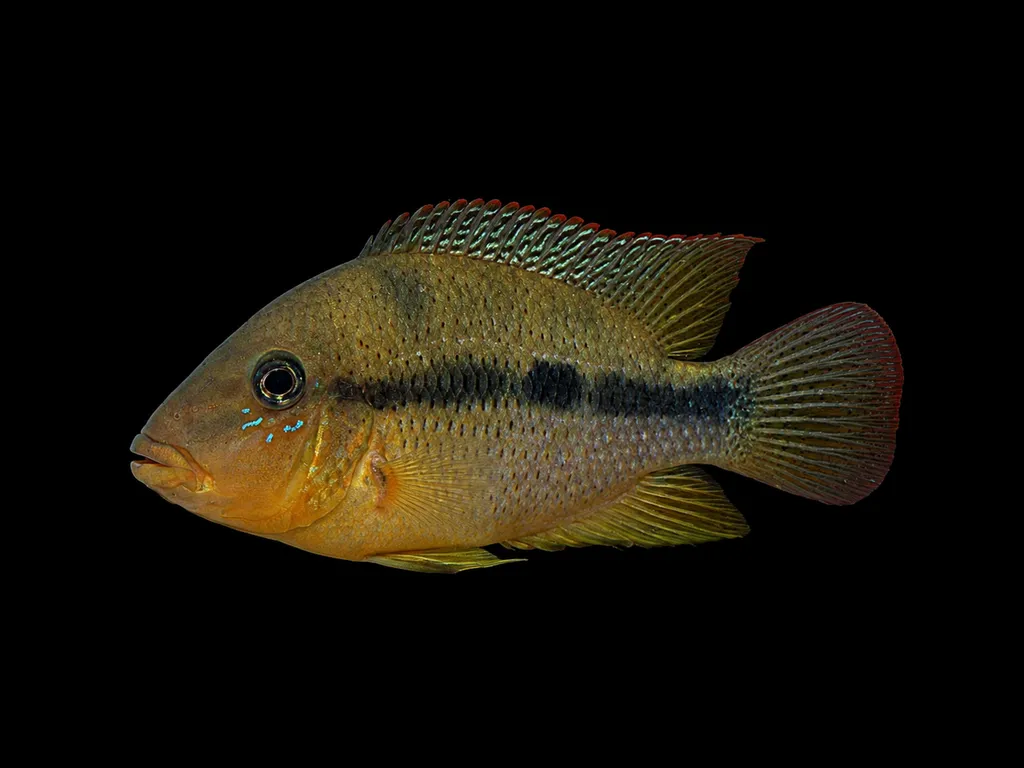 7.1 in (18 cm)79 gal (300 L)75–84°F (24–29°C)
Bussing's cichlid
Cribroheros bussingi
7.1 in (18 cm) · 79 gal (300 L)
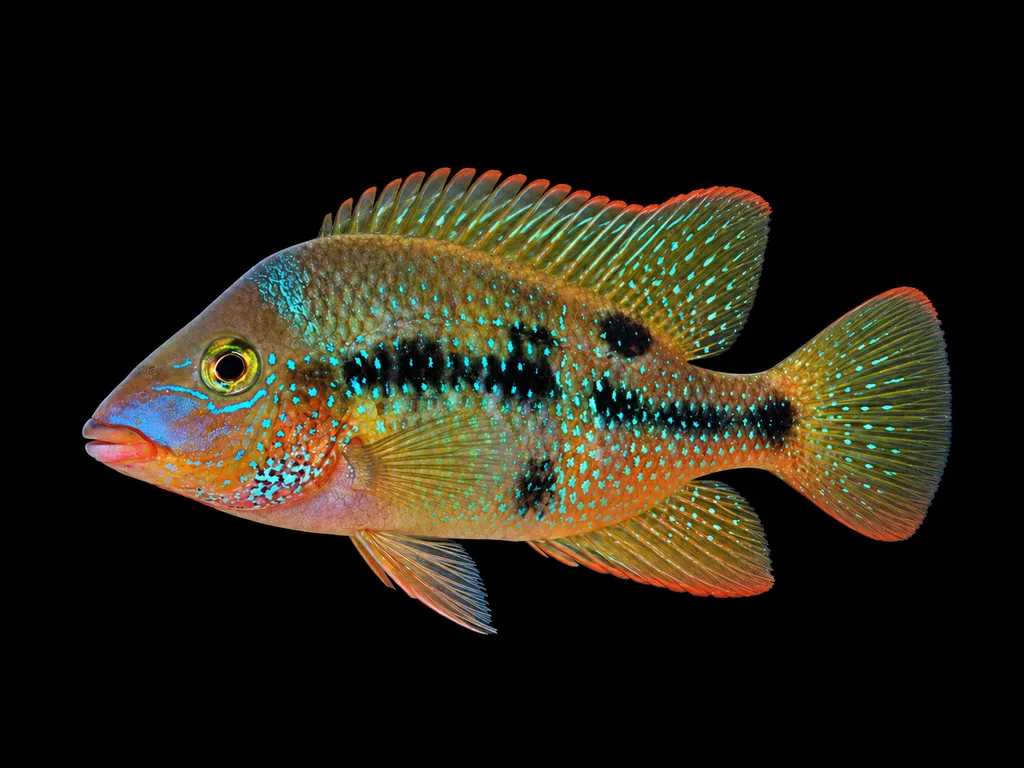 6.3 in (16 cm)79 gal (300 L)75–84°F (24–29°C)
Altifrons cichlid
Cribroheros altifrons
6.3 in (16 cm) · 79 gal (300 L)
 6.3 in (16 cm)79 gal (300 L)75–84°F (24–29°C)
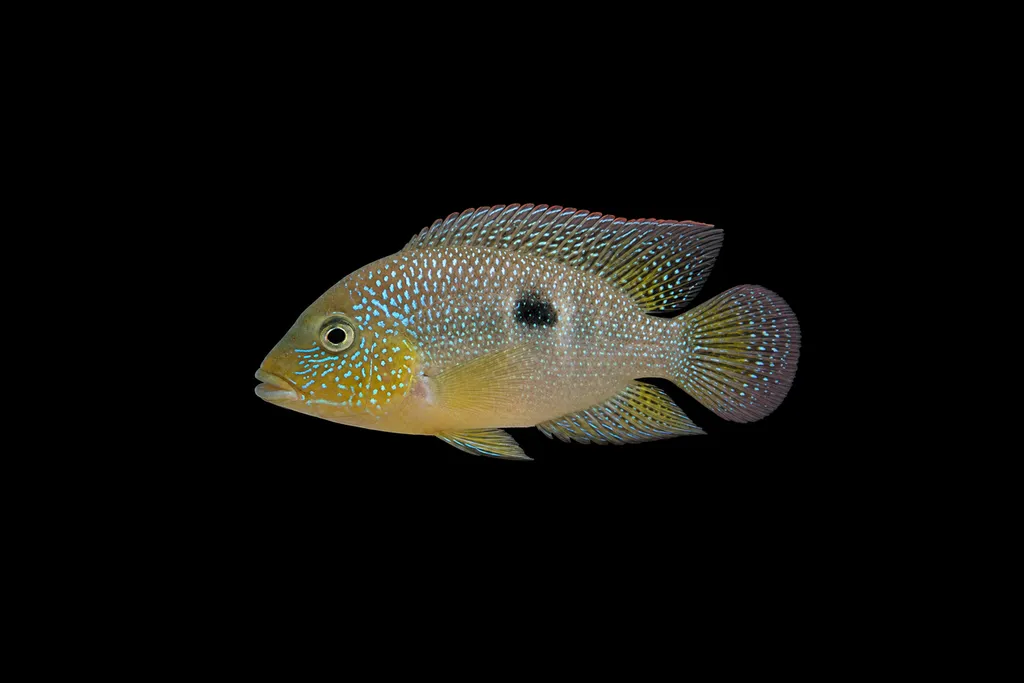
Longfin sifter cichlid
Cribroheros longimanus
6.3 in (16 cm) · 79 gal (300 L)
 6.3 in (16 cm)79 gal (300 L)75–84°F (24–29°C)
Rhytisma cichlid
Cribroheros rhytisma
6.3 in (16 cm) · 79 gal (300 L)
 9.1 in (23 cm)172 gal (650 L)77–84°F (25–29°C)
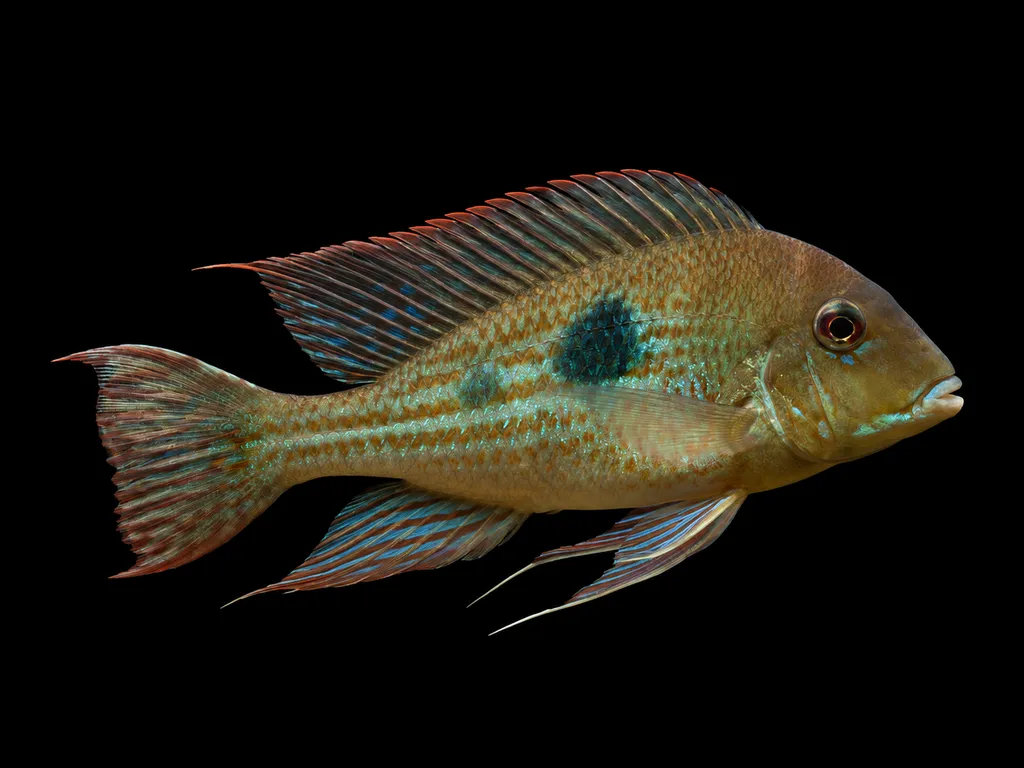
Bigspot eartheater
Geophagus megasema
9.1 in (23 cm) · 172 gal (650 L)