Rainford's goby
Koumansetta rainfordi
Also known as Court Jester Goby, Old Glory Goby
SaltwaterFish
Care at a glance
- Temperature
- 72–79°F
- 22–26°C
- pH
- 8.1–8.4
- Adult size
- 3.1 in
- 8 cm
- Minimum tank
- 20 gal
- 75 L
- Temperament
- Peaceful
- Social behavior
- Solitary
- Tankmates
- With caution
- Swim level
- Bottom
- Difficulty
- Medium
- Breeding
- Medium
- Rarity
- Common
- Reef safe
- Reef safe
- Family
- Gobiidae
- Origin
- Western Pacific reefs (Great Barrier Reef to Palau and the Philippines)
Overview
A timid, peaceful grazer that rarely bothers other fish and is fully reef safe around corals and invertebrates. It does best alone or in a large tank with multiple hiding spots, since it can be territorial with its own kind. Wild-caught individuals can be difficult to keep feeding and are prone to starving if a tank lacks enough natural algae growth, so captive-bred stock or a well-established tank with supplemental frozen mysis and brine shrimp is the safer route.
In the wild
Grazes over sandy and rubble-strewn reef flats down to about 30 meters, picking algae and tiny invertebrates off rock and sand. Only add this goby to a mature tank with established live rock and a sand bed, since it needs a steady supply of filamentous algae, diatoms, and pods to graze on throughout the day. It does not need a burrow partner, but still benefits from plenty of rockwork to retreat into.
Good to know
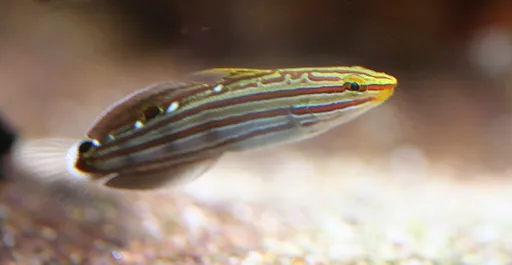
Formerly placed in the genus Amblygobius, this species was first collected in 1924 and later described by Whitley in 1940, with the species name honoring the Queensland collector E. H. Rainford. Its body carries alternating green, blue, and orange stripes that break up its outline against algae-covered rock. Biota runs a commercial captive-breeding program for this species, producing tank-raised fish that adapt to prepared foods far more readily than wild-caught individuals.
Did you know
Wild-caught Court Jester Gobies have a reputation for starving in captivity because they hold out for the filamentous algae they graze on in nature, which is exactly why captive-bred stock, raised on prepared foods from birth, has become the more reliable option for reef tanks.
Common questions
What size tank does a Rainford's goby need?
A Rainford's goby needs at least 20 gal (75 L). It spends most of its time in the bottom.
What temperature and pH does a Rainford's goby need?
A Rainford's goby is comfortable at 72–79°F (22–26°C) with a pH of 8.1–8.4.
How big does a Rainford's goby get?
An adult Rainford's goby reaches about 3.1 in (8 cm).
Related species
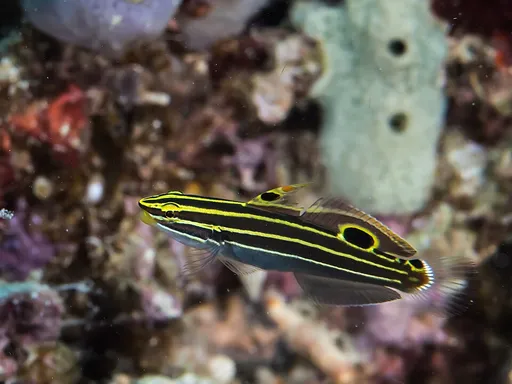 3.1 in (8 cm)20 gal (75 L)73–81°F (23–27°C)
Hector's goby
Koumansetta hectori
3.1 in (8 cm) · 20 gal (75 L)
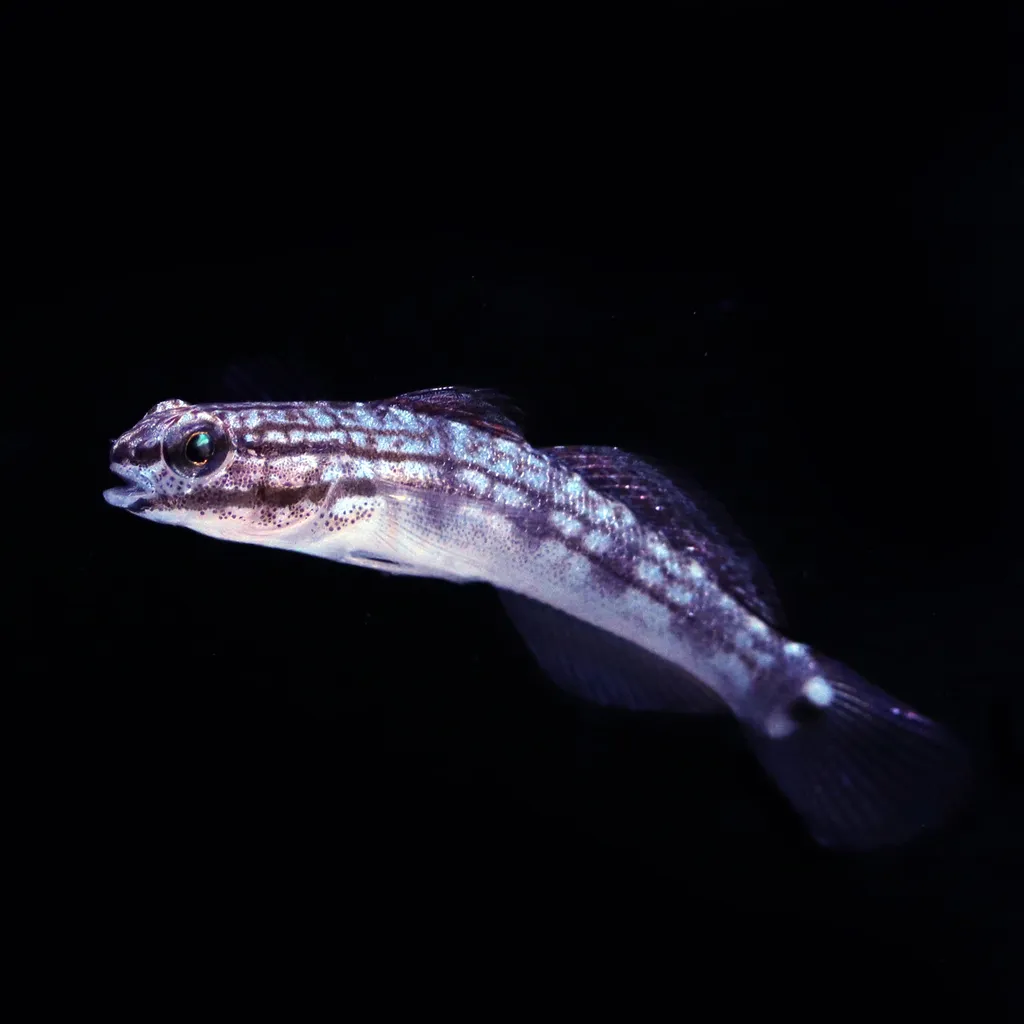 3.1 in (8 cm)20 gal (75 L)73–81°F (23–27°C)
Buan's sleeper goby
Amblygobius buanensis
3.1 in (8 cm) · 20 gal (75 L)
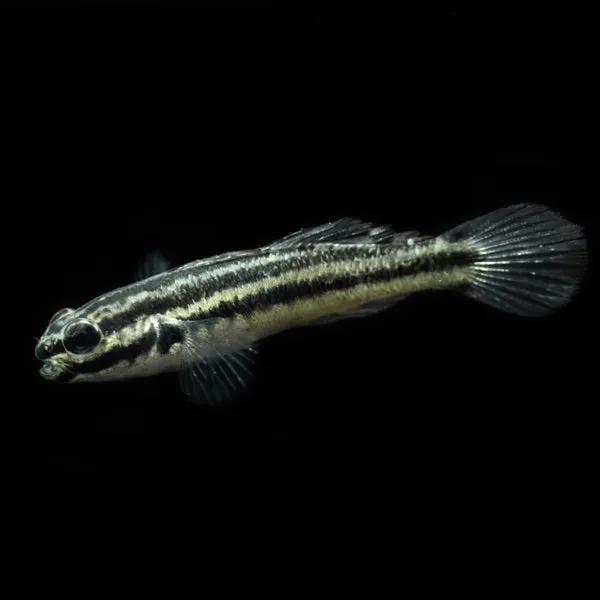 2.8 in (7 cm)20 gal (75 L)73–81°F (23–27°C)
Link's goby
Amblygobius linki
2.8 in (7 cm) · 20 gal (75 L)
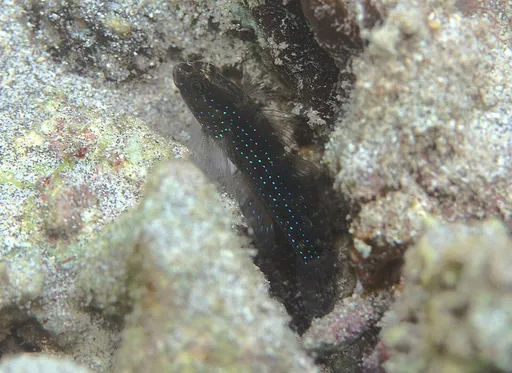 2.8 in (7 cm)13 gal (50 L)73–81°F (23–27°C)
Starry goby
Asterropteryx semipunctata
2.8 in (7 cm) · 13 gal (50 L)
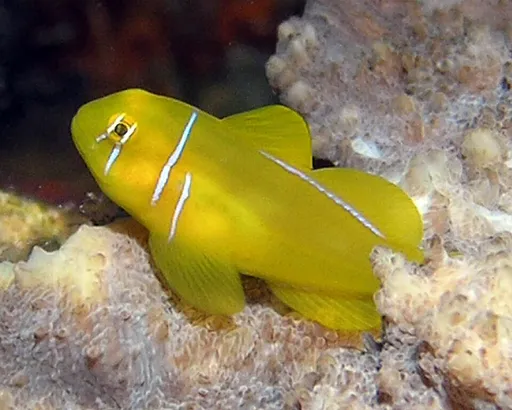 2.6 in (6.5 cm)11 gal (40 L)72–81°F (22–27°C)
Citron clown goby
Gobiodon citrinus
2.6 in (6.5 cm) · 11 gal (40 L)
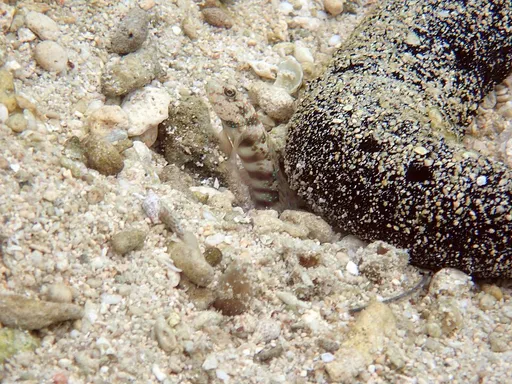 3.9 in (10 cm)30 gal (115 L)73–81°F (23–27°C)
Pink-spotted watchman goby
Cryptocentrus leptocephalus
3.9 in (10 cm) · 30 gal (115 L)