Pinktail triggerfish
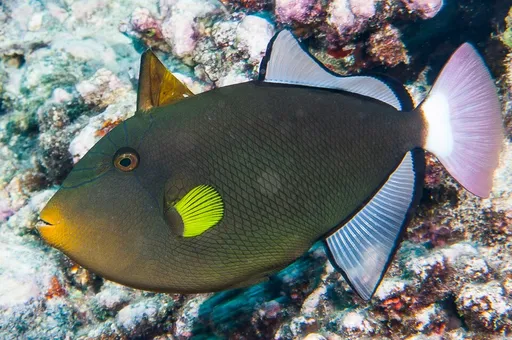
Melichthys vidua
Also known as Pinktail Durgon, Paddlefin Triggerfish, White-tailed Triggerfish
SaltwaterFish
Care at a glance
- Temperature
- 72–79°F
- 22–26°C
- pH
- 8.1–8.4
- Adult size
- 15.7 in
- 40 cm
- Minimum tank
- 180 gal
- 680 L
- Temperament
- Mostly peaceful
- Social behavior
- Solitary
- Tankmates
- With caution
- Swim level
- Middle
- Difficulty
- Medium
- Breeding
- No record
- Rarity
- Common
- Reef safe
- Reef safe with caution
- Family
- Balistidae
- Origin
- Indo-Pacific, from East Africa to Hawaii and the Tuamotu Islands, north to southern Japan
Overview
This trigger is on the calmer, more reef-tolerant end of the family and can settle into a mixed FOWLR community reasonably well if introduced with care, but it is still an opportunistic feeder rather than a true planktivore, and it will hunt down small fish, crabs, and ornamental shrimp given the chance, so reef safe here means caution, not a guarantee. Feed a varied diet of squid, krill, clams, and other meaty foods along with some algae, and include hard-shelled items to wear down its teeth. It is not venomous, but it digs and redecorates enthusiastically, so anchor rockwork well and expect the sand bed to move around.
In the wild
Ranges across coral reefs of the Indo-Pacific, typically from the surface to about 60 meters and often deeper on outer reef slopes. It forages over rock and rubble for a broad mix of food and blows jets of water into the sand to uncover buried prey, a habit that shows up in the tank too. It needs a long aquarium with a wide open swimming lane plus solid live rock structure to claim as a territory.
Good to know
Melichthys vidua is a triggerfish in the family Balistidae, reaching about 40 cm, with a deep green to almost black body, translucent white rear dorsal and anal fins, and the bright pink tail that gives it its name. It is more of a generalist than the strictly planktivorous triggers, eating algae and detritus alongside crustaceans, small fish, octopus, and sponges, so it forages across a wider range of food types than a Niger or Bluethroat.
Did you know
Its emerald body and bright pink tail make it one of the more distinctively colored triggerfish, but the body can look almost entirely dark green to black under actinic lighting, with the pink tail providing the only real flash of color.
Common questions
What size tank does a Pinktail triggerfish need?
A Pinktail triggerfish needs at least 180 gal (680 L). It spends most of its time in the middle.
What temperature and pH does a Pinktail triggerfish need?
A Pinktail triggerfish is comfortable at 72–79°F (22–26°C) with a pH of 8.1–8.4.
How big does a Pinktail triggerfish get?
An adult Pinktail triggerfish reaches about 15.7 in (40 cm).
Related species
 15.7 in (40 cm)124 gal (470 L)75–81°F (24–27°C)
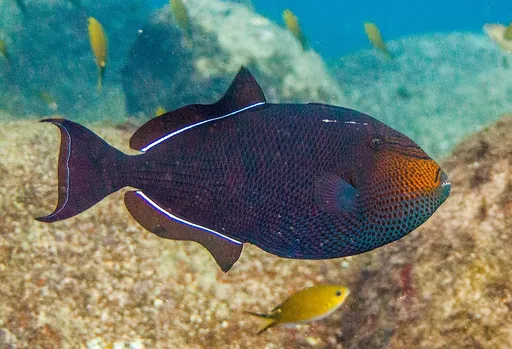
Black durgon
Melichthys niger
15.7 in (40 cm) · 124 gal (470 L)
 11.8 in (30 cm)106 gal (400 L)70–79°F (21–26°C)
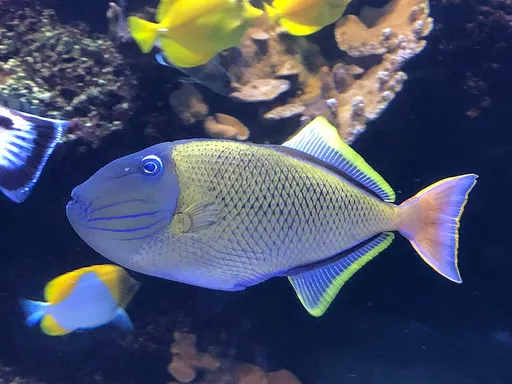
Crosshatch triggerfish
Xanthichthys mento
11.8 in (30 cm) · 106 gal (400 L)
 11.8 in (30 cm)180 gal (680 L)72–79°F (22–26°C)
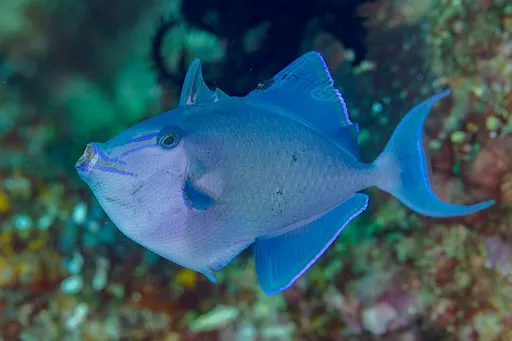
Niger triggerfish
Odonus niger
11.8 in (30 cm) · 180 gal (680 L)
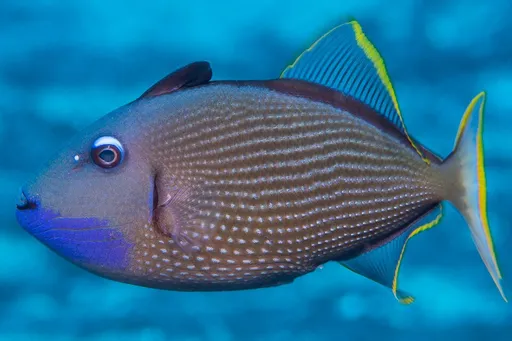 9.1 in (23 cm)125 gal (473 L)72–79°F (22–26°C)
Bluethroat triggerfish
Xanthichthys auromarginatus
9.1 in (23 cm) · 125 gal (473 L)
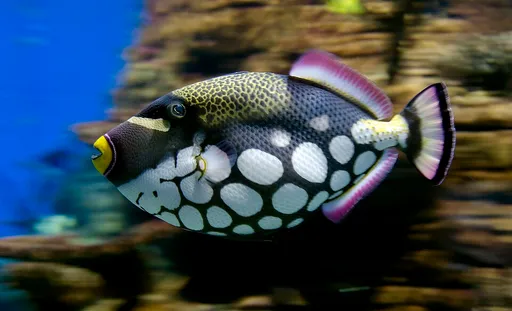 19.7 in (50 cm)300 gal (1,135 L)72–79°F (22–26°C)
Clown triggerfish
Balistoides conspicillum
19.7 in (50 cm) · 300 gal (1,135 L)
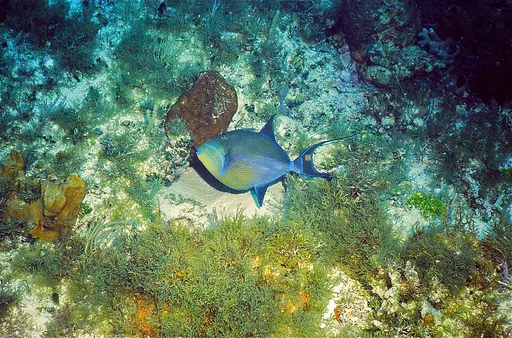 19.7 in (50 cm)238 gal (900 L)72–81°F (22–27°C)
Queen triggerfish
Balistes vetula
19.7 in (50 cm) · 238 gal (900 L)