Black durgon
Melichthys niger
Also known as Black triggerfish, Black durgeon
SaltwaterFish
Care at a glance
- Temperature
- 75–81°F
- 24–27°C
- pH
- 8.0–8.4
- Adult size
- 15.7 in
- 40 cm
- Minimum tank
- 124 gal
- 470 L
- Temperament
- Mostly peaceful
- Social behavior
- Solitary
- Tankmates
- With caution
- Swim level
- Middle
- Difficulty
- Medium
- Breeding
- No record
- Rarity
- Common
- Reef safe
- Reef safe with caution
- Family
- Balistidae
- Origin
- Found circumtropically on outer reef slopes and drop-offs, hovering in open water to feed on plankton and algae.
Overview
Give a black durgon a tank of at least 470 litres with open swimming space and some rock, at 24 to 27 C and pH 8.0 to 8.4. It is calmer than most triggers but can still nip ornamental shrimp and small inverts, so it is reef-safe only with caution. It generally leaves corals alone. Feed a mix of meaty foods and marine algae or nori, as it grazes as well as hunts. It is an active, hungry swimmer that appreciates strong flow.
In the wild
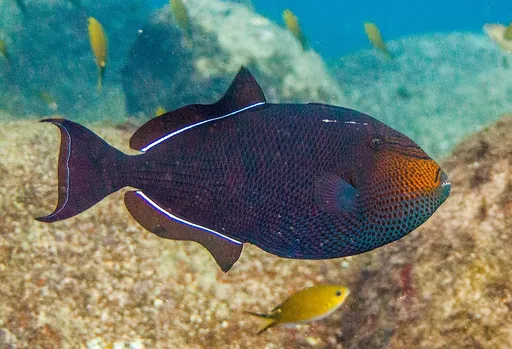
The black durgon looks plain dark from a distance but up close it glows with blue-green scales and pale lines along the fin bases. It is one of the more peaceful triggerfish and spends its time cruising the open water rather than hiding in rock. On the reef it feeds high in the water column on drifting plankton and algae.
Good to know
Melichthys niger reaches around 40 cm and, unlike most triggers, is largely a mid-water planktivore, which makes it one of the more reef-tolerant members of the family. Its dark body reflects an iridescent blue-green sheen in good light. Like all triggers it can lock its dorsal spine upright to wedge into a crevice at night.
Did you know
Though it looks jet black, the durgon is covered in iridescent blue and green scales that only flash into view when the light catches it at the right angle.
Common questions
What size tank does a Black durgon need?
A Black durgon needs at least 124 gal (470 L). It spends most of its time in the middle.
What temperature and pH does a Black durgon need?
A Black durgon is comfortable at 75–81°F (24–27°C) with a pH of 8.0–8.4.
How big does a Black durgon get?
An adult Black durgon reaches about 15.7 in (40 cm).
Related species
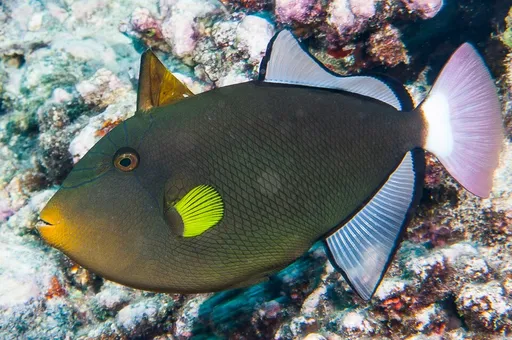 15.7 in (40 cm)180 gal (680 L)72–79°F (22–26°C)
Pinktail triggerfish
Melichthys vidua
15.7 in (40 cm) · 180 gal (680 L)
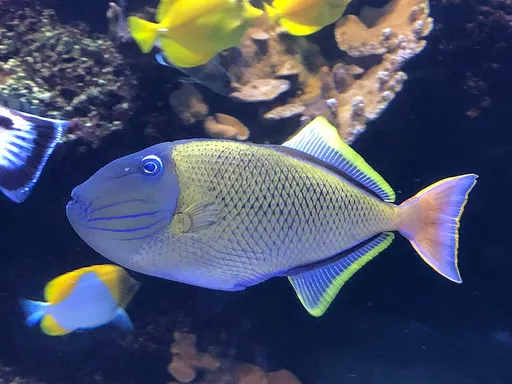 11.8 in (30 cm)106 gal (400 L)70–79°F (21–26°C)
Crosshatch triggerfish
Xanthichthys mento
11.8 in (30 cm) · 106 gal (400 L)
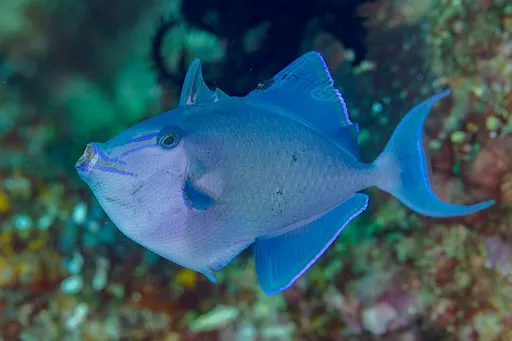 11.8 in (30 cm)180 gal (680 L)72–79°F (22–26°C)
Niger triggerfish
Odonus niger
11.8 in (30 cm) · 180 gal (680 L)
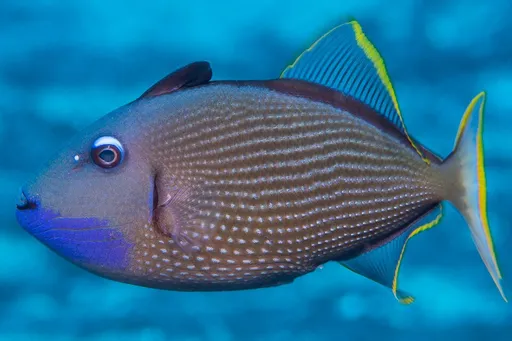 9.1 in (23 cm)125 gal (473 L)72–79°F (22–26°C)
Bluethroat triggerfish
Xanthichthys auromarginatus
9.1 in (23 cm) · 125 gal (473 L)
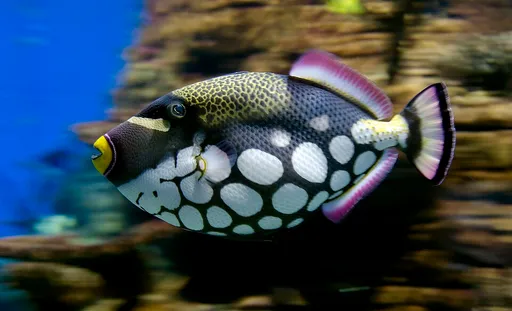 19.7 in (50 cm)300 gal (1,135 L)72–79°F (22–26°C)
Clown triggerfish
Balistoides conspicillum
19.7 in (50 cm) · 300 gal (1,135 L)
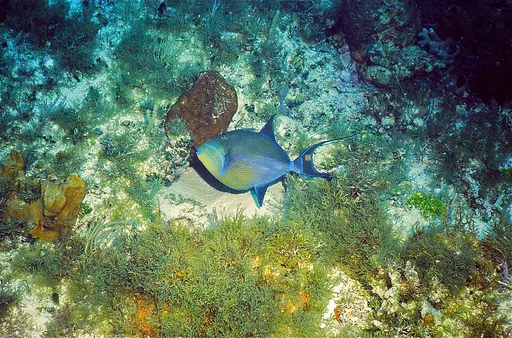 19.7 in (50 cm)238 gal (900 L)72–81°F (22–27°C)
Queen triggerfish
Balistes vetula
19.7 in (50 cm) · 238 gal (900 L)