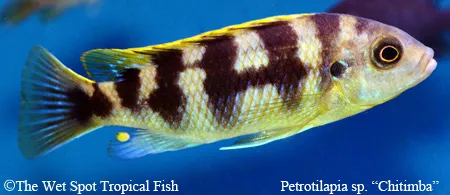
Petrotilapia
Petrotilapia sp.
Also known as Petrotilapia mbuna, Brush-tooth mbuna
FreshwaterFish
Care at a glance
- Temperature
- 75–81°F
- 24–27°C
- pH
- 7.6–8.6
- Adult size
- 7.1 in
- 18 cm
- Minimum tank
- 119 gal
- 450 L
- Temperament
- Aggressive
- Social behavior
- Social
- Own kind
- One male per tank
- Tankmates
- With caution
- Swim level
- Middle
- Difficulty
- Medium
- Breeding
- Easy
- Rarity
- Common
- Family
- Cichlidae
- Origin
- Rocky shorelines of Lake Malawi in East Africa, in the algae covered surge zone.
Overview
These large, active grazers need a rocky tank of at least 450 liters and a group to spread out their aggression. Keep the water hard and alkaline at 24 to 27 C, pH 7.6 to 8.6. Feed a vegetable heavy diet of spirulina and algae foods, since a protein rich diet causes digestive trouble in dedicated grazers. Provide lots of rock and mix only with other robust Malawi cichlids.
In the wild
Petrotilapia are medium to large mbuna that graze thick algae from rocks in the wave zone of Lake Malawi. They cover the rocky habitat in loose feeding groups, scraping the film off stone with brush like teeth. The genus holds many similar looking species and site forms.
Good to know
Petrotilapia have loose, brush shaped teeth set on movable lips that let them comb algae from uneven rock. They are maternal mouthbrooders like other mbuna. Because so many species look alike, aquarium fish are often traded simply as Petrotilapia with a collecting location.
Did you know
Their lips and teeth work like a soft brush, letting them sweep algae off bumpy rock surfaces that harder toothed grazers cannot clean.
Common questions
What size tank does a Petrotilapia need?
A Petrotilapia needs at least 119 gal (450 L). It spends most of its time in the middle.
What temperature and pH does a Petrotilapia need?
A Petrotilapia is comfortable at 75–81°F (24–27°C) with a pH of 7.6–8.6.
How big does a Petrotilapia get?
An adult Petrotilapia reaches about 7.1 in (18 cm).
Related species
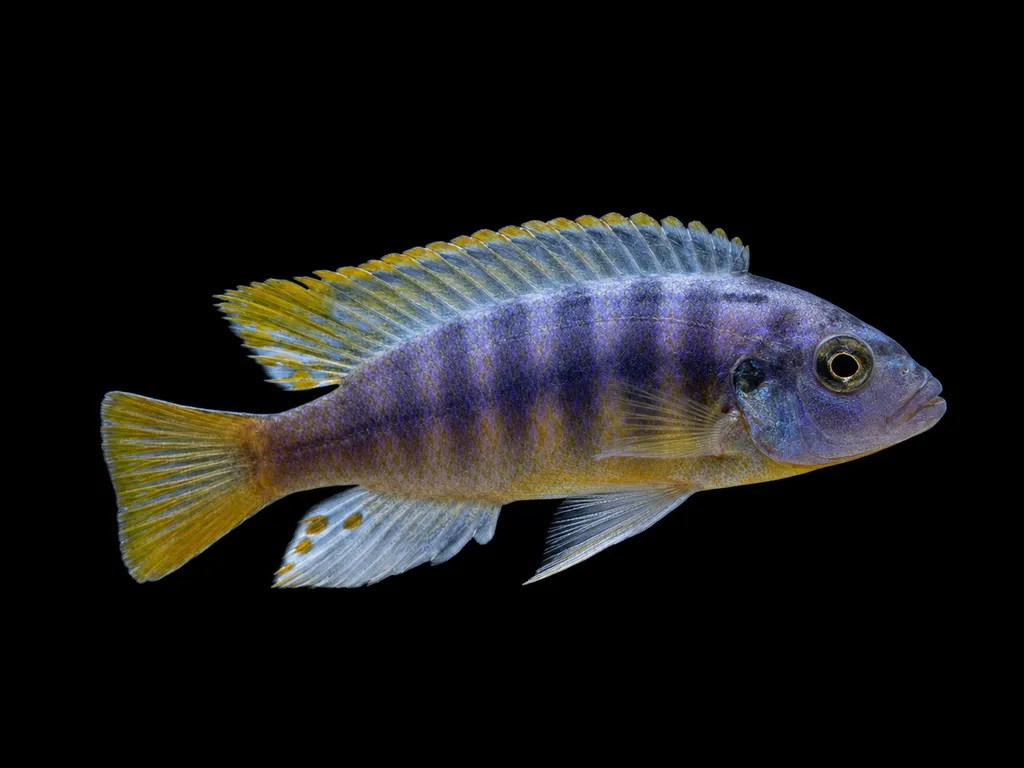 5.5 in (14 cm)79 gal (300 L)75–82°F (24–28°C)
Dwarf petrotilapia
Petrotilapia microgalana
5.5 in (14 cm) · 79 gal (300 L)
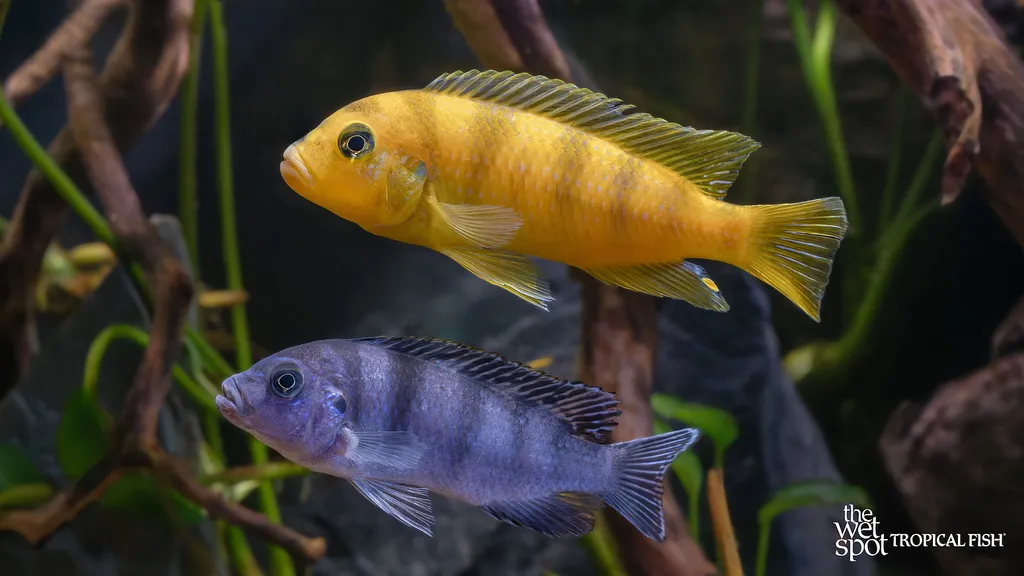 7.1 in (18 cm)46 gal (175 L)75–82°F (24–28°C)
Fuelleborn's cichlid
Labeotropheus fuelleborni
7.1 in (18 cm) · 46 gal (175 L)
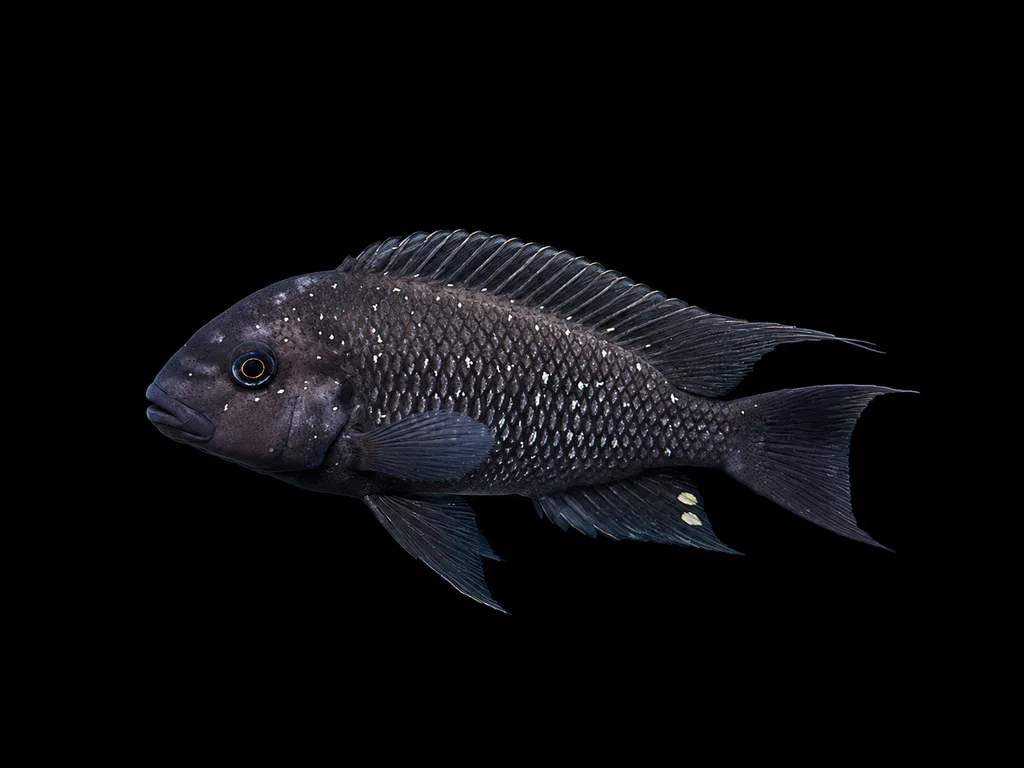 7.1 in (18 cm)159 gal (600 L)75–81°F (24–27°C)
Threadfin cichlid
Petrochromis trewavasae
7.1 in (18 cm) · 159 gal (600 L)
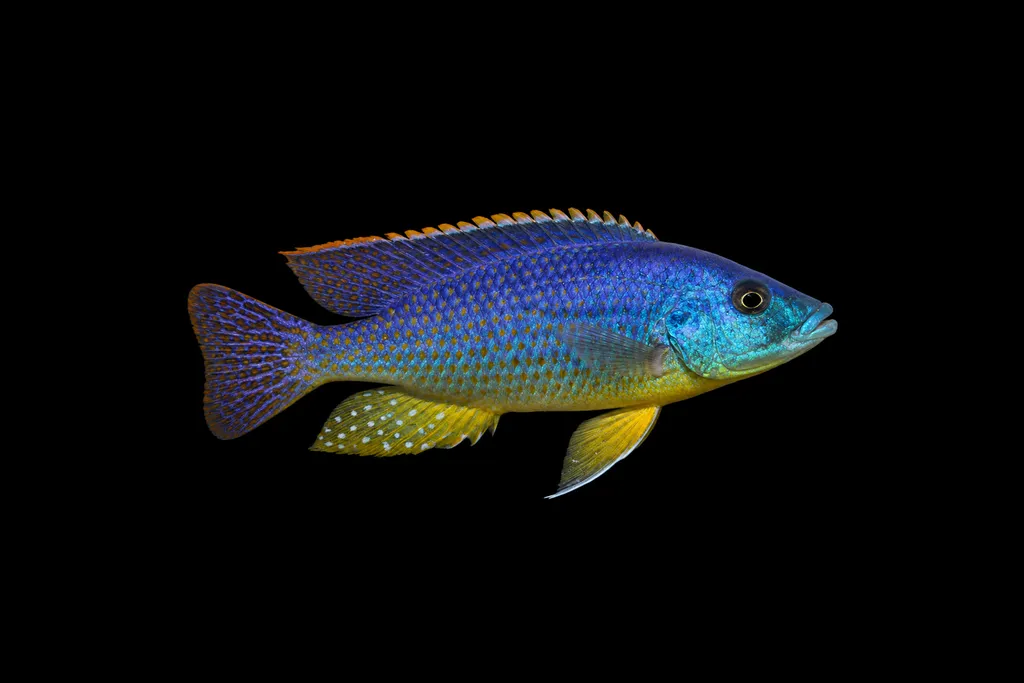 7.2 in (18.2 cm)106 gal (400 L)75–82°F (24–28°C)
Ornate hap
Protomelas ornatus
7.2 in (18.2 cm) · 106 gal (400 L)
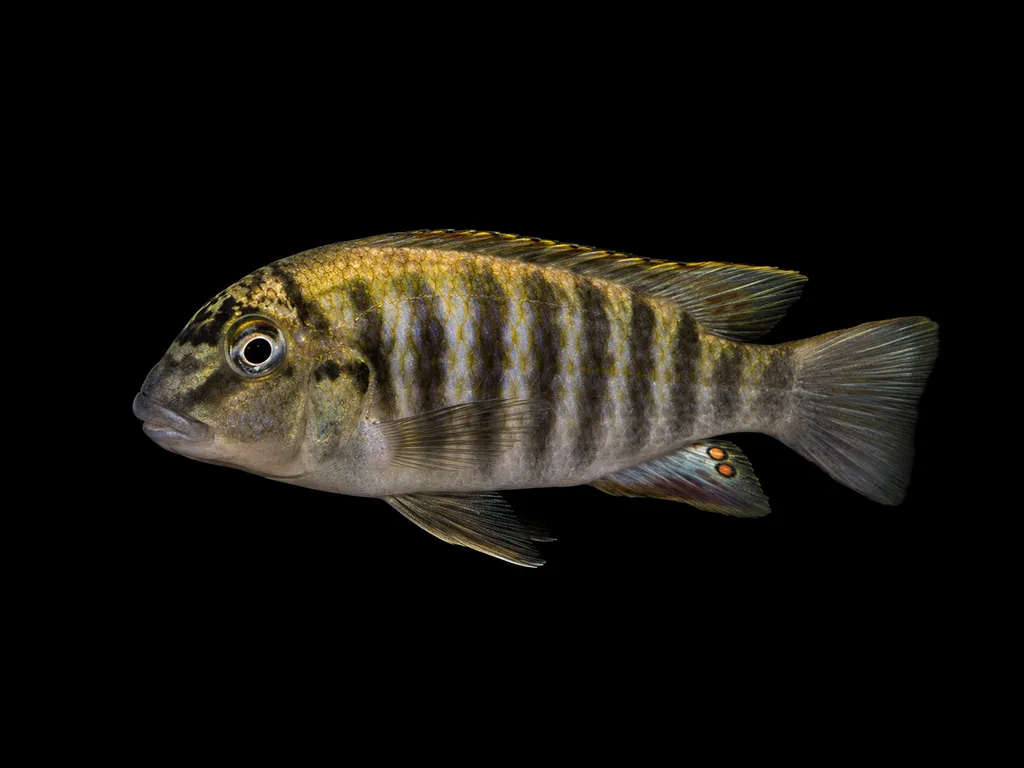 7.7 in (19.5 cm)79 gal (300 L)75–81°F (24–27°C)
Diagramma cichlid
Simochromis diagramma
7.7 in (19.5 cm) · 79 gal (300 L)
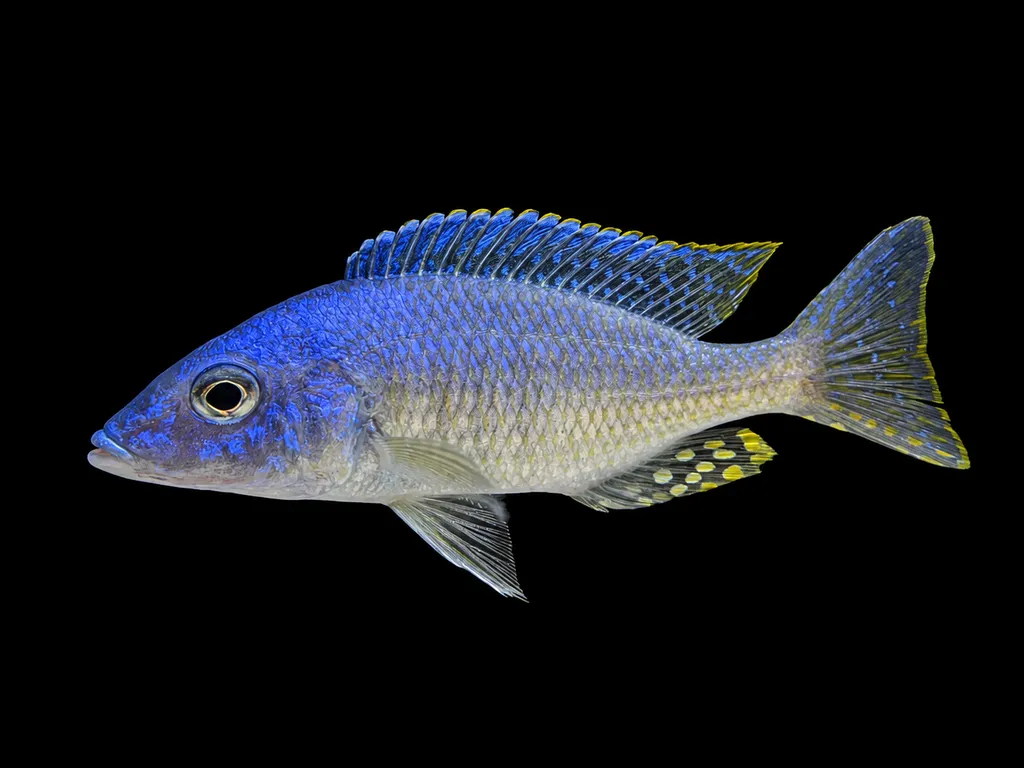 7.9 in (20 cm)70 gal (265 L)75–82°F (24–28°C)
Beak peacock
Aulonocara rostratum
7.9 in (20 cm) · 70 gal (265 L)