Beak peacock
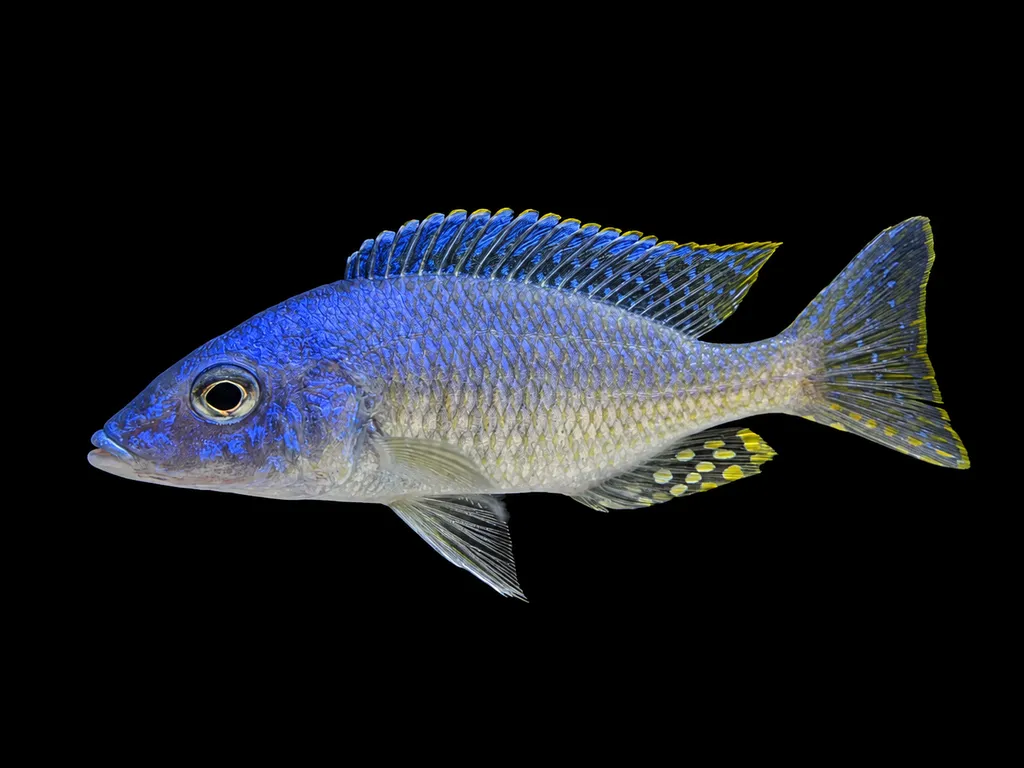
Aulonocara rostratum
Also known as Rostratum peacock, Deepwater peacock
FreshwaterFish
Care at a glance
- Temperature
- 75–82°F
- 24–28°C
- pH
- 7.6–8.6
- Adult size
- 7.9 in
- 20 cm
- Minimum tank
- 70 gal
- 265 L
- Temperament
- Aggressive
- Social behavior
- Social
- Tankmates
- With caution
- Swim level
- Middle
- Difficulty
- Medium
- Breeding
- Mouthbrooder · Medium
- Rarity
- Rare
- Family
- Cichlidae
- Origin
- Deep waters of Lake Malawi
Overview
The beak peacock is one of the larger peacock cichlids, a deepwater species from Lake Malawi. It is slower and more deliberate than the rock-zone Malawi cichlids, and best with a little experience.
Did you know
The beak peacock and other deepwater peacocks look drab in the lake, where there is little light to show off color. Males develop their full brightness only under aquarium lighting. That is why shops often sell plain-looking fish that color up strongly once settled and well lit.
Caring for the beak peacock
A beak peacock needs at least 70 gal (265 L), with a sand floor and scattered rock. Keep the lighting subdued, since it naturally lives where light is low. It swims in the middle and lower water.
Give it the standard rift-lake chemistry, hard and alkaline, at 75 to 82°F (24 to 28°C) and a pH of 7.6 to 8.6. Feed sinking pellets and frozen foods such as mysis and brine shrimp.
A harem of one male with several females suits its breeding habits and eases aggression. It is territorial for a peacock, so choose tank mates with caution. Pick other medium to large Malawi cichlids of similar temperament, and avoid delicate or tiny fish.
Like other peacocks, it is a maternal mouthbrooder, and the female carries the eggs and fry. Breeding it is moderately difficult.
Good to know
The beak peacock is a member of the cichlid family in the genus Aulonocara. Its name rostratum refers to its drawn-out snout, or beak.
In the wild
The beak peacock lives in the deeper waters of Lake Malawi, below the busy rock zone. It hunts small invertebrates over the open sand, finding them through sensory pores on its head.
Common questions
What size tank does a beak peacock need?
A beak peacock needs at least 70 gal (265 L). It spends most of its time in the middle.
What temperature and pH does a beak peacock need?
A beak peacock is comfortable at 75–82°F (24–28°C) with a pH of 7.6–8.6.
What does a beak peacock eat?
A beak peacock eats sinking pellets and frozen foods such as mysis and brine shrimp.
How big does a beak peacock get?
An adult beak peacock reaches about 7.9 in (20 cm).
How does a beak peacock breed?
The beak peacock is a maternal mouthbrooder, like other peacocks, so the female carries the eggs and fry. Breeding it is moderately difficult.
Related species
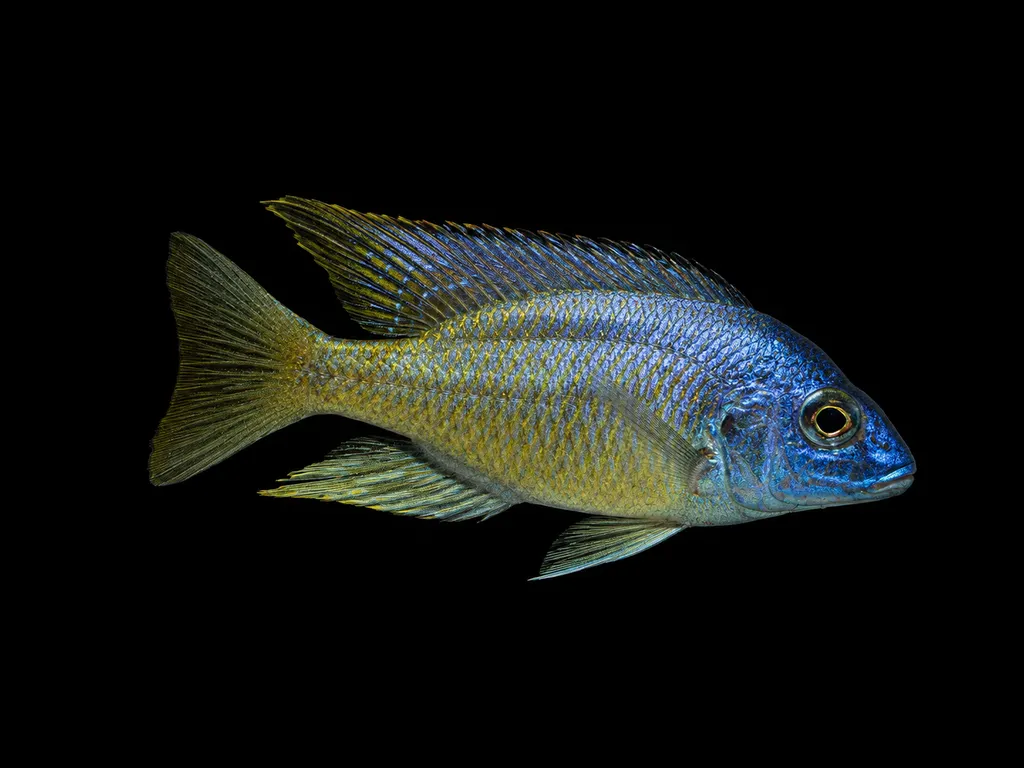 5.1 in (13 cm)53 gal (200 L)75–82°F (24–28°C)
Mdoka peacock
Aulonocara aquilonium
5.1 in (13 cm) · 53 gal (200 L)
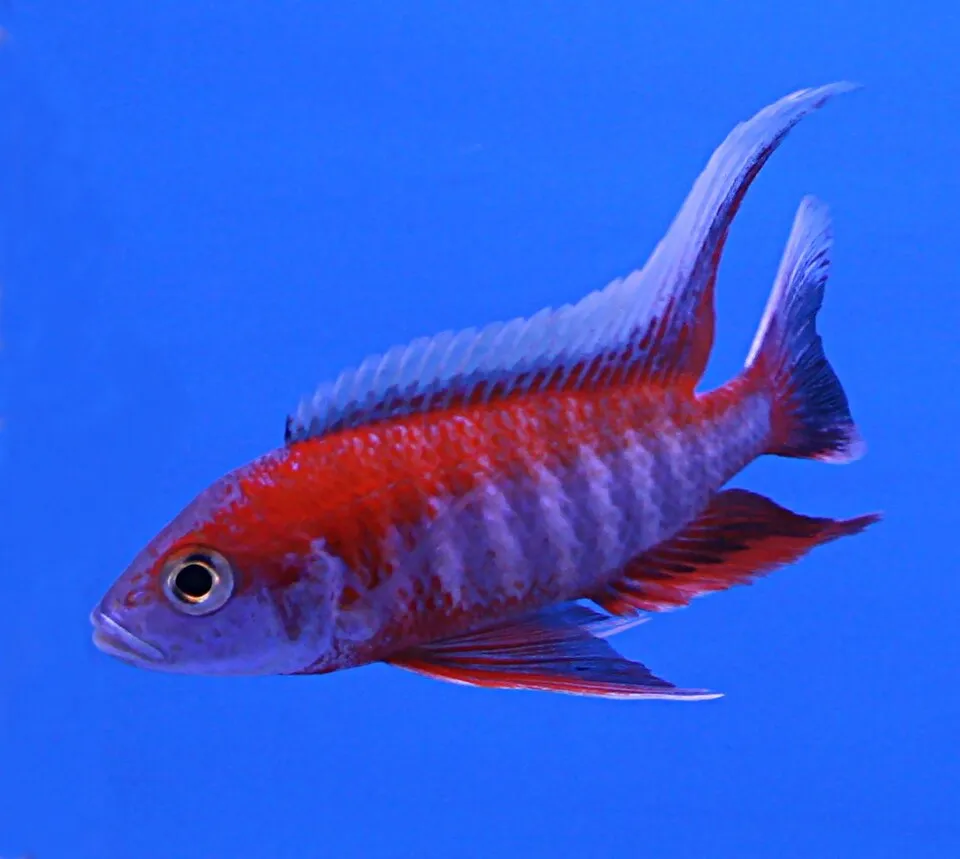 6.7 in (17 cm)114 gal (430 L)77–84°F (25–29°C)
Eureka red peacock
Aulonocara jacobfreibergi
6.7 in (17 cm) · 114 gal (430 L)
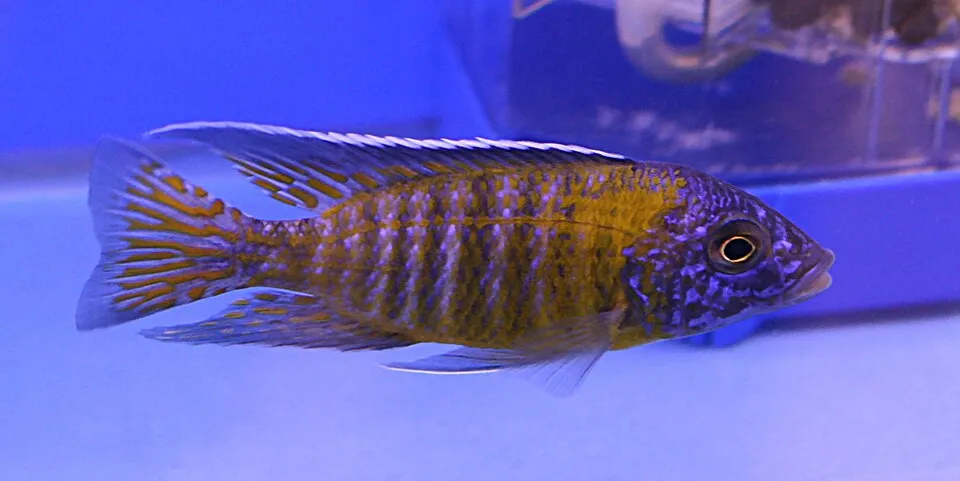 5.5 in (14 cm)63 gal (240 L)75–82°F (24–28°C)
Pale usisya aulonocara
Aulonocara steveni
5.5 in (14 cm) · 63 gal (240 L)
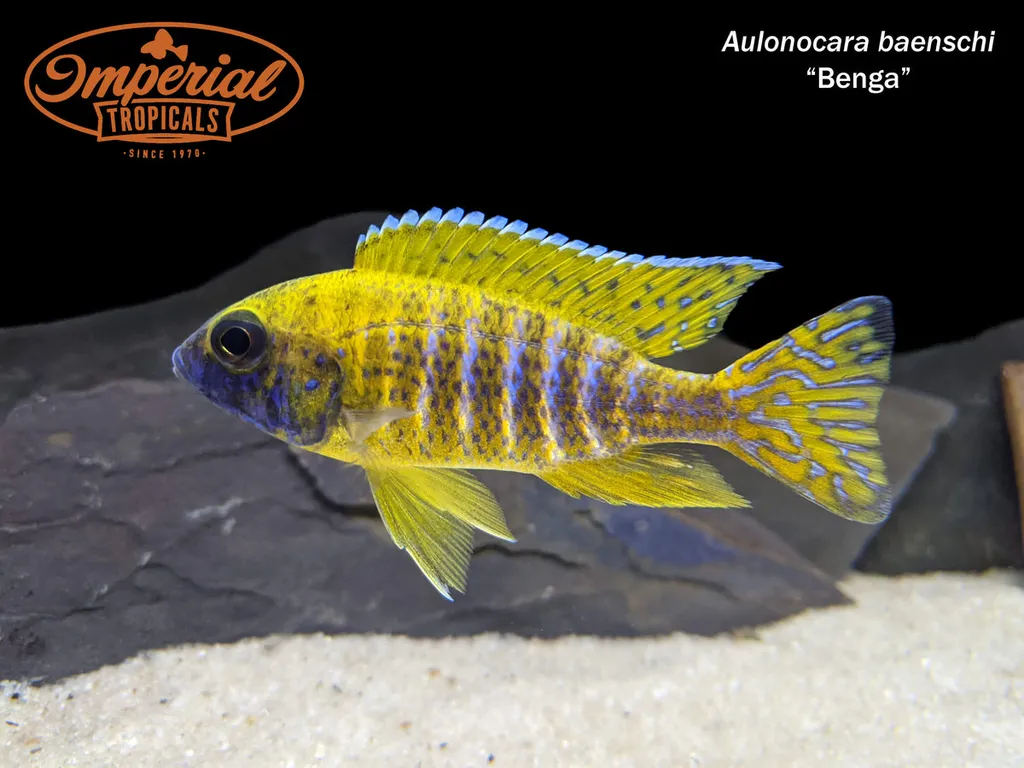 4.3 in (11 cm)63 gal (240 L)77–84°F (25–29°C)
Sunshine peacock cichlid
Aulonocara baenschi
4.3 in (11 cm) · 63 gal (240 L)
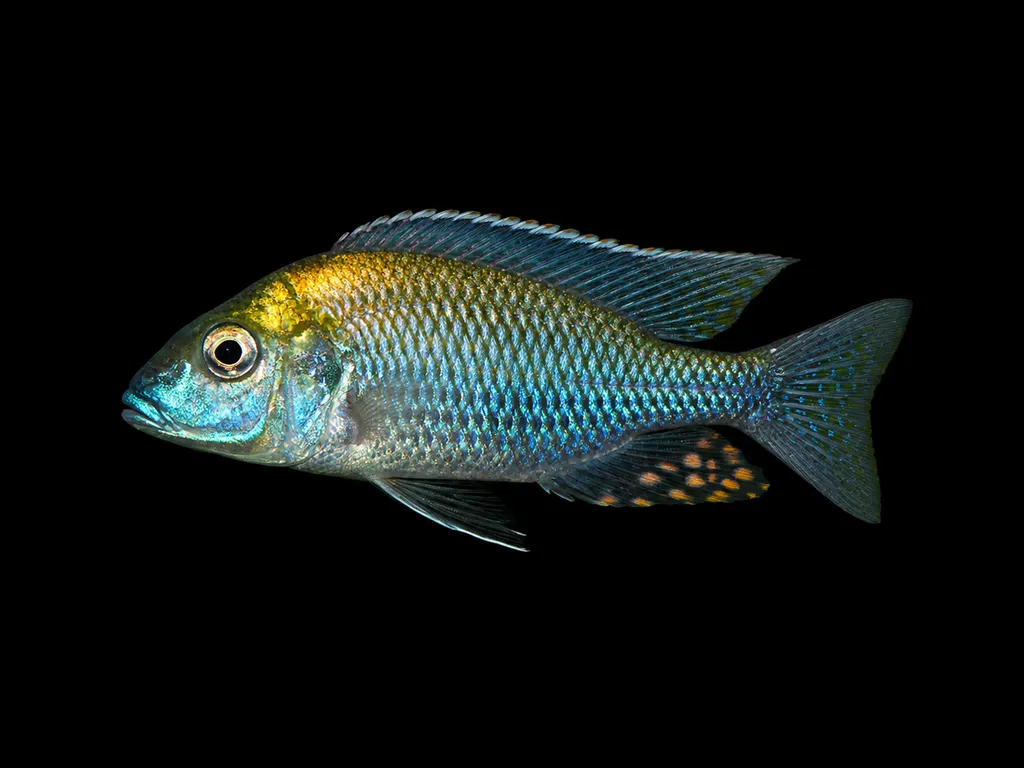 5.9 in (15 cm)74 gal (280 L)75–81°F (24–27°C)
Günther's peacock
Aulonocara guentheri
5.9 in (15 cm) · 74 gal (280 L)
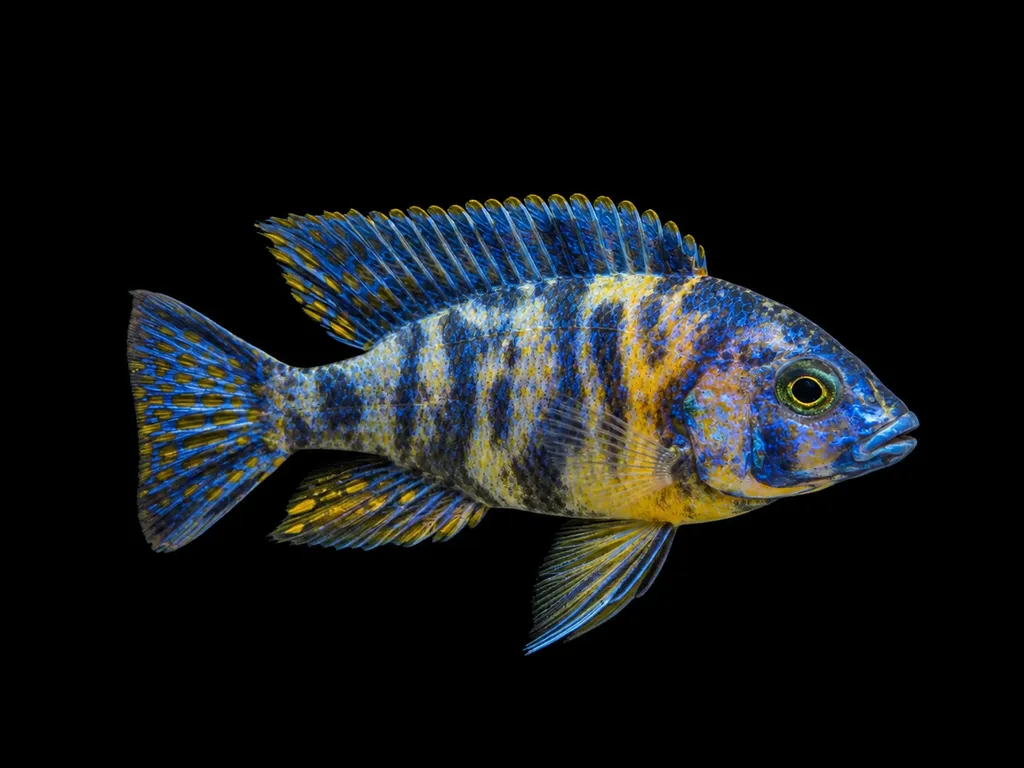 5.9 in (15 cm)63 gal (240 L)75–82°F (24–28°C)
OB peacock cichlid
Aulonocara hybrid
5.9 in (15 cm) · 63 gal (240 L)