Nicaragua cichlid
Hypsophrys nicaraguensis
Also known as Macaw cichlid
FreshwaterFish
Care at a glance
- Temperature
- 73–82°F
- 23–28°C
- pH
- 7.0–8.0
- Adult size
- 9.8 in
- 25 cm
- Minimum tank
- 75 gal
- 285 L
- Temperament
- Mostly peaceful
- Social behavior
- Social
- Tankmates
- With caution
- Swim level
- Bottom
- Difficulty
- Medium
- Breeding
- Medium
- Rarity
- Common
- Family
- Cichlidae
- Origin
- Central America, Atlantic slope from Honduras/Nicaragua (Lake Nicaragua, San Juan drainage) to Costa Rica
Overview
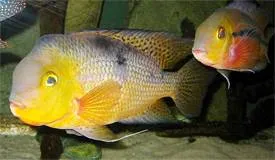
Keep them as a compatible male and female pair in a tank of 285 liters or larger, with another 180 liters or more on top of that if you want to mix in other cichlids. They are mostly peaceful for their size but stay territorial, especially when breeding, and they will eat any fish small enough to swallow, so this is not a community fish. They hold to the bottom, where they sift sand and dig. Run the water at 23 to 28 C, pH 7 to 8, and hard. They are sensitive to organic waste and nitrate, so do frequent partial water changes. Feed a varied diet of quality pellets, frozen foods, and some vegetable matter.
In the wild
Nicaragua cichlids come from the Atlantic slope of Central America, from Honduras and Nicaragua down into Costa Rica, including Lake Nicaragua and the San Juan drainage. They live over sand and rock where they sift the substrate for food. Give them a soft sandy bottom they can dig in, along with rockwork, driftwood, and caves, and stick to hardy attached plants like Anubias since loose plants get uprooted. Keep the water hard and on the neutral to alkaline side, around pH 7 to 8, at 23 to 28 C, in a tank of at least 285 liters.
Good to know
This is a large cichlid in the family Cichlidae, reaching about 25 cm, with males growing larger and developing a nuchal hump while females stay smaller. It is a substrate spawner with strong care from both parents. A pair excavates a pit and produces 200 to 400 eggs, and wild females will even pool their broods together for group defense. Adults can live well over a decade in good conditions.
Did you know
Wild females practice a behavior called creching, where several mothers herd their fry into a shared group and defend the whole pool together. A single female may end up guarding young that are not all her own, which spreads the risk of predation across the colony.
Common questions
What size tank does a Nicaragua cichlid need?
A Nicaragua cichlid needs at least 75 gal (285 L). It spends most of its time in the bottom.
What temperature and pH does a Nicaragua cichlid need?
A Nicaragua cichlid is comfortable at 73–82°F (23–28°C) with a pH of 7.0–8.0.
How big does a Nicaragua cichlid get?
An adult Nicaragua cichlid reaches about 9.8 in (25 cm).
Related species
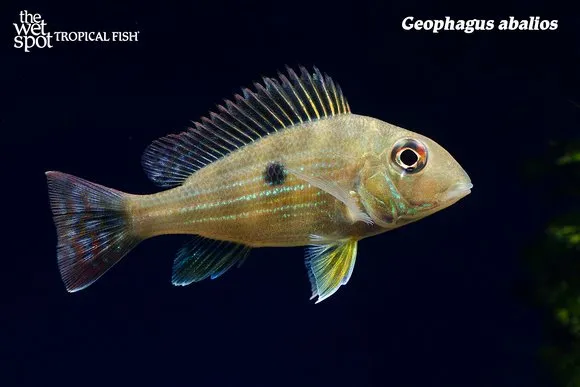 9.8 in (25 cm)119 gal (450 L)77–84°F (25–29°C)
Abalios eartheater
Geophagus abalios
9.8 in (25 cm) · 119 gal (450 L)
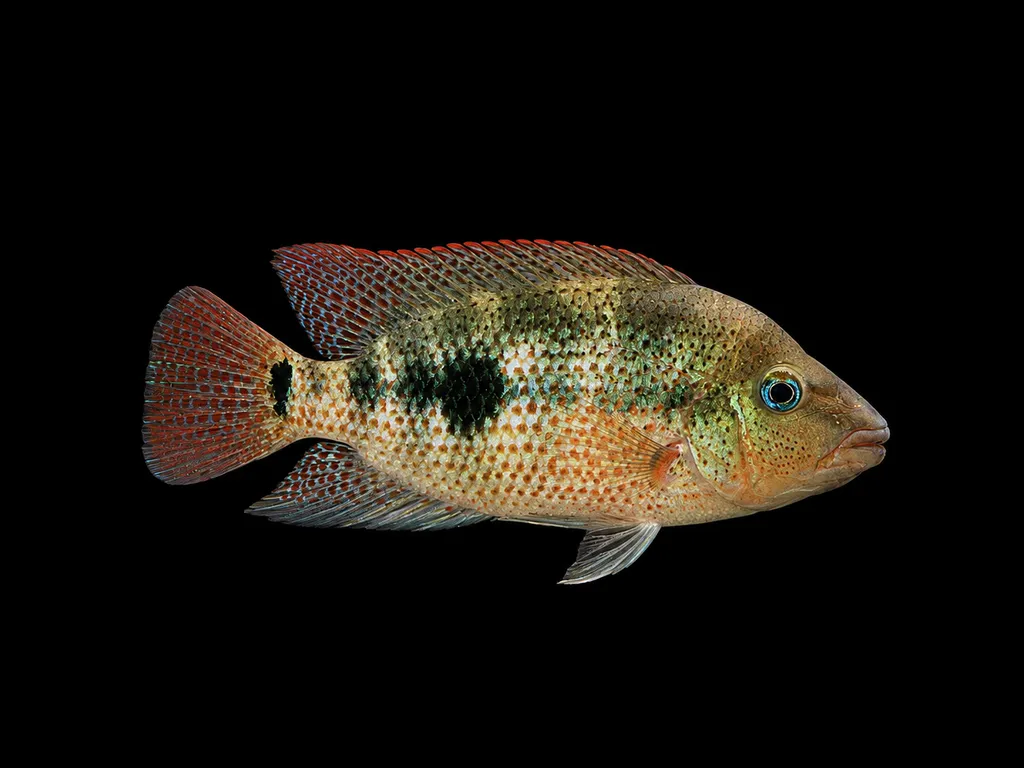 9.8 in (25 cm)106 gal (400 L)75–84°F (24–29°C)
Calobre cichlid
Darienheros calobrensis
9.8 in (25 cm) · 106 gal (400 L)
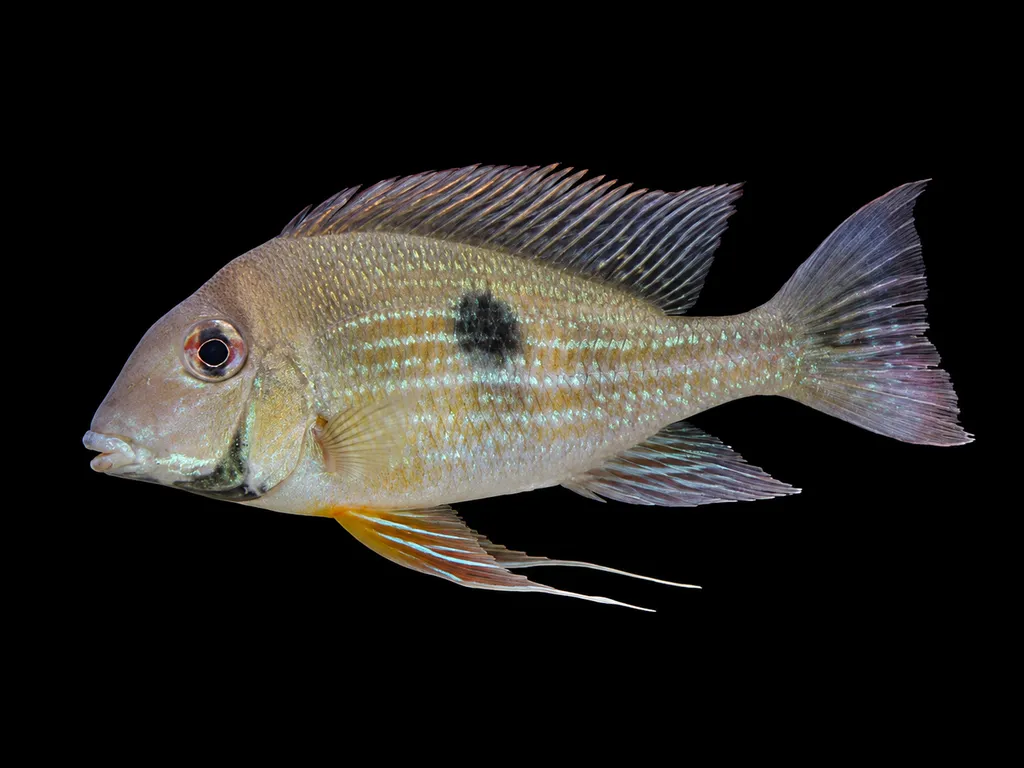 9.8 in (25 cm)119 gal (450 L)77–84°F (25–29°C)
Dicrozoster eartheater
Geophagus dicrozoster
9.8 in (25 cm) · 119 gal (450 L)
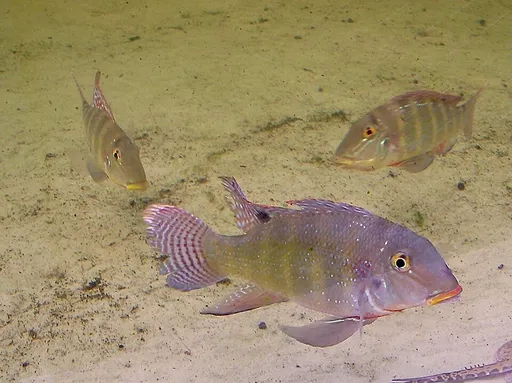 9.8 in (25 cm)185 gal (700 L)79–86°F (26–30°C)
Xingu eartheater
Retroculus xinguensis
9.8 in (25 cm) · 185 gal (700 L)
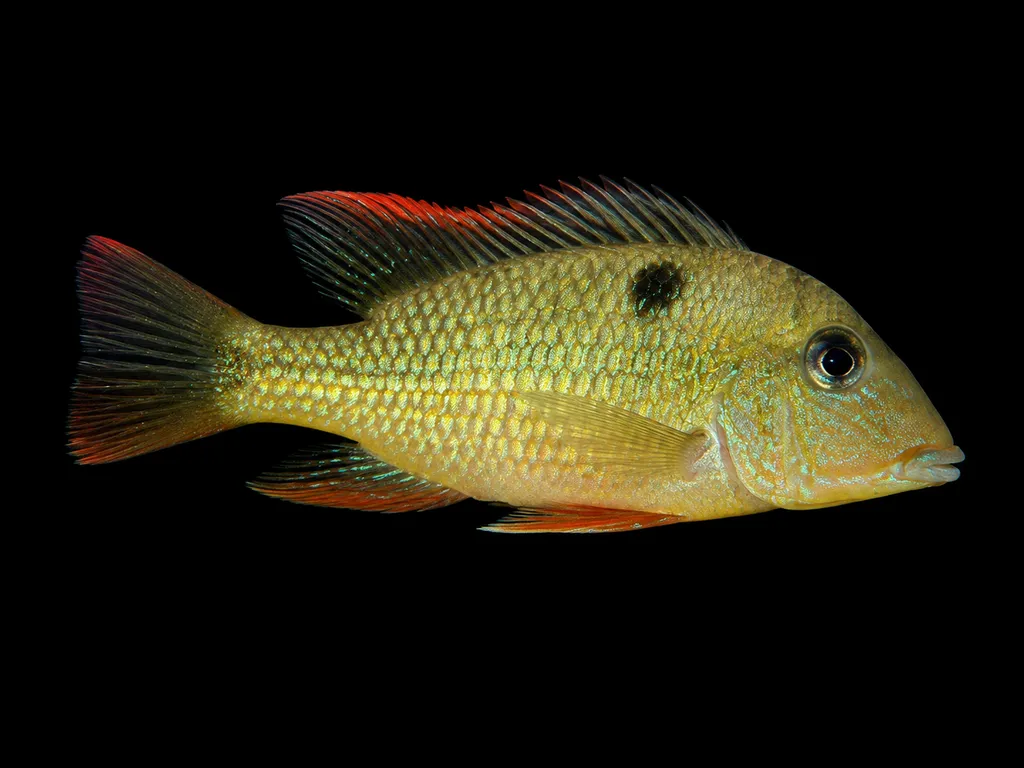 10.2 in (26 cm)119 gal (450 L)77–84°F (25–29°C)
Panama eartheater
Geophagus crassilabris
10.2 in (26 cm) · 119 gal (450 L)
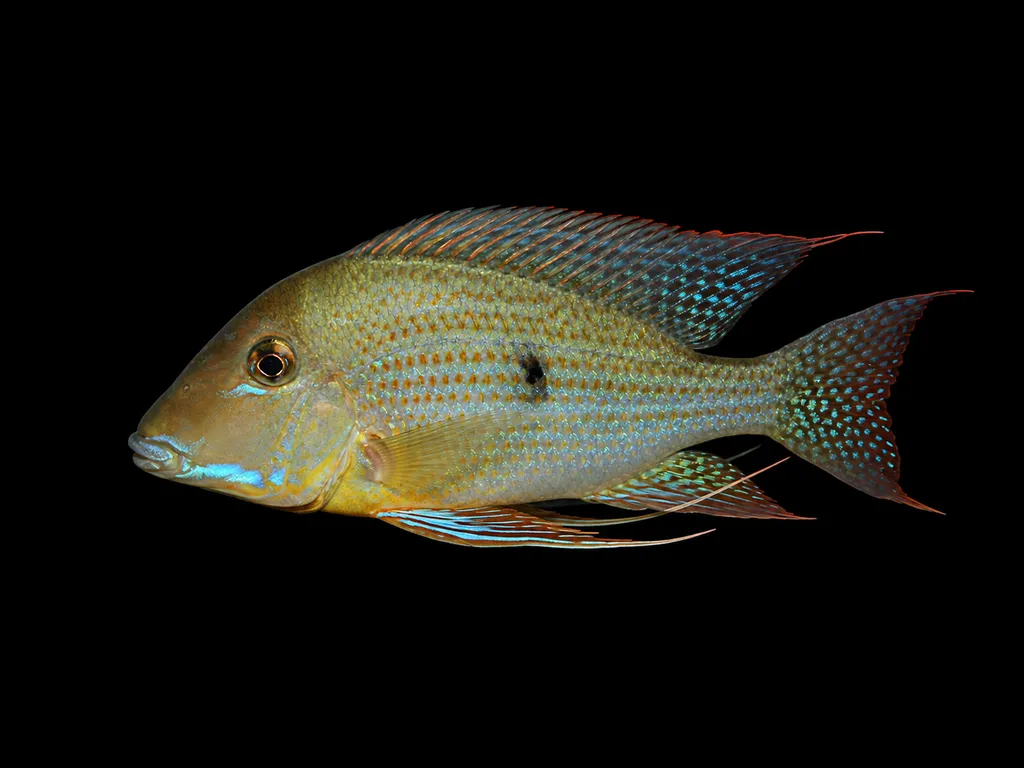 9.4 in (24 cm)119 gal (450 L)77–84°F (25–29°C)
Neambi eartheater
Geophagus neambi
9.4 in (24 cm) · 119 gal (450 L)