Hingemouth
Phractolaemus ansorgii
FreshwaterFish
Care at a glance
- Temperature
- 73–82°F
- 23–28°C
- pH
- 6.0–7.5
- Adult size
- 9.8 in
- 25 cm
- Minimum tank
- 36 gal
- 135 L
- Temperament
- Mostly peaceful
- Social behavior
- Solitary
- Tankmates
- With caution
- Swim level
- Bottom
- Difficulty
- Medium
- Breeding
- No record
- Rarity
- Very rare
- Family
- Phractolaemidae
- Origin
- Congo Basin
Overview
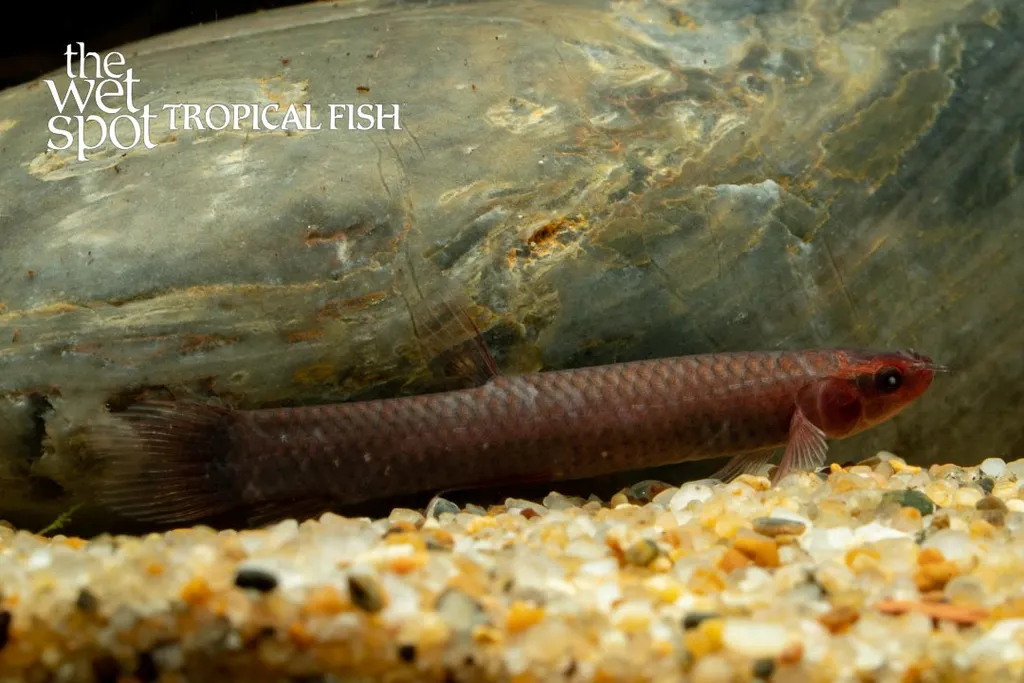
The hingemouth is an odd, night-active bottom fish that roots through soft substrate for algae, tiny organisms, and detritus rather than hunting other fish. That makes it peaceful toward tankmates of any size, though it is shy and does best with calm, undemanding companions. Keep it singly, with a soft sand or fine bed it can grub through and plenty of cover from wood and plants. Feed sinking foods, frozen bloodworms, and vegetable matter in the evening. It breathes air, so leave a gap at the surface and fit a lid. Give it a tank of at least 135 liters.
In the wild
Phractolaemus ansorgii lives in the Congo River basin and nearby West African waters, in sluggish, often poorly oxygenated forest pools, swamps, and floodplains rich in leaf litter and soft mud. Recreate this with soft substrate, dim lighting, driftwood, and gentle flow, leaving open air above the water since the fish surfaces to breathe. Keep the temperature between 23 and 28 degrees Celsius and the pH slightly acidic to neutral, from about 6 to 7.5.
Good to know
The hingemouth is the only member of its family, Phractolaemidae, and grows to somewhere around 20 to 25 centimeters. Its small mouth can be pushed forward into a short tube to graze fine food from surfaces. Its swim bladder is divided into lung-like chambers, letting it breathe atmospheric air and survive in near-stagnant water. Females can carry several thousand small eggs, though spawning is not recorded in aquariums.
Did you know
The hingemouth gets its name from a tiny mouth that hinges forward into a stubby tube to nibble food from surfaces. It also gulps air, which lets it survive in the low-oxygen swamps and pools where it lives.
Common questions
What size tank does a Hingemouth need?
A Hingemouth needs at least 36 gal (135 L). It spends most of its time in the bottom.
What temperature and pH does a Hingemouth need?
A Hingemouth is comfortable at 73–82°F (23–28°C) with a pH of 6.0–7.5.
How big does a Hingemouth get?
An adult Hingemouth reaches about 9.8 in (25 cm).
Related species
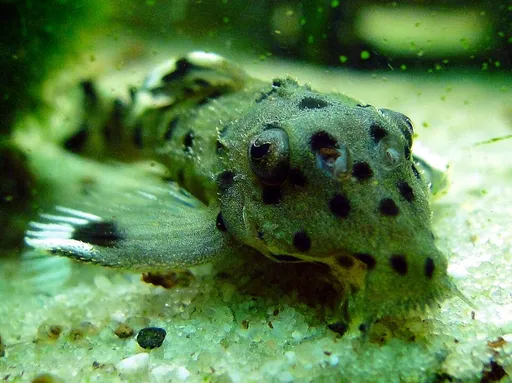 8.7 in (22 cm)66 gal (250 L)79–86°F (26–30°C)
Sultan pleco (L264)
Leporacanthicus joselimai
8.7 in (22 cm) · 66 gal (250 L)
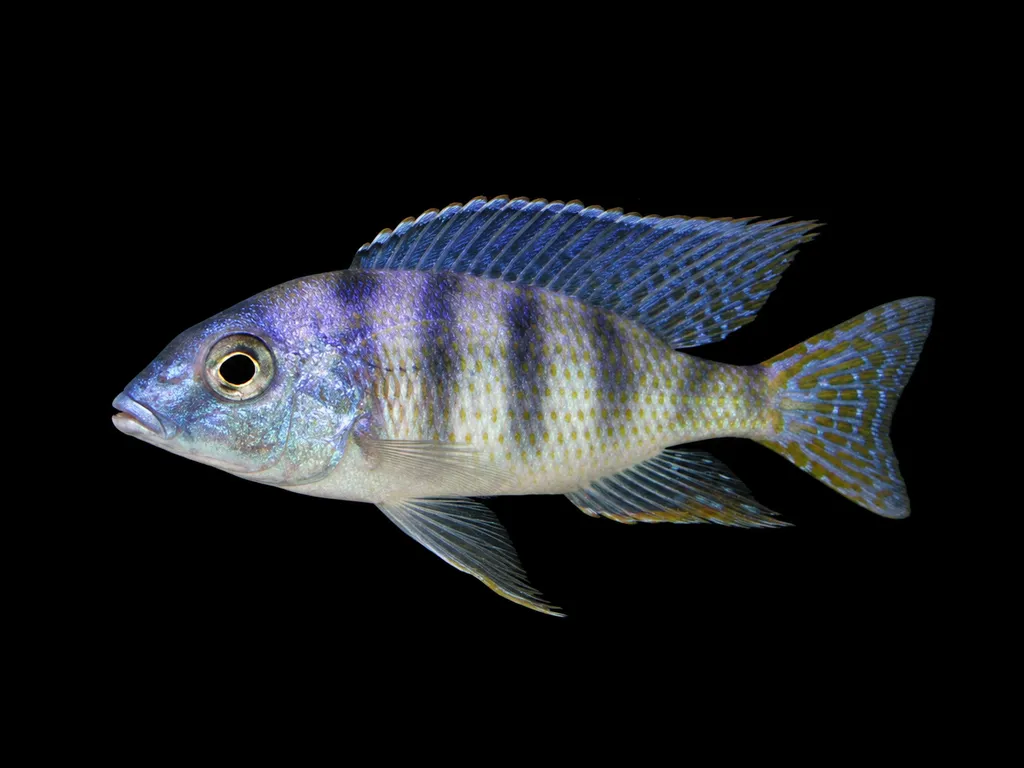 8.1 in (20.5 cm)119 gal (450 L)75–81°F (24–27°C)
Ericotaenia hap
Mylochromis ericotaenia
8.1 in (20.5 cm) · 119 gal (450 L)
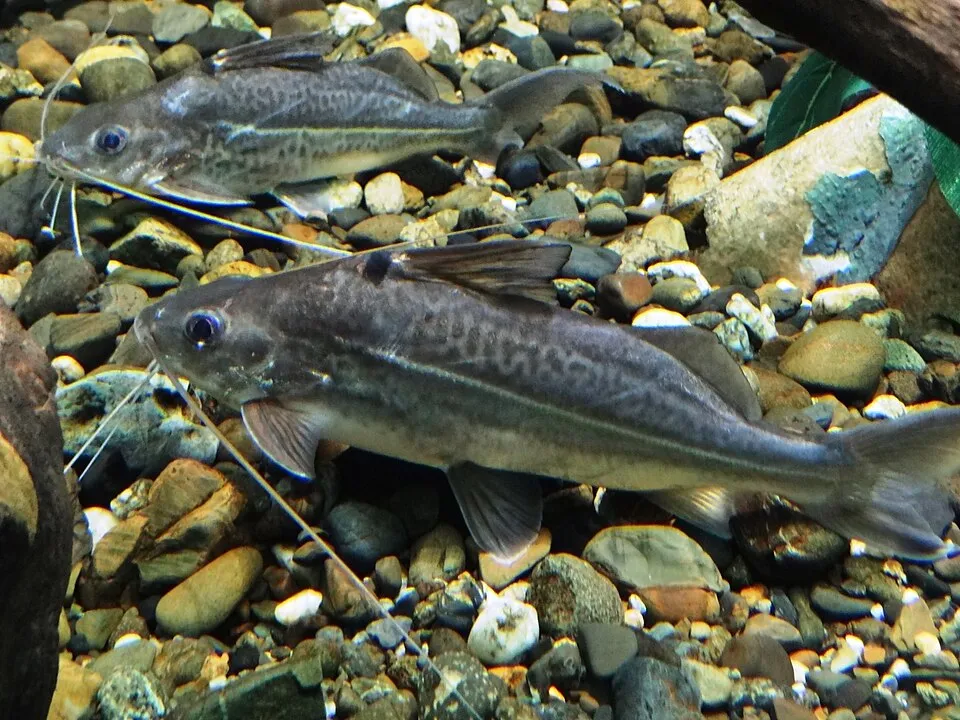 12.2 in (31 cm)65 gal (245 L)75–82°F (24–28°C)
Ornate pimelodus
Pimelodus ornatus
12.2 in (31 cm) · 65 gal (245 L)
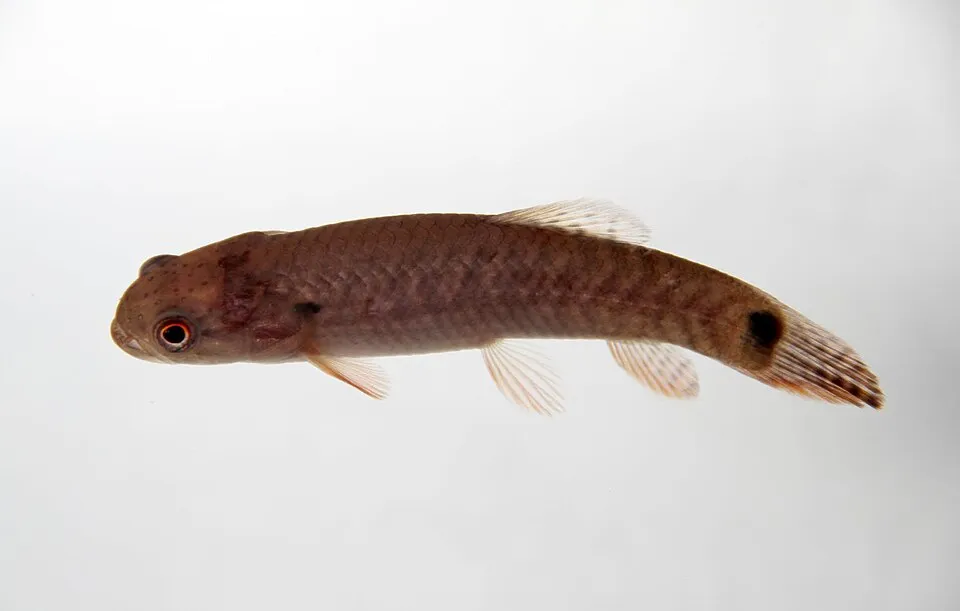 7.9 in (20 cm)40 gal (150 L)72–79°F (22–26°C)
Red wolf fish
Erythrinus erythrinus
7.9 in (20 cm) · 40 gal (150 L)
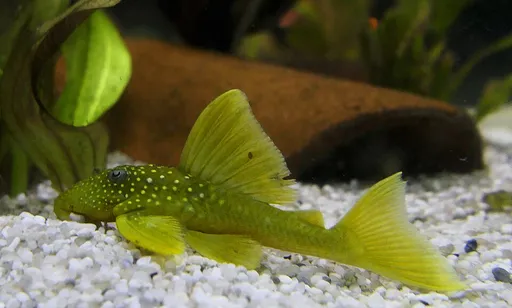 7.1 in (18 cm)53 gal (200 L)79–86°F (26–30°C)
Green phantom pleco (L200)
Hemiancistrus subviridis
7.1 in (18 cm) · 53 gal (200 L)
- 6.7 in (17 cm)106 gal (400 L)77–84°F (25–29°C)
Fine-spotted eartheater
Satanoperca mapiritensis
6.7 in (17 cm) · 106 gal (400 L)