Fourspine lamprologus
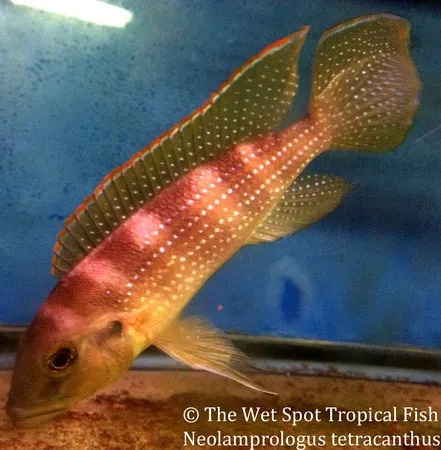
Neolamprologus tetracanthus
Also known as Lamprologus tetracanthus, Pearl-lined lamprologus
FreshwaterFish
Care at a glance
- Temperature
- 75–81°F
- 24–27°C
- pH
- 7.5–9.0
- Adult size
- 7.9 in
- 20 cm
- Minimum tank
- 79 gal
- 300 L
- Temperament
- Aggressive
- Social behavior
- Solitary
- Tankmates
- With caution
- Swim level
- Bottom
- Diet
- Carnivore
- Difficulty
- Medium
- Breeding
- Substrate spawner · Medium
- Rarity
- Rare
- Family
- Cichlidae
- Origin
- Lake Tanganyika
Overview
The fourspine lamprologus is a big, capable sand-dwelling predator from Lake Tanganyika. It is best with a little experience.
Did you know
Beyond hunting fish and insect larvae, the fourspine lamprologus has a specialized trick. It can suck snails and other mollusks clean out of their shells, a food source many of its rivals cannot touch.
Caring for the fourspine lamprologus
A pair of fourspine lamprologus needs at least 79 gal (300 L), with open sand, some piled rock and clear swimming space. Plan the floor around their territory, since a settled pair claims and defends a broad stretch of it. They work the bottom along the sand-and-rock line.
Keep the water hard and alkaline, at 75 to 81°F (24 to 27°C) and a pH of 7.5 to 9.0. Run strong filtration to keep it clean. Feed meaty foods such as frozen mysis, bloodworm, prawn and small snails, plus good sinking pellets.
Keep a single fish or a bonded pair rather than a group. The fourspine lamprologus is a capable predator and aggressive around its territory, so choose companions with care. Robust Tanganyikans that keep to open water or the rocks suit it, but avoid anything small enough to be hunted down.
It is a substrate spawner that hides its eggs against or under stone, and the pair guards the fry. Breeding is a moderate project, given the space for a territory.
Good to know
The fourspine lamprologus is a pearl-spangled lamprologine in the family Cichlidae. Its bronze body is dotted with rows of light spots. Its name, tetracanthus, refers to four spines.
In the wild
Neolamprologus tetracanthus ranges all around Lake Tanganyika, along the boundary between sand and rock. It hunts over open sand and uses the stones for cover and spawning.
Common questions
What size tank does a fourspine lamprologus need?
A fourspine lamprologus needs at least 79 gal (300 L). It spends most of its time in the bottom.
What temperature and pH does a fourspine lamprologus need?
A fourspine lamprologus is comfortable at 75–81°F (24–27°C) with a pH of 7.5–9.0.
What does a fourspine lamprologus eat?
A fourspine lamprologus eats meaty foods such as frozen mysis, bloodworm, prawn and small snails, plus good sinking pellets.
How big does a fourspine lamprologus get?
An adult fourspine lamprologus reaches about 7.9 in (20 cm).
How does a fourspine lamprologus breed?
The fourspine lamprologus is a substrate spawner that hides its eggs against or under stone. The pair guards the fry, and breeding is a moderate project if they have space for a territory.
Related species
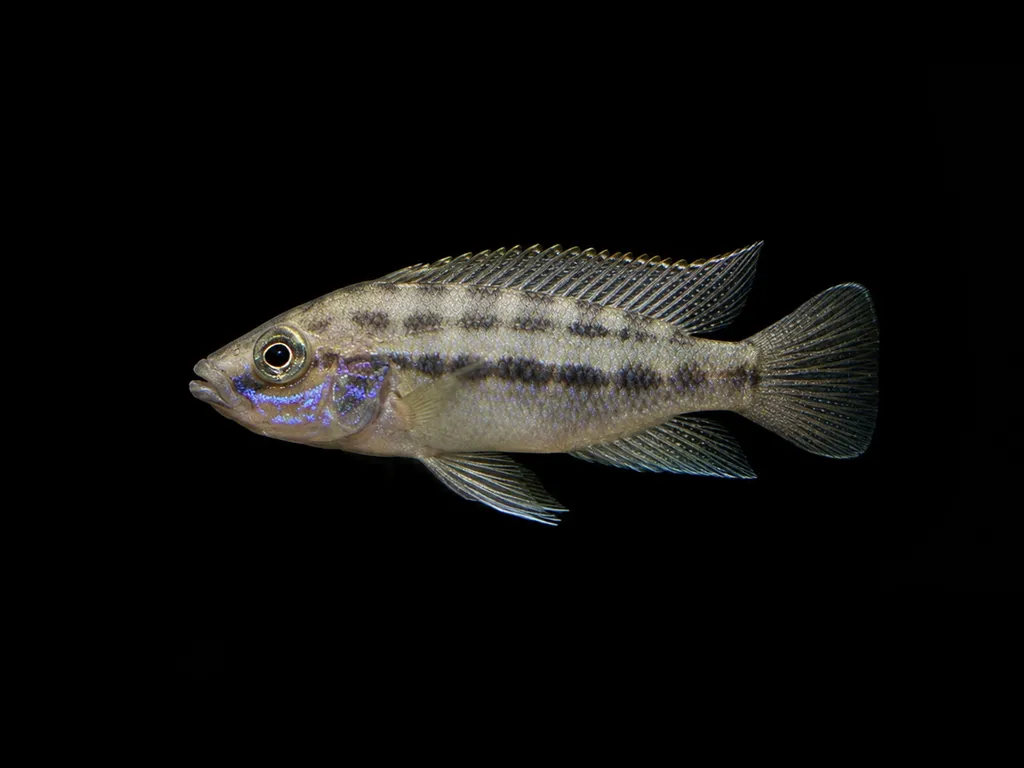 6.7 in (17 cm)79 gal (300 L)75–81°F (24–27°C)
Prochilus cichlid
Neolamprologus prochilus
6.7 in (17 cm) · 79 gal (300 L)
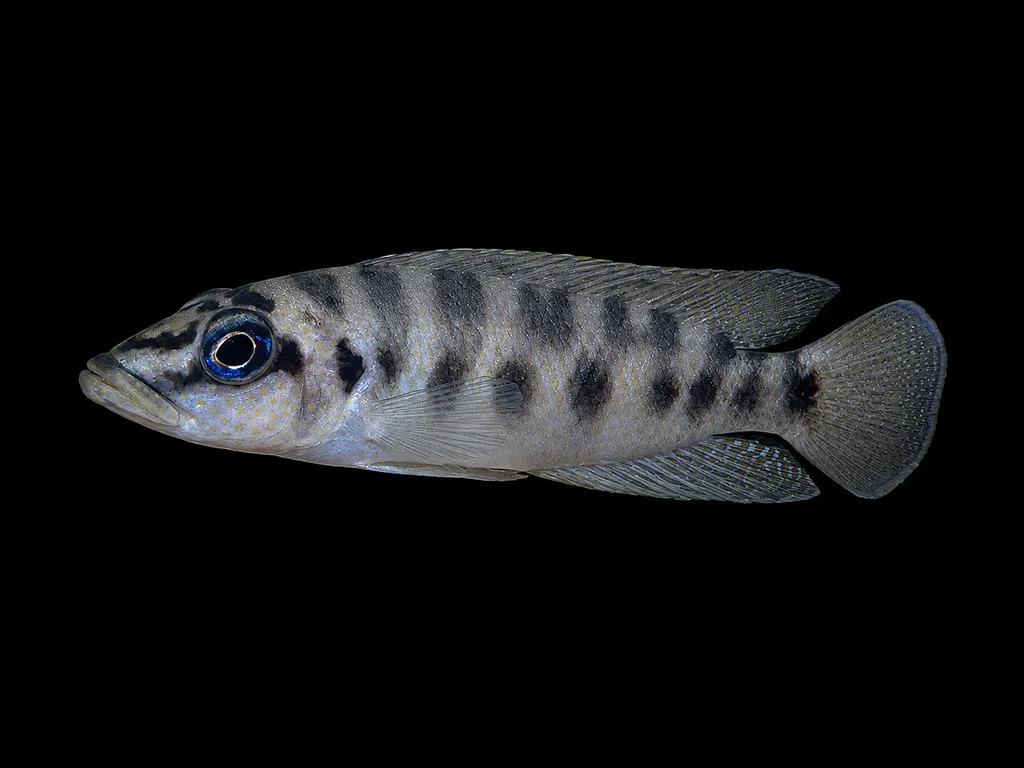 5.9 in (15 cm)66 gal (250 L)75–81°F (24–27°C)
Barred lamprologus
Neolamprologus fasciatus
5.9 in (15 cm) · 66 gal (250 L)
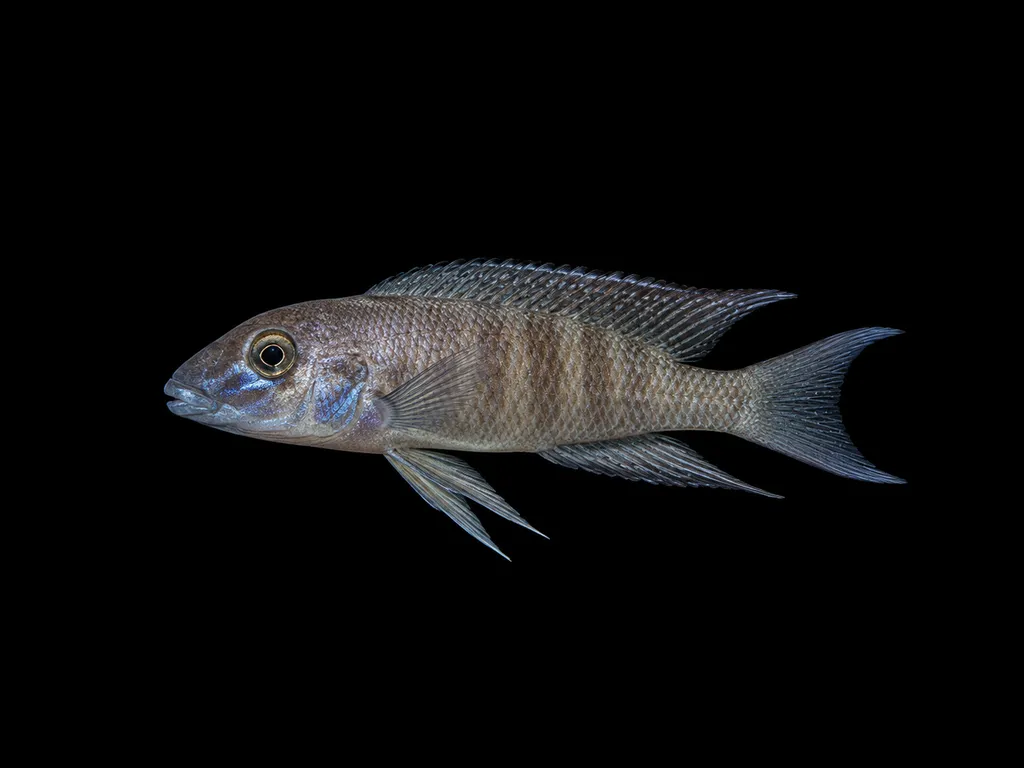 5.9 in (15 cm)66 gal (250 L)75–81°F (24–27°C)
Christy's lamprologus
Neolamprologus christyi
5.9 in (15 cm) · 66 gal (250 L)
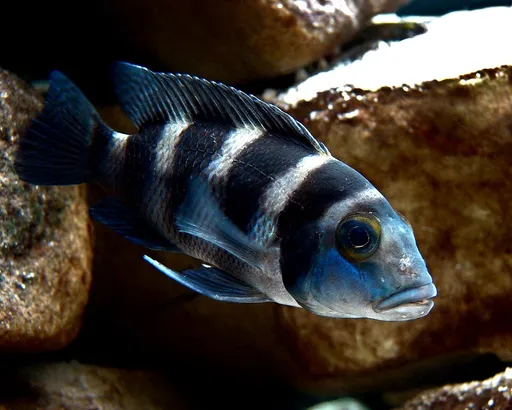 5.9 in (15 cm)53 gal (200 L)73–81°F (23–27°C)
Five-bar cichlid
Neolamprologus tretocephalus
5.9 in (15 cm) · 53 gal (200 L)
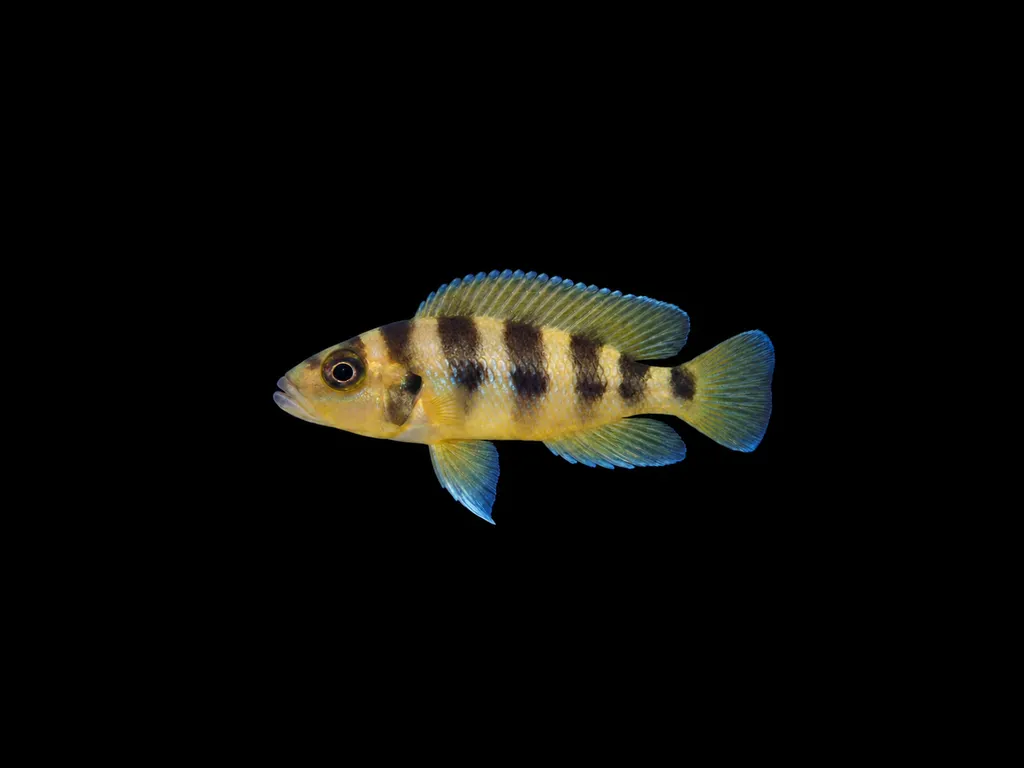 5.9 in (15 cm)79 gal (300 L)75–81°F (24–27°C)
Six-bar lamprologus
Neolamprologus sexfasciatus
5.9 in (15 cm) · 79 gal (300 L)
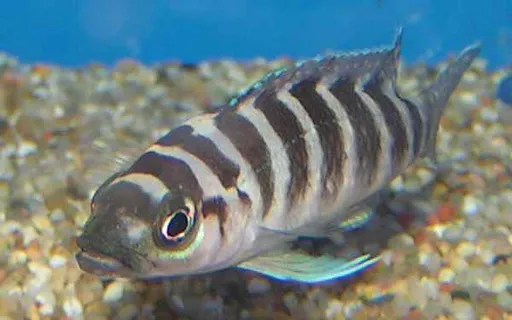 4.7 in (12 cm)29 gal (110 L)75–81°F (24–27°C)
Cylindricus cichlid
Neolamprologus cylindricus
4.7 in (12 cm) · 29 gal (110 L)