Dwarf giraffe cat
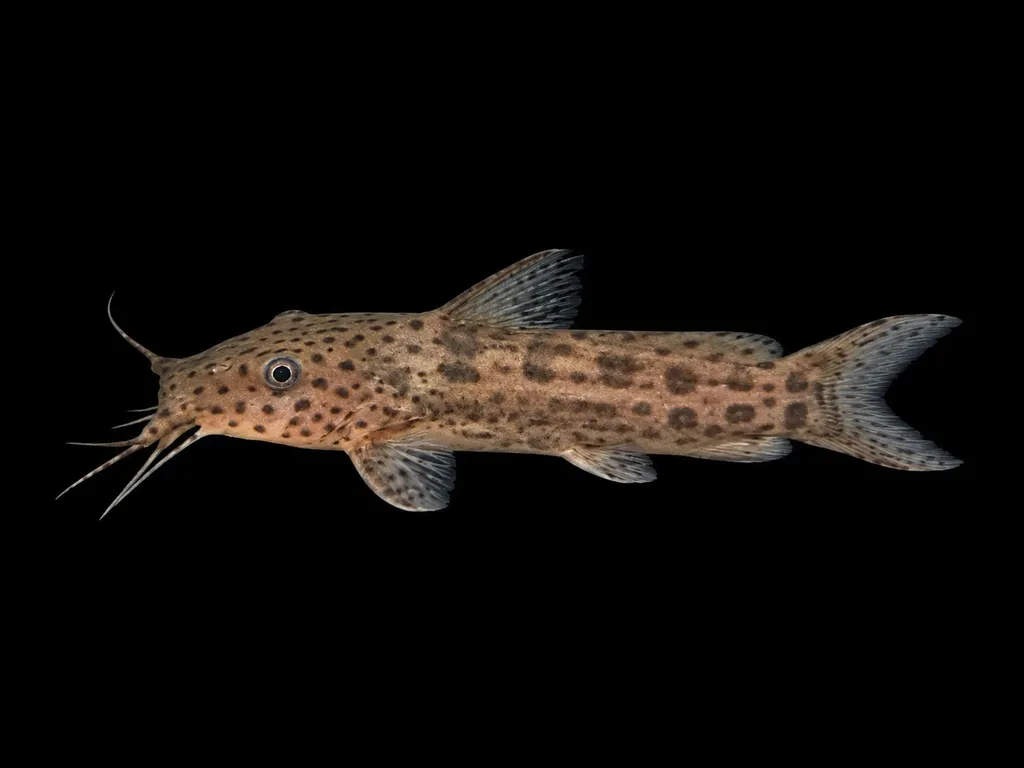
Notoglanidium macrostoma
Also known as Dwarf giraffe catfish, Flatnose catfish
FreshwaterFish
Care at a glance
- Temperature
- 73–82°F
- 23–28°C
- pH
- 6.5–7.8
- Adult size
- 11 in
- 28 cm
- Minimum tank
- 79 gal
- 300 L
- Temperament
- Mostly peaceful
- Social behavior
- Solitary
- Tankmates
- With caution
- Swim level
- Bottom
- Diet
- Carnivore
- Difficulty
- Medium
- Breeding
- No record
- Rarity
- Rare
- Family
- Claroteidae
- Origin
- Lower Congo and coastal Gabon rivers
Overview
The dwarf giraffe cat is a nocturnal African catfish for the bottom of a large, dim tank. It is best with a little experience.
Did you know
The dwarf giraffe cat has the look of a giraffe catfish, all pale patchwork and long barbels, in a much smaller body. It stays under 30 centimeters, where the true giraffe cats can pass half a meter or more.
Caring for the dwarf giraffe cat
Give the dwarf giraffe cat a tank of at least 79 gal (300 L), with a cave of its own. A soft sand floor protects its delicate barbels. Add bogwood, rounded caves and shaded corners so it can rest by day. Dim or blue night lighting brings it out to forage.
Keep the water warm, at 73 to 82°F (23 to 28°C), with a neutral pH of 6.5 to 7.8. It is a heavy, messy eater that produces plenty of waste, so use strong filtration and keep the water clean.
It spends the day tucked in a cave or under wood. At night it comes out to hunt, working the bottom for anything it can catch. Feed meaty foods such as earthworms, prawn, mussel and sinking pellets after dark, when it is active and confident.
The dwarf giraffe cat is calm toward fish too big to eat. It is territorial with its own kind, so keep just one per tank. It will eat small fish and is pushy with other bottom dwellers, so house it with large, robust, open-water tank mates. Breeding has not been recorded in the aquarium, so imported fish are wild caught.
Good to know
Notoglanidium macrostoma is a claroteid catfish, from one of the African bagrid-like families. Its flattened body carries the blotched, netted markings that give it the giraffe-cat name. It is also known as the flatnose catfish, for its broad, low head.
In the wild
The dwarf giraffe cat comes from the lower Congo region and the coastal rivers of Gabon. It lives in slow, dim water among submerged wood and leaf litter, where it likes shade and cover.
Common questions
What size tank does a dwarf giraffe cat need?
A dwarf giraffe cat needs at least 79 gal (300 L). It spends most of its time in the bottom.
What temperature and pH does a dwarf giraffe cat need?
A dwarf giraffe cat is comfortable at 73–82°F (23–28°C) with a pH of 6.5–7.8.
What does a dwarf giraffe cat eat?
A dwarf giraffe cat eats meaty foods such as earthworms, prawn, mussel and sinking pellets. Feed it after dark, when it is active and confident.
How big does a dwarf giraffe cat get?
An adult dwarf giraffe cat reaches about 11 in (28 cm).
Related species
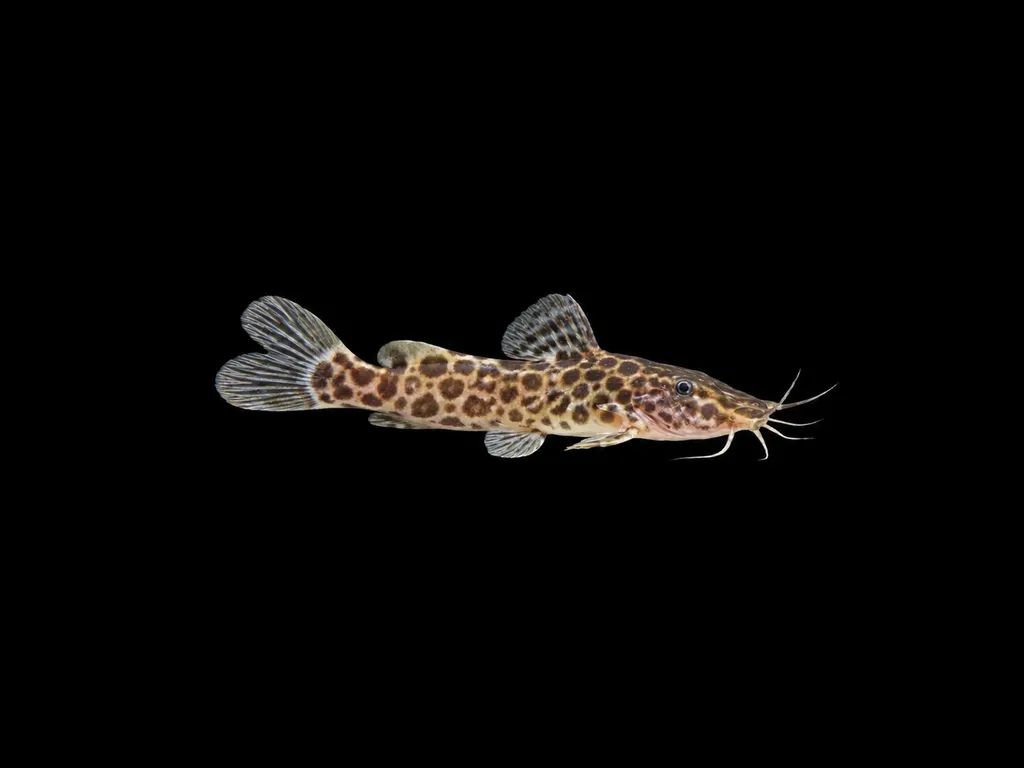 5.9 in (15 cm)53 gal (200 L)73–82°F (23–28°C)
Spotted dwarf giraffe cat
Parauchenoglanis monkei
5.9 in (15 cm) · 53 gal (200 L)
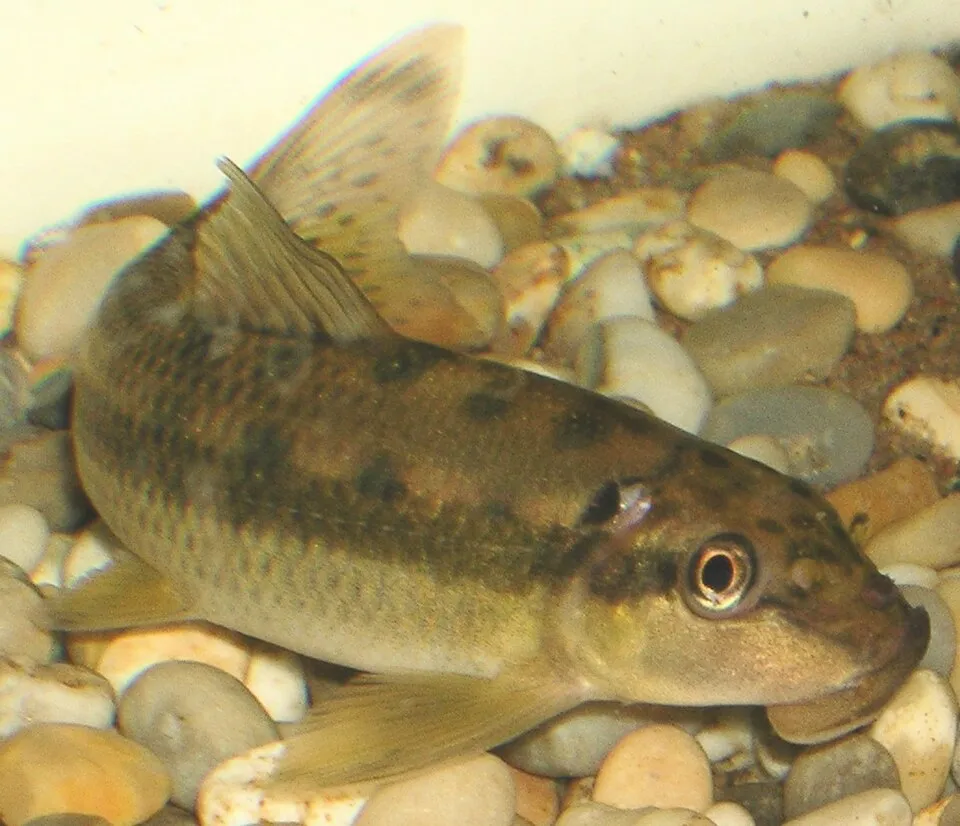 11 in (28 cm)46 gal (175 L)72–79°F (22–26°C)
Chinese algae eater
Gyrinocheilus aymonieri
11 in (28 cm) · 46 gal (175 L)
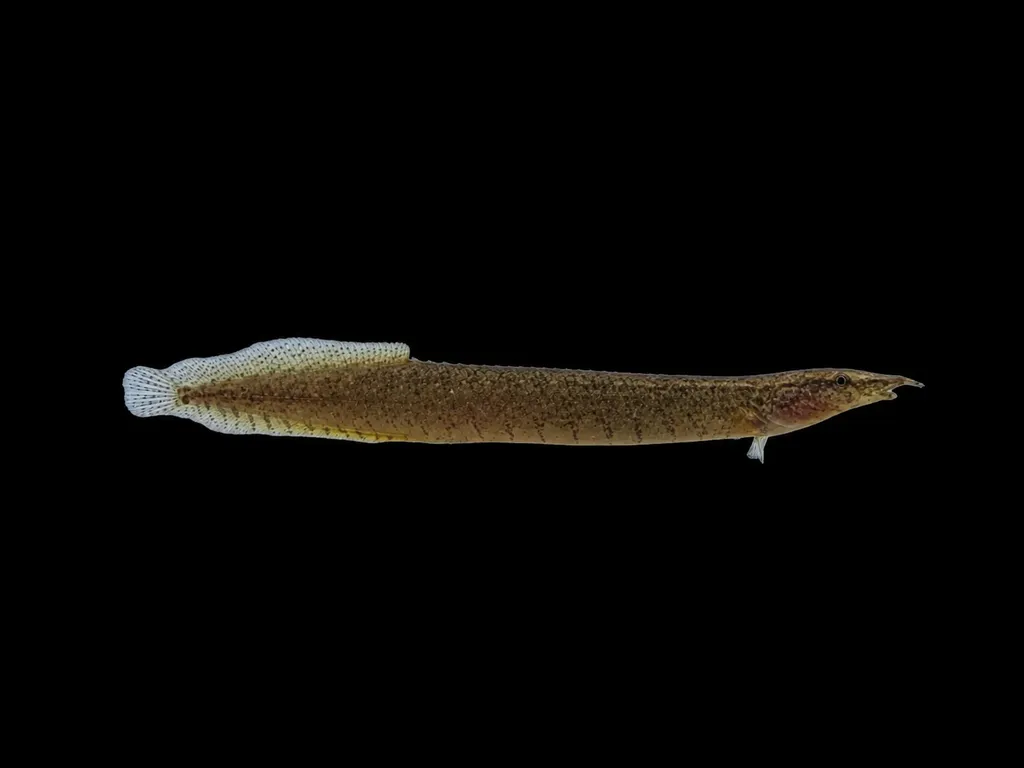 11 in (28 cm)66 gal (250 L)73–82°F (23–28°C)
Frecklefin spiny eel
Macrognathus maculatus
11 in (28 cm) · 66 gal (250 L)
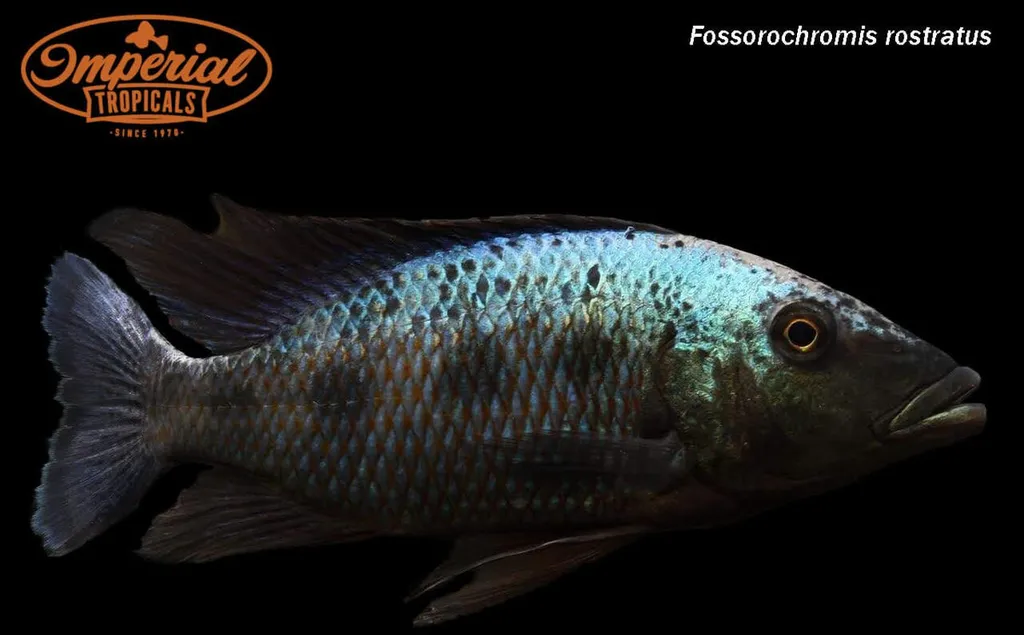 11 in (28 cm)119 gal (450 L)75–82°F (24–28°C)
Malawi sand diver
Fossorochromis rostratus
11 in (28 cm) · 119 gal (450 L)
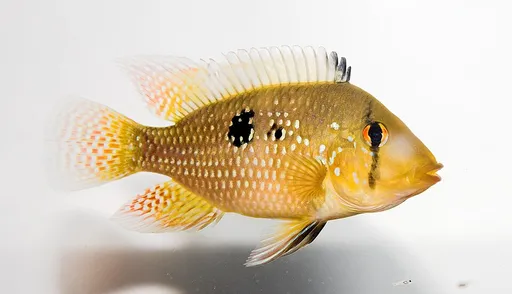 11 in (28 cm)75 gal (284 L)68–79°F (20–26°C)
Pearl eartheater
Geophagus brasiliensis
11 in (28 cm) · 75 gal (284 L)
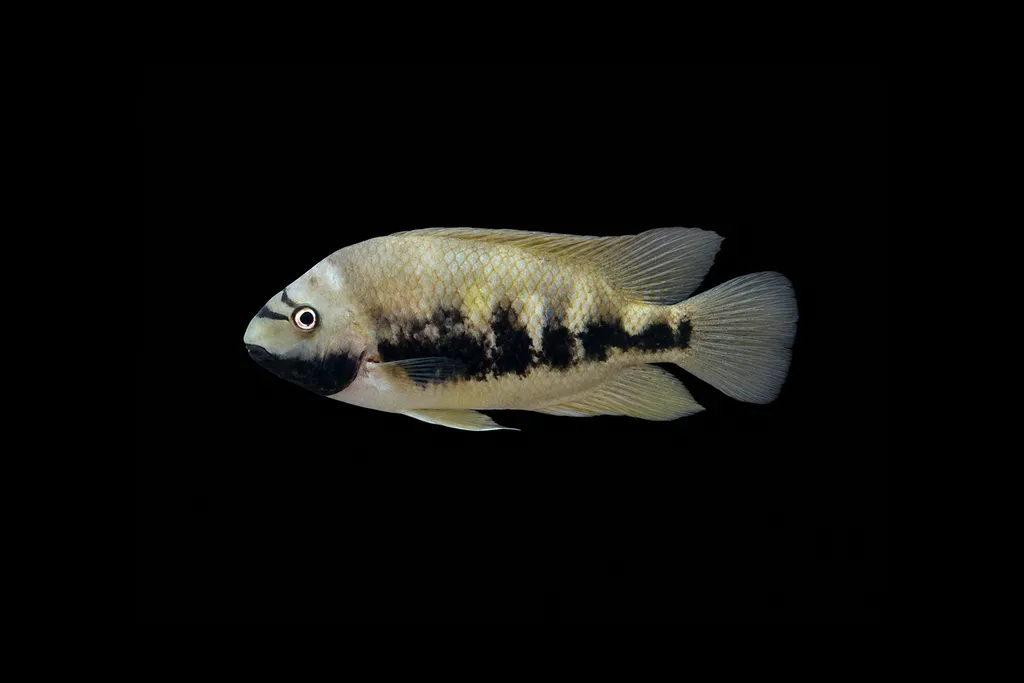 11 in (28 cm)106 gal (400 L)75–84°F (24–29°C)
Underwoodi cichlid
Talamancaheros underwoodi
11 in (28 cm) · 106 gal (400 L)