African eel catfish
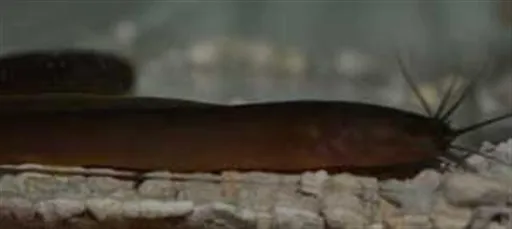
Channallabes apus
Also known as Eel catfish, Gaboon eel catfish, Snake catfish
FreshwaterFish
Care at a glance
- Temperature
- 72–82°F
- 22–28°C
- pH
- 6.0–7.5
- Adult size
- 13 in
- 33 cm
- Minimum tank
- 53 gal
- 200 L
- Temperament
- Mostly peaceful
- Social behavior
- Solitary
- Tankmates
- With caution
- Swim level
- Bottom
- Difficulty
- Medium
- Breeding
- No record
- Rarity
- Rare
- Family
- Clariidae
- Origin
- Found in swamps and muddy waters of the Congo basin in Central Africa.
Overview
The eel catfish is a hardy oddball, but it is a notorious escape artist that will climb out through the smallest gap, so an absolutely secure, weighted lid is essential. It is a nocturnal predator that will eat small fish and shrimp, though it ignores larger, faster tankmates, and it is otherwise not aggressive. Feed meaty foods like earthworms, bloodworm, and prawn after dark. It needs soft substrate and heavy cover in a tank of at least 200 liters.
In the wild
The African eel catfish lives in swamps, muddy backwaters, and oxygen-poor pools of the Congo basin, wriggling through mud and dense cover like an eel. It has a long, snake-like body, tiny eyes, and reduced fins, and can breathe air to survive stagnant water. Give it soft sand, plenty of wood and root tangles, dim light, and warm water at 22 to 28 degrees C, with a very secure lid.
Good to know
Channallabes apus grows to about 33 cm and belongs to the airbreathing catfish family Clariidae, with an elongated body and an accessory breathing organ. Remarkably, it can leave the water to hunt, bending its body to pin insect prey on land and swallow it, one of the few fish known to feed out of water. It burrows through soft mud in search of food.
Did you know
It is one of the very few fish that can hunt on land, lunging out of the water and arching its body downward to trap and swallow insects clear of the surface.
Common questions
What size tank does an African eel catfish need?
An African eel catfish needs at least 53 gal (200 L). It spends most of its time in the bottom.
What temperature and pH does an African eel catfish need?
An African eel catfish is comfortable at 72–82°F (22–28°C) with a pH of 6.0–7.5.
How big does an African eel catfish get?
An adult African eel catfish reaches about 13 in (33 cm).
Related species
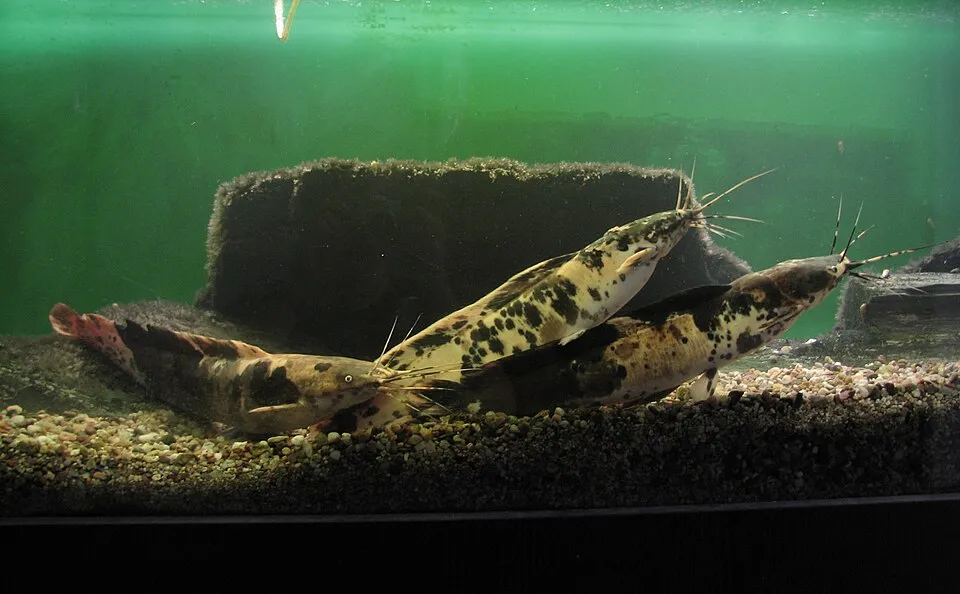 23.6 in (60 cm)600 gal (2,270 L)68–79°F (20–26°C)
Walking catfish
Clarias batrachus
23.6 in (60 cm) · 600 gal (2,270 L)
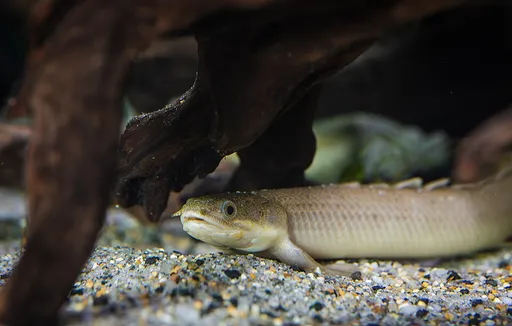 13.8 in (35 cm)143 gal (540 L)75–82°F (24–28°C)
Senegal bichir
Polypterus senegalus
13.8 in (35 cm) · 143 gal (540 L)
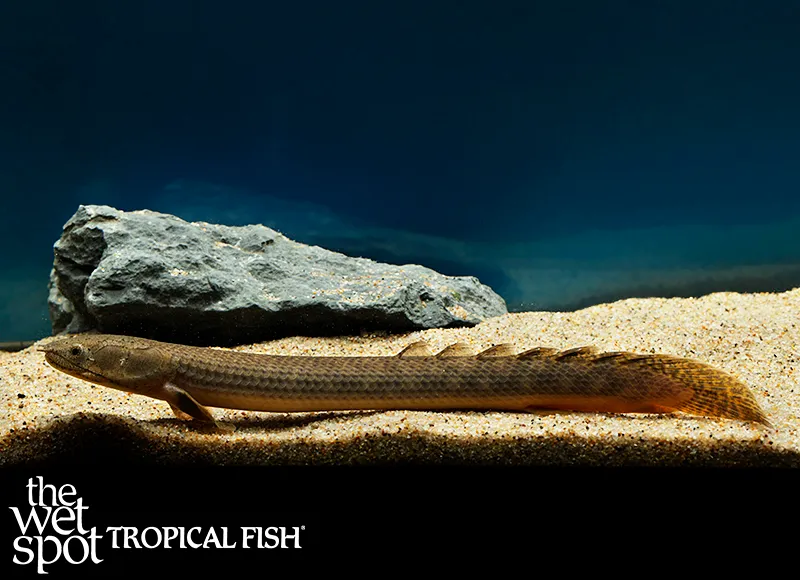 13.8 in (35 cm)53 gal (200 L)77–82°F (25–28°C)
West African bichir
Polypterus retropinnis
13.8 in (35 cm) · 53 gal (200 L)
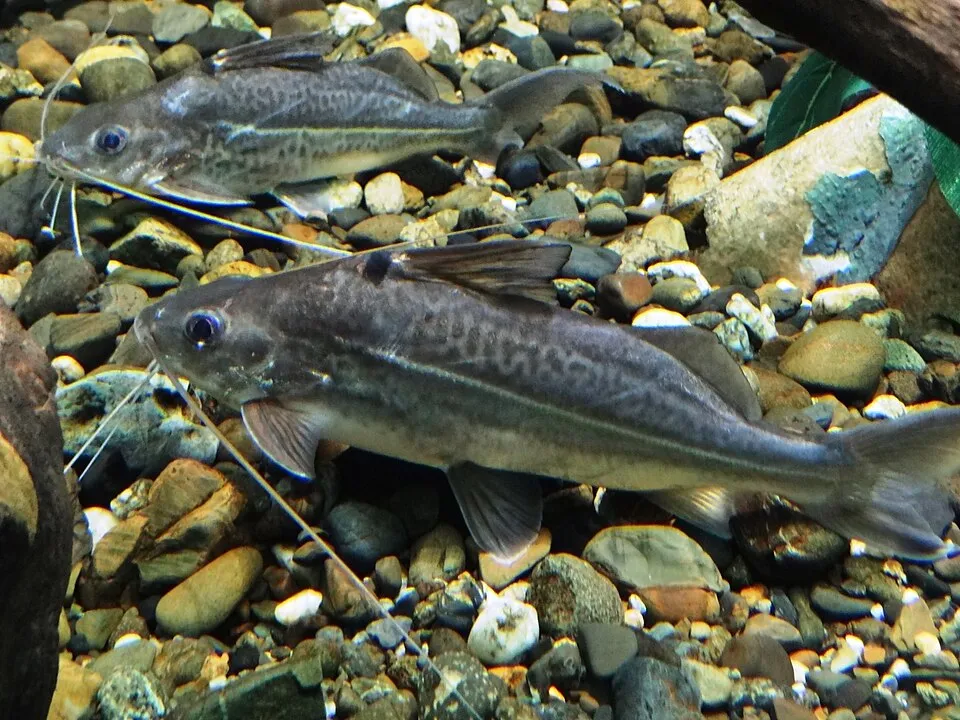 12.2 in (31 cm)65 gal (245 L)75–82°F (24–28°C)
Ornate pimelodus
Pimelodus ornatus
12.2 in (31 cm) · 65 gal (245 L)
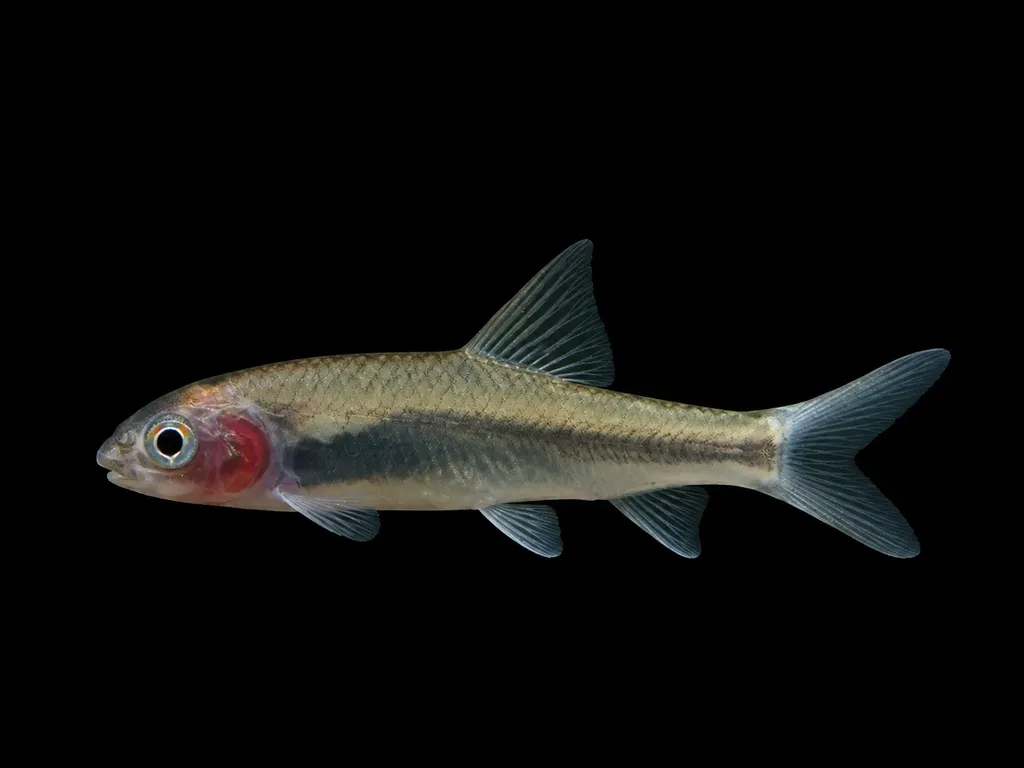 11.8 in (30 cm)106 gal (400 L)68–81°F (20–27°C)
Boga labeo
Labeo boga
11.8 in (30 cm) · 106 gal (400 L)
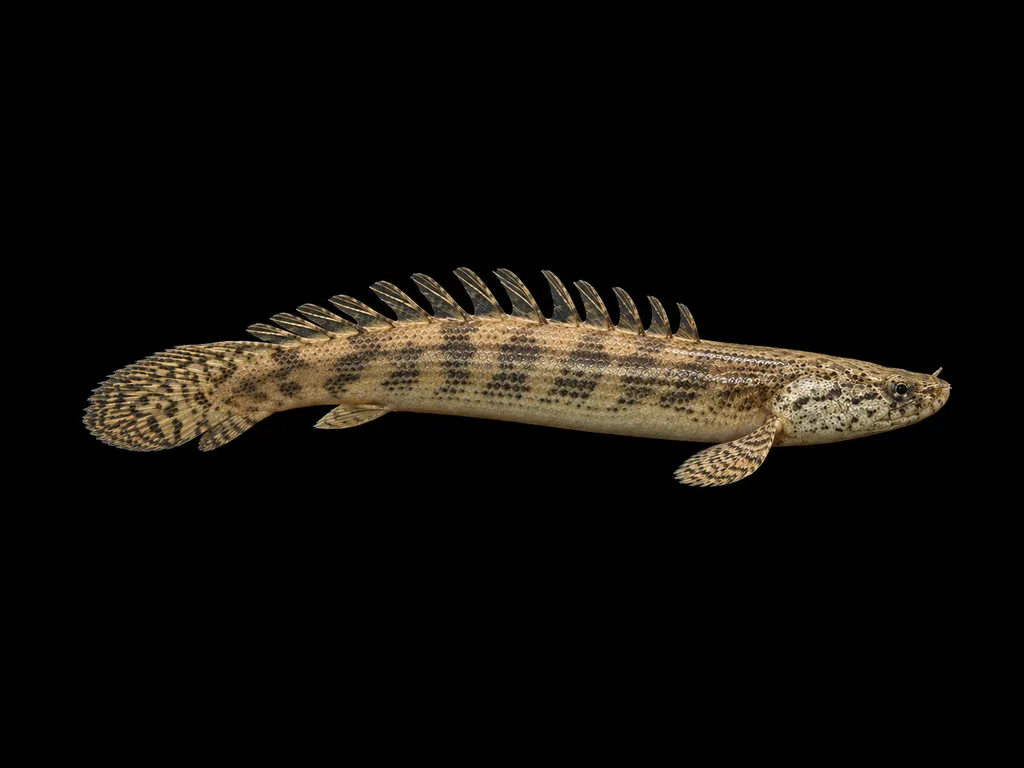 15.7 in (40 cm)119 gal (450 L)75–82°F (24–28°C)
Ansorge's bichir
Polypterus ansorgii
15.7 in (40 cm) · 119 gal (450 L)