Blue gularis
Fundulopanchax sjoestedti
Also known as Blue gularis killifish
FreshwaterFish
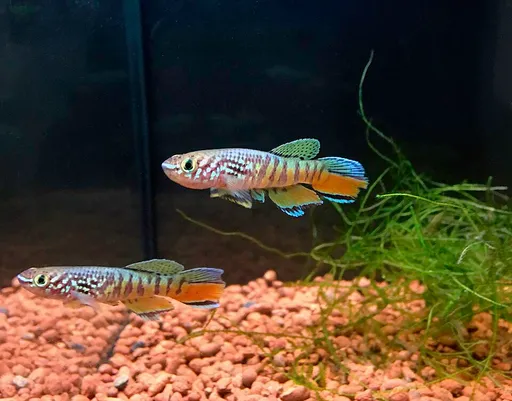
Care at a glance
- Temperature
- 72–79°F
- 22–26°C
- pH
- 6.0–7.5
- Adult size
- 4.7 in
- 12 cm
- Minimum tank
- 21 gal
- 80 L
- Temperament
- Aggressive
- Social behavior
- Solitary
- Own kind
- One male per tank
- Tankmates
- With caution
- Swim level
- Bottom
- Difficulty
- Medium
- Breeding
- Medium
- Rarity
- Common
- Family
- Nothobranchiidae
- Origin
- Coastal lowlands of Nigeria and Cameroon (Niger Delta)
Overview
Keep a single pair or a trio of one male and two females in a tank of at least 80 liters, and only ever one male, since two males will fight. They are aggressive, predatory bottom dwellers that will eat small fish and shrimp, so any tankmates must be peaceful and too large to fit in the mouth. Run the water at 22 to 26 C, soft, with a pH between 6 and 7.5. A tight lid is essential because they jump. Feed meaty foods like frozen bloodworms, brine shrimp, and small earthworms, with the odd pellet they will take.
In the wild
Blue gularis come from the coastal lowlands of Nigeria and Cameroon, in and around the Niger Delta, where they live in soft, acidic blackwater pools and slow forest streams stained brown with tannins. To match that, give them fine sand, plenty of driftwood, and dense planting, with some leaf litter or botanicals to push the water soft and acidic. Keep them between 22 and 26 C with a pH of 6 to 7.5. Lower light and tannin-stained water suit them best.
Good to know
This is a large killifish in the family Aplocheilidae, growing to about 12 cm, which is big for a killi. It is a bottom spawner, and the eggs can either be water incubated or stored in damp peat for a few weeks before hatching. Most fish in the trade are bred by hobbyists, and a healthy adult lives a couple of years.
Did you know
The eggs can survive out of water. In the wild, pools that dry down would kill most fish, so the eggs sit in damp ground until rain returns, which is why hobbyists can store them in peat and post them in the mail. You can wet the peat weeks later and watch a batch of fry hatch out within hours.
Common questions
What size tank does a Blue gularis need?
A Blue gularis needs at least 21 gal (80 L). It spends most of its time in the bottom.
What temperature and pH does a Blue gularis need?
A Blue gularis is comfortable at 72–79°F (22–26°C) with a pH of 6.0–7.5.
How big does a Blue gularis get?
An adult Blue gularis reaches about 4.7 in (12 cm).
Related species
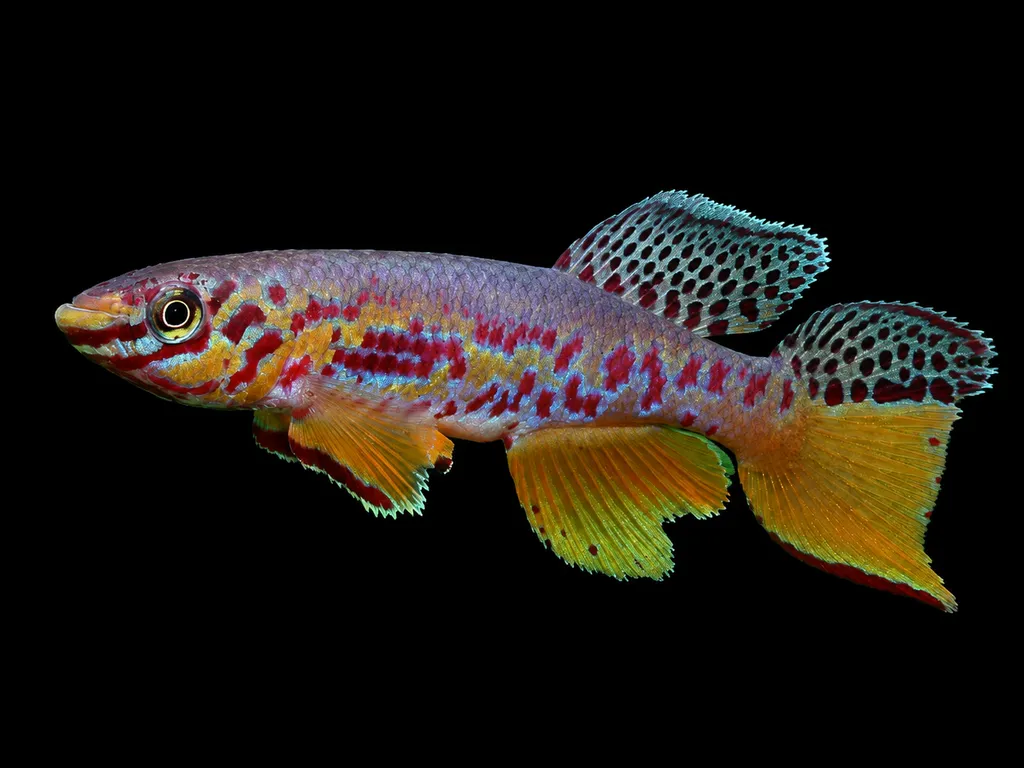 3.5 in (9 cm)14 gal (54 L)68–77°F (20–25°C)
Fallax killifish
Fundulopanchax fallax
3.5 in (9 cm) · 14 gal (54 L)
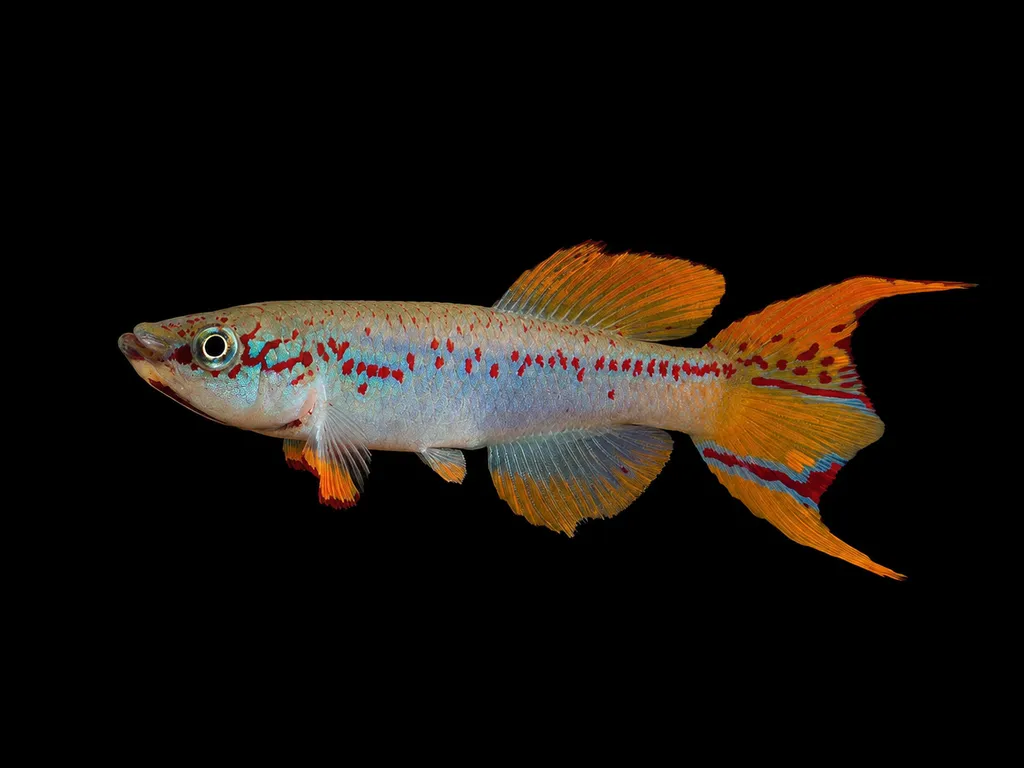 3.1 in (8 cm)14 gal (54 L)68–77°F (20–25°C)
Delta killifish
Fundulopanchax deltaensis
3.1 in (8 cm) · 14 gal (54 L)
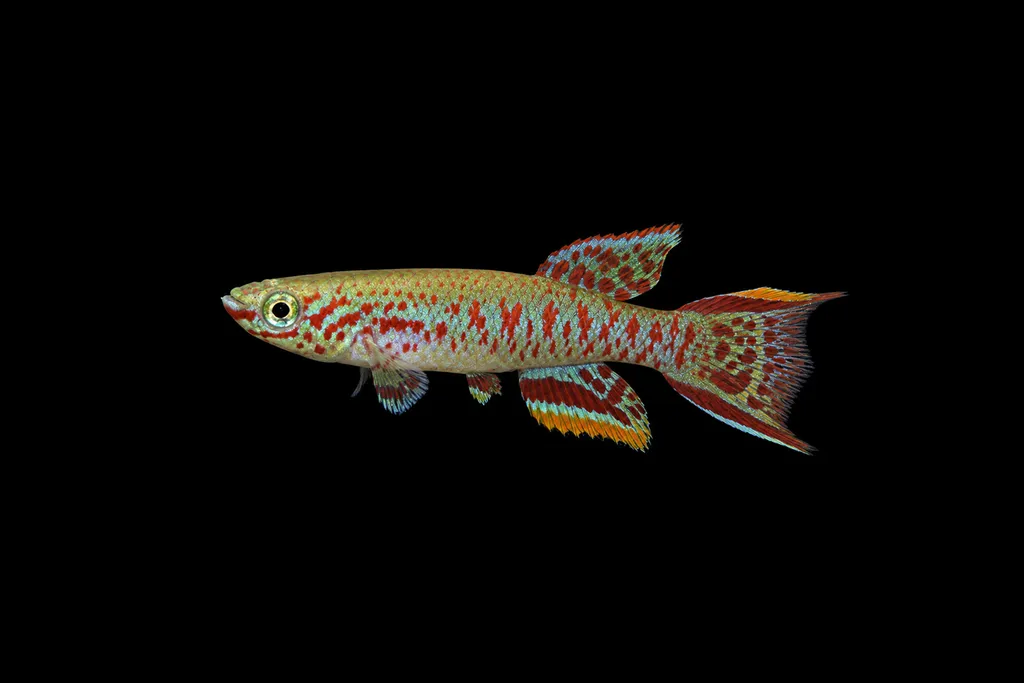 3 in (7.5 cm)14 gal (54 L)68–77°F (20–25°C)
Arnold's killifish
Fundulopanchax arnoldi
3 in (7.5 cm) · 14 gal (54 L)
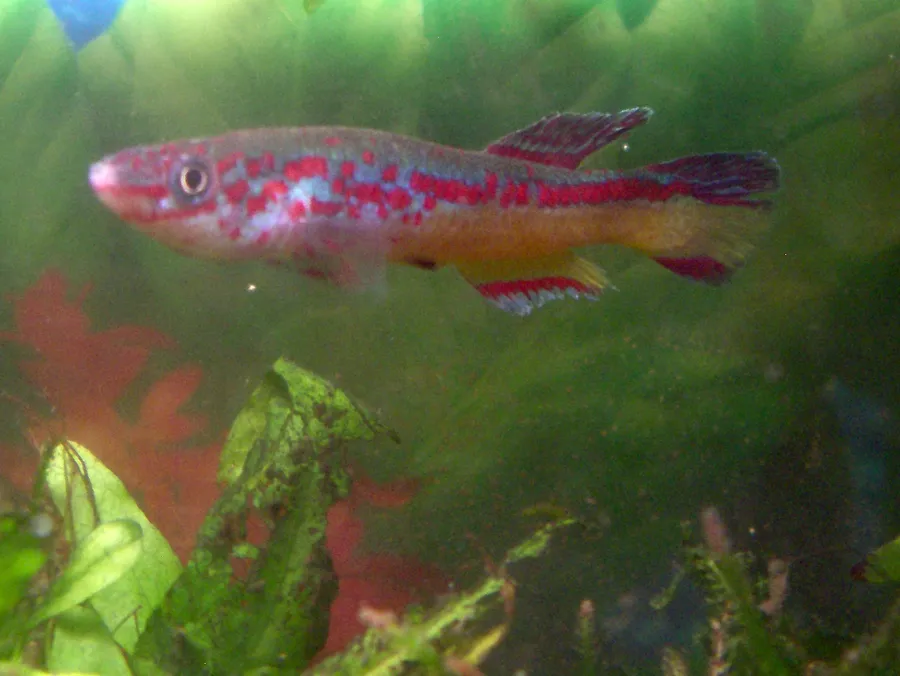 2.8 in (7 cm)14 gal (54 L)68–77°F (20–25°C)
Amiet's lyretail
Fundulopanchax amieti
2.8 in (7 cm) · 14 gal (54 L)
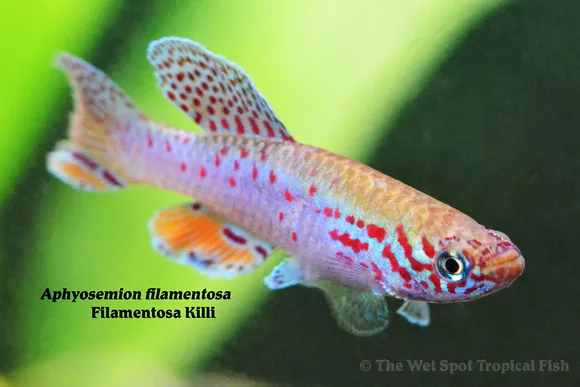 2.4 in (6 cm)20 gal (75 L)68–75°F (20–24°C)
Plumed lyretail
Fundulopanchax filamentosus
2.4 in (6 cm) · 20 gal (75 L)
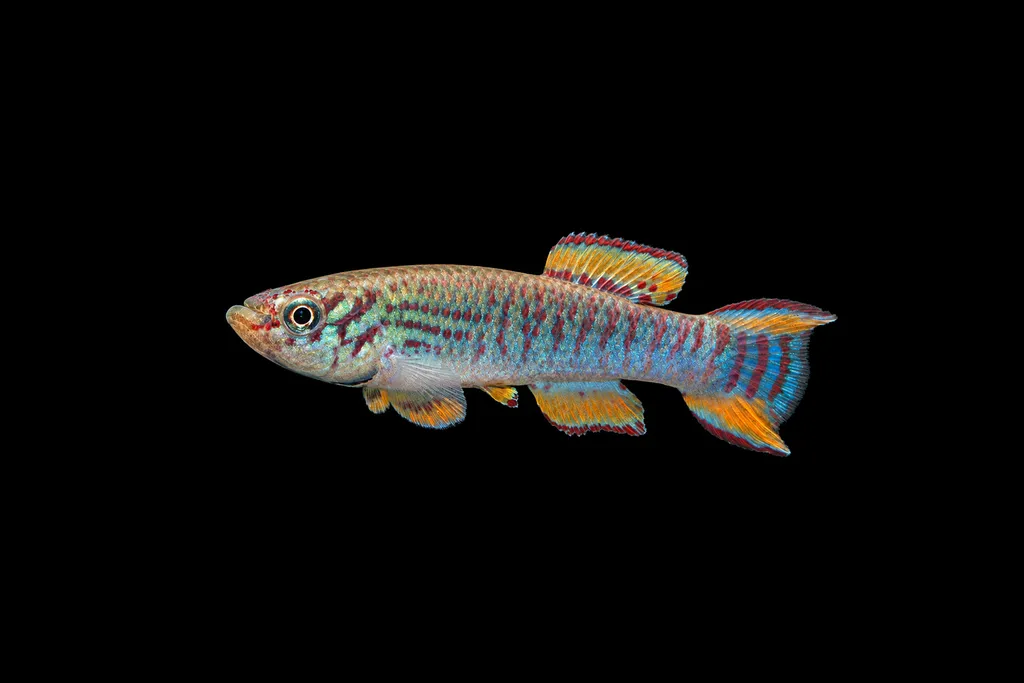 2.4 in (6 cm)14 gal (54 L)68–77°F (20–25°C)
Walker's killifish
Fundulopanchax walkeri
2.4 in (6 cm) · 14 gal (54 L)