Allen's damsel
Pomacentrus alleni
Also known as Andaman Damsel, Neon Damsel
SaltwaterFish
Care at a glance
- Temperature
- 75–81°F
- 24–27°C
- pH
- 8.1–8.4
- Adult size
- 2.4 in
- 6 cm
- Minimum tank
- 29 gal
- 110 L
- Temperament
- Mostly peaceful
- Social behavior
- Social
- Tankmates
- With caution
- Swim level
- Middle
- Diet
- Omnivore
- Difficulty
- Easy
- Breeding
- Substrate spawner · Medium
- Rarity
- Common
- Reef safe
- Reef safe
- Family
- Pomacentridae
- Origin
- Eastern Indian Ocean reefs
Overview
Allen's damsel is a small Pomacentrus damsel and a solid choice for a reef community tank. It is easy to keep.
Did you know
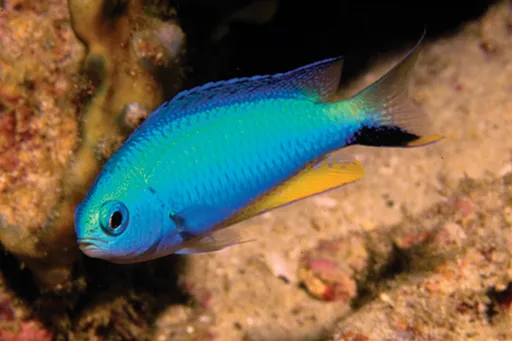
Its electric blue body and bright yellow belly make Allen's damsel one of the more strikingly colored small damsels. It keeps that look for life instead of fading with age like many of its relatives.
Caring for the Allen's damsel
Allen's damsel retreats quickly when startled, so give it dense live rock with small crevices. A tank of 29 gal (110 L) works well for one fish, and keeping several together needs more room. Aim for 75 to 81°F (24 to 27°C) and a pH of 8.1 to 8.4. Feed small meaty foods such as mysis and brine shrimp, along with marine pellets and some algae-based food.
It has a gentler reputation than most of its relatives, often described as shy or skittish rather than pushy. It can still stake out a favorite rock and turn territorial toward its own kind or similar-sized fish, especially in a smaller tank. It rarely bothers slower or more docile tank mates, and it leaves coral and sessile invertebrates alone. It does best in a small group, with enough rockwork for each fish to claim a corner.
The male clears a nest site and courts a female to lay adhesive eggs there. He then guards and fans the clutch alone until it hatches. Breeding Allen's damsel is moderately difficult.
Good to know
Allen's damsel, Pomacentrus alleni, belongs to the damselfish family Pomacentridae. It is named for the ichthyologist Gerald Allen, who described hundreds of Indo-Pacific reef fish over his career. Small numbers have been reared by commercial marine fish farms, though most in the trade are still wild-caught.
In the wild
Allen's damsel is native to a fairly narrow stretch of the eastern Indian Ocean, around the Andaman Sea and Thailand. It has also been recorded from Indonesia. It shelters among branching coral and rocky reef.
Common questions
What size tank does an Allen's damsel need?
An Allen's damsel needs at least 29 gal (110 L). It spends most of its time in the middle.
What temperature and pH does an Allen's damsel need?
An Allen's damsel is comfortable at 75–81°F (24–27°C) with a pH of 8.1–8.4.
What does an Allen's damsel eat?
Allen's damsel eats small meaty foods such as mysis and brine shrimp. Add marine pellets and some algae-based food as well.
How big does an Allen's damsel get?
An adult Allen's damsel reaches about 2.4 in (6 cm).
How does an Allen's damsel breed?
Allen's damsel males clear a nest site and court a female to lay adhesive eggs there. The male guards and fans the clutch alone until it hatches. Breeding them is moderately difficult.
Related species
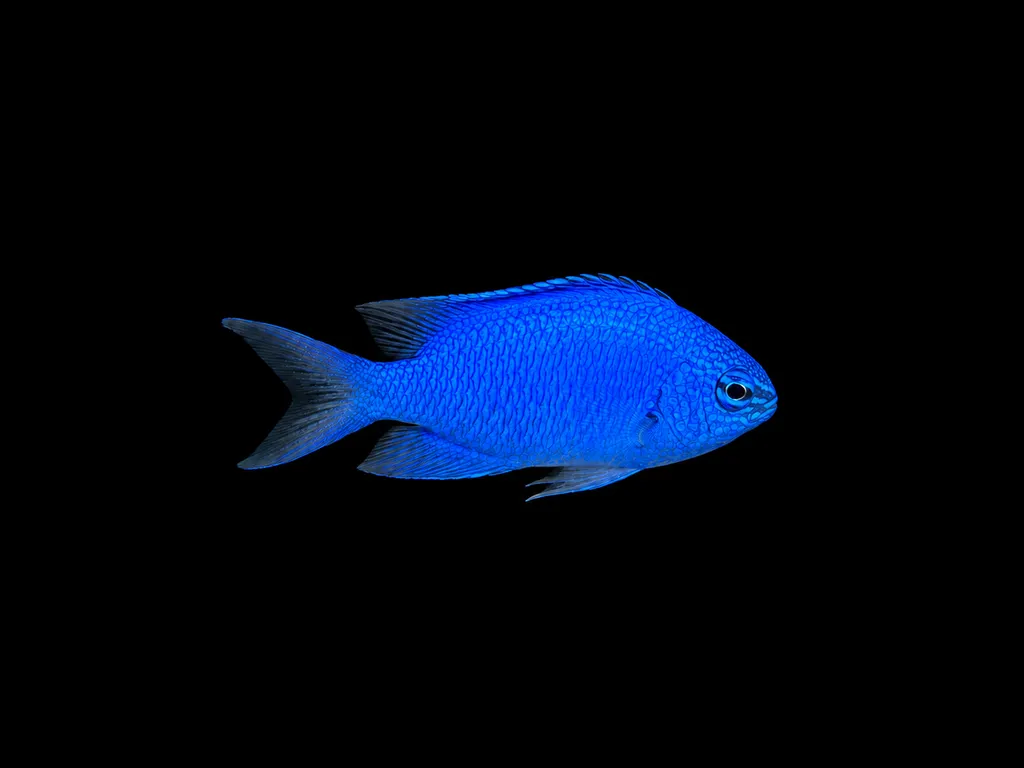 3.3 in (8.5 cm)29 gal (110 L)75–82°F (24–28°C)
Sapphire damsel
Pomacentrus pavo
3.3 in (8.5 cm) · 29 gal (110 L)
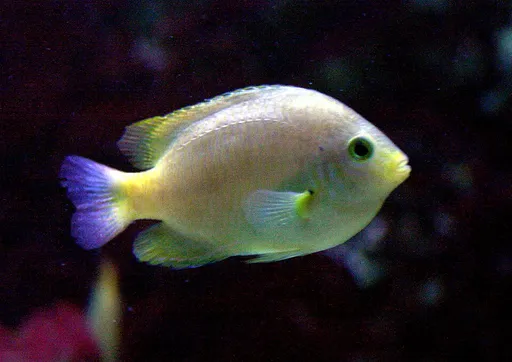 3.5 in (9 cm)29 gal (110 L)75–81°F (24–27°C)
Lemon damsel
Pomacentrus moluccensis
3.5 in (9 cm) · 29 gal (110 L)
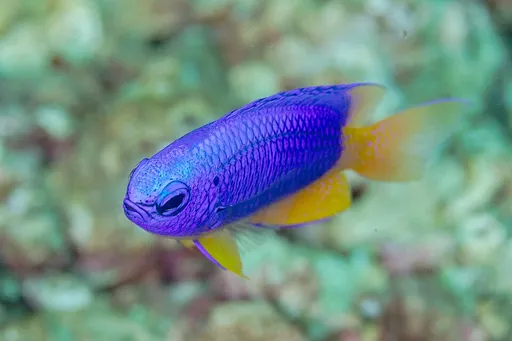 3.5 in (9 cm)29 gal (110 L)75–81°F (24–27°C)
Neon damselfish
Pomacentrus coelestis
3.5 in (9 cm) · 29 gal (110 L)
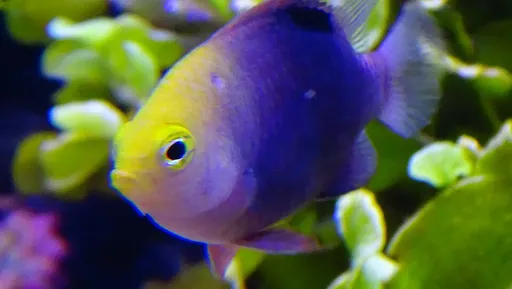 2.4 in (6 cm)29 gal (110 L)75–81°F (24–27°C)
Talbot's damsel
Chrysiptera talboti
2.4 in (6 cm) · 29 gal (110 L)
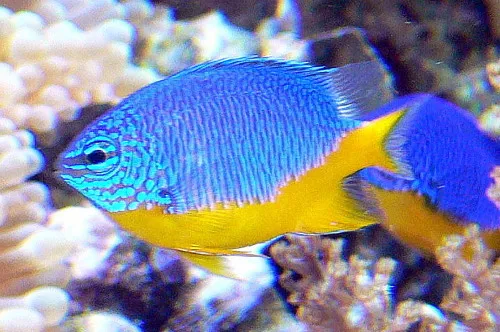 2.8 in (7 cm)29 gal (110 L)75–81°F (24–27°C)
Azure damsel
Chrysiptera hemicyanea
2.8 in (7 cm) · 29 gal (110 L)
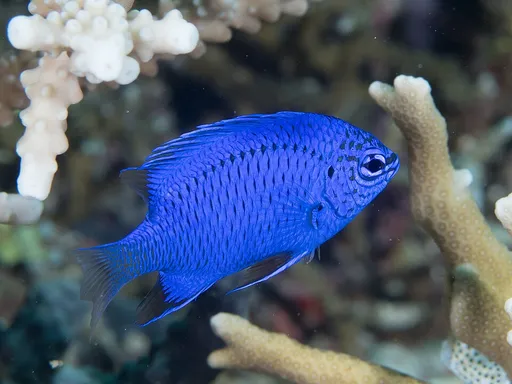 2.8 in (7 cm)25 gal (95 L)75–81°F (24–27°C)
Springer's damsel
Chrysiptera springeri
2.8 in (7 cm) · 25 gal (95 L)