African snakehead
Parachanna obscura
FreshwaterFish
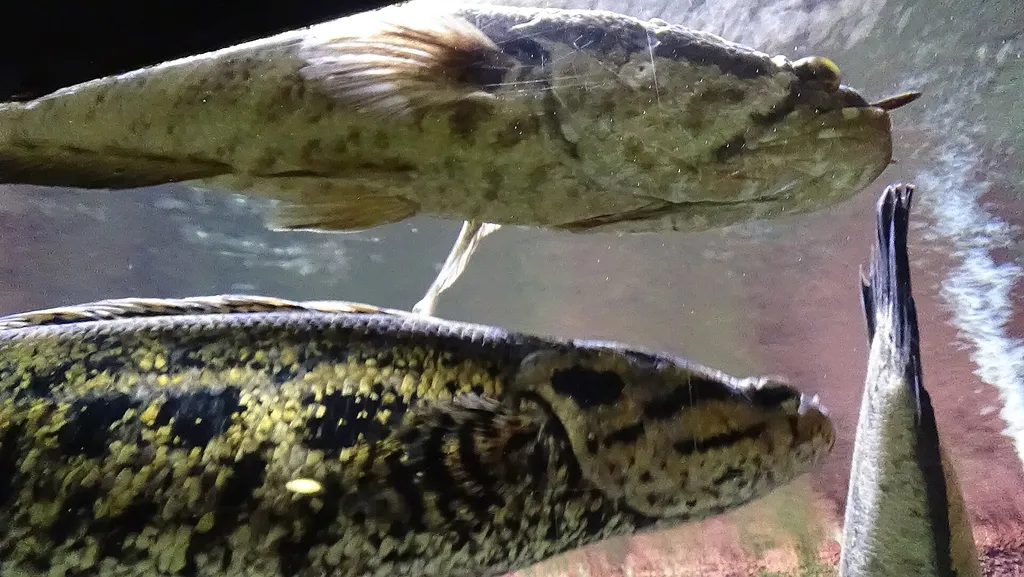
Care at a glance
- Temperature
- 79–86°F
- 26–30°C
- pH
- 6.0–7.5
- Adult size
- 17.7 in
- 45 cm
- Minimum tank
- 74 gal
- 280 L
- Temperament
- Aggressive
- Social behavior
- Solitary
- Tankmates
- With caution
- Swim level
- Middle
- Difficulty
- Medium
- Breeding
- No record
- Rarity
- Very rare
- Family
- Channidae
- Origin
- West Africa
Overview
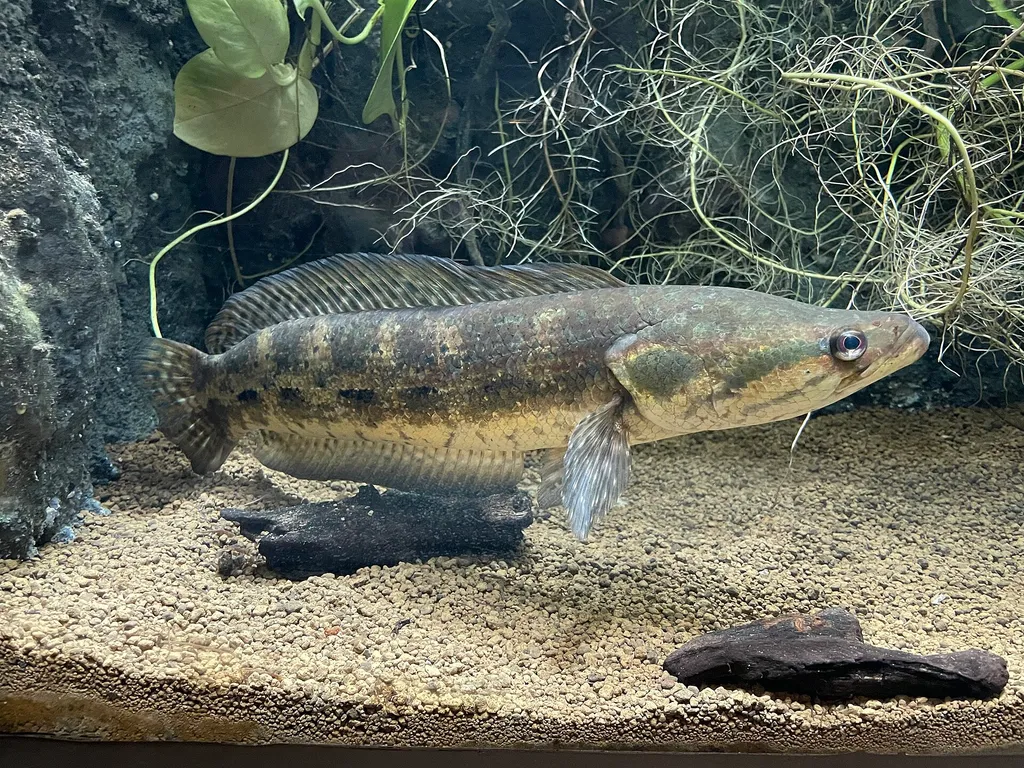
The African snakehead is a large, predatory air-breather that is best kept on its own, since it will kill or eat almost anything it can catch, including its own kind. Adults patrol the middle of the tank but come up regularly to gulp air, so leave a gap between the water and a tight lid. Feed meaty foods such as earthworms, prawns, mussel and the occasional whole fish, offered a few times a week rather than daily. Do not rely on live feeder fish, which carry disease. Give it a long tank of at least 280 liters with a heavy lid, as these fish are strong and jump. House it alone, or at most attempt a bonded pair in a very large setup with plenty of cover.
In the wild
It lives in the slow rivers, swamps and floodplain pools of west and central Africa, water that is often warm, still and low in oxygen. That habitat is exactly why the fish breathes air. Recreate it with a soft, sandy or fine gravel base, some sturdy driftwood and a few tough plants or floating cover to break up the light. Keep the water warm, between 26 and 30 degrees Celsius, and slightly acidic to neutral at pH 6.0 to 7.5. Gentle filtration suits it, since it comes from sluggish water, but keep on top of water changes because it is a messy, heavy feeder.
Good to know
Parachanna obscura belongs to Channidae, the snakehead family, and is one of only a few African members of the group. It is a substantial fish, reaching about 45 centimeters, with an elongate body, a broad flattened head and a large mouth full of teeth. Like all snakeheads it has a chamber above the gills that lets it breathe atmospheric air and survive in stagnant water. Breeding in aquaria is rarely recorded, but in the wild pairs spawn among surface vegetation and both parents guard the floating eggs and fry, with the female reported to feed the young on unfertilised eggs.
Did you know
The species name obscura means dark or dusky, a nod to its mottled brown camouflage. Snakeheads are such capable air-breathers that they can survive for a long time out of water in damp conditions, and several of their relatives can even wriggle short distances over land.
Common questions
What size tank does an African snakehead need?
An African snakehead needs at least 74 gal (280 L). It spends most of its time in the middle.
What temperature and pH does an African snakehead need?
An African snakehead is comfortable at 79–86°F (26–30°C) with a pH of 6.0–7.5.
How big does an African snakehead get?
An adult African snakehead reaches about 17.7 in (45 cm).
Related species
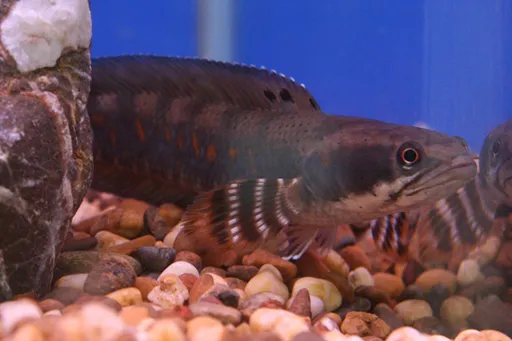 11.8 in (30 cm)74 gal (280 L)61–79°F (16–26°C)
Peacock snakehead
Channa pulchra
11.8 in (30 cm) · 74 gal (280 L)
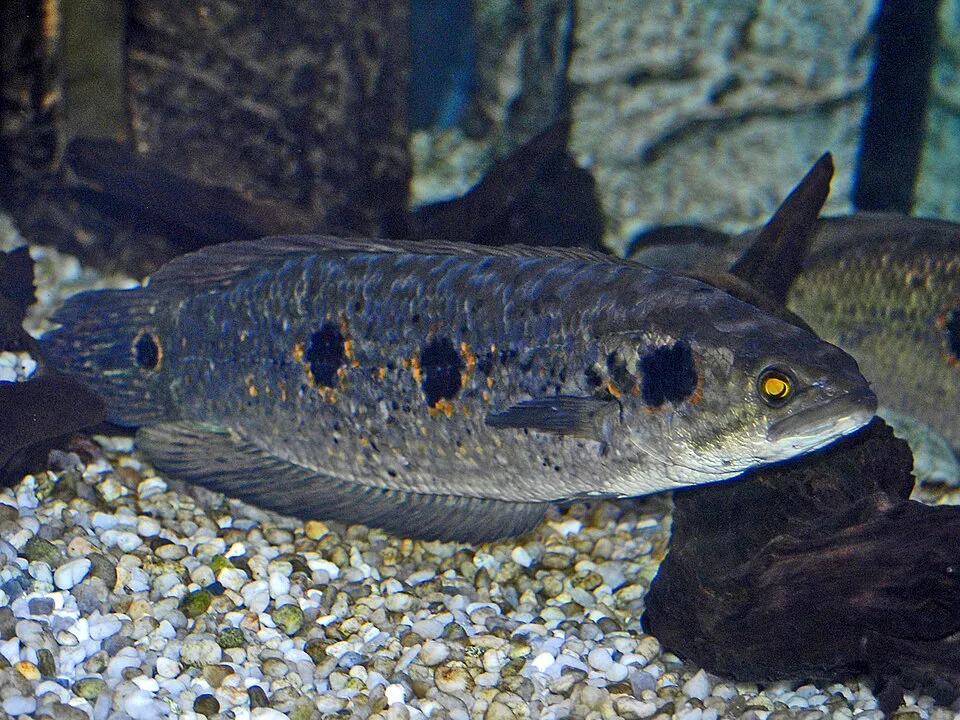 15.7 in (40 cm)70 gal (265 L)75–82°F (24–28°C)
Ocellated snakehead
Channa pleurophthalma
15.7 in (40 cm) · 70 gal (265 L)
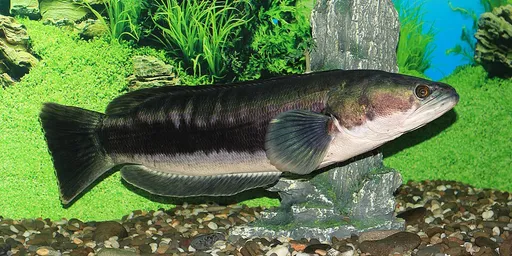 39.4 in (100 cm)528 gal (2,000 L)75–82°F (24–28°C)
Giant snakehead
Channa micropeltes
39.4 in (100 cm) · 528 gal (2,000 L)
 15.7 in (40 cm)70 gal (265 L)68–86°F (20–30°C)
Forest snakehead
Channa lucius
15.7 in (40 cm) · 70 gal (265 L)
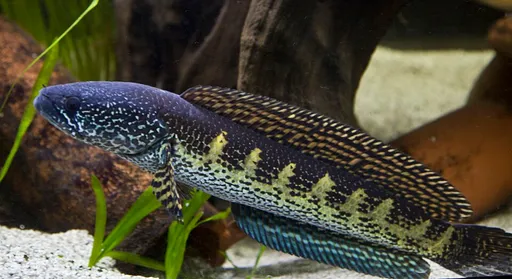 15.7 in (40 cm)119 gal (450 L)59–77°F (15–25°C)
Orange-spotted snakehead
Channa aurantimaculata
15.7 in (40 cm) · 119 gal (450 L)
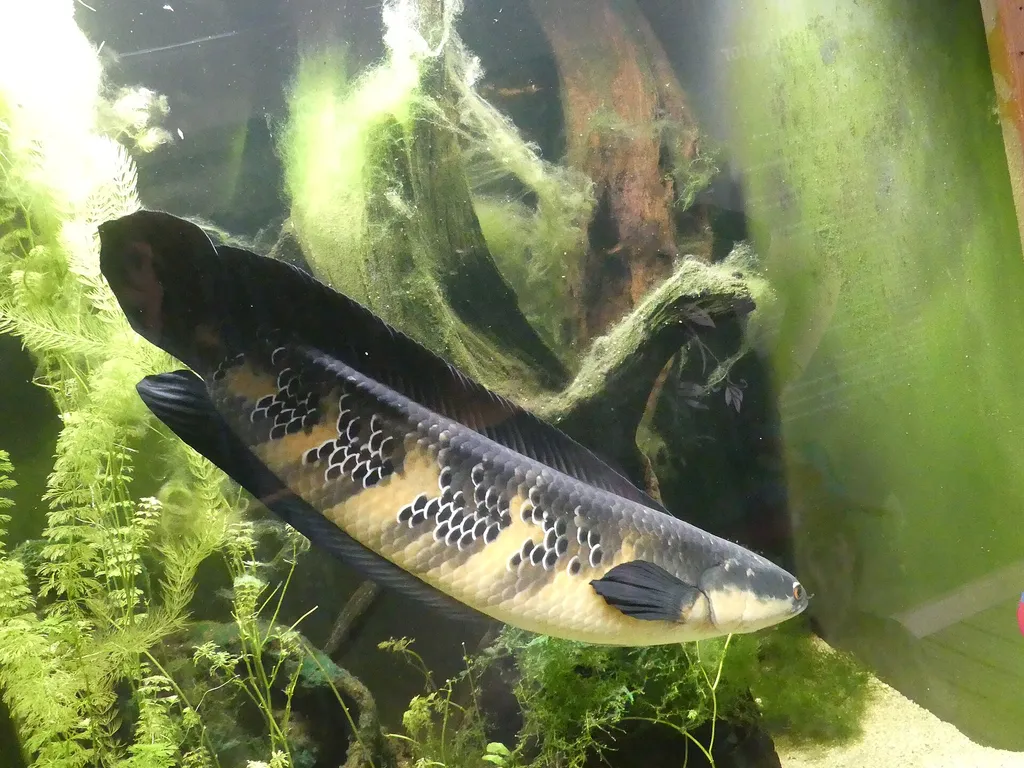 47.2 in (120 cm)396 gal (1,500 L)72–82°F (22–28°C)
Bullseye snakehead
Channa marulius
47.2 in (120 cm) · 396 gal (1,500 L)