Forest snakehead
Channa lucius
FreshwaterFish
Care at a glance
- Temperature
- 68–86°F
- 20–30°C
- pH
- 6.0–7.5
- Adult size
- 15.7 in
- 40 cm
- Minimum tank
- 70 gal
- 265 L
- Temperament
- Aggressive
- Social behavior
- Solitary
- Tankmates
- Species tank only
- Swim level
- Bottom
- Difficulty
- Medium
- Breeding
- No record
- Rarity
- Very rare
- Family
- Channidae
- Origin
- South East Asia
Overview
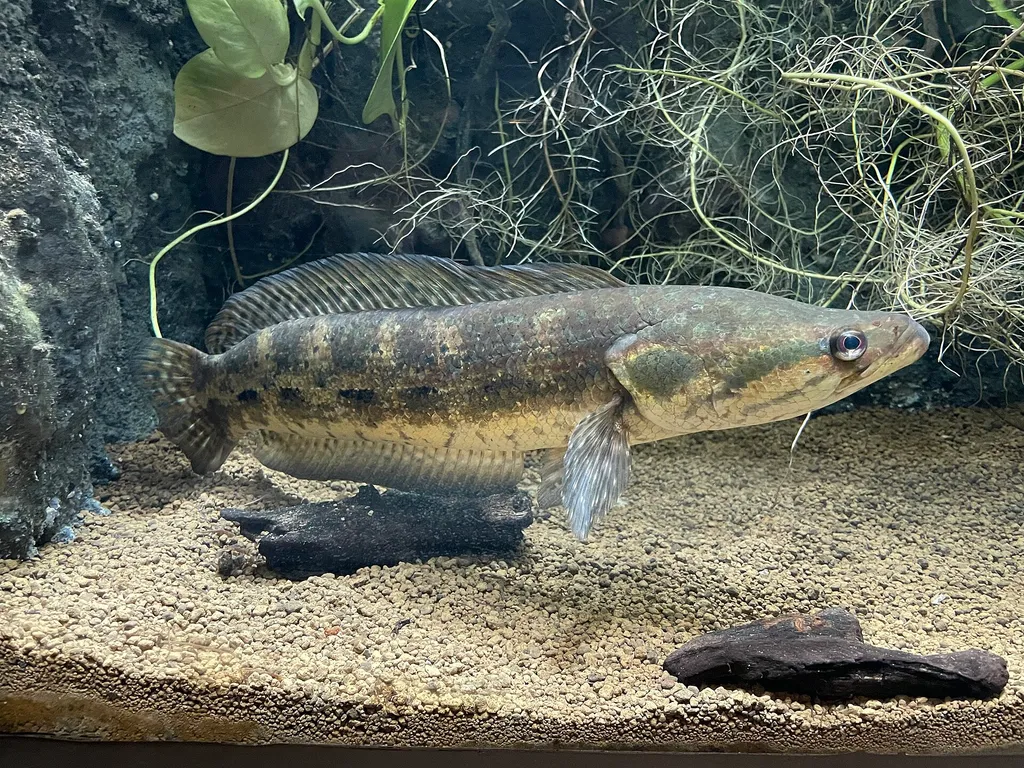
The forest snakehead is a large, aggressive predator that should be kept alone, as it will attack other snakeheads and eat anything it can swallow. It spends most of its time low in the tank, lying among wood and plants before ambushing food. Do not attempt a community; even a bonded pair needs a big tank and close watching. Feed meaty items such as earthworm, prawn, mussel and the occasional whole fish, offered every few days rather than daily, and skip live feeder fish that bring disease. It grows big and jumps hard, so give it at least 265 liters with a heavy, tight-fitting lid and plenty of cover.
In the wild
Channa lucius is found across Southeast Asia in slow rivers, swamps, canals and forest pools, often in shady, plant-choked water. Recreate that with a dimly lit tank, driftwood, leaf litter and clumps of tough plants over a soft, dark substrate, leaving open lanes where the fish can rest and lie in wait. Keep the temperature between 20 and 30 degrees Celsius and the pH from 6.0 to 7.5. Filtration can be gentle, as it comes from sluggish water, but stay on top of water changes because it is a large, messy carnivore.
Good to know
A member of the snakehead family Channidae, the forest snakehead reaches about 40 centimeters and has the elongate body, flattened head and toothy mouth typical of the group. Like all snakeheads it breathes air using a chamber above the gills and must reach the surface. Aquarium breeding is rarely recorded; in the wild the parents guard a clutch of floating eggs and stay with the fry. The name lucius, borrowed from the pike, points to its long, predatory shape.
Did you know
The species name lucius is the same word used for the pike, and it fits: the forest snakehead is a long, torpedo-shaped ambush hunter. Like other snakeheads it must breathe air and will drown if it cannot reach the surface.
Common questions
What size tank does a Forest snakehead need?
A Forest snakehead needs at least 70 gal (265 L). It spends most of its time in the bottom.
What temperature and pH does a Forest snakehead need?
A Forest snakehead is comfortable at 68–86°F (20–30°C) with a pH of 6.0–7.5.
How big does a Forest snakehead get?
An adult Forest snakehead reaches about 15.7 in (40 cm).
Related species
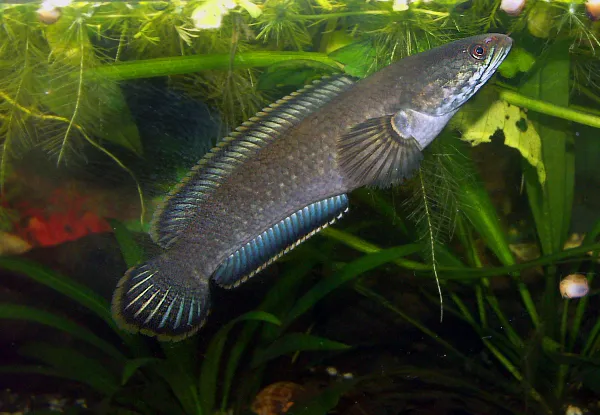 7.9 in (20 cm)40 gal (150 L)64–82°F (18–28°C)
Dwarf snakehead
Channa gachua
7.9 in (20 cm) · 40 gal (150 L)
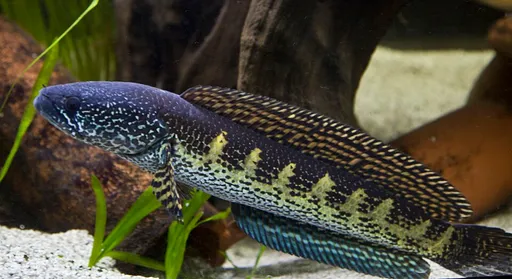 15.7 in (40 cm)119 gal (450 L)59–77°F (15–25°C)
Orange-spotted snakehead
Channa aurantimaculata
15.7 in (40 cm) · 119 gal (450 L)
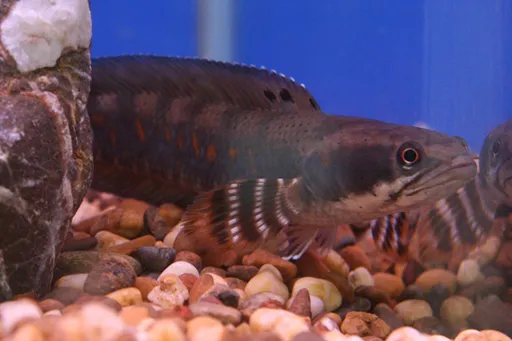 11.8 in (30 cm)74 gal (280 L)61–79°F (16–26°C)
Peacock snakehead
Channa pulchra
11.8 in (30 cm) · 74 gal (280 L)
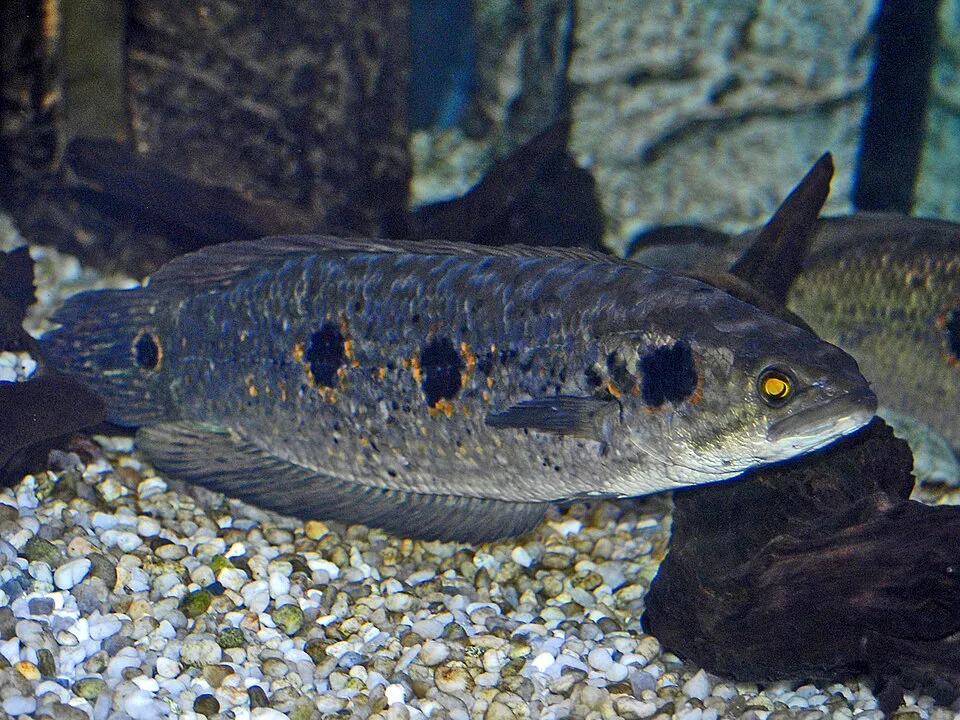 15.7 in (40 cm)70 gal (265 L)75–82°F (24–28°C)
Ocellated snakehead
Channa pleurophthalma
15.7 in (40 cm) · 70 gal (265 L)
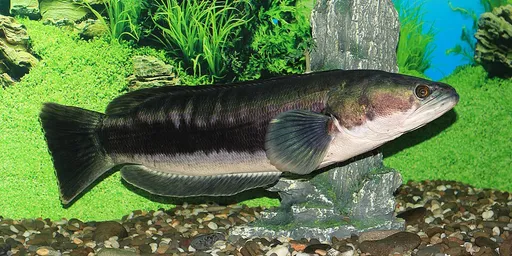 39.4 in (100 cm)528 gal (2,000 L)75–82°F (24–28°C)
Giant snakehead
Channa micropeltes
39.4 in (100 cm) · 528 gal (2,000 L)
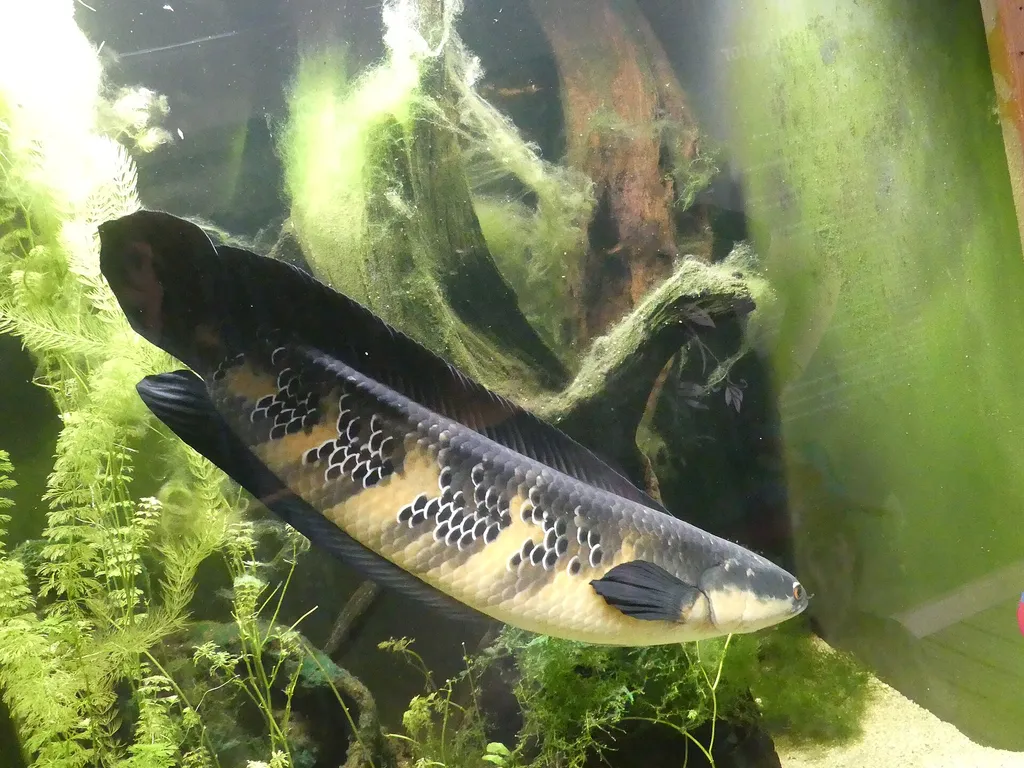 47.2 in (120 cm)396 gal (1,500 L)72–82°F (22–28°C)
Bullseye snakehead
Channa marulius
47.2 in (120 cm) · 396 gal (1,500 L)