Giant hairgrass
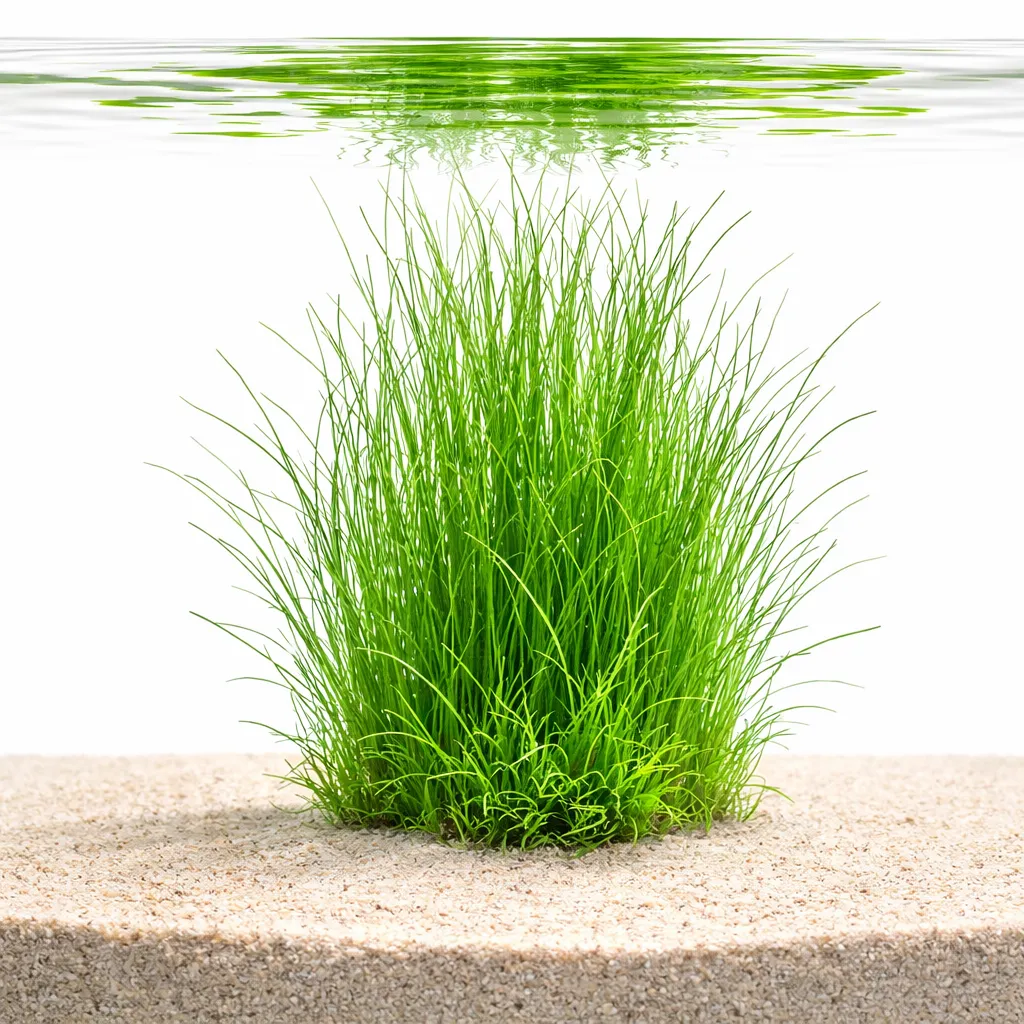
Eleocharis montevidensis
Also known as Sand spikerush, Tall hairgrass, Montevideo spikerush, Eleocharis sp. 'Montevidensis'
FreshwaterCarpetingRunnersdivision
Care at a glance
- Light
- Medium light
- CO2
- CO₂ beneficial
- Temperature
- 64–82°F
- 18–28°C
- Max height
- 11.8 in
- 30 cm
- Growth rate
- Medium
- Placement
- Midground
- Type
- Carpeting
- pH
- 6.0–7.5
- Hardness
- 2–15 dGH
- Spread
- 5.9 in (15 cm)
- Nutrient uptake
- Root feeder
- Growth region
- Submersed or emersed
- Difficulty
- Easy
- Family
- Cyperaceae
- Origin
- A spikerush from the Americas that grows in wet sand, marsh edges, and shallow water, sending up dense stands of grassy stems.
Overview
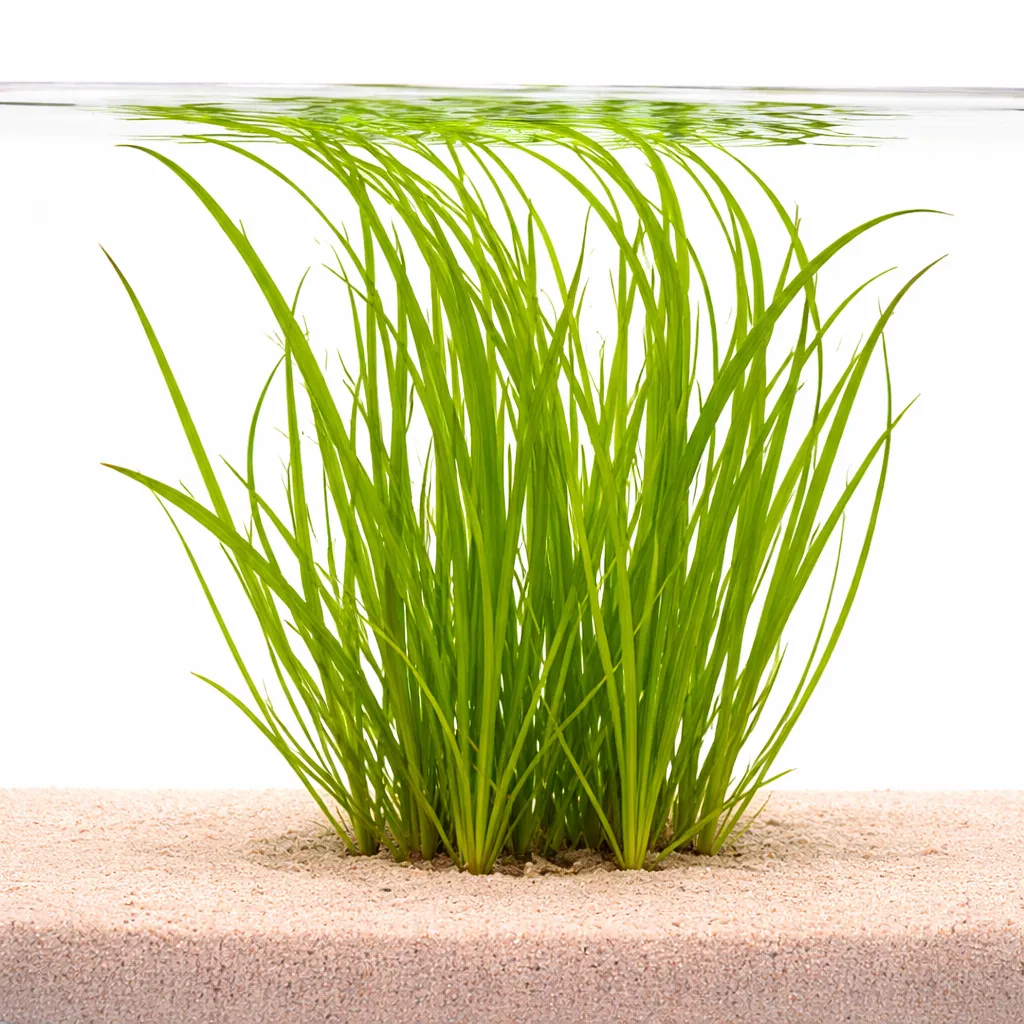
Push small bunches into the substrate and let the runners fill in over time under moderate light. It is a root feeder that does best in a nutrient rich substrate, and CO2 thickens the stand and keeps it shorter. Brighter light holds it low and dense, while dimmer light lets it grow tall and wild.
In the wild
Giant hairgrass is a taller, thicker bladed spikerush than the dwarf hairgrasses, forming a grassy stand of slender green stems. It spreads by runners into a connected clump that reads as either a tall midground tuft or a loose background screen. Its height depends a lot on light and can range from a few inches to well over a foot.
Good to know
Spikerushes are sedges, so the upright green blades are actually leafless stems, each tipped by a small flower spike. The plant knits itself together by sending out runners that root and sprout new stems.
Did you know
The same plant can be grown as a bog plant in shallow, damp setups or fully submerged in an aquarium, which makes it popular for paludariums.
Related plants
 Medium lightBackground15.7 in (40 cm)
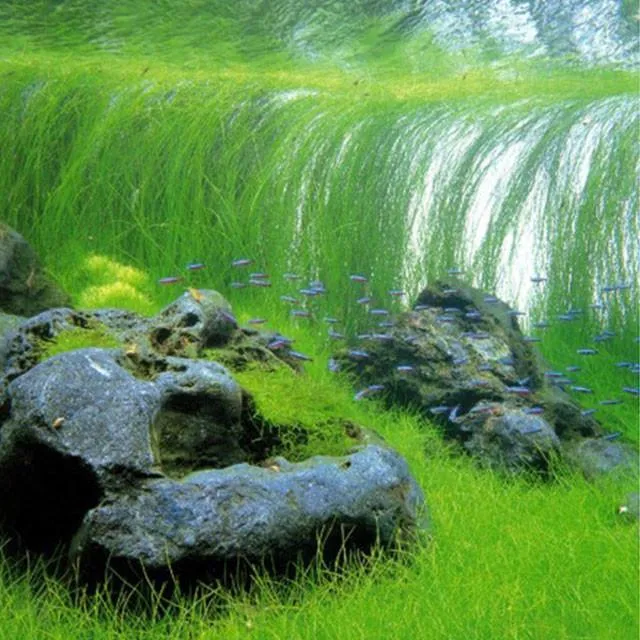
Umbrella hairgrass
Eleocharis vivipara
Medium light · Background
 Medium lightForeground7.9 in (20 cm)
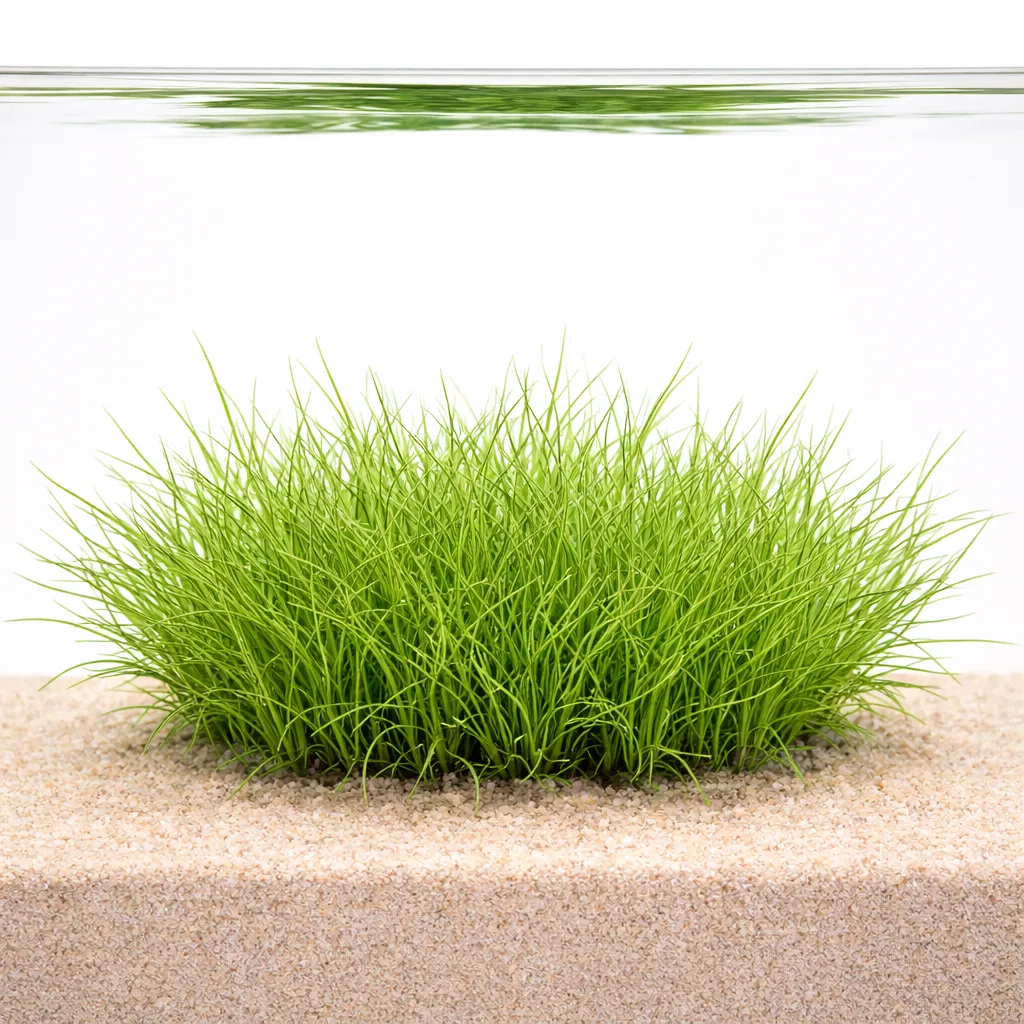
Needle hairgrass
Eleocharis acicularis
Medium light · Foreground
 Medium lightForeground3.9 in (10 cm)
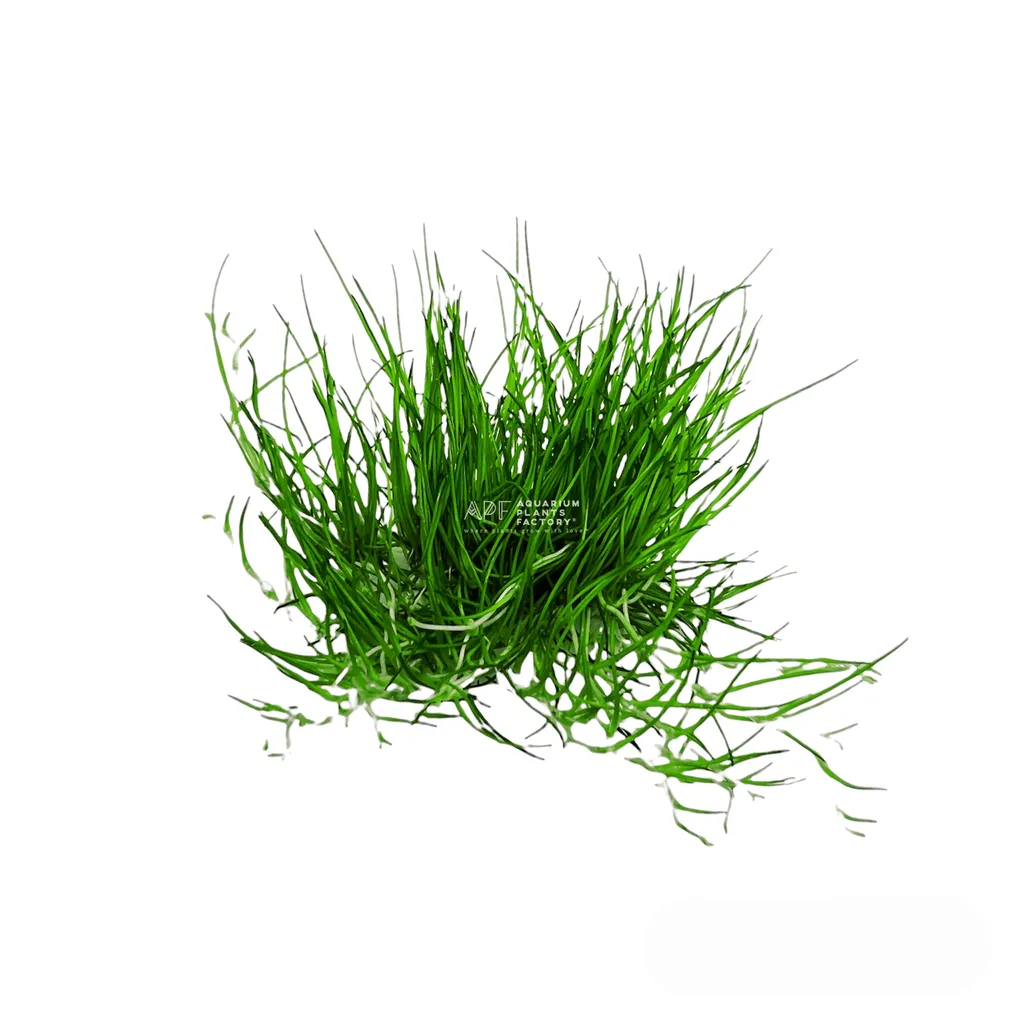
Dwarf hairgrass
Eleocharis parvula
Medium light · Foreground
- Medium lightForeground2.8 in (7 cm)
Eleocharis Belem
Eleocharis sp. 'Belem'
Medium light · Foreground
- Medium lightForeground2.4 in (6 cm)
Dwarf hairgrass Mini
Eleocharis parvula 'Mini'
Medium light · Foreground
 Medium lightMidground11.8 in (30 cm)
Cyperus helferi
Medium light · Midground