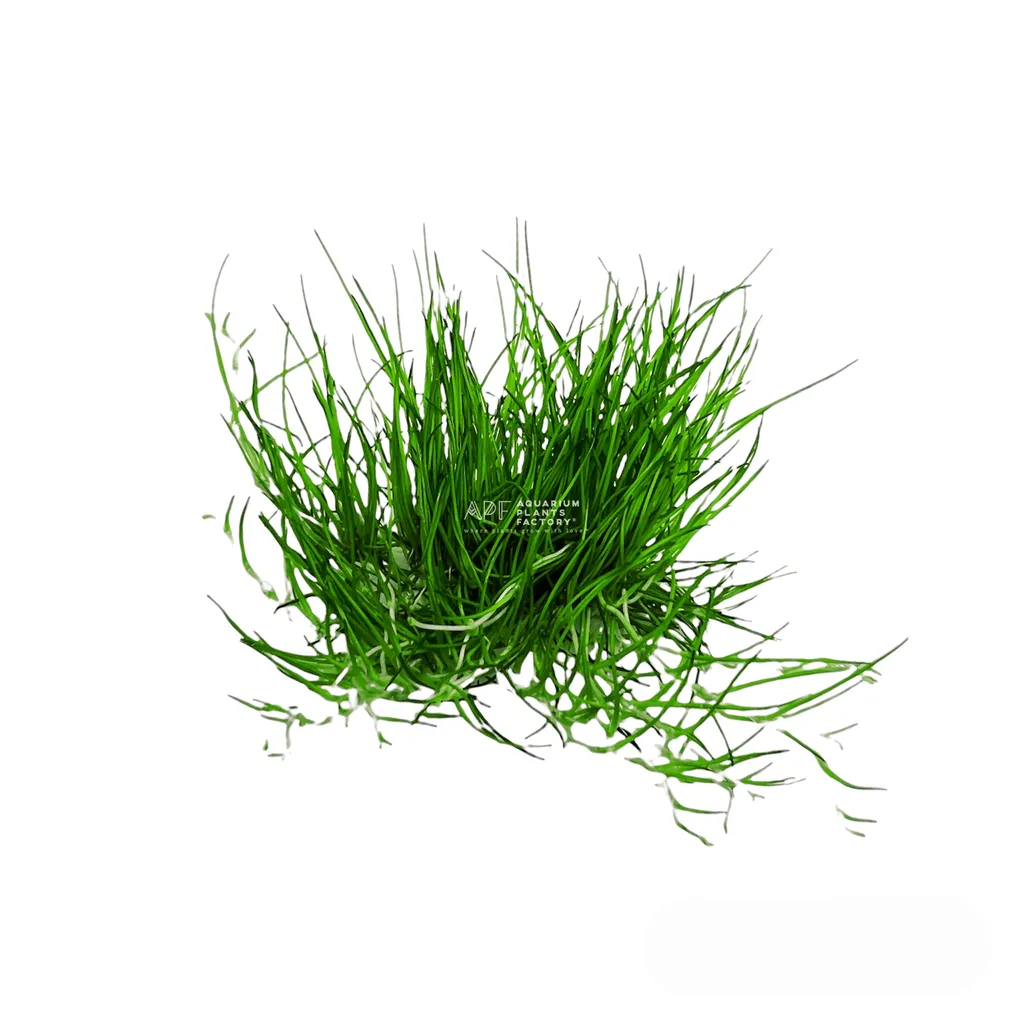
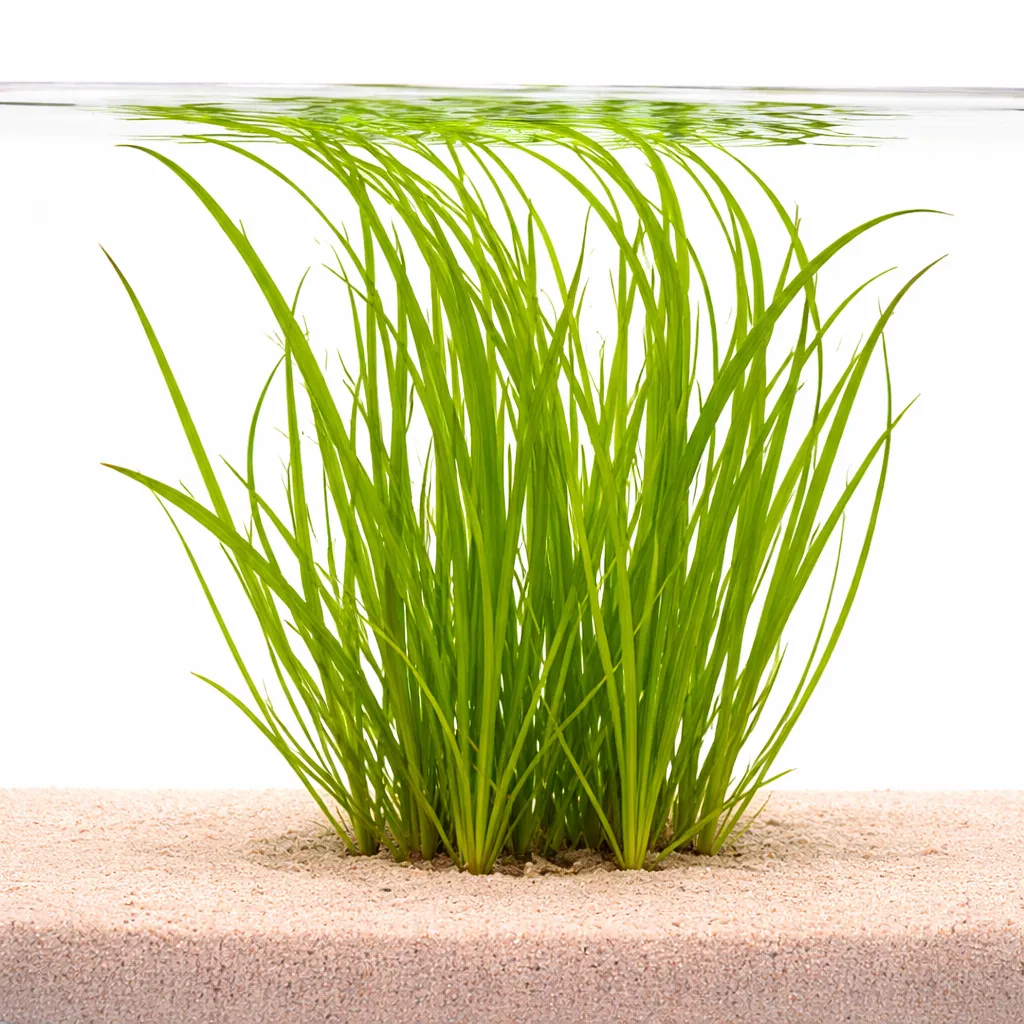
Dwarf hairgrass
Eleocharis parvula
Also known as Dwarf spikerush
FreshwaterCarpetingRunners
Care at a glance
- Light
- Medium light
- CO2
- CO₂ beneficial
- Temperature
- 59–82°F
- 15–28°C
- Max height
- 3.9 in
- 10 cm
- Growth rate
- Medium
- Placement
- Foreground
- Type
- Carpeting
- pH
- 6.0–7.5
- Hardness
- 2–12 dGH
- Spread
- 2 in (5 cm)
- Nutrient uptake
- Root + water column
- Growth region
- Submersed or emersed
- Difficulty
- Easy
- Family
- Cyperaceae
- Origin
- Cosmopolitan (temperate and tropical wetlands worldwide)
Overview
Plant it as a foreground carpet by separating tissue-culture or potted stock into small tufts of a few blades and pushing each into the substrate a couple centimeters apart so the runners can knit them together. It will grow in moderate light without CO2 but stays shorter, denser, and carpets much faster with strong light and added CO2. A nutrient-rich or capped substrate helps, and giving the new carpet a trim once it establishes encourages it to thicken rather than reach for the surface. Patience is the main requirement, as the initial spread is slow before it suddenly fills in.
In the wild
A genuinely cosmopolitan spikerush found in marshes, ditches, and the muddy margins of brackish and fresh water across temperate and tropical regions worldwide. It is a marginal wetland sedge, growing emersed in saturated mud and tolerating periodic submersion. Because of that wide native range it copes with everything from cool to warm water and soft to moderately hard conditions.
Good to know
A true sedge in the family Cyperaceae, not a grass despite the common name. The thin green blades are actually leafless photosynthetic stems, and the plant spreads aggressively by horizontal underground runners that pop up new shoots all around the parent. It is the smallest of the commonly sold Eleocharis species, distinct from the taller E. acicularis and E. montevidensis.
Did you know
Those slender blades are not leaves at all but modified leafless stems, so a hairgrass carpet is essentially a lawn of green stalks doing all the photosynthesis.
Related plants
- Medium lightForeground2.8 in (7 cm)
Eleocharis Belem
Eleocharis sp. 'Belem'
Medium light · Foreground
- Medium lightForeground2.4 in (6 cm)
Dwarf hairgrass Mini
Eleocharis parvula 'Mini'
Medium light · Foreground
 Medium lightForeground7.9 in (20 cm)
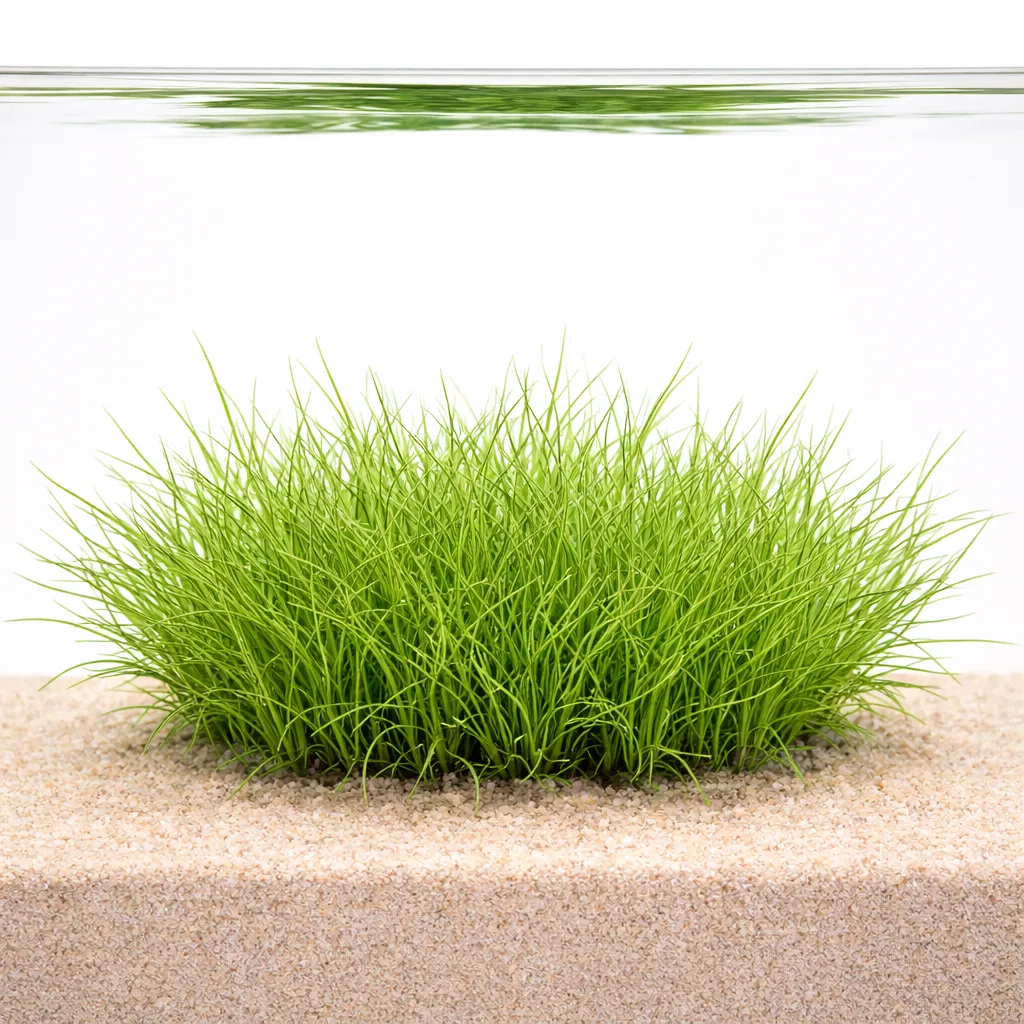
Needle hairgrass
Eleocharis acicularis
Medium light · Foreground
 Medium lightMidground11.8 in (30 cm)
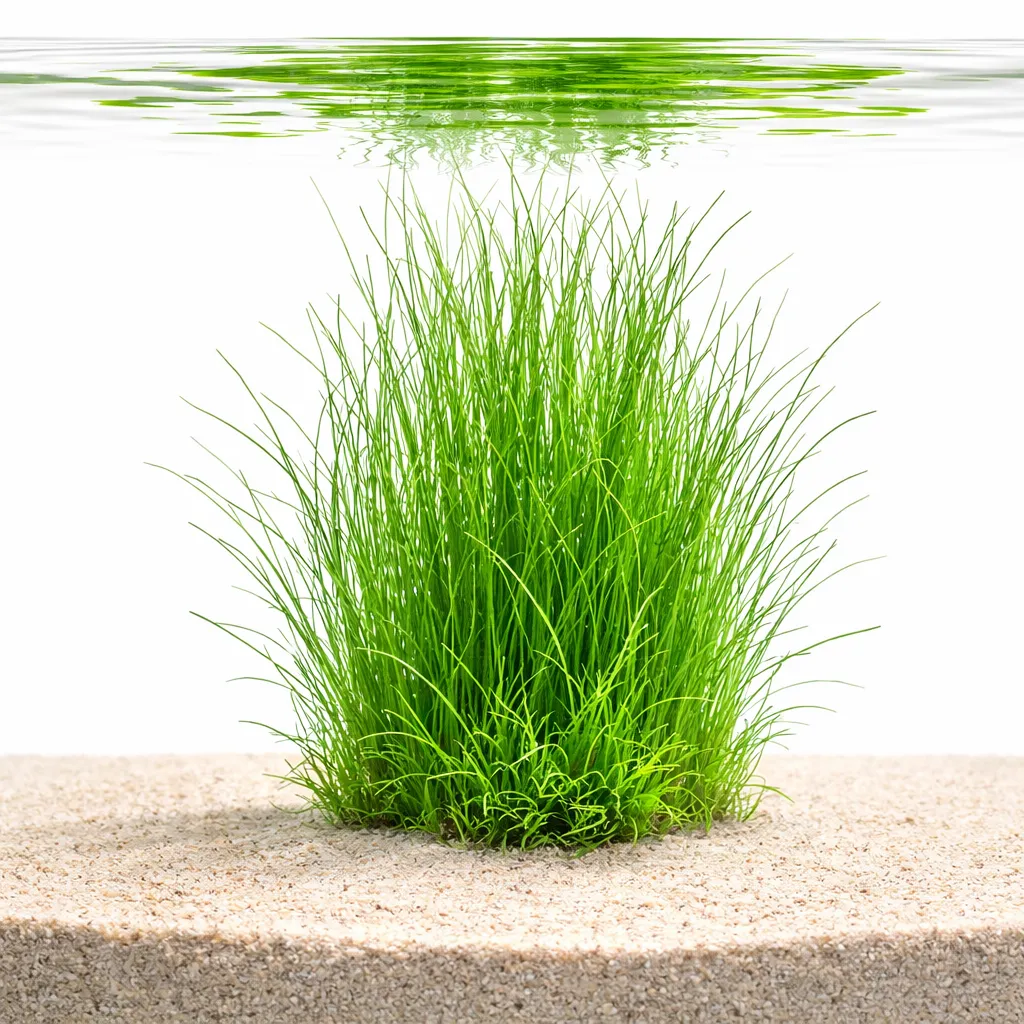
Giant hairgrass
Eleocharis montevidensis
Medium light · Midground
 Medium lightBackground15.7 in (40 cm)
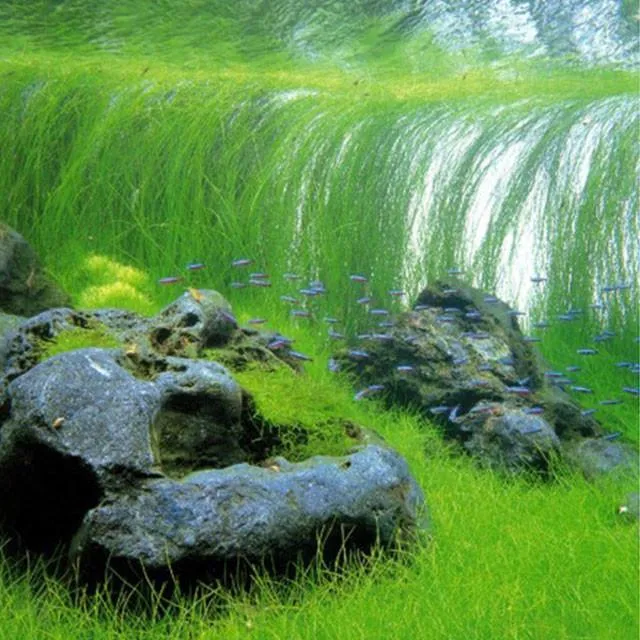
Umbrella hairgrass
Eleocharis vivipara
Medium light · Background
 Medium lightMidground11.8 in (30 cm)
Cyperus helferi
Medium light · Midground