Yellow-tail barracuda
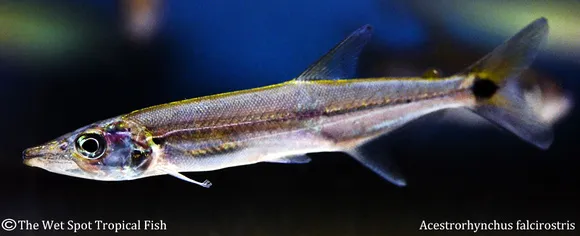
Acestrorhynchus falcirostris
Also known as Freshwater yellow tail barracuda
FreshwaterFish
Care at a glance
- Temperature
- 73–82°F
- 23–28°C
- pH
- 5.5–7.2
- Adult size
- 17.7 in
- 45 cm
- Minimum tank
- 264 gal
- 1,000 L
- Temperament
- Aggressive
- Social behavior
- Social
- Tankmates
- With caution
- Swim level
- Middle
- Diet
- Carnivore
- Difficulty
- Difficult
- Breeding
- No record
- Rarity
- Rare
- Family
- Acestrorhynchidae
- Origin
- Amazon and Orinoco basins
Overview
The yellow-tail barracuda is a fast, slender pursuit predator that needs a very large tank and careful stocking. It is a fish for experienced keepers.
Did you know
The yellow-tail barracuda looks and hunts like a barracuda, but it is a characin, a cousin of the tetras and piranhas. The likeness is convergence, two unrelated fish shaped by the same job of chasing prey in open water.
Caring for the yellow-tail barracuda
A group of yellow-tail barracuda needs a tank of at least 264 gal (1,000 L), with great length and open swimming water. They are skittish and can injure themselves bolting, so fit a secure lid.
Keep the water soft to neutral, at 73 to 82°F (23 to 28°C) and a pH of 5.5 to 7.2. Use strong filtration and steady flow, since this large, active predator produces plenty of waste and needs clean water. Feed meaty foods, weaning it from live fish onto frozen and prepared items over time.
The yellow-tail barracuda is a social hunter that does best in a group of its own kind, ideally three or more. A group settles its nerves and lets it school as it does in the wild. It is not a community fish and will chase and eat anything slim enough to swallow, so tank mates must be large, robust and quick. Its breeding is not recorded in aquariums.
Good to know
The yellow-tail barracuda is the largest of the freshwater barracuda characins, in the family Acestrorhynchidae. It has a lance-shaped, silver body and is also sold as the freshwater yellow tail barracuda.
In the wild
The yellow-tail barracuda ranges through open water in the Amazon and Orinoco basins. It hunts smaller fish there in loose packs.
Common questions
What size tank does a yellow-tail barracuda need?
A yellow-tail barracuda needs at least 264 gal (1,000 L). It spends most of its time in the middle.
What temperature and pH does a yellow-tail barracuda need?
A yellow-tail barracuda is comfortable at 73–82°F (23–28°C) with a pH of 5.5–7.2.
What does a yellow-tail barracuda eat?
A yellow-tail barracuda eats meaty foods. It can be weaned from live fish onto frozen and prepared items over time.
How big does a yellow-tail barracuda get?
An adult yellow-tail barracuda reaches about 17.7 in (45 cm).
Related species
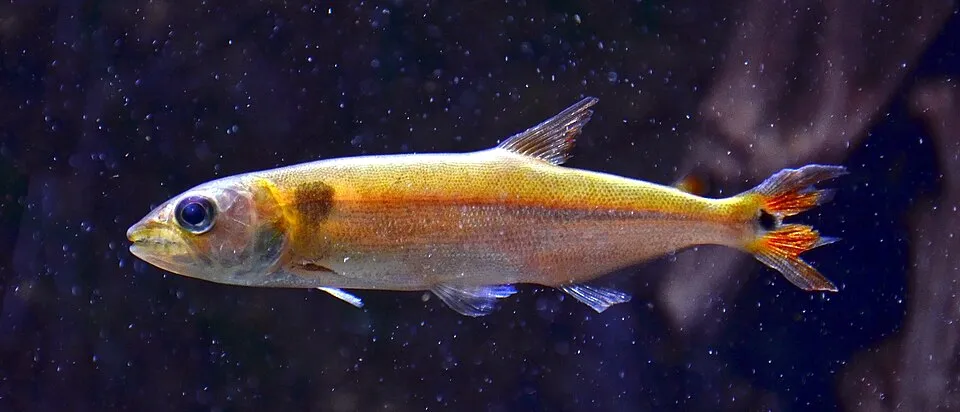 11.8 in (30 cm)100 gal (380 L)72–82°F (22–28°C)
Red tail barracuda
Acestrorhynchus falcatus
11.8 in (30 cm) · 100 gal (380 L)
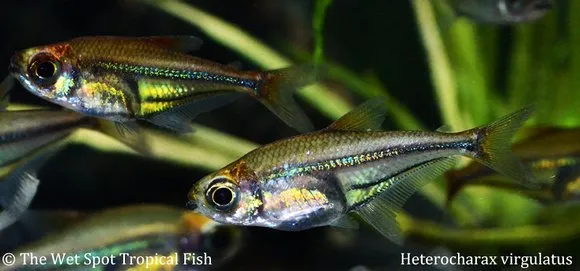 1.6 in (4 cm)14 gal (54 L)73–82°F (23–28°C)
Azure tetra
Heterocharax virgulatus
1.6 in (4 cm) · 14 gal (54 L)
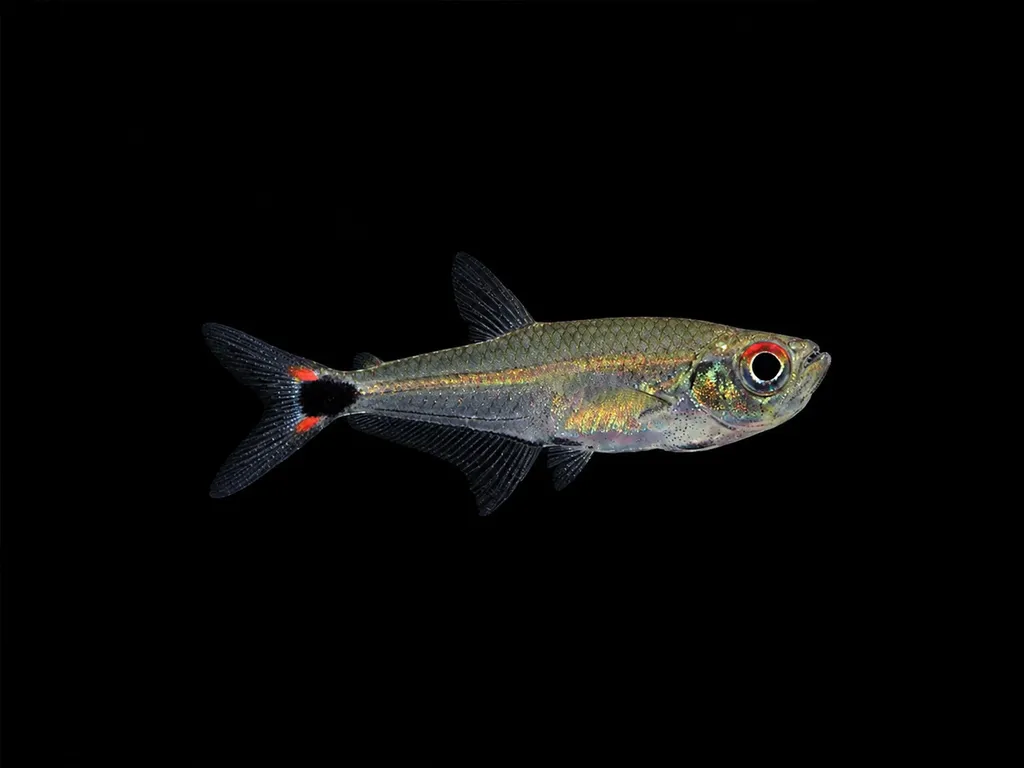 2 in (5 cm)21 gal (80 L)73–82°F (23–28°C)
Arowana tetra
Gnathocharax steindachneri
2 in (5 cm) · 21 gal (80 L)
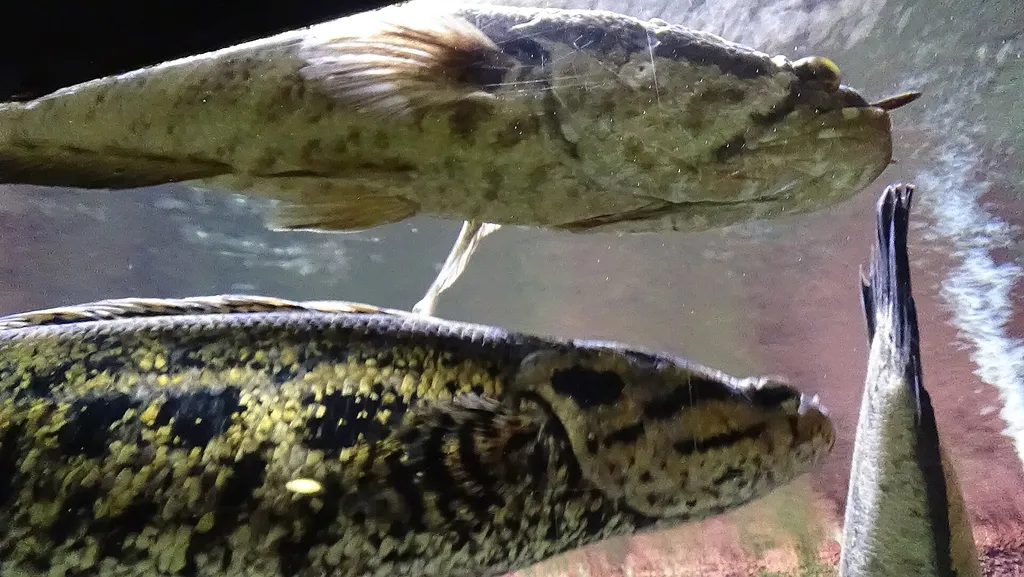 17.7 in (45 cm)74 gal (280 L)79–86°F (26–30°C)
African snakehead
Parachanna obscura
17.7 in (45 cm) · 74 gal (280 L)
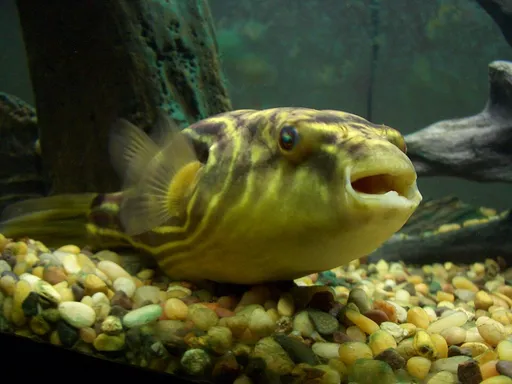 17.7 in (45 cm)119 gal (450 L)75–82°F (24–28°C)
Fahaka puffer
Tetraodon lineatus
17.7 in (45 cm) · 119 gal (450 L)
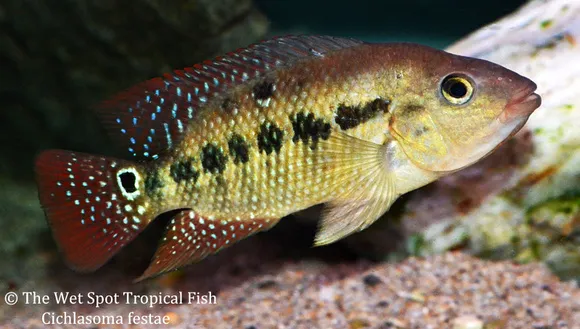 17.7 in (45 cm)151 gal (570 L)75–82°F (24–28°C)
True red terror
Mesoheros festae
17.7 in (45 cm) · 151 gal (570 L)