Two-banded killifish
Chromaphyosemion bitaeniatum
Also known as Two-striped killifish, Bitaeniatum killi, Aphyosemion bitaeniatum
FreshwaterFish
Care at a glance
- Temperature
- 72–79°F
- 22–26°C
- pH
- 5.8–7.0
- Adult size
- 2.2 in
- 5.5 cm
- Minimum tank
- 10 gal
- 38 L
- Temperament
- Mostly peaceful
- Social behavior
- Social
- Tankmates
- With caution
- Swim level
- Middle
- Diet
- Carnivore
- Difficulty
- Easy
- Breeding
- Egg depositor · Easy
- Rarity
- Common
- Family
- Nothobranchiidae
- Origin
- Native to shallow coastal creeks, swamps, and roadside pools from Nigeria and Benin east to western Cameroon.
Overview
The two-banded killifish is a mostly peaceful killifish for the middle of a dim, planted tank. It is easy to keep, and one of the easier killifish to start with.
Did you know
Rival two-banded killifish males settle disputes by flaring their fins side by side rather than fighting. The flaring is when their two dark body stripes stand out best.
Caring for the two-banded killifish
Keep two-banded killifish as a pair or trio in a planted tank of at least 10 gal (38 L). Keep the light dim, add floating plants and fit a snug lid. They swim in the middle of the tank.
Keep the water soft, at a pH of 5.8 to 7.0 and 72 to 79°F (22 to 26°C). Feed small live and frozen foods such as daphnia, micro worm, grindal worm and baby brine shrimp. They are mostly peaceful and calm enough for a quiet species tank, so choose any tank mates with caution.
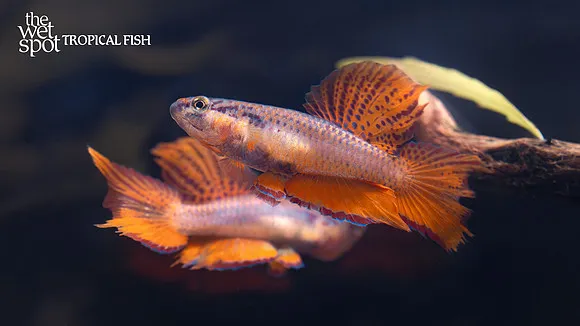
Males carry iridescent blue, red and yellow between two dark lengthwise stripes, with delicate pointed fins. Two-banded killifish are non-annual and lay their eggs on fine plants, with no need for a dry season. Spawn them on a wool mop, then pick the eggs by hand or let them hatch in place. Breeding them is easy.
Good to know
Chromaphyosemion bitaeniatum belongs to a subgroup of the genus Aphyosemion. Some references still list it as Aphyosemion bitaeniatum. Males vary strikingly in color across the range, so many local forms exist in the hobby.
In the wild
The two-banded killifish lives in small, slow, heavily shaded waters in the West African coastal forest belt. It is found in shallow coastal creeks, swamps and roadside pools, from Nigeria and Benin east to western Cameroon.
Common questions
What size tank does a two-banded killifish need?
A two-banded killifish needs at least 10 gal (38 L). It spends most of its time in the middle.
What temperature and pH does a two-banded killifish need?
A two-banded killifish is comfortable at 72–79°F (22–26°C) with a pH of 5.8–7.0.
What does a two-banded killifish eat?
A two-banded killifish eats small live and frozen foods, such as daphnia, micro worm, grindal worm and baby brine shrimp.
How big does a two-banded killifish get?
An adult two-banded killifish reaches about 2.2 in (5.5 cm).
How can you tell a male two-banded killifish from a female?
Males show iridescent blue, red and yellow between their two dark stripes, and their fins are delicate and pointed.
How does a two-banded killifish breed?
A two-banded killifish lays its eggs on fine plants or a wool mop and needs no dry season. Pick the eggs by hand or let them hatch in place. Breeding it is easy.
Related species
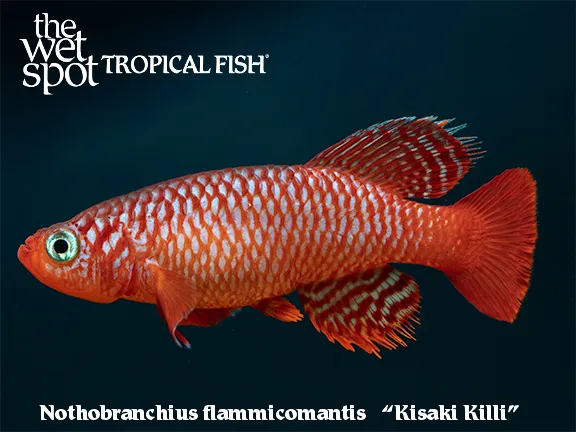 2.2 in (5.5 cm)11 gal (40 L)72–79°F (22–26°C)
Kisaki nothobranch
Nothobranchius flammicomantis
2.2 in (5.5 cm) · 11 gal (40 L)
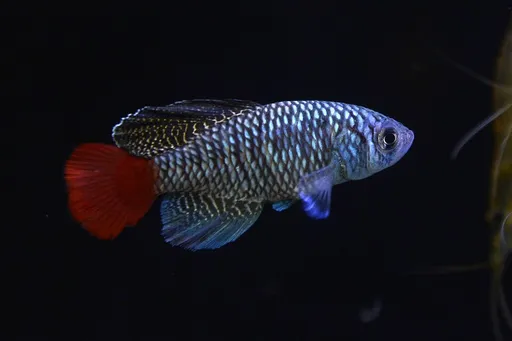 2.2 in (5.5 cm)11 gal (40 L)72–79°F (22–26°C)
Patrizi's notho
Nothobranchius patrizii
2.2 in (5.5 cm) · 11 gal (40 L)
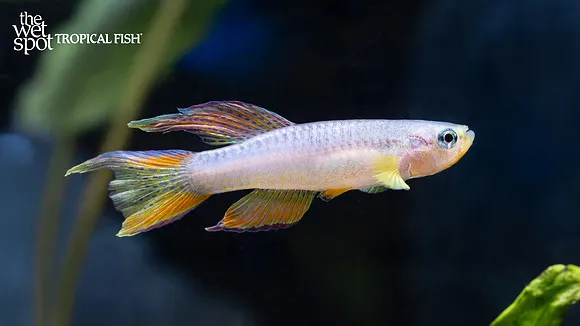 2.2 in (5.5 cm)11 gal (40 L)68–77°F (20–25°C)
Splendid killifish
Aphyosemion splendopleure
2.2 in (5.5 cm) · 11 gal (40 L)
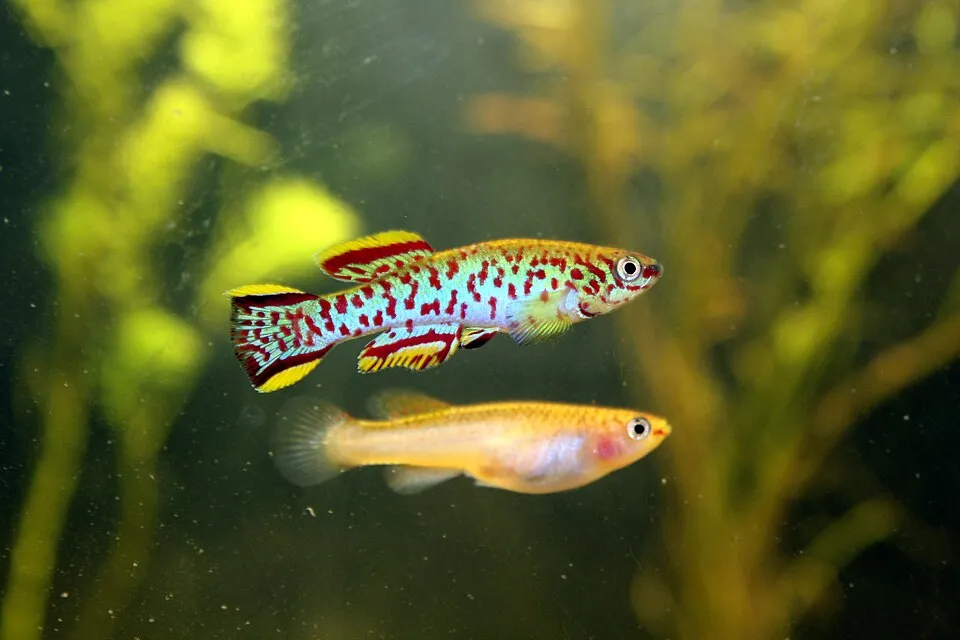 2.2 in (5.5 cm)21 gal (80 L)70–79°F (21–26°C)
Steel blue killifish
Fundulopanchax gardneri
2.2 in (5.5 cm) · 21 gal (80 L)
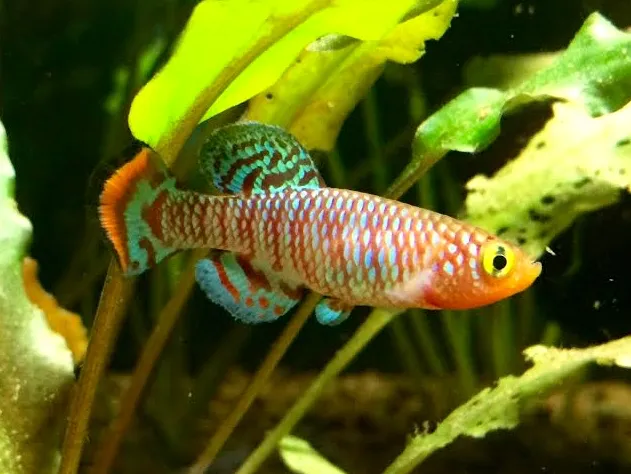 2.4 in (6 cm)11 gal (40 L)68–75°F (20–24°C)
Bluefin notho
Nothobranchius rachovii
2.4 in (6 cm) · 11 gal (40 L)
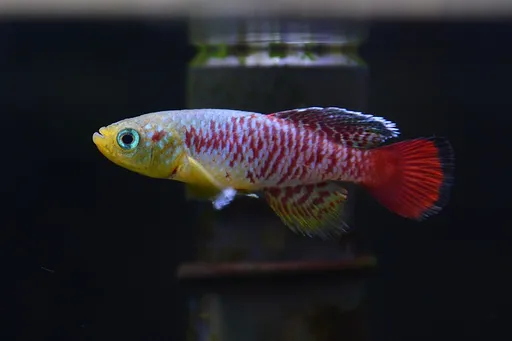 2.4 in (6 cm)11 gal (40 L)72–77°F (22–25°C)
Gunther's nothobranch
Nothobranchius guentheri
2.4 in (6 cm) · 11 gal (40 L)