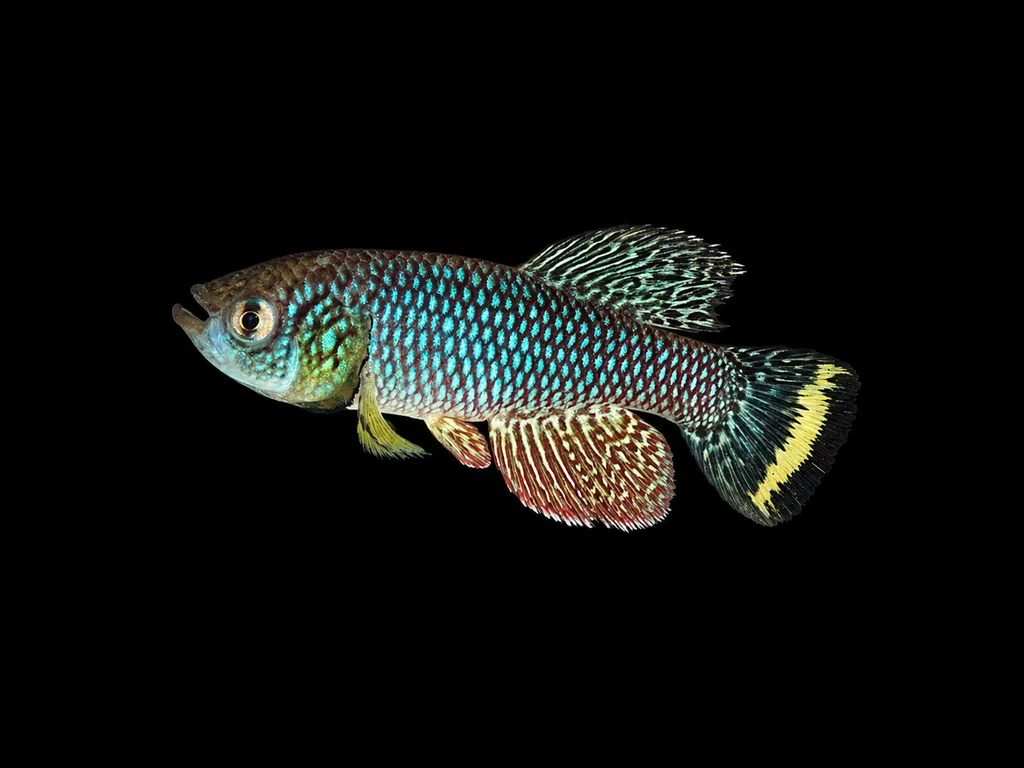
Turquoise killifish
Nothobranchius furzeri
Also known as Turquoise notho, Furzer's notho, Mozambique killifish
FreshwaterFish
Care at a glance
- Temperature
- 68–79°F
- 20–26°C
- pH
- 6.0–7.5
- Adult size
- 2.4 in
- 6 cm
- Minimum tank
- 11 gal
- 40 L
- Temperament
- Aggressive
- Social behavior
- Solitary
- Tankmates
- With caution
- Swim level
- Middle
- Difficulty
- Difficult
- Breeding
- Medium
- Rarity
- Common
- Family
- Nothobranchiidae
- Origin
- Native to seasonal rain pools in the semi-arid savanna of southern Mozambique and adjacent Zimbabwe, in the Save and Limpopo drainages.
Overview
Keep one male with two or three females in a 40 litre or larger species tank at 20 to 26 C and pH 6.0 to 7.5; cooler temperatures slow the aging clock and stretch out their short lives. Males are pushy toward each other, so either keep a single male or use a large tank with sightline breaks. Feed a carnivorous diet of live or frozen bloodworm, brine shrimp, daphnia, and blackworm. It is best kept on its own rather than in a community.
In the wild
It lives in ephemeral pools that form during the rainy season on clay soils and then dry out completely for much of the year. The water is shallow, warm, and often turbid, with little flow. In the aquarium it wants a dimly lit tank with a soft substrate, some floating plants, and a tight lid because these fish jump.
Good to know
Nothobranchius furzeri is the shortest-lived vertebrate that can be bred in captivity, with a natural lifespan of only a few months. Its drought-resistant eggs survive months buried in dry mud in a dormant state called diapause. This combination has made it a major laboratory model for the biology of aging.
Did you know
Wild fry hatch, grow up, and breed within a few weeks before their pool dries, packing a whole generation into one short rainy season.
Common questions
What size tank does a Turquoise killifish need?
A Turquoise killifish needs at least 11 gal (40 L). It spends most of its time in the middle.
What temperature and pH does a Turquoise killifish need?
A Turquoise killifish is comfortable at 68–79°F (20–26°C) with a pH of 6.0–7.5.
How big does a Turquoise killifish get?
An adult Turquoise killifish reaches about 2.4 in (6 cm).
Related species
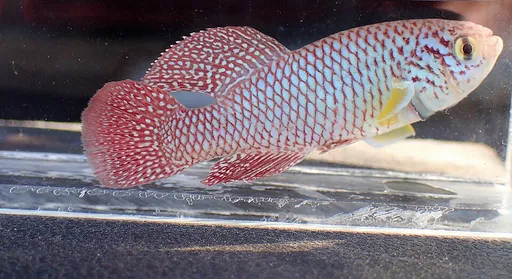 2.4 in (6 cm)11 gal (40 L)72–79°F (22–26°C)
Kadlec's notho
Nothobranchius kadleci
2.4 in (6 cm) · 11 gal (40 L)
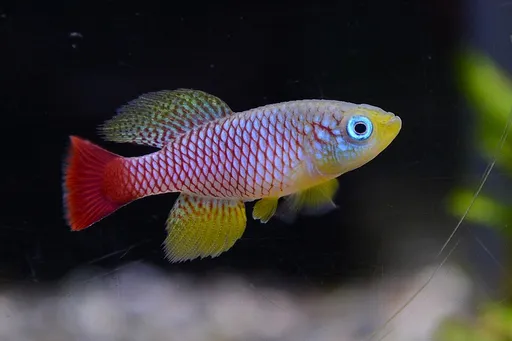 2.2 in (5.5 cm)11 gal (40 L)72–79°F (22–26°C)
Foersch's notho
Nothobranchius foerschi
2.2 in (5.5 cm) · 11 gal (40 L)
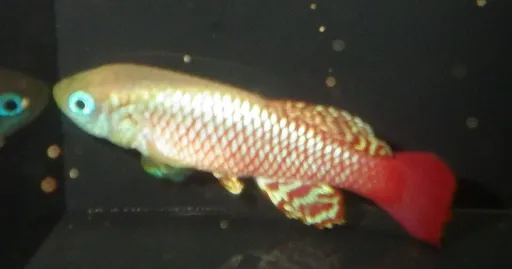 2 in (5 cm)11 gal (40 L)72–81°F (22–27°C)
Palmqvist's notho
Nothobranchius palmqvisti
2 in (5 cm) · 11 gal (40 L)
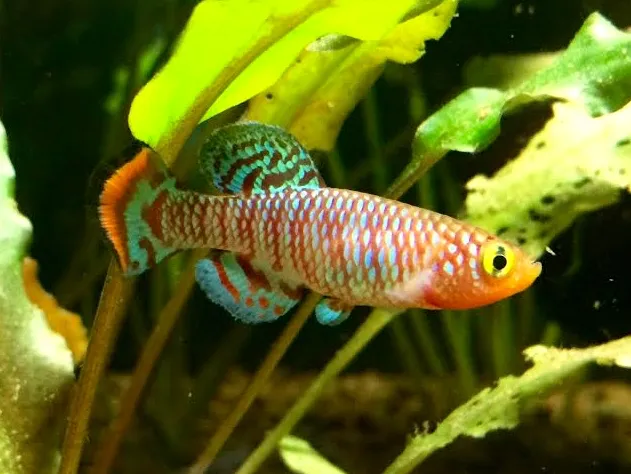 2.4 in (6 cm)21 gal (80 L)68–75°F (20–24°C)
Bluefin notho
Nothobranchius rachovii
2.4 in (6 cm) · 21 gal (80 L)
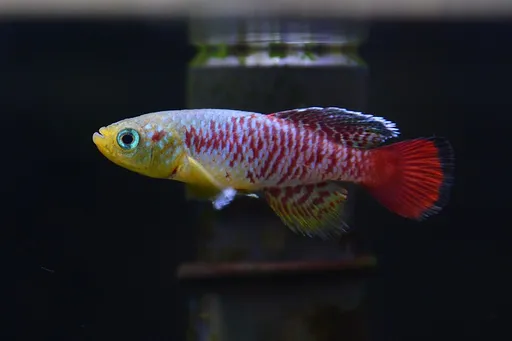 2.4 in (6 cm)11 gal (40 L)72–77°F (22–25°C)
Gunther's nothobranch
Nothobranchius guentheri
2.4 in (6 cm) · 11 gal (40 L)
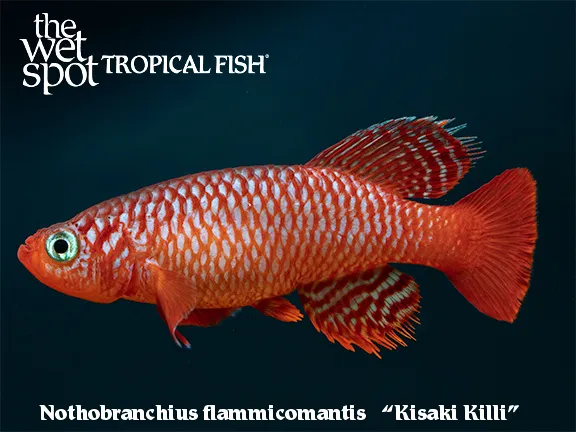 2.2 in (5.5 cm)11 gal (40 L)72–79°F (22–26°C)
Kisaki nothobranch
Nothobranchius flammicomantis
2.2 in (5.5 cm) · 11 gal (40 L)