Foersch's notho
Nothobranchius foerschi
Also known as Foersch's killifish, Foersch's nothobranch
FreshwaterFish
Care at a glance
- Temperature
- 72–79°F
- 22–26°C
- pH
- 6.0–7.0
- Adult size
- 2.2 in
- 5.5 cm
- Minimum tank
- 11 gal
- 40 L
- Temperament
- Aggressive
- Social behavior
- Solitary
- Tankmates
- With caution
- Swim level
- Middle
- Diet
- Carnivore
- Difficulty
- Medium
- Breeding
- Egg burier · Medium
- Rarity
- Rare
- Family
- Nothobranchiidae
- Origin
- Native to seasonal pools, swamps, and floodplain depressions in the lower Ruvu River area of eastern Tanzania, between Soga and the coast near Bagamoyo.
Overview
Foersch's notho is an aggressive annual killifish, best kept in a species tank. It is a step up from the easiest fish.
Did you know
Foersch's notho is named in honor of Walter Foersch, a German killifish specialist. He helped describe several African annual species.
Caring for the Foersch's notho
Keep Foersch's notho as a trio or a single pair in a species tank of 11 gal (40 L) or more. Set the tank up dimly lit, with a fine, dark substrate and a tight lid.
Give it soft, slightly acidic water at 72 to 79°F (22 to 26°C) and a pH of 6.0 to 7.0. Feed live and frozen bloodworm, daphnia, brine shrimp and blackworm. Nothos are prone to the skin parasite velvet, so keep the water clean and consider adding a little salt.
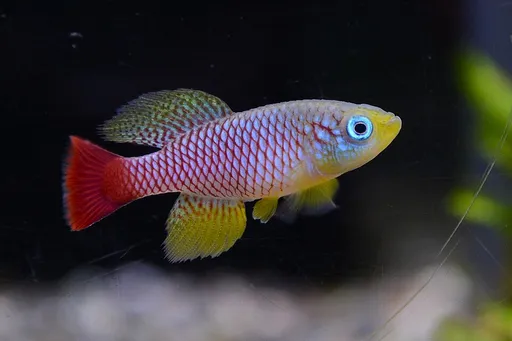
Males are territorial, so keep only one male unless the tank is large and broken up with plants. Choose any tank mates with caution. Males have a green to blue body, with red-brown scale edges that form a net pattern. They also show a deep red tail base and a yellow anal fin.
Foersch's notho is an annual killifish whose eggs undergo diapause in the substrate during the dry season. Breeding it is a moderate challenge.
Good to know
Foersch's notho, Nothobranchius foerschi, belongs to the family Nothobranchiidae. It looks very similar to the more common Nothobranchius guentheri, but it lacks the red cheek spot that guentheri shows.
In the wild
Foersch's notho lives in seasonal pools, swamps and floodplain depressions in the lower Ruvu River area of eastern Tanzania. Its range runs from Soga to the coast near Bagamoyo, and it may be restricted to a fairly small part of the Ruvu floodplain. This shallow, seasonally flooded ground in the lowland Ruvu catchment dries out for several months each year.
Common questions
What size tank does a Foersch's notho need?
A Foersch's notho needs at least 11 gal (40 L). It spends most of its time in the middle.
What temperature and pH does a Foersch's notho need?
A Foersch's notho is comfortable at 72–79°F (22–26°C) with a pH of 6.0–7.0.
What does a Foersch's notho eat?
A Foersch's notho eats live and frozen foods, such as bloodworm, daphnia, brine shrimp and blackworm.
How big does a Foersch's notho get?
An adult Foersch's notho reaches about 2.2 in (5.5 cm).
How can you tell a male Foersch's notho from a female?
Males have a green to blue body with a net pattern of red-brown scale edges. They also carry a deep red tail base and a yellow anal fin.
How does a Foersch's notho breed?
Foersch's notho is an annual. Its eggs survive the dry season in the substrate by going into diapause. Breeding it is of moderate difficulty.
Related species
 2.4 in (6 cm)11 gal (40 L)72–79°F (22–26°C)
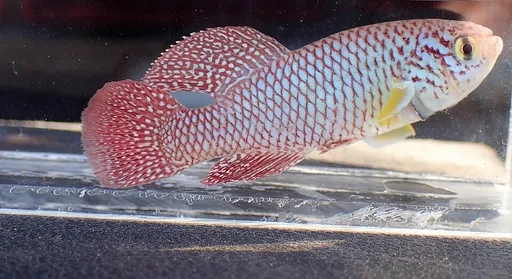
Kadlec's notho
Nothobranchius kadleci
2.4 in (6 cm) · 11 gal (40 L)
 2.4 in (6 cm)11 gal (40 L)68–79°F (20–26°C)
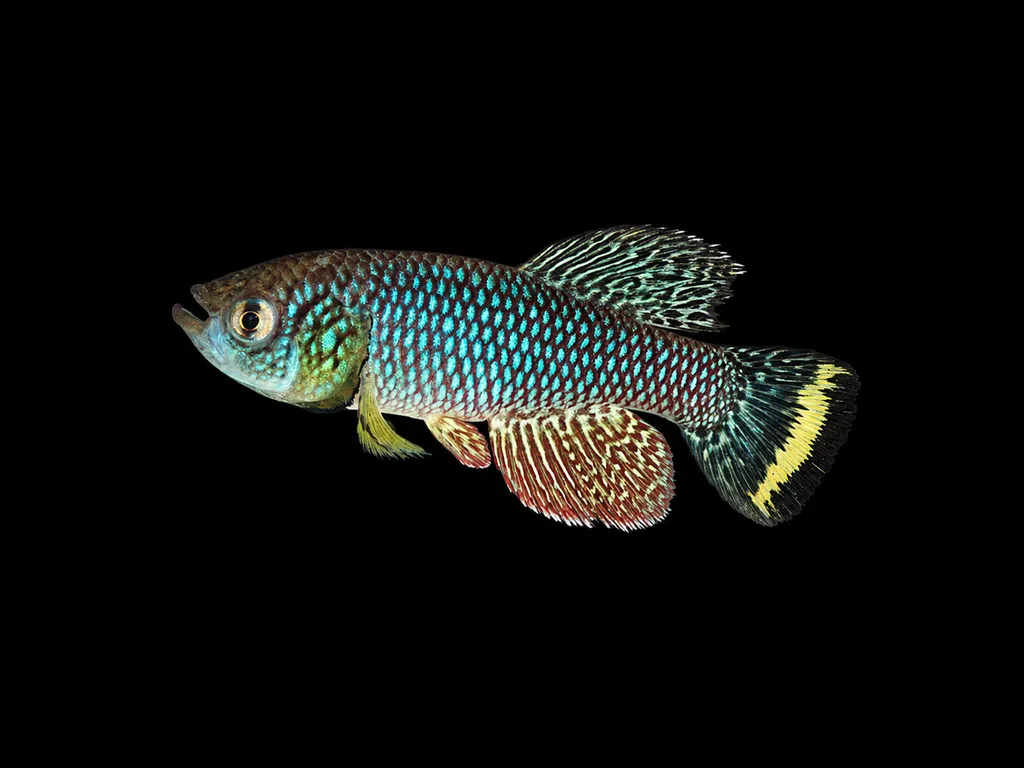
Turquoise killifish
Nothobranchius furzeri
2.4 in (6 cm) · 11 gal (40 L)
 2 in (5 cm)11 gal (40 L)72–81°F (22–27°C)
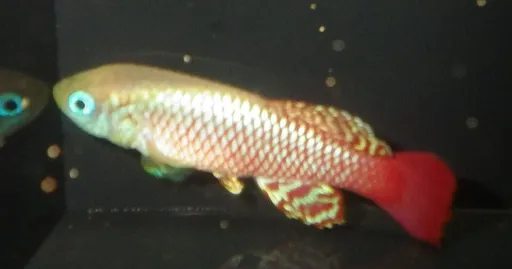
Palmqvist's notho
Nothobranchius palmqvisti
2 in (5 cm) · 11 gal (40 L)
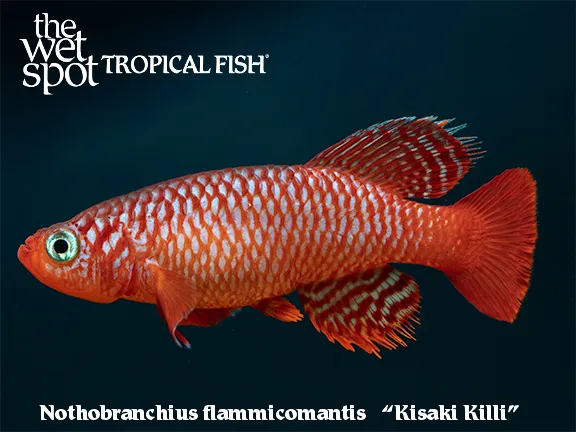 2.2 in (5.5 cm)11 gal (40 L)72–79°F (22–26°C)
Kisaki nothobranch
Nothobranchius flammicomantis
2.2 in (5.5 cm) · 11 gal (40 L)
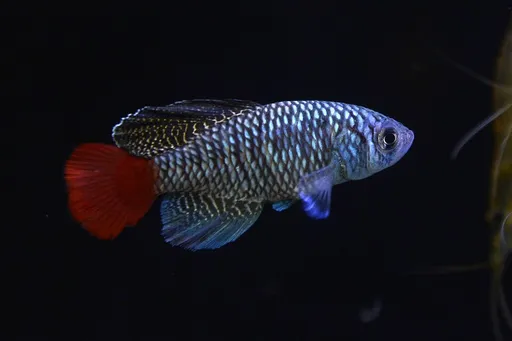 2.2 in (5.5 cm)11 gal (40 L)72–79°F (22–26°C)
Patrizi's notho
Nothobranchius patrizii
2.2 in (5.5 cm) · 11 gal (40 L)
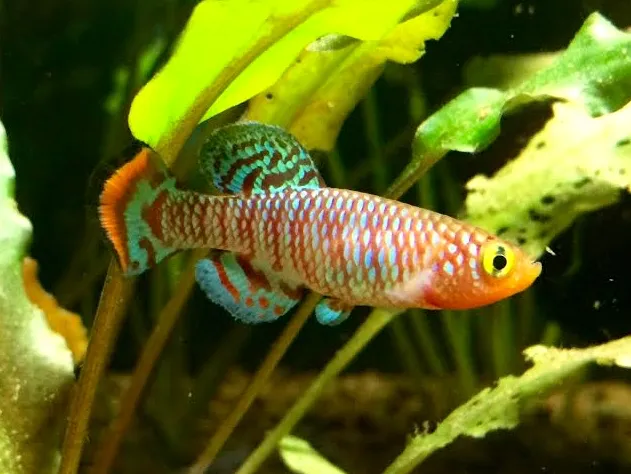 2.4 in (6 cm)11 gal (40 L)68–75°F (20–24°C)
Bluefin notho
Nothobranchius rachovii
2.4 in (6 cm) · 11 gal (40 L)