Purple spotted gudgeon
Mogurnda mogurnda
FreshwaterFish
Care at a glance
- Temperature
- 68–79°F
- 20–26°C
- pH
- 6.5–7.5
- Adult size
- 7.9 in
- 20 cm
- Minimum tank
- 40 gal
- 150 L
- Temperament
- Mostly peaceful
- Social behavior
- Solitary
- Tankmates
- With caution
- Swim level
- Bottom
- Difficulty
- Medium
- Breeding
- Hard
- Rarity
- Very rare
- Family
- Eleotridae
- Origin
- Australia, New Guinea
Overview
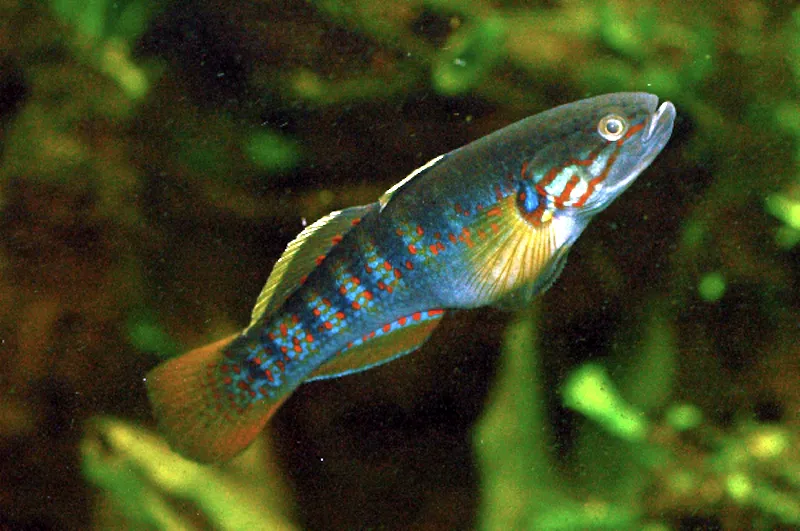
The purple spotted gudgeon is a sturdy, bottom-oriented fish that is best kept singly or as a single compatible pair, since it is territorial with its own kind and will eat smaller fish and shrimp. Toward larger, robust tankmates it is fairly easygoing, so pick companions it cannot swallow and that will not bully it. It hunts meaty prey and largely ignores flake, so feed frozen and live foods such as bloodworms, prawn, earthworms, and small invertebrates. Give it a soft floor, driftwood, rockwork, and caves to claim as territory, along with a secure lid, as it can be a jumper. A tank of 150 liters or larger gives one fish or a pair enough room.
In the wild
The purple spotted gudgeon is widespread across northern and eastern Australia and southern New Guinea, living in rivers, creeks, billabongs, and still floodplain pools, often among rocks, roots, and plants. It suits warm to subtropical conditions, about 20 to 26 °C, and neutral water near pH 6.5 to 7.5. Set up a tank with a sandy floor, plenty of rock and wood to form caves and boundaries, and some planting, with gentle flow and clean, well-oxygenated water. Being adaptable, it copes with a range of hardness as long as extremes are avoided.
Good to know
The purple spotted gudgeon belongs to Eleotridae, the sleeper gobies, and is one of the larger members kept by hobbyists, reaching around 20 cm. Like other sleepers, it has separate pelvic fins rather than the fused sucker of true gobies. It is a substrate spawner: the male cleans a flat rock or log, the female lays a batch of small sticky eggs on it, and the male then fans and guards them until they hatch. Getting a settled pair and raising the fry takes patience, so breeding rates as challenging even though the spawning itself is straightforward.
Did you know
Purple spotted gudgeons are named for the rows of small red and purple spots scattered over the head and body, which glow more strongly when a male is in breeding condition and guarding his eggs.
Common questions
What size tank does a Purple spotted gudgeon need?
A Purple spotted gudgeon needs at least 40 gal (150 L). It spends most of its time in the bottom.
What temperature and pH does a Purple spotted gudgeon need?
A Purple spotted gudgeon is comfortable at 68–79°F (20–26°C) with a pH of 6.5–7.5.
How big does a Purple spotted gudgeon get?
An adult Purple spotted gudgeon reaches about 7.9 in (20 cm).
Related species
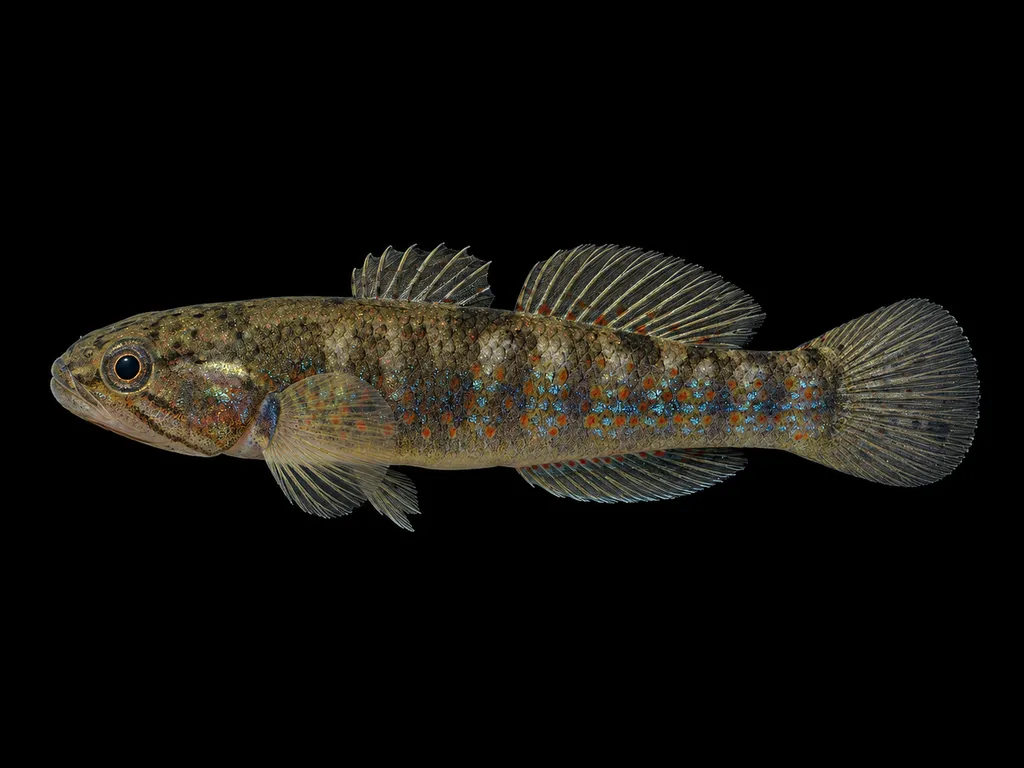 4.7 in (12 cm)30 gal (112 L)72–82°F (22–28°C)
Banded gudgeon
Mogurnda cingulata
4.7 in (12 cm) · 30 gal (112 L)
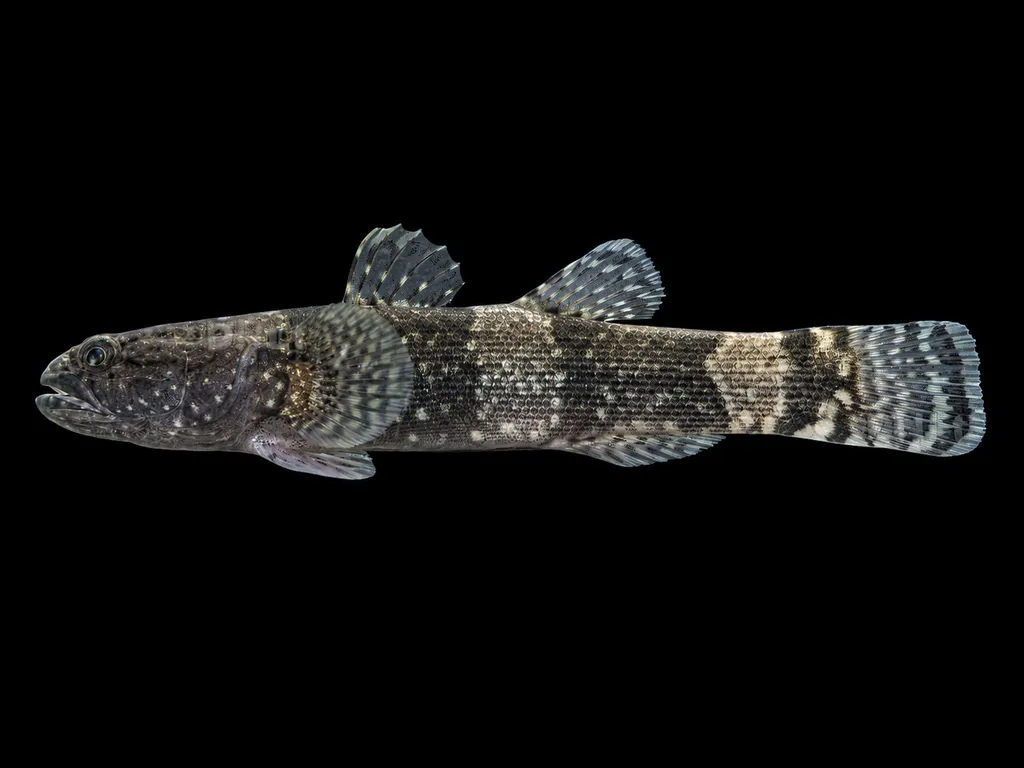 7.5 in (19 cm)53 gal (200 L)73–81°F (23–27°C)
Gecko goby
Belobranchus belobranchus
7.5 in (19 cm) · 53 gal (200 L)
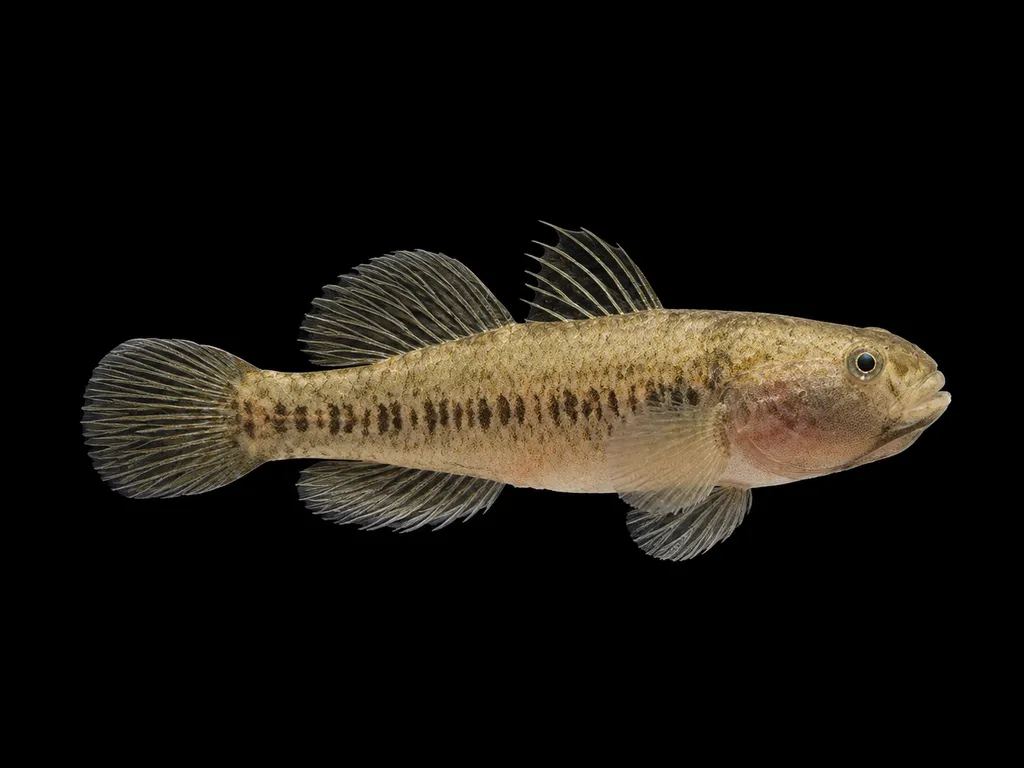 4.7 in (12 cm)42 gal (160 L)75–82°F (24–28°C)
Clay goby
Dormitator lebretonis
4.7 in (12 cm) · 42 gal (160 L)
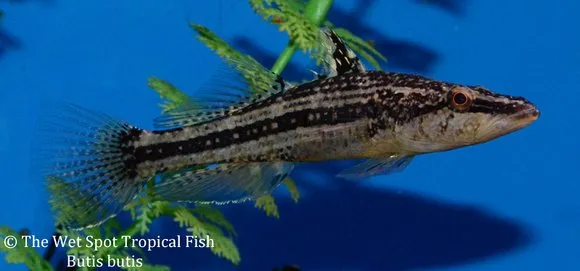 5.9 in (15 cm)66 gal (250 L)75–82°F (24–28°C)
Crazy fish
Butis butis
5.9 in (15 cm) · 66 gal (250 L)
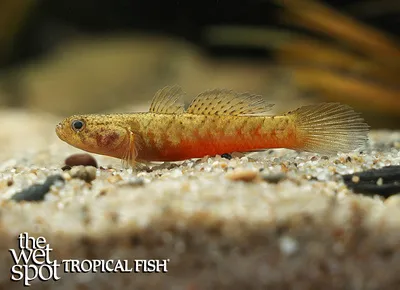 2 in (5 cm)20 gal (75 L)75–82°F (24–28°C)
Poreless gudgeon
Oxyeleotris nullipora
2 in (5 cm) · 20 gal (75 L)
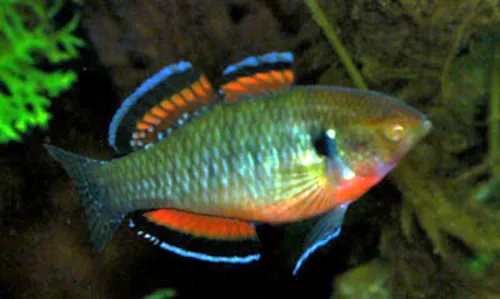 4.7 in (12 cm)26 gal (100 L)68–95°F (20–35°C)
Empire gudgeon
Hypseleotris compressa
4.7 in (12 cm) · 26 gal (100 L)