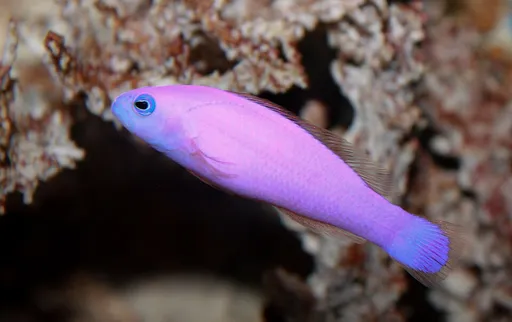
Magenta dottyback
Pictichromis porphyrea
Also known as Strawberry Dottyback, Purple Dottyback, Purple Pseudochromis, Strawberry Gramma
SaltwaterFish
Care at a glance
- Temperature
- 72–79°F
- 22–26°C
- pH
- 8.1–8.4
- Adult size
- 2.4 in
- 6 cm
- Minimum tank
- 20 gal
- 75 L
- Temperament
- Mostly peaceful
- Social behavior
- Solitary
- Own kind
- One per tank
- Tankmates
- With caution
- Swim level
- Middle
- Difficulty
- Easy
- Breeding
- Medium
- Rarity
- Very common
- Reef safe
- Reef safe
- Family
- Pseudochromidae
- Origin
- Western Pacific, from eastern Indonesia and the Philippines east to Samoa, north to the Ryukyu Islands
Overview
It is smaller and generally a notch less pugnacious than the bicolor dottyback, but it still has a temper: it will single out and harass tankmates that are a similar shape, size, or color, especially peaceful fish added to the tank after it has already settled in. Keep only one per tank and add it after its neighbors are established. It is completely reef safe, ignoring corals and other sessile invertebrates, and demands little open swimming room. A hardy carnivore, it takes mysis, chopped seafood, and other frozen carnivore preparations readily once it feels secure enough to come out and eat, and good nutrition is what keeps its magenta color at its brightest.
In the wild
Lives on reef flats and slopes across the western Pacific, from eastern Indonesia and the Philippines east to Samoa and north to the Ryukyu Islands, usually in less than 20 meters of water. It is a shy fish at first, sticking close to crevices and rubble, though it grows bolder about venturing into open water once it settles in. A nano or small reef tank of 75 liters or more with plenty of tight hiding spots suits it well.
Good to know
Pictichromis porphyrea was originally described in 1974 as Pseudochromis porphyreus and was moved into the newly erected genus Pictichromis in 2004 along with the bicolor dottyback and several other small, vividly colored relatives. The older name is still used by some sellers, sometimes under the separately marketed label purple dottyback, but Pseudochromis porphyreus and Pictichromis porphyrea both refer to the same fish rather than two different species, and the purple, magenta, and strawberry dottyback names in stores usually all point back to this one animal. Like the rest of the family it is a protogynous hermaphrodite, and a field study documented individual fish switching from female to male and back again, the first confirmed bidirectional sex change recorded in the wild for any Pseudochromidae.
Did you know
Because it is sold under at least three different common names (magenta, strawberry, and purple dottyback) and two different scientific names, a hobbyist could easily buy what looks like a second, different fish and end up with a duplicate of the one already in the tank.
Common questions
What size tank does a Magenta dottyback need?
A Magenta dottyback needs at least 20 gal (75 L). It spends most of its time in the middle.
What temperature and pH does a Magenta dottyback need?
A Magenta dottyback is comfortable at 72–79°F (22–26°C) with a pH of 8.1–8.4.
How big does a Magenta dottyback get?
An adult Magenta dottyback reaches about 2.4 in (6 cm).
Related species
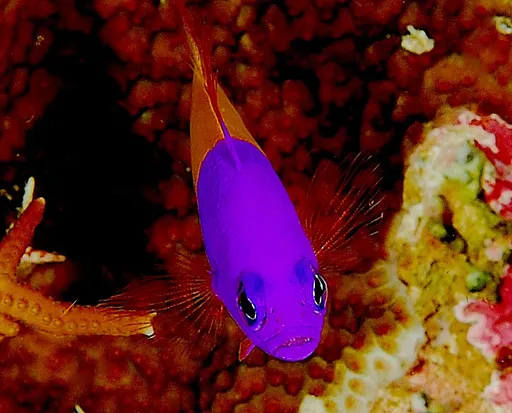 2.8 in (7 cm)29 gal (110 L)72–81°F (22–27°C)
Bicolor dottyback
Pictichromis paccagnellae
2.8 in (7 cm) · 29 gal (110 L)
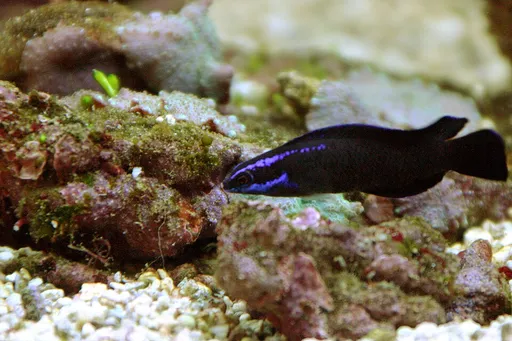 2.4 in (6 cm)20 gal (75 L)72–79°F (22–26°C)
Springer's dottyback
Pseudochromis springeri
2.4 in (6 cm) · 20 gal (75 L)
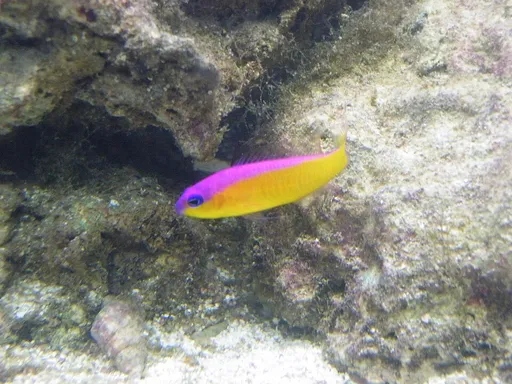 2.8 in (7 cm)20 gal (75 L)73–81°F (23–27°C)
Diadem dottyback
Pseudochromis diadema
2.8 in (7 cm) · 20 gal (75 L)
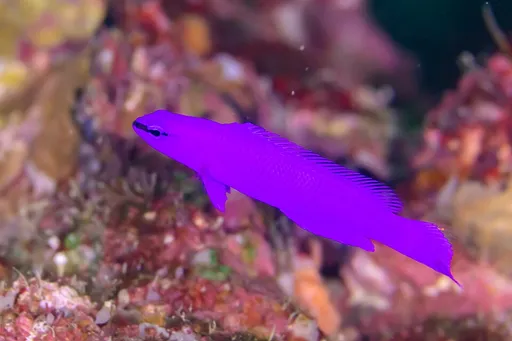 2.8 in (7 cm)29 gal (110 L)72–79°F (22–26°C)
Orchid dottyback
Pseudochromis fridmani
2.8 in (7 cm) · 29 gal (110 L)
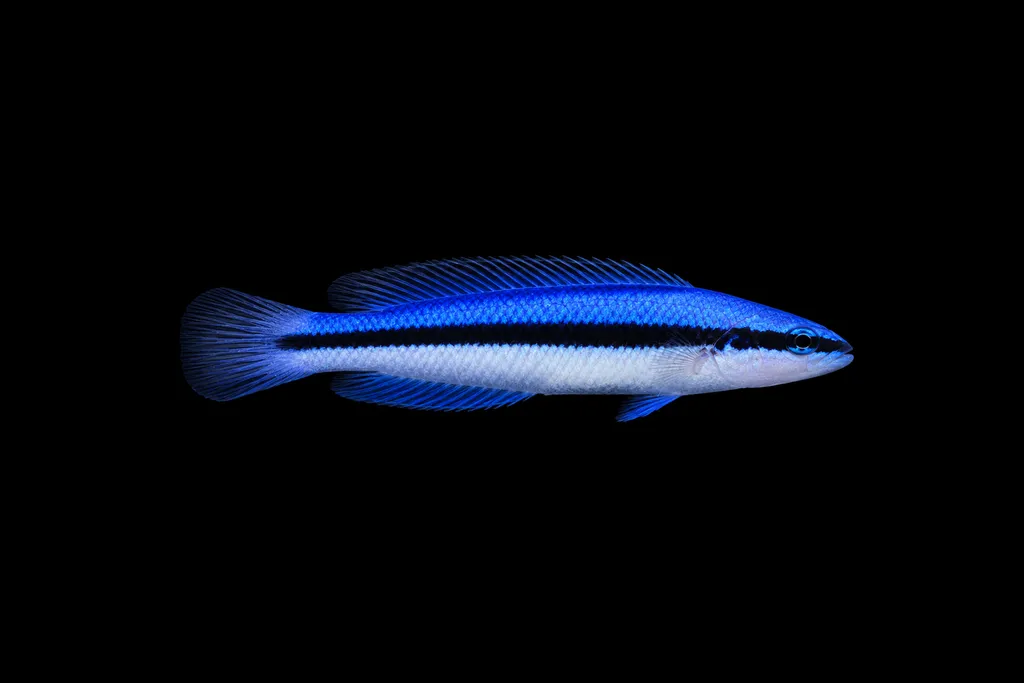 3 in (7.5 cm)29 gal (110 L)73–81°F (23–27°C)
Indigo dottyback
Pseudochromis hybrid
3 in (7.5 cm) · 29 gal (110 L)
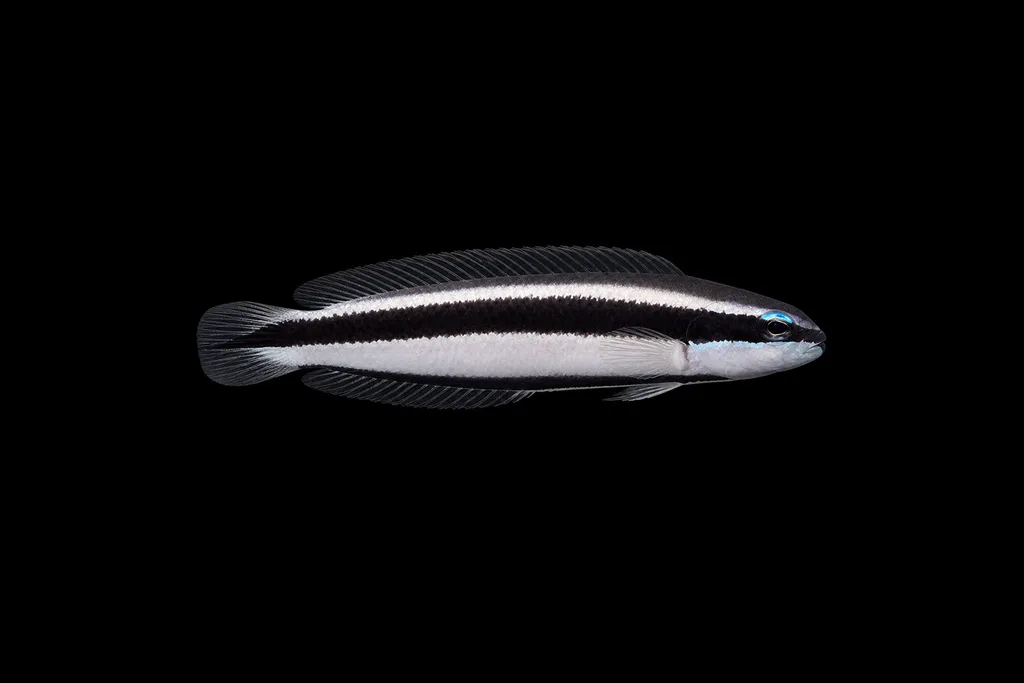 3.1 in (8 cm)29 gal (110 L)75–82°F (24–28°C)
Sankey's dottyback
Pseudochromis sankeyi
3.1 in (8 cm) · 29 gal (110 L)