Javari banded knifefish
Gymnotus javari
Also known as Javari gymnotus, False tiger knife
FreshwaterFish
Care at a glance
- Temperature
- 75–82°F
- 24–28°C
- pH
- 5.5–7.2
- Adult size
- 7.9 in
- 20 cm
- Minimum tank
- 66 gal
- 250 L
- Temperament
- Aggressive
- Social behavior
- Solitary
- Tankmates
- With caution
- Swim level
- Bottom
- Diet
- Carnivore
- Difficulty
- Difficult
- Breeding
- No record
- Rarity
- Rare
- Family
- Gymnotidae
- Origin
- Javari basin, Peru and Brazil
Overview
The Javari banded knifefish is an aggressive electric fish for experienced keepers. It hunts at night along the bottom, threading through leaf litter and roots.
Did you know
When two Javari banded knifefish meet, their electric discharges can clash. If their signals are too close in frequency, each fish shifts its own so the two no longer interfere. This built-in reaction keeps their electric senses working side by side.
Caring for the Javari banded knifefish
Give a Javari banded knifefish at least 66 gal (250 L) and lots of shelter. Use driftwood, roots and leaf litter for dense cover, and add plenty of tubes for it to hide in by day. Keep the light dim.
Keep the water soft and warm, at 75 to 82°F (24 to 28°C), with gentle flow. An acidic to neutral pH of 5.5 to 7.2 suits it. Feed meaty foods in the evening, such as frozen bloodworm, blackworm, chopped prawn, earthworm and sinking pellets.
Keep one to a tank, without exception, because it fights its own kind and other knifefish. It is best in a species tank, or with peaceful fish too large to swallow, chosen very carefully. Small fish and shrimp will be eaten. There is no established record of it spawning in aquaria.
Good to know
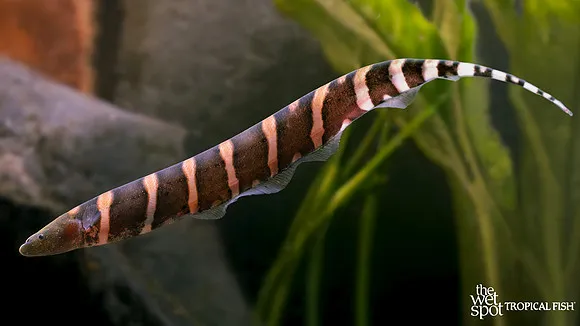
The Javari banded knifefish belongs to the banded knifefish family, Gymnotidae. Oblique dark bands mark its tapering body. Like its relatives, it produces a continuous weak electric discharge to navigate, find prey and signal to other fish.
In the wild
The Javari banded knifefish comes from the Javari basin on the Peru and Brazil border. It lives in slow, leaf-choked backwaters and margins, where the water is soft, warm and stained with tannins.
Common questions
What size tank does a Javari banded knifefish need?
A Javari banded knifefish needs at least 66 gal (250 L). It spends most of its time in the bottom.
What temperature and pH does a Javari banded knifefish need?
A Javari banded knifefish is comfortable at 75–82°F (24–28°C) with a pH of 5.5–7.2.
What does a Javari banded knifefish eat?
A Javari banded knifefish eats meaty foods, such as frozen bloodworm, blackworm, chopped prawn, earthworm and sinking pellets. Feed it in the evening.
How big does a Javari banded knifefish get?
An adult Javari banded knifefish reaches about 7.9 in (20 cm).
How does a Javari banded knifefish breed?
The Javari banded knifefish has no established record of spawning in aquaria.
Related species
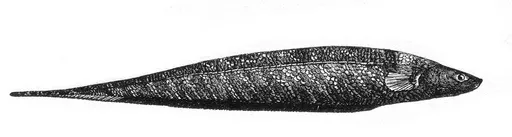 15.7 in (40 cm)79 gal (300 L)73–82°F (23–28°C)
Banded knifefish
Gymnotus carapo
15.7 in (40 cm) · 79 gal (300 L)
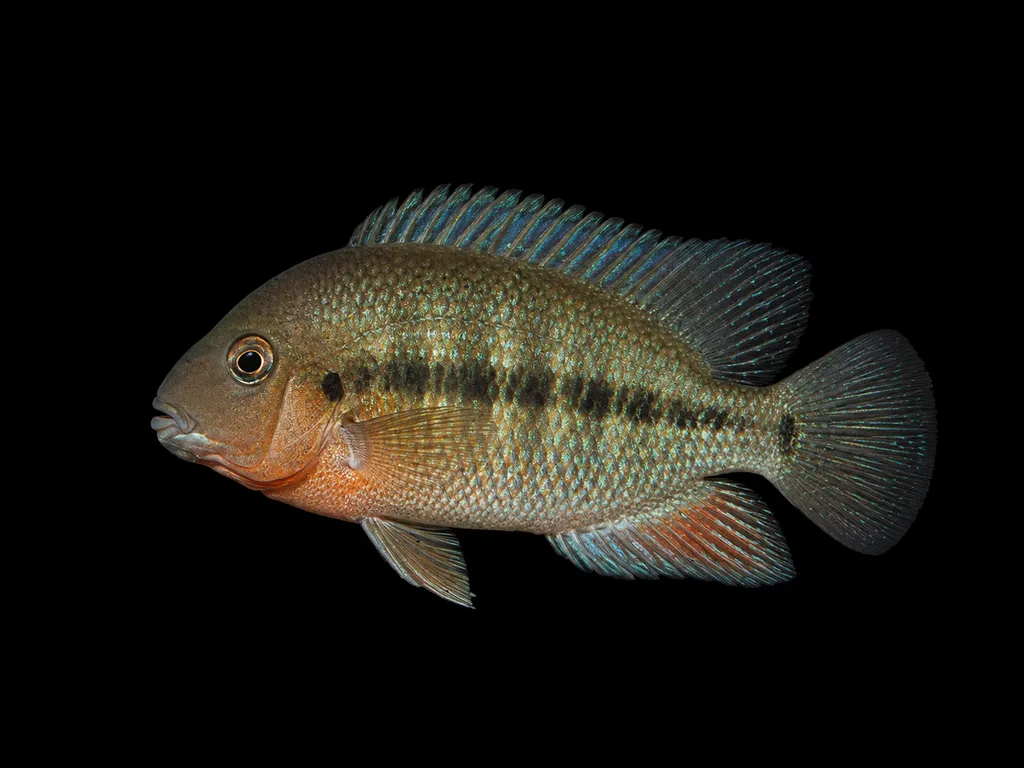 7.9 in (20 cm)119 gal (450 L)75–84°F (24–29°C)
Breidohr's vieja
Vieja breidohri
7.9 in (20 cm) · 119 gal (450 L)
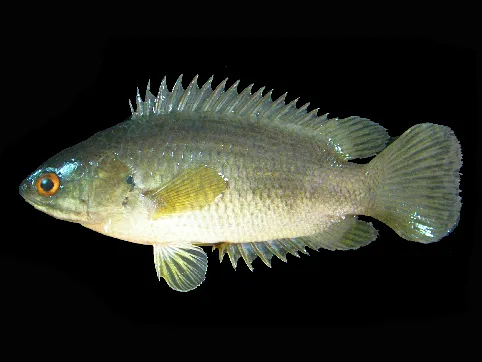 7.9 in (20 cm)40 gal (150 L)59–86°F (15–30°C)
Climbing perch
Anabas testudineus
7.9 in (20 cm) · 40 gal (150 L)
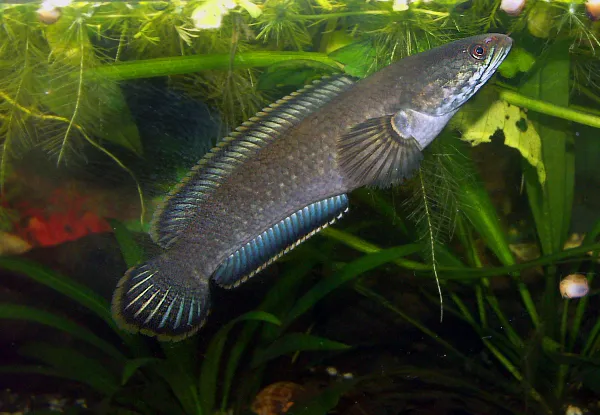 7.9 in (20 cm)40 gal (150 L)64–82°F (18–28°C)
Dwarf snakehead
Channa gachua
7.9 in (20 cm) · 40 gal (150 L)
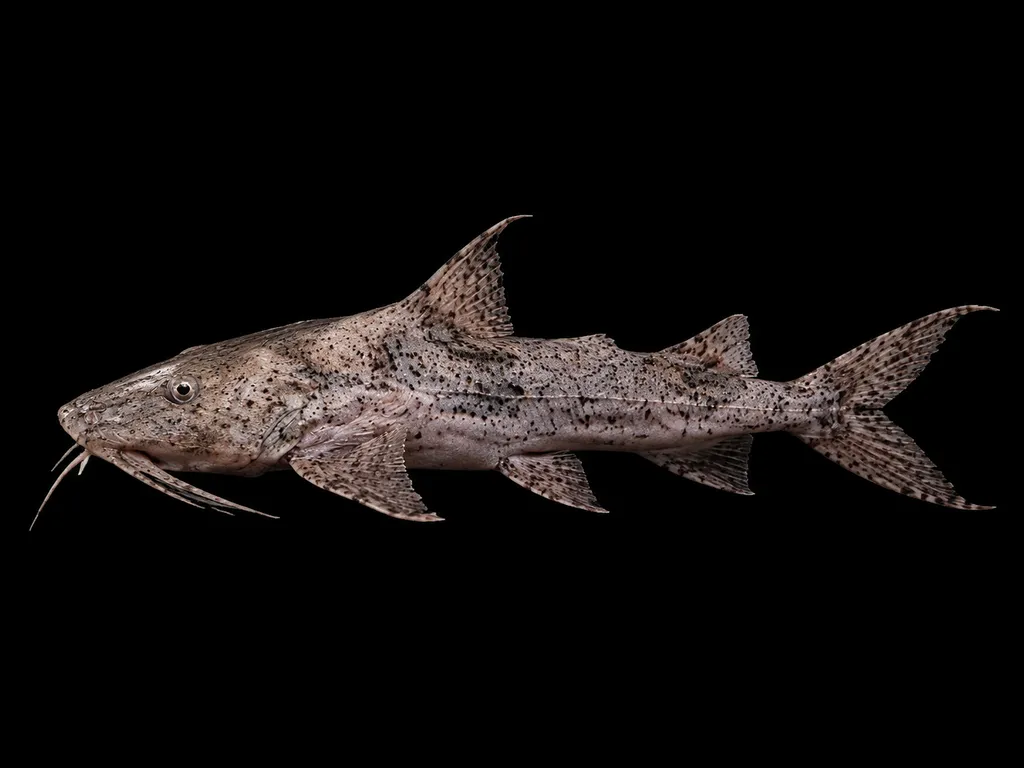 7.9 in (20 cm)53 gal (200 L)72–79°F (22–26°C)
Goonch catfish
Bagarius bagarius
7.9 in (20 cm) · 53 gal (200 L)
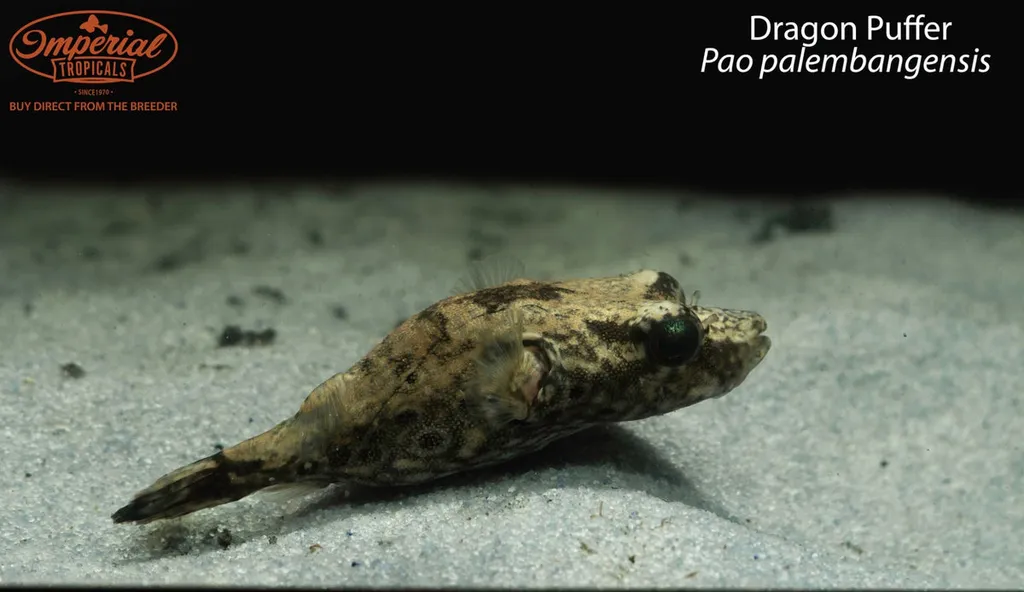 7.9 in (20 cm)32 gal (120 L)75–82°F (24–28°C)
Humpback puffer
Pao palembangensis
7.9 in (20 cm) · 32 gal (120 L)