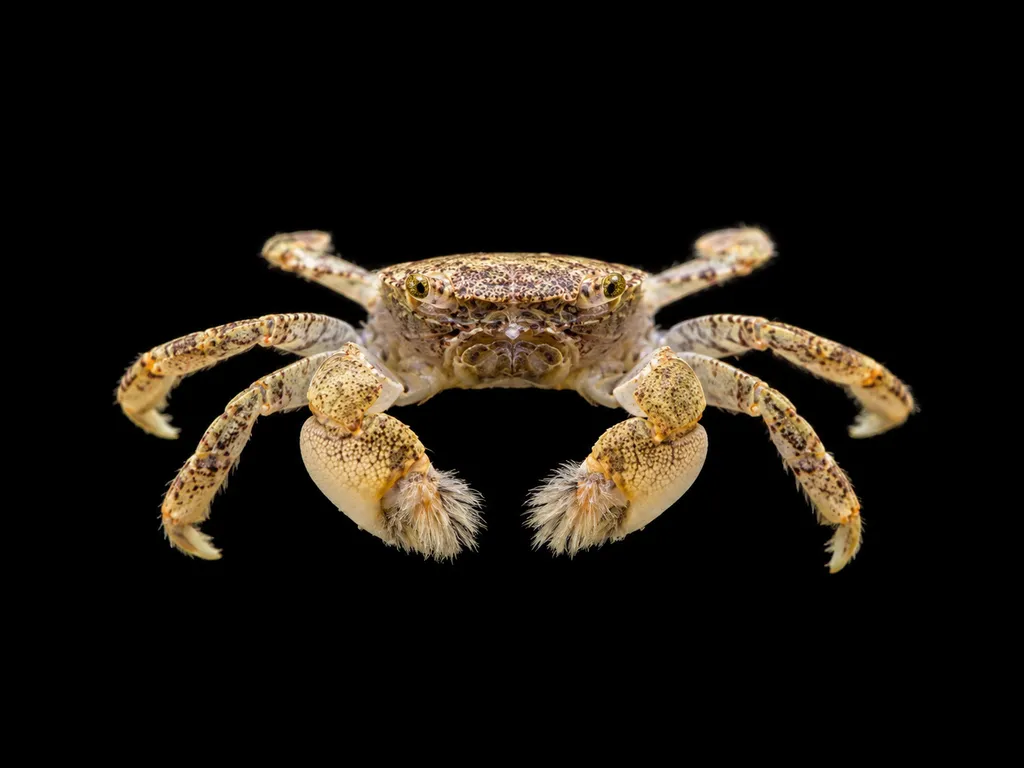
Hairy claw boxer crab
Ptychognathus insolitus
Also known as Freshwater hairy claw boxer crab
FreshwaterBrackishCrab
Care at a glance
- Temperature
- 72–82°F
- 22–28°C
- pH
- 7.0–8.0
- Adult size
- 0.4 in
- 1 cm
- Minimum tank
- 5 gal
- 20 L
- Temperament
- Peaceful
- Social behavior
- Social
- Tankmates
- With caution
- Swim level
- Bottom
- Difficulty
- Medium
- Breeding
- No record
- Rarity
- Very rare
- Family
- Varunidae
- Origin
- Ryukyu Islands, Japan, and southern Taiwan
Overview
A peaceful bottom dweller that behaves like the pom pom crab, holding its hairy claws out in the current to trap particles and then combing them off with its mouthparts. It cannot hurt anything and gets eaten by anything with a big enough mouth, so keep it with dwarf shrimp, snails, and small peaceful nano fish only, in a group of several. Feed powdered foods, crushed flakes, and frozen baby brine shrimp on top of the biofilm it grazes, and never use copper. The boxer name is borrowed from the marine Lybia crabs that hold anemones; this one holds nothing but its own hair.
In the wild
The hairy claw boxer crab comes from the brackish lower reaches of small rivers and estuaries, where it hides under stones on sandy mud, in the Ryukyu Islands, from Amami Oshima to Izena, and in southern Taiwan around Tainan and Pingtung. It is sold as a freshwater crab and adults are kept that way in the trade, but its home water carries some salt, so a low dose of marine salt is closer to what it knows and a wholly fresh tank is a guess. Give a group a tank of 20 liters or more with sand, flat stones to hide under, a gentle current, and a mature coat of biofilm, at 22 to 28 C and pH 7 to 8. It is fully aquatic and needs no land, only a tight lid.
Good to know
Ptychognathus insolitus is a small crab in the family Varunidae, described by Osawa and Ng in 2006 from Izena Island and named insolitus, Latin for unusual, because its very broad carapace, long slender legs, and stout gonopods made it look like a different genus. Males reach about 1 cm across, with the biggest measured at 10.1 mm. The males carry long, soft hairs on the claws, the same trait that gives its relative the pom pom crab its name. The larvae develop in the sea, so it does not breed in fresh water and has never been bred in captivity, and the marine species register lists it as a brackish species.
Did you know
Ryukyu crabs filed away under two other Ptychognathus names, as P. cf. hachijoensis from Amami Oshima in 2001 and as P. johannae in a 2003 guide to Ryukyu inland waters, turned out to be this species once Osawa and Ng described it in 2006. Taiwan did not get its first record until 2015, from Tainan. The name insolitus, unusual, was earned by looking like the wrong genus.
Common questions
What size tank does a Hairy claw boxer crab need?
A Hairy claw boxer crab needs at least 5 gal (20 L). It spends most of its time in the bottom.
What temperature and pH does a Hairy claw boxer crab need?
A Hairy claw boxer crab is comfortable at 72–82°F (22–28°C) with a pH of 7.0–8.0.
How big does a Hairy claw boxer crab get?
An adult Hairy claw boxer crab reaches about 0.4 in (1 cm).
Related species
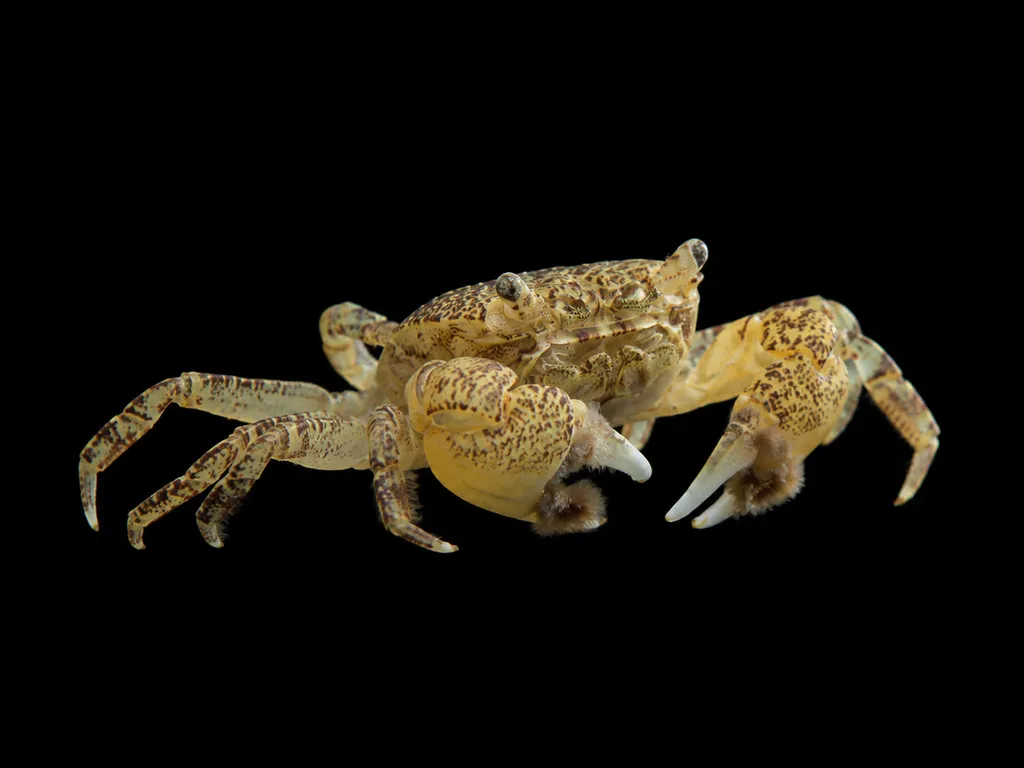 1.6 in (4 cm)5 gal (20 L)72–82°F (22–28°C)
Pom pom crab
Ptychognathus barbatus
1.6 in (4 cm) · 5 gal (20 L)
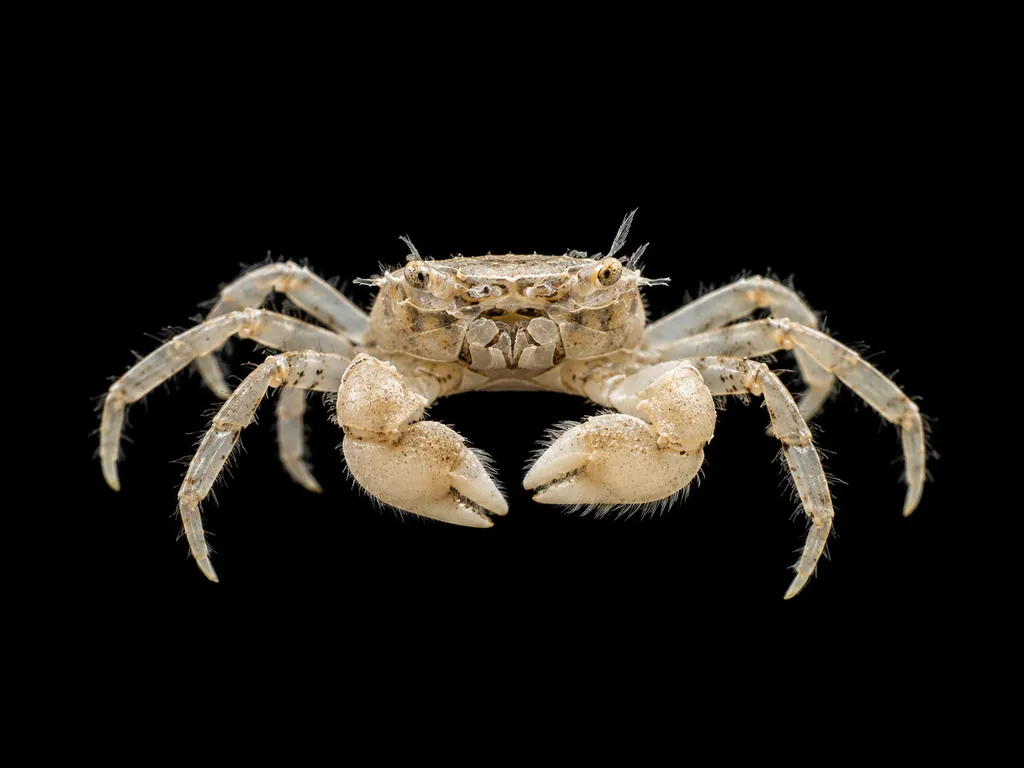 0.4 in (1 cm)5 gal (20 L)72–82°F (22–28°C)
Indo micro crab
Neorhynchoplax prima
0.4 in (1 cm) · 5 gal (20 L)
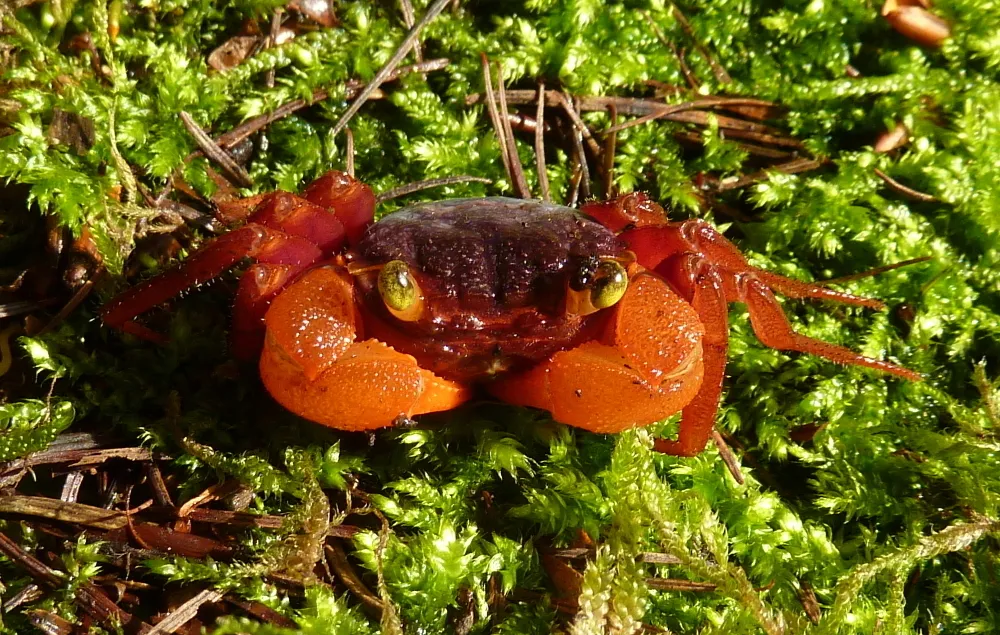 0.6 in (1.5 cm)16 gal (60 L)72–81°F (22–27°C)
Mandarin vampire crab
Geosesarma notophorum
0.6 in (1.5 cm) · 16 gal (60 L)
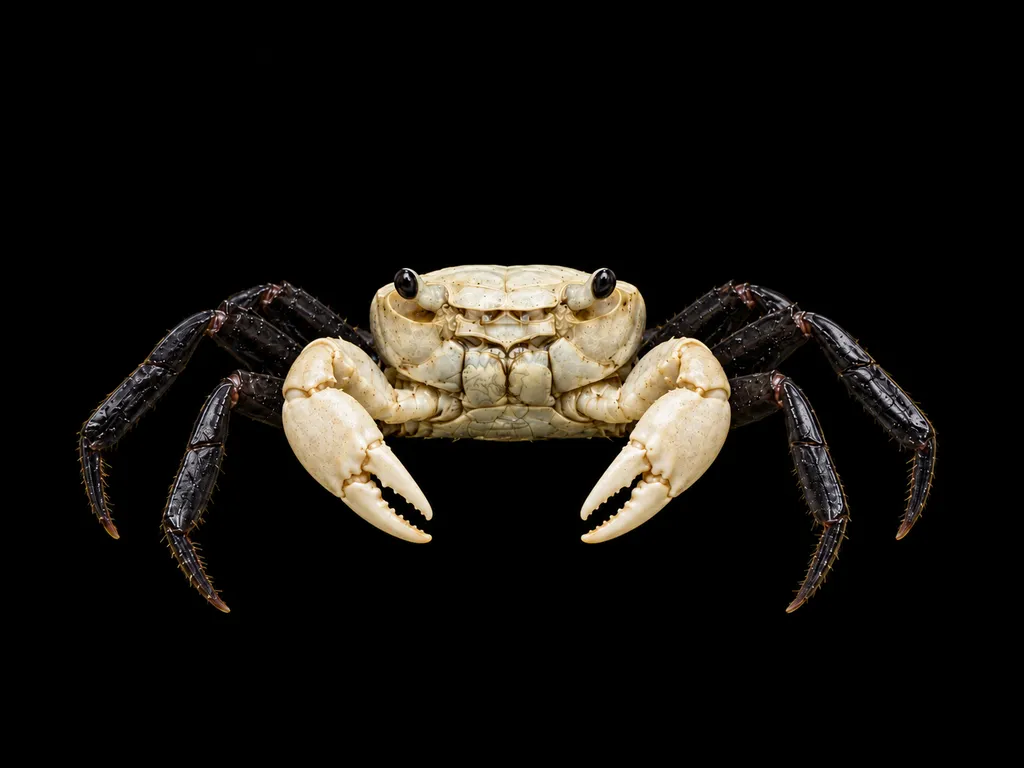 0.6 in (1.5 cm)16 gal (60 L)72–79°F (22–26°C)
Panda crab
Lepidothelphusa cognettii
0.6 in (1.5 cm) · 16 gal (60 L)
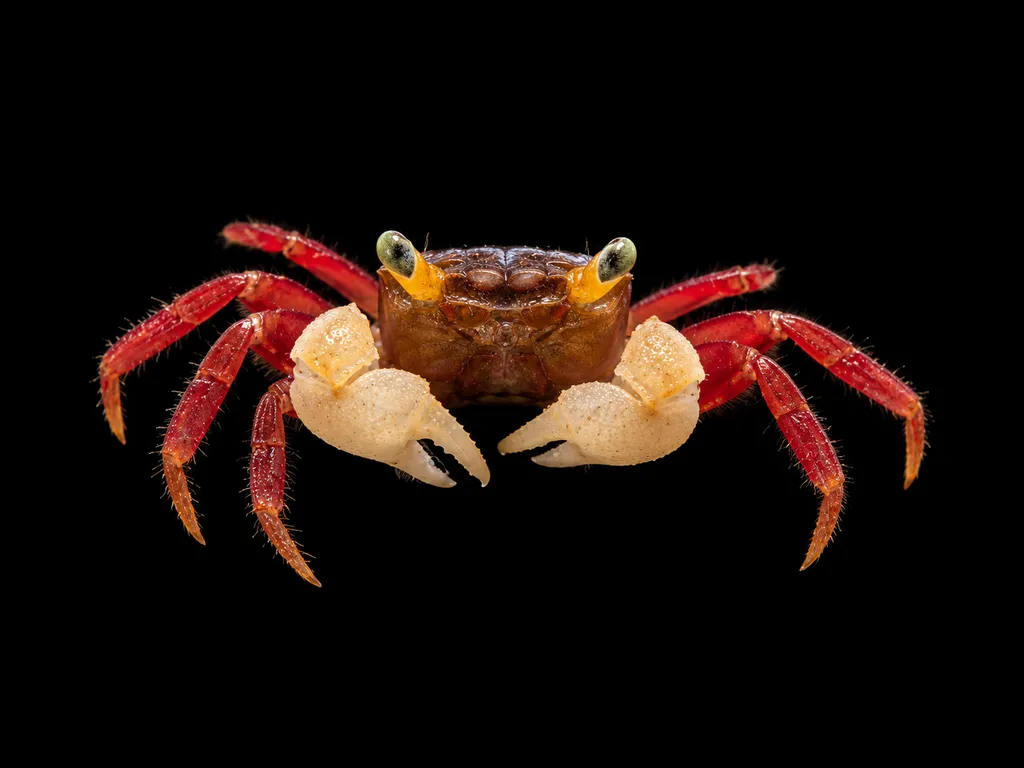 0.6 in (1.5 cm)10 gal (38 L)72–82°F (22–28°C)
White mandarin vampire crab
Geosesarma pontianak
0.6 in (1.5 cm) · 10 gal (38 L)
- 0.6 in (1.5 cm)10 gal (38 L)75–82°F (24–28°C)
Purple arm vampire crab
Geosesarma noduliferum
0.6 in (1.5 cm) · 10 gal (38 L)