Freshwater needlefish
Xenentodon cancila
FreshwaterFish

Care at a glance
- Temperature
- 66–86°F
- 19–30°C
- pH
- 6.5–7.5
- Adult size
- 13.8 in
- 35 cm
- Minimum tank
- 85 gal
- 320 L
- Temperament
- Mostly peaceful
- Social behavior
- Shoaling
- Tankmates
- With caution
- Swim level
- Middle
- Diet
- Carnivore
- Difficulty
- Difficult
- Breeding
- Egg layer
- Rarity
- Very rare
- Family
- Belonidae
- Origin
- South Asia, Thailand
Overview
The freshwater needlefish is a slim, fast predator that waits in open mid to upper water to ambush prey. It is a fish for experienced keepers.
Did you know
A freshwater needlefish is built like a living spear. It ambushes prey near the surface with a sudden sideways snap of its head.
Caring for the freshwater needlefish
Give a group of freshwater needlefish a long tank of at least 85 gal (320 L), with open swimming room at the top. Some floating or marginal plants give them security. They are nervous and jump hard, so a tight lid is essential.
They tolerate a wide temperature span of 66 to 86°F (19 to 30°C), with a near-neutral pH of 6.5 to 7.5. Feed live and frozen foods such as river shrimp, earthworms and small fish. Wean them onto frozen foods where you can.
Keep them in a small group, where they are calmer than when kept alone. A needlefish will snap up any fish small enough to fit in its long jaws. Its tank mates must be similar in size or larger.
Freshwater needlefish lay relatively large eggs that anchor to plants by fine threads. Spawning in aquariums is seldom recorded.
Good to know
The freshwater needlefish, Xenentodon cancila, belongs to Belonidae, the needlefish family. Its body is drawn out into a long, thin form, with narrow, beak-like jaws lined with fine teeth. Despite those fearsome jaws, studies of wild fish suggest that much of its natural diet is small crustaceans.
In the wild
The freshwater needlefish is widespread across South and Southeast Asia, from Pakistan and India through to Thailand. It lives in rivers, canals, lakes and floodplains, sometimes reaching slightly brackish estuaries. It favors calm, open surface water near the bank.
Common questions
What size tank does a freshwater needlefish need?
A freshwater needlefish needs at least 85 gal (320 L). It spends most of its time in the middle.
What temperature and pH does a freshwater needlefish need?
A freshwater needlefish is comfortable at 66–86°F (19–30°C) with a pH of 6.5–7.5.
What does a freshwater needlefish eat?
A freshwater needlefish eats live and frozen foods such as river shrimp, earthworms and small fish. Wean it onto frozen foods where you can.
How big does a freshwater needlefish get?
An adult freshwater needlefish reaches about 13.8 in (35 cm).
Does a freshwater needlefish need a group?
Yes. A freshwater needlefish is a shoaling species and should be kept in a group, not singly.
How does a freshwater needlefish breed?
Freshwater needlefish lay relatively large eggs that anchor to plants by fine threads. Aquarium spawning is seldom recorded.
Related species
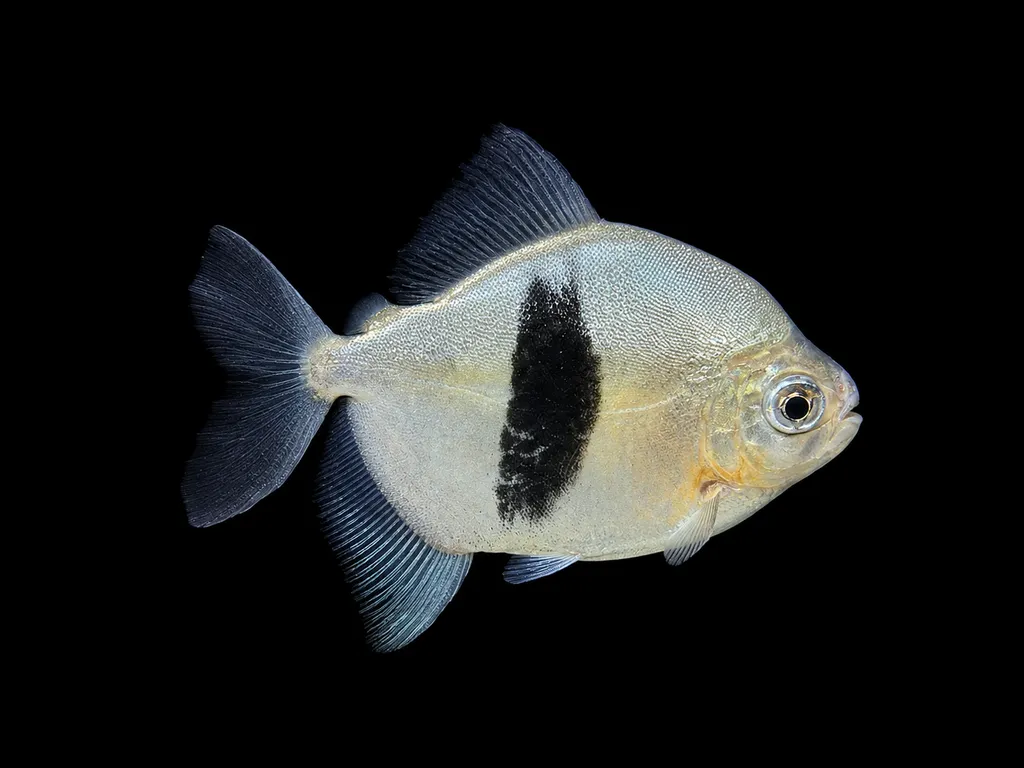 13.8 in (35 cm)170 gal (645 L)75–82°F (24–28°C)
Blue hook silver dollar
Myloplus aylan
13.8 in (35 cm) · 170 gal (645 L)
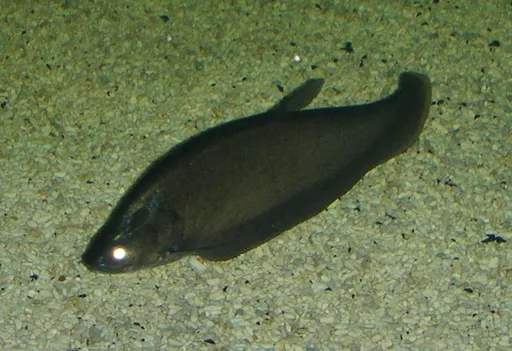 13.8 in (35 cm)79 gal (300 L)75–82°F (24–28°C)
Bronze featherback
Notopterus notopterus
13.8 in (35 cm) · 79 gal (300 L)
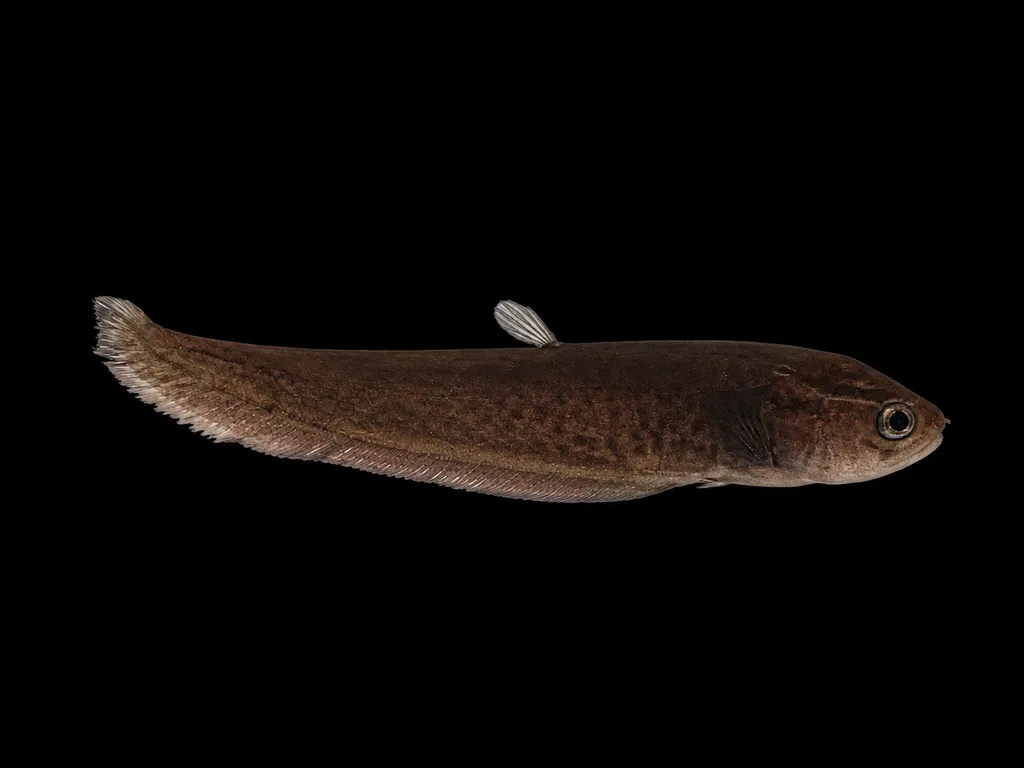 13.8 in (35 cm)119 gal (450 L)75–82°F (24–28°C)
Congo featherfin knifefish
Papyrocranus congoensis
13.8 in (35 cm) · 119 gal (450 L)
 13.8 in (35 cm)135 gal (510 L)73–84°F (23–29°C)
Kissing prochilodus
Semaprochilodus insignis
13.8 in (35 cm) · 135 gal (510 L)
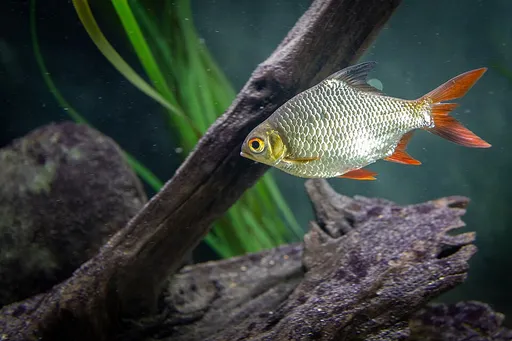 13.8 in (35 cm)180 gal (680 L)72–82°F (22–28°C)
Tinfoil barb
Barbonymus schwanenfeldii
13.8 in (35 cm) · 180 gal (680 L)
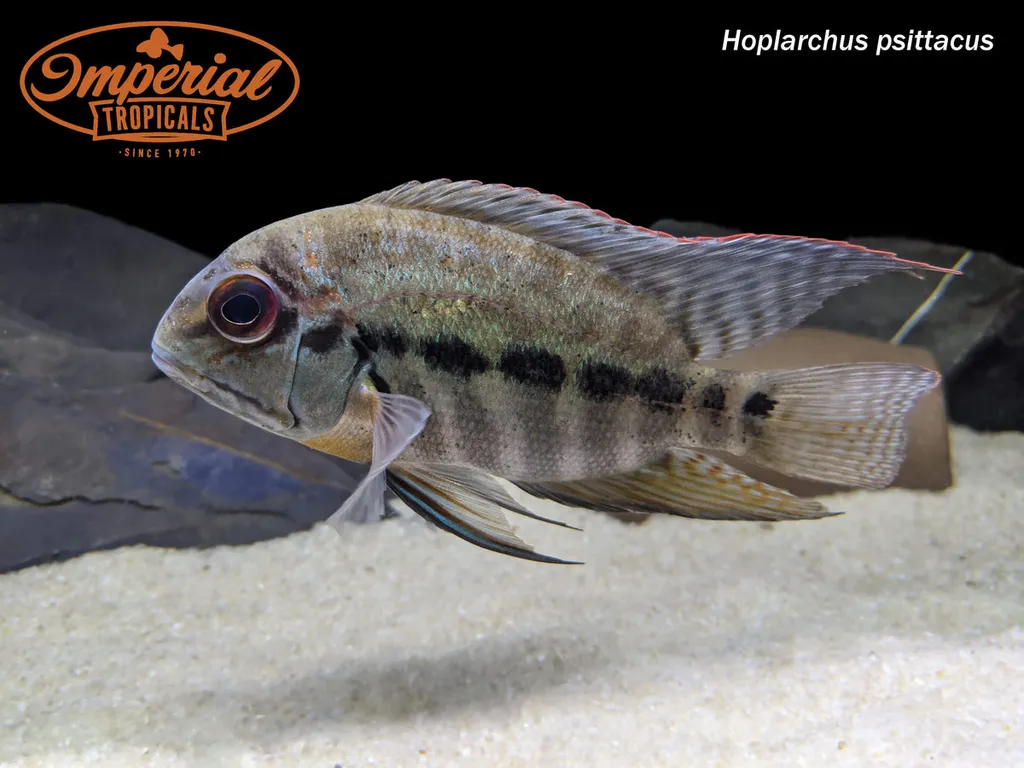 13.8 in (35 cm)151 gal (570 L)79–86°F (26–30°C)
True parrot cichlid
Hoplarchus psittacus
13.8 in (35 cm) · 151 gal (570 L)