Elephant-nose knifefish
Sternarchorhynchus oxyrhynchus
Also known as Tube-snout knifefish
FreshwaterFish
Care at a glance
- Temperature
- 73–82°F
- 23–28°C
- pH
- 5.5–7.2
- Adult size
- 18.5 in
- 47 cm
- Minimum tank
- 106 gal
- 400 L
- Temperament
- Mostly peaceful
- Social behavior
- Solitary
- Tankmates
- With caution
- Swim level
- Bottom
- Diet
- Carnivore
- Difficulty
- Difficult
- Breeding
- No record
- Rarity
- Rare
- Family
- Apteronotidae
- Origin
- Amazon and Orinoco river channels
Overview
The elephant-nose knifefish is a large, specialized electric knifefish for experienced keepers. It works the bottom of a dim, soft-water tank by night.
Did you know
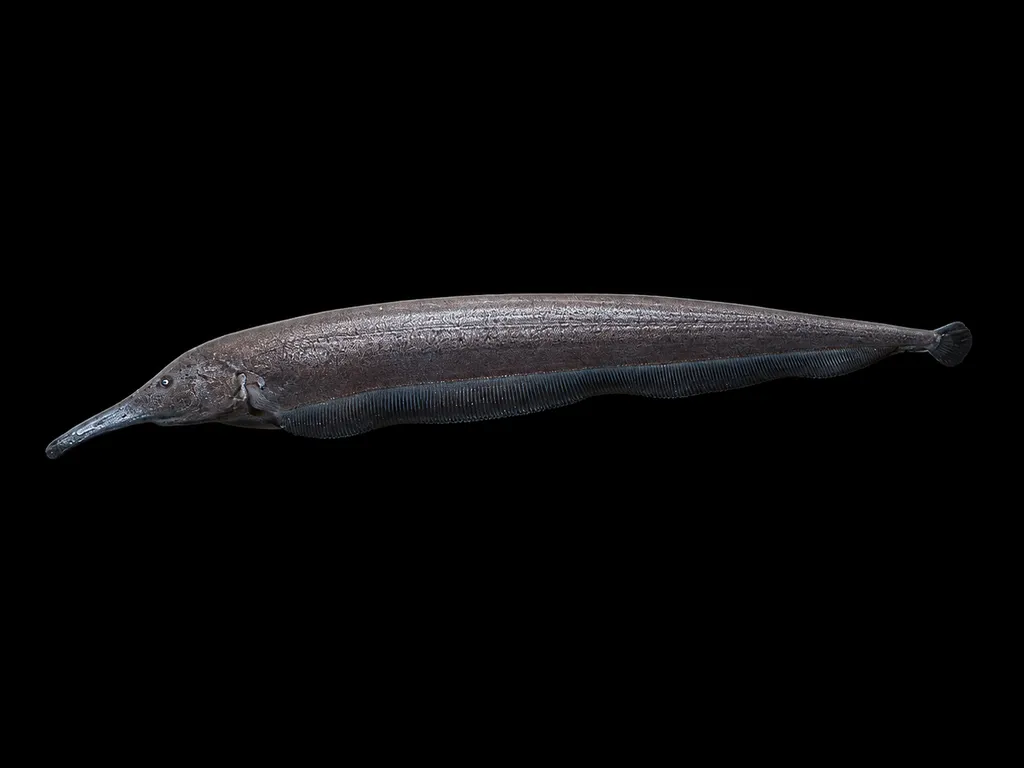
The elephant-nose knifefish hunts with tweezers and radar at once. Its curved tube snout reaches into burrows and crevices for insect larvae. A weak electric field, which the fish generates and senses, helps it find prey it cannot see in the dark.
Caring for the elephant-nose knifefish
Keep an elephant-nose knifefish singly, in at least 106 gal (400 L). Give it a soft sand bed it can work over, tubes and wood for daytime shelter, and dim, shaded light. It stays near the bottom and probes the sand and crevices for hidden prey at night.
It wants warm, soft water at 73 to 82°F (23 to 28°C) and a pH of 5.5 to 7.2, with gentle to moderate flow. Feed meaty foods after dark, such as frozen bloodworm, blackworm and chopped prawn. Small sinking items suit it best, since it pulls its food out of the substrate.
The elephant-nose knifefish is mostly peaceful toward fish it cannot eat, but it hunts at night. Choose tank mates with caution, and avoid small fish and shrimp that could become food. It is not known to breed in the aquarium.
Good to know
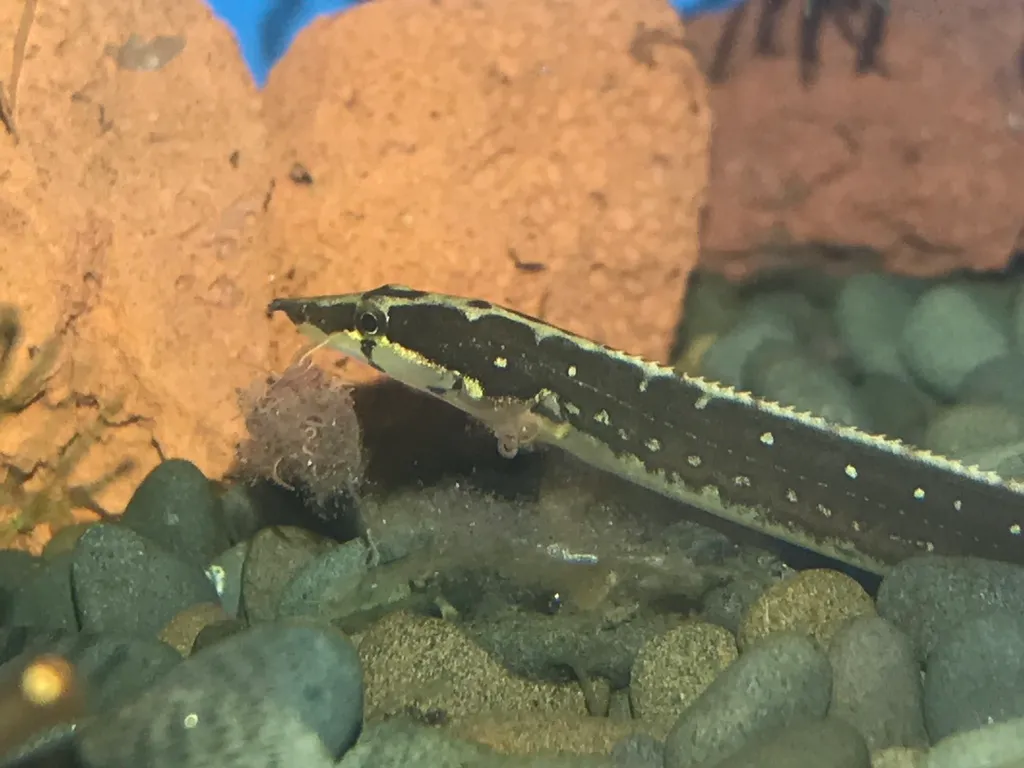
The elephant-nose knifefish, Sternarchorhynchus oxyrhynchus, belongs to the ghost knifefish family, Apteronotidae. Its most striking feature is the long, tube-like, downcurved snout. It is also called the tube-snout knifefish.
In the wild
The elephant-nose knifefish lives in the channels of the Amazon and Orinoco and their tributaries. It stays over sand and among submerged wood, in warm, flowing water.
Common questions
What size tank does an elephant-nose knifefish need?
An elephant-nose knifefish needs at least 106 gal (400 L). It spends most of its time in the bottom.
What temperature and pH does an elephant-nose knifefish need?
An elephant-nose knifefish is comfortable at 73–82°F (23–28°C) with a pH of 5.5–7.2.
What does an elephant-nose knifefish eat?
An elephant-nose knifefish eats meaty foods such as frozen bloodworm, blackworm and chopped prawn, fed after dark. Small sinking items suit it best, since it pulls its food from the substrate.
How big does an elephant-nose knifefish get?
An adult elephant-nose knifefish reaches about 18.5 in (47 cm).
Related species
 17.7 in (45 cm)85 gal (320 L)75–82°F (24–28°C)
Black ghost knifefish
Apteronotus albifrons
17.7 in (45 cm) · 85 gal (320 L)
 11.8 in (30 cm)85 gal (320 L)75–84°F (24–29°C)
Brown ghost knifefish
Apteronotus leptorhynchus
11.8 in (30 cm) · 85 gal (320 L)
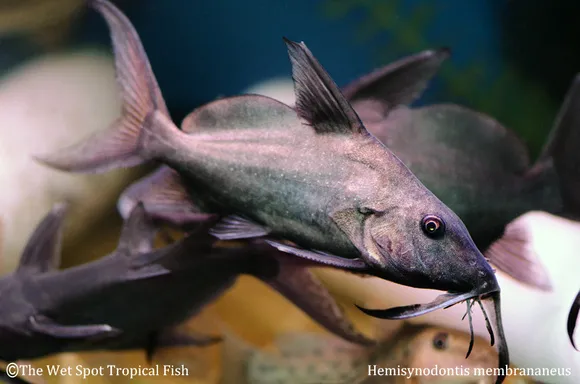 18.1 in (46 cm)114 gal (430 L)73–82°F (23–28°C)
Mustache synodontis
Synodontis membranaceus
18.1 in (46 cm) · 114 gal (430 L)
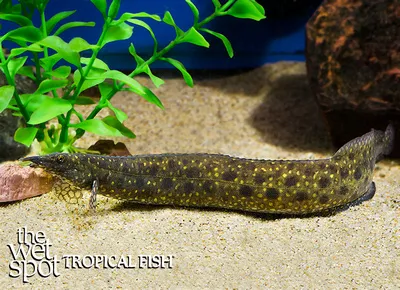 19.3 in (49 cm)106 gal (400 L)73–82°F (23–28°C)
White-spotted spiny eel
Mastacembelus alboguttatus
19.3 in (49 cm) · 106 gal (400 L)
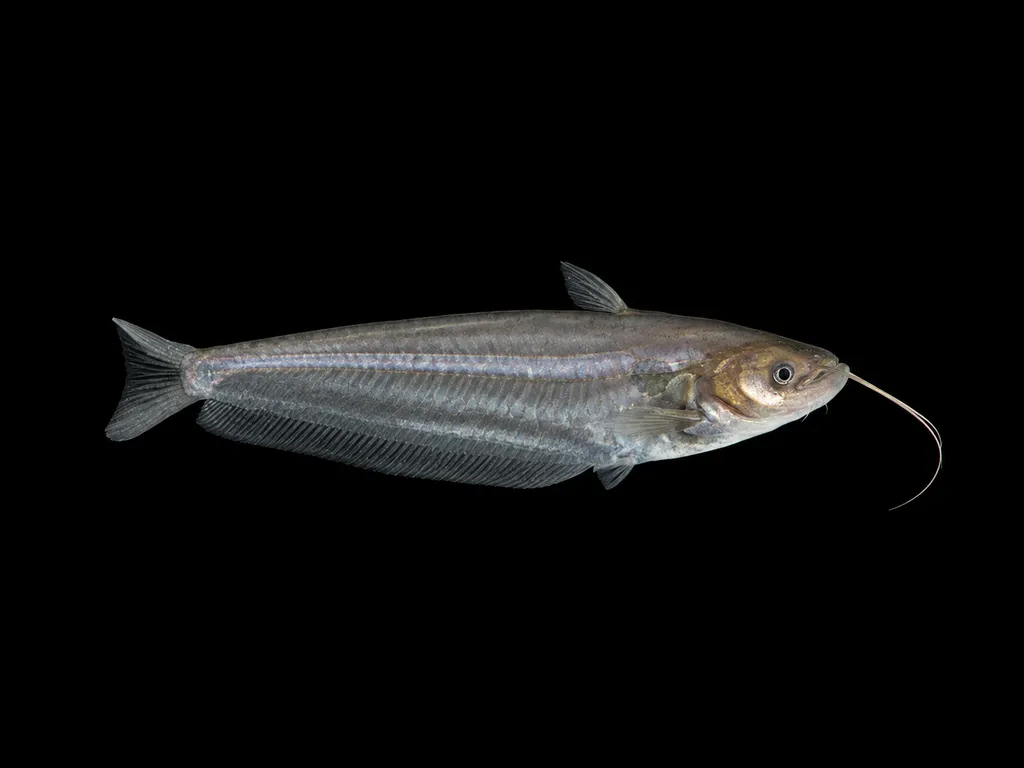 17.7 in (45 cm)172 gal (650 L)68–82°F (20–28°C)
Butter catfish
Ompok bimaculatus
17.7 in (45 cm) · 172 gal (650 L)
 17.7 in (45 cm)106 gal (400 L)73–82°F (23–28°C)
Eyespot spiny eel
Mastacembelus notophthalmus
17.7 in (45 cm) · 106 gal (400 L)