Eggers' notho
Nothobranchius eggersi
Also known as Egger's Killi
FreshwaterFish
Care at a glance
- Temperature
- 68–79°F
- 20–26°C
- pH
- 6.0–7.5
- Adult size
- 2 in
- 5 cm
- Minimum tank
- 11 gal
- 40 L
- Temperament
- Mostly peaceful
- Social behavior
- Social
- Tankmates
- With caution
- Swim level
- Bottom
- Difficulty
- Medium
- Breeding
- Hard
- Rarity
- Common
- Family
- Nothobranchiidae
- Origin
- Temporary pools and swamps of the lower Rufiji River and delta, eastern Tanzania
Overview
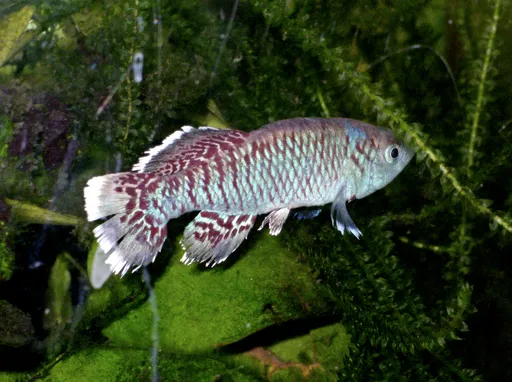
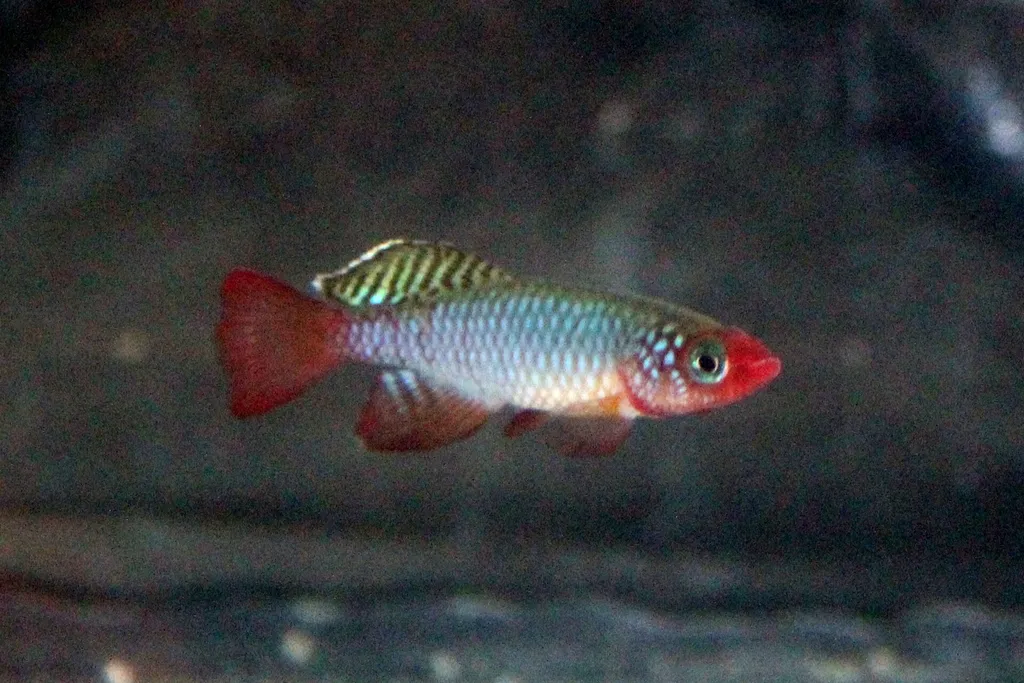
Keep them as a species tank, one male with two or more females, or a small colony, in 40 liters or more with plenty of plants. Males are not community-peaceful: they spar and chase, so this is mostly peaceful rather than a true community fish, and rival males and harassed females need cover to retreat into. Hold the water cooler, 20 to 26 C, with a pH from 6 to 7.5, since warmer temperatures shorten their already short life. They are micropredators, so feed small live or frozen foods like daphnia, brine shrimp, and chopped bloodworm. Many refuse dry food. Keep them alone or with very gentle, similar-sized tankmates, not in a busy community.
In the wild
Eggers' notho is an annual killifish from temporary pools and swamps along the lower Rufiji River and delta in eastern Tanzania. These are shallow, soft, slightly acidic blackwater habitats, stained brown with tannins and shaded by plants. To match that, give them a heavily planted tank of at least 40 liters with peat filtration, some dried leaves or tannins in the water, dim light, and dense cover like java moss. They tolerate harder water but show better in soft and acidic conditions.
Good to know
This is a small annual killifish in the family Nothobranchiidae. Males reach about 5 cm, with females staying a touch smaller and plainer. Like other Nothobranchius, it is a bottom-spawner whose eggs sit in the substrate through a dry diapause, an adaptation to pools that dry out each year. Lifespan is short, roughly one year, which is normal for an annual species.
Did you know
Breeding works the way the wild pools do. The fish spawn into a peat or sand mound, and the eggs need a dry rest before they will hatch. Keepers collect the peat, dry it to a damp pipe-tobacco texture, and store it warm for two to four months before rehydrating it to trigger hatching. The fry are prone to velvet, so some people add a little marine salt as a preventative.
Common questions
What size tank does an Eggers' notho need?
An Eggers' notho needs at least 11 gal (40 L). It spends most of its time in the bottom.
What temperature and pH does an Eggers' notho need?
An Eggers' notho is comfortable at 68–79°F (20–26°C) with a pH of 6.0–7.5.
How big does an Eggers' notho get?
An adult Eggers' notho reaches about 2 in (5 cm).
Related species
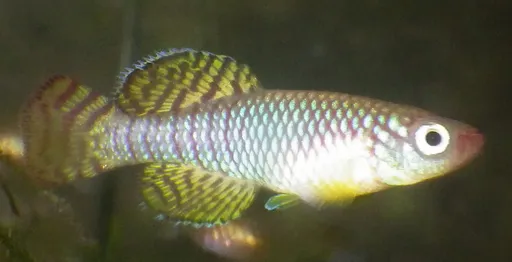 2 in (5 cm)10 gal (38 L)72–79°F (22–26°C)
Mafia killifish
Nothobranchius korthausae
2 in (5 cm) · 10 gal (38 L)
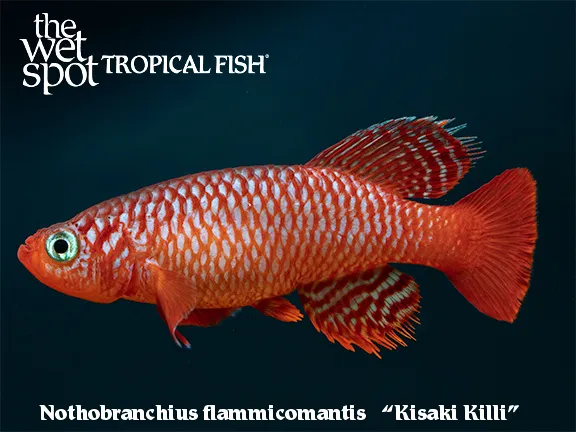 2.2 in (5.5 cm)11 gal (40 L)72–79°F (22–26°C)
Kisaki nothobranch
Nothobranchius flammicomantis
2.2 in (5.5 cm) · 11 gal (40 L)
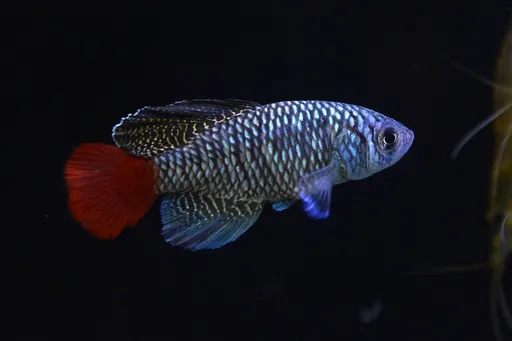 2.2 in (5.5 cm)11 gal (40 L)72–79°F (22–26°C)
Patrizi's notho
Nothobranchius patrizii
2.2 in (5.5 cm) · 11 gal (40 L)
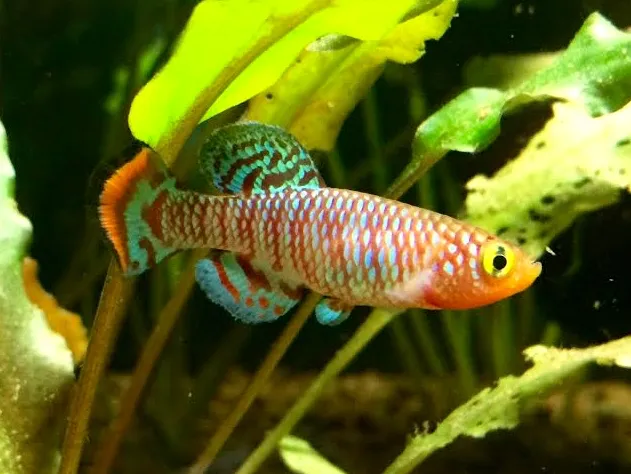
 1.8 in (4.5 cm)11 gal (40 L)72–79°F (22–26°C)
Rubripinnis nothobranch
Nothobranchius rubripinnis
1.8 in (4.5 cm) · 11 gal (40 L)
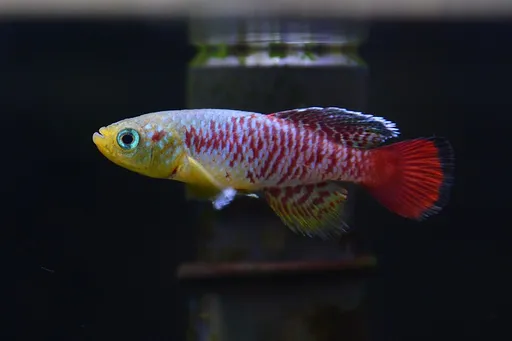
 2.4 in (6 cm)21 gal (80 L)68–75°F (20–24°C)
Bluefin notho
Nothobranchius rachovii
2.4 in (6 cm) · 21 gal (80 L)
 2.4 in (6 cm)11 gal (40 L)72–77°F (22–25°C)
Gunther's nothobranch
Nothobranchius guentheri
2.4 in (6 cm) · 11 gal (40 L)