Congo blue cichlid
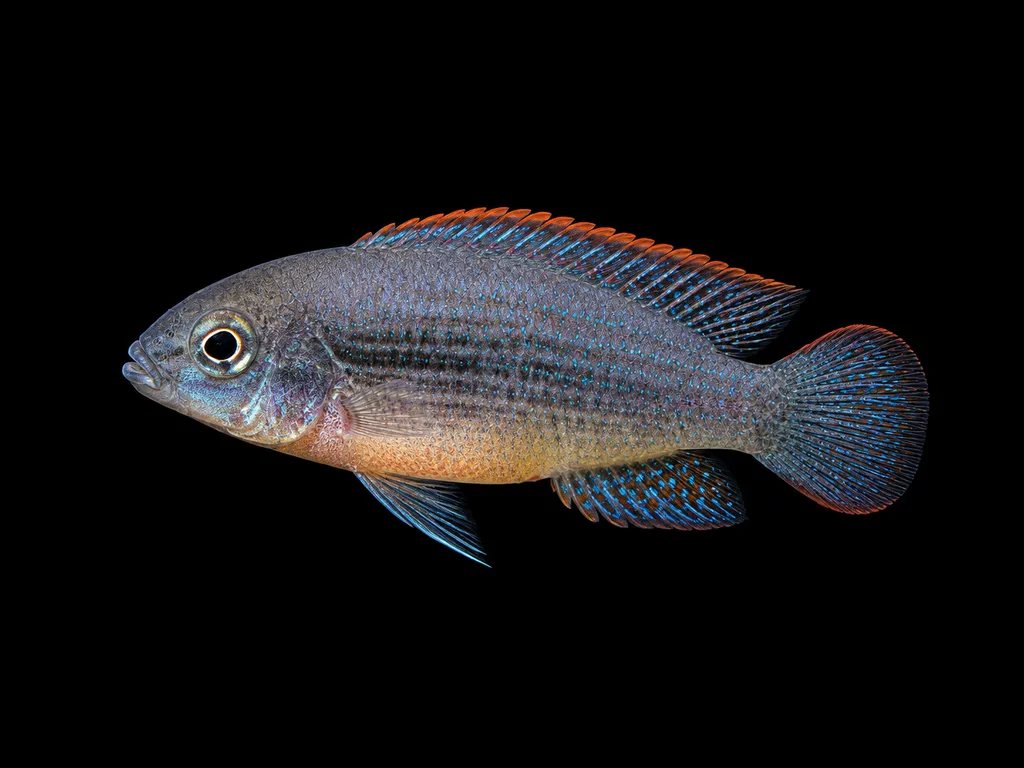
Nanochromis nudiceps
Also known as Mbandaka blue cichlid, Nudiceps
FreshwaterFish
Care at a glance
- Temperature
- 73–81°F
- 23–27°C
- pH
- 5.5–7.0
- Adult size
- 2.8 in
- 7 cm
- Minimum tank
- 29 gal
- 110 L
- Temperament
- Mostly peaceful
- Social behavior
- Solitary
- Tankmates
- With caution
- Swim level
- Bottom
- Difficulty
- Medium
- Breeding
- Cave spawner · Medium
- Rarity
- Rare
- Family
- Cichlidae
- Origin
- Central Congo basin near Mbandaka
Overview
The Congo blue cichlid is a small, mostly peaceful dwarf cichlid that lives on the bottom of a tank with sand and caves. It suits a keeper with a little experience.
Did you know
For decades, almost every Congo dwarf sold as nudiceps was really a different fish, Nanochromis parilus. That fish was not recognized as its own species until 1976. The true Congo blue cichlid is rarely exported, so it spent years overshadowed by its lookalike.
Caring for the Congo blue cichlid
Keep Congo blue cichlids as a single bonded pair in at least 29 gal (110 L). Give them a fine sand floor, driftwood and a scatter of caves made from stone, coconut shells or clay pots. The caves double as feeding cover and spawning sites. Each fish holds a small territory around a chosen cave or hollow near the bottom, so give each one somewhere to claim.
Keep the water soft and gently acidic, at 73 to 81°F (23 to 27°C) and a pH of 5.5 to 7.0. Feed small sinking foods, frozen bloodworm and brine shrimp.
It is peaceful most of the time, but a pair will defend a spawn firmly. Choose small, calm tank mates with care, or keep the pair on its own.
As in other Nanochromis, the female is the showier sex and flushes a swollen purple to red belly when ready to breed. The pair spawns in a cave and raises the eggs and fry inside a hollow they defend together. Breeding is of medium difficulty.
Good to know
The Congo blue cichlid, Nanochromis nudiceps, is a Congo dwarf cichlid in the family Cichlidae. Its name means naked head, for the scaleless skin on the top of the head.
In the wild
The Congo blue cichlid comes from the central Congo around Mbandaka, where it works the sandy margins and cover along the river. The water there is soft, warm and on the acidic side.
Common questions
What size tank does a Congo blue cichlid need?
A Congo blue cichlid needs at least 29 gal (110 L). It spends most of its time in the bottom.
What temperature and pH does a Congo blue cichlid need?
A Congo blue cichlid is comfortable at 73–81°F (23–27°C) with a pH of 5.5–7.0.
What does a Congo blue cichlid eat?
A Congo blue cichlid eats small sinking foods, frozen bloodworm and brine shrimp.
How big does a Congo blue cichlid get?
An adult Congo blue cichlid reaches about 2.8 in (7 cm).
How can you tell a male Congo blue cichlid from a female?
A female Congo blue cichlid is showier than the male. She flushes a swollen purple to red belly when she is ready to breed.
How does a Congo blue cichlid breed?
The Congo blue cichlid is a cave spawner. The pair raises its eggs and fry inside a hollow they defend together, and breeding is of medium difficulty.
Related species
 2.8 in (7 cm)29 gal (110 L)73–81°F (23–27°C)
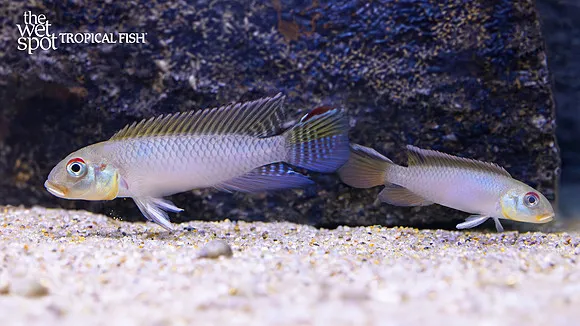
Teugels' nanochromis
Nanochromis teugelsi
2.8 in (7 cm) · 29 gal (110 L)
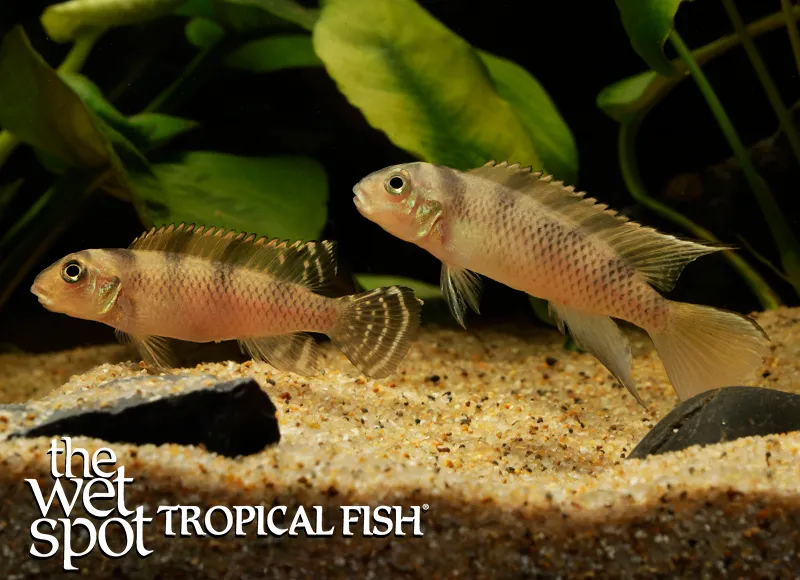 2.8 in (7 cm)20 gal (75 L)73–81°F (23–27°C)
Transvestite cichlid
Nanochromis transvestitus
2.8 in (7 cm) · 20 gal (75 L)
 2.6 in (6.5 cm)29 gal (110 L)73–81°F (23–27°C)
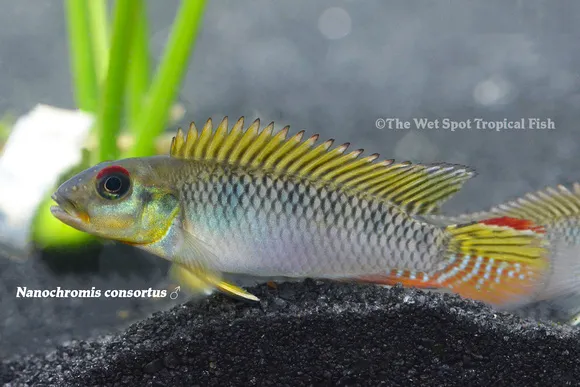
Consortus nanochromis
Nanochromis consortus
2.6 in (6.5 cm) · 29 gal (110 L)
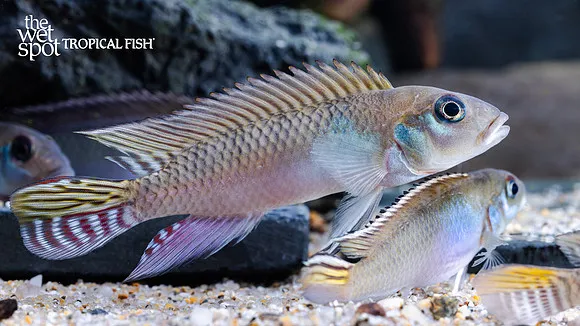 2.6 in (6.5 cm)29 gal (110 L)73–81°F (23–27°C)
Parilus nanochromis
Nanochromis parilus
2.6 in (6.5 cm) · 29 gal (110 L)
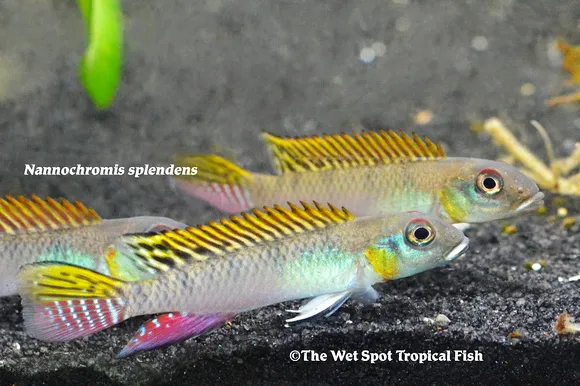 2.2 in (5.5 cm)29 gal (110 L)73–81°F (23–27°C)
Splendens nanochromis
Nanochromis splendens
2.2 in (5.5 cm) · 29 gal (110 L)
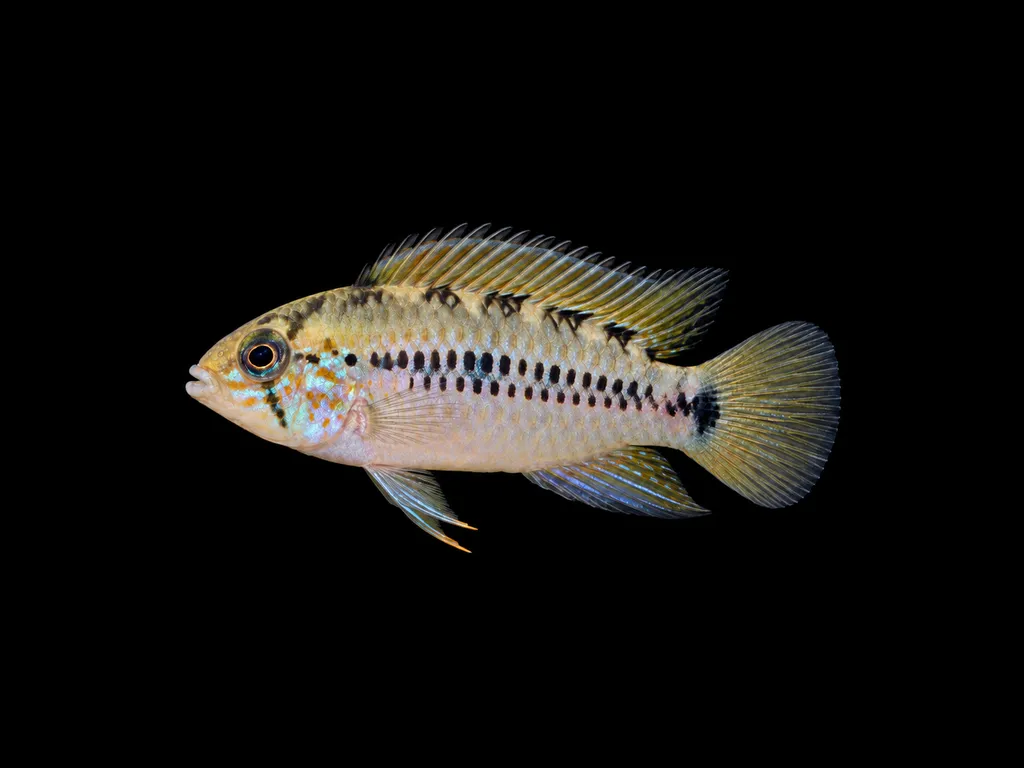 2.8 in (7 cm)20 gal (75 L)73–82°F (23–28°C)
Alacrina dwarf cichlid
Apistogramma alacrina
2.8 in (7 cm) · 20 gal (75 L)