Colt coral
Cladiella
Also known as Cauliflower Colt Coral, Finger Leather Coral, Blushing Coral, Soft Finger Leather
SaltwaterCoral
Care at a glance
- Temperature
- 75–81°F
- 24–27°C
- pH
- 8.1–8.4
- Adult size
- 11.8 in
- 30 cm
- Minimum tank
- 20 gal
- 75 L
- Temperament
- Peaceful
- Social behavior
- Solitary
- Swim level
- Bottom
- Difficulty
- Beginner
- Breeding
- Easy
- Rarity
- Very common
- Reef safe
- Reef safe
- Family
- Alcyoniidae
- Origin
- Indo-Pacific reefs, from the Red Sea to the Great Barrier Reef
Overview
A sessile leather coral that reproduces by fragmentation and by budding new lobes off its base, which makes it easy to propagate by cutting off a branch and mounting it to rock. It carries milder chemical defenses than heavier hitters like Sarcophyton or Sinularia, though its fast growth can still crowd out slower neighbors if it is not given space to expand. It rarely needs feeding and adapts well to a range of lighting, which is why it is often suggested as one of the easiest soft corals for a first reef tank.
In the wild
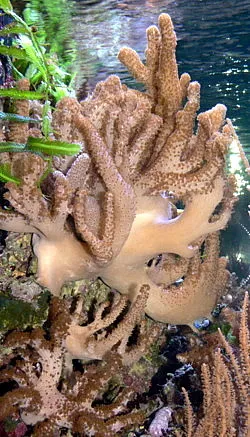
Colt coral grows across Indo-Pacific reef flats from the Red Sea to the Great Barrier Reef, forming a lobed, finger-covered colony on a short trunk. It adapts to a wide light range but grows best under moderate to high light, roughly 100 to 200 PAR, with moderate to strong flow that helps it shed its waxy coating and keeps the lobes free of debris. Give it room low to mid on the rockwork, since a mature colony can swell to nearly twice its resting size once fully expanded.
Good to know
Cladiella is a leather coral in the family Alcyoniidae, the same family as the toadstool and finger leather corals already in this catalog, and its tissue is stiffened by small calcite spicules rather than a hard skeleton. It is mostly photosynthetic and only lightly captures fine particulate food, so it has no strong need for target feeding. Like other leathers it periodically sheds a waxy film to clean its surface, closing up and looking dull for a day or two before reopening.
Did you know
A colt coral can look like a different animal from one day to the next: a colony that looks like a shriveled brown blob in the morning can fully inflate into a bushy, cream-colored bush covered in feathery polyps by evening.
Common questions
What size tank does a Colt coral need?
A Colt coral needs at least 20 gal (75 L). It spends most of its time in the bottom.
What temperature and pH does a Colt coral need?
A Colt coral is comfortable at 75–81°F (24–27°C) with a pH of 8.1–8.4.
How big does a Colt coral get?
An adult Colt coral reaches about 11.8 in (30 cm).
Related species
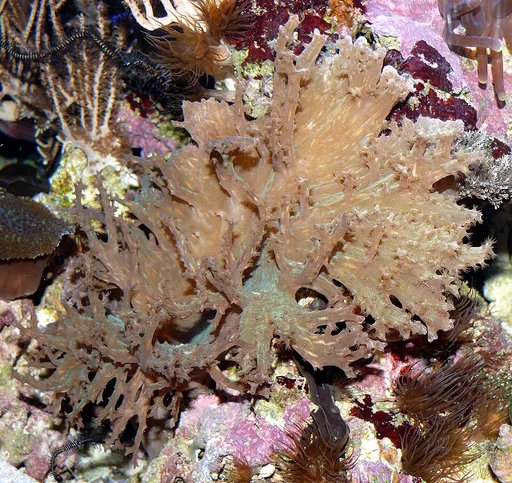 11.8 in (30 cm)40 gal (150 L)75–81°F (24–27°C)
Cabbage leather coral
Sinularia dura
11.8 in (30 cm) · 40 gal (150 L)
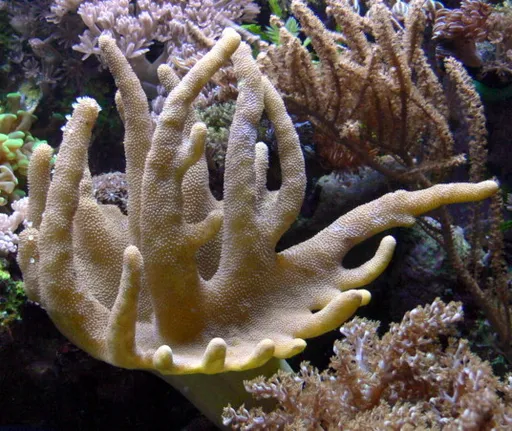 11.8 in (30 cm)40 gal (150 L)75–81°F (24–27°C)
Devil's hand leather coral
Lobophytum
11.8 in (30 cm) · 40 gal (150 L)
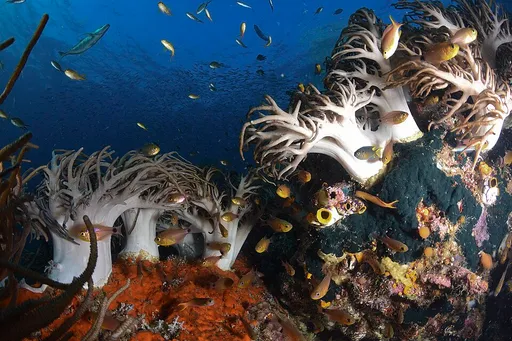 11.8 in (30 cm)40 gal (150 L)75–81°F (24–27°C)
Flexible finger leather coral
Sinularia flexibilis
11.8 in (30 cm) · 40 gal (150 L)
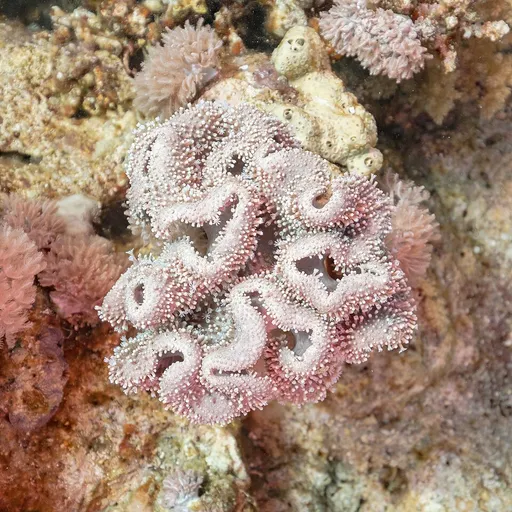 11.8 in (30 cm)20 gal (75 L)75–81°F (24–27°C)
Toadstool leather
Sarcophyton
11.8 in (30 cm) · 20 gal (75 L)
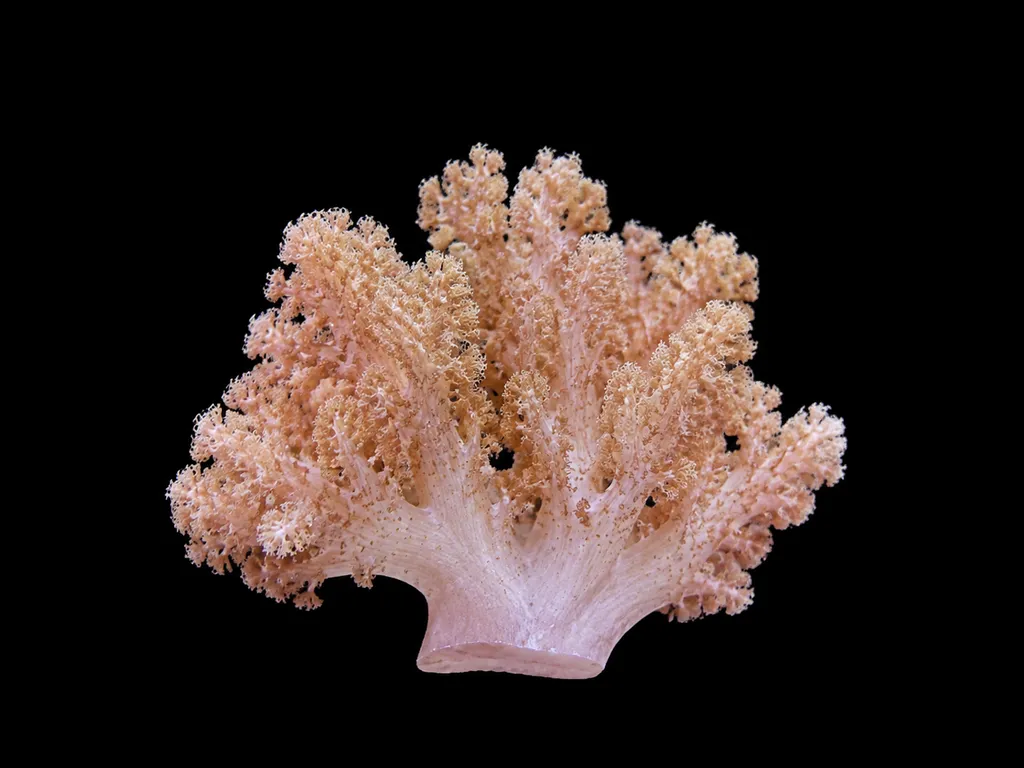 9.8 in (25 cm)26 gal (100 L)75–81°F (24–27°C)
Cauliflower colt coral
Klyxum simplex
9.8 in (25 cm) · 26 gal (100 L)
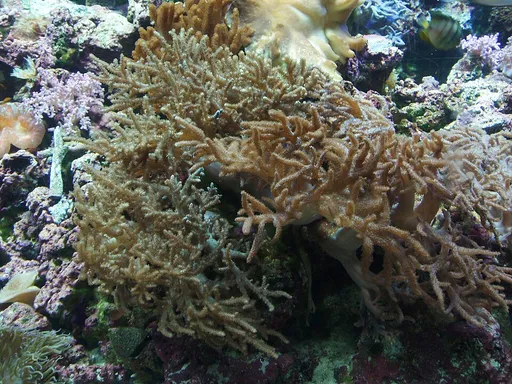 9.8 in (25 cm)20 gal (75 L)75–81°F (24–27°C)
Finger leather
Sinularia
9.8 in (25 cm) · 20 gal (75 L)