Channoides betta
Betta channoides
Also known as Snakehead betta, Red Cherry Betta
FreshwaterFish
Care at a glance
- Temperature
- 73–82°F
- 23–28°C
- pH
- 4.0–6.5
- Adult size
- 1.6 in
- 4 cm
- Minimum tank
- 11 gal
- 40 L
- Temperament
- Mostly peaceful
- Social behavior
- Social
- Tankmates
- With caution
- Swim level
- Bottom
- Difficulty
- Medium
- Breeding
- Medium
- Rarity
- Common
- Family
- Osphronemidae
- Origin
- Mahakam River basin, East Kalimantan, Borneo, Indonesia
Overview
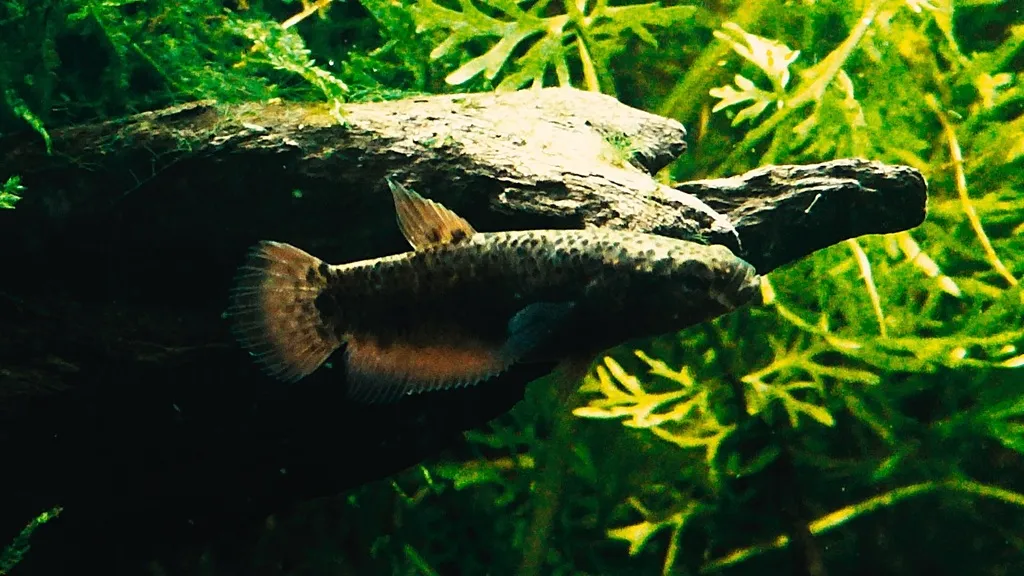
Keep them as a single pair or a small same-species group in a species-only tank of about 40 liters or larger, with more room for a group. They are mostly peaceful but shy and easily intimidated, so skip boisterous or fast tankmates that will bully them off their food. They spend most of their time among low cover near the bottom in soft, acidic blackwater, warm at 23 to 28 C with a pH from 4 to 6.5. Feed small live and frozen foods like daphnia, baby brine, and micro worms, since many refuse dry flake. They are strong jumpers, so use a tight lid and leave a gap of warm, humid air above the water for the labyrinth organ. Do not fill the tank to the brim.
In the wild
Betta channoides comes from the Mahakam River basin in East Kalimantan, on the Indonesian side of Borneo. These are sluggish forest streams stained dark with tannins, soft and very acidic, shaded so the light stays dim. To match that, give them a tank of about 40 liters or more with driftwood roots, a layer of leaf litter, and gentle flow from a sponge filter. Keep the water warm, 23 to 28 C, and push the pH down to 4 to 6.5. Hitting water that soft and acidic usually means mixing in reverse osmosis or rainwater, since most tap water is far too hard.
Good to know
This is a small mouthbrooding betta in the family Osphronemidae, part of the Betta albimarginata complex and sometimes called the Snakehead Betta. Adults reach around 4 cm. The male is a paternal mouthbrooder, holding a small brood of roughly 10 to 15 eggs in his mouth for about 10 to 21 days before releasing fully formed fry. Like other bettas it breathes air through a labyrinth organ.
Did you know
The male does all the parenting with his mouth. After spawning he gathers the eggs and holds them in his throat pouch for up to three weeks, not eating the whole time, then spits out a handful of free-swimming fry. The pair often work the eggs together during spawning, the female nudging dropped eggs back toward the male to catch.
Common questions
What size tank does a Channoides betta need?
A Channoides betta needs at least 11 gal (40 L). It spends most of its time in the bottom.
What temperature and pH does a Channoides betta need?
A Channoides betta is comfortable at 73–82°F (23–28°C) with a pH of 4.0–6.5.
How big does a Channoides betta get?
An adult Channoides betta reaches about 1.6 in (4 cm).
Related species
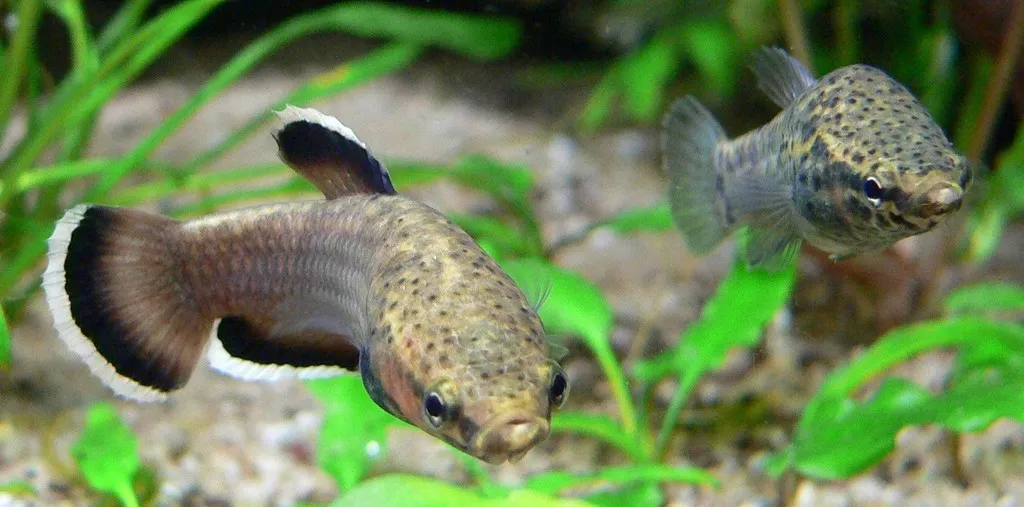 1.2 in (3 cm)11 gal (40 L)73–82°F (23–28°C)
Whiteseam betta
Betta albimarginata
1.2 in (3 cm) · 11 gal (40 L)
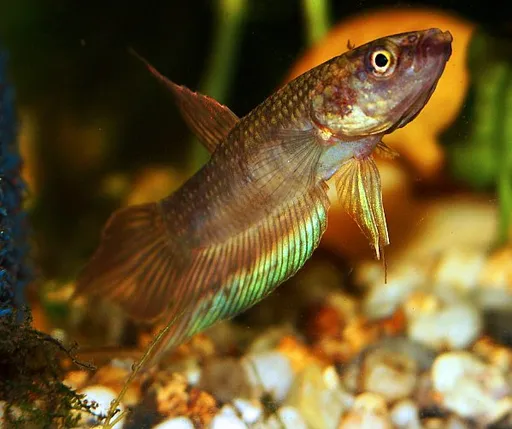 1.6 in (4 cm)12 gal (45 L)72–81°F (22–27°C)
Dimidiata betta
Betta dimidiata
1.6 in (4 cm) · 12 gal (45 L)
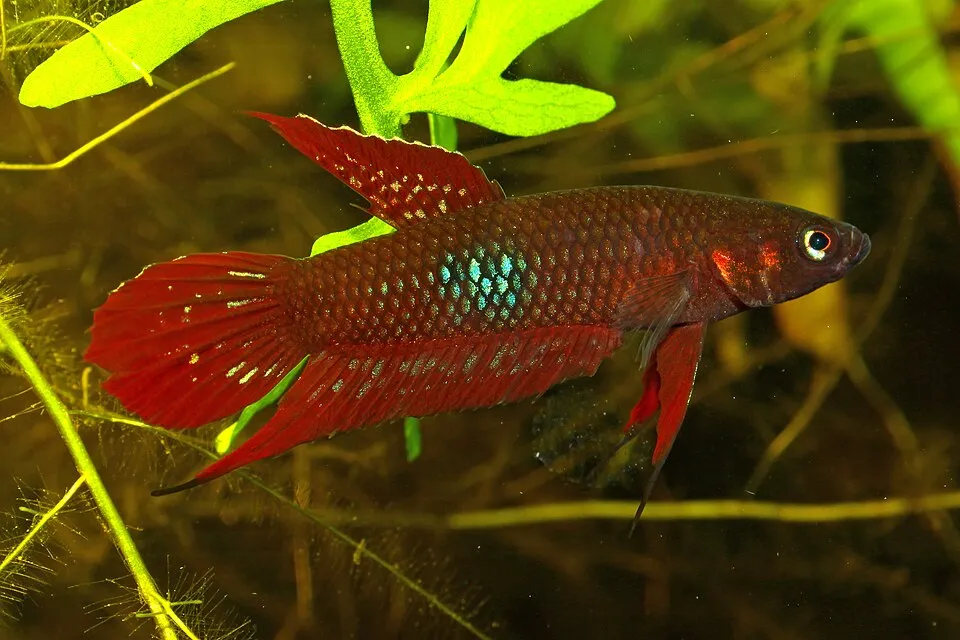 1.6 in (4 cm)11 gal (40 L)72–86°F (22–30°C)
Scarlet betta
Betta coccina
1.6 in (4 cm) · 11 gal (40 L)
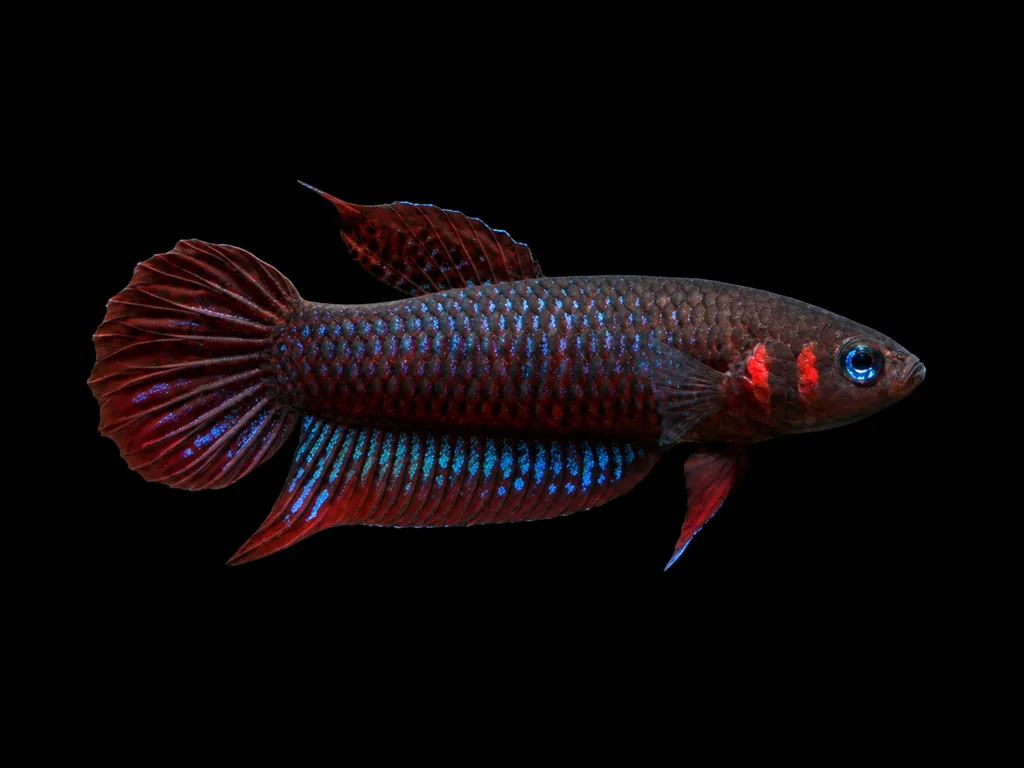
 1.6 in (4 cm)11 gal (40 L)72–81°F (22–27°C)
Toba betta
Betta rubra
1.6 in (4 cm) · 11 gal (40 L)
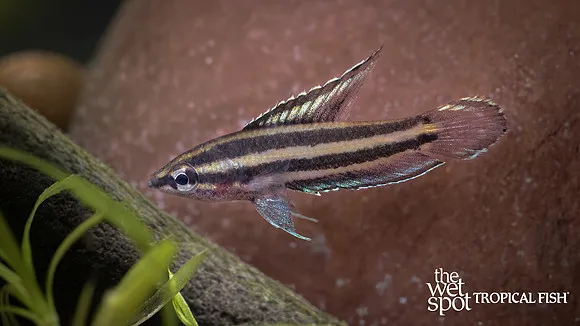
 1.4 in (3.6 cm)11 gal (40 L)73–81°F (23–27°C)
Livid betta
Betta livida
1.4 in (3.6 cm) · 11 gal (40 L)
 1.4 in (3.6 cm)11 gal (40 L)73–81°F (23–27°C)
Uberis betta
Betta uberis
1.4 in (3.6 cm) · 11 gal (40 L)