Blue whale catfish
Cetopsis coecutiens
FreshwaterFish
Care at a glance
- Temperature
- 72–79°F
- 22–26°C
- pH
- 6.0–7.5
- Adult size
- 10.6 in
- 27 cm
- Minimum tank
- 70 gal
- 265 L
- Temperament
- Aggressive
- Social behavior
- Solitary
- Tankmates
- Species tank only
- Swim level
- Bottom
- Difficulty
- Difficult
- Breeding
- No record
- Rarity
- Very rare
- Family
- Cetopsidae
- Origin
- South America
Overview
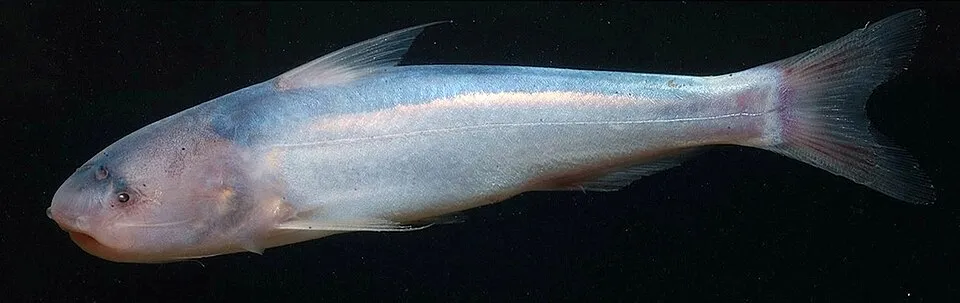
The blue whale catfish is a fast, aggressive predator that is best kept entirely on its own. In the wild it tears mouthfuls of flesh from fish far larger than itself, and in a tank it will both swallow smaller companions and bite chunks out of bigger ones, so it is not a community fish under any circumstances. Keep it as a single specimen in a secure, well-filtered tank with strong flow, open swimming space, and firmly weighted caves, since it is powerful and restless. Feed meaty foods such as chunks of white fish, prawn, mussel, and earthworms. A tank of around 265 liters or larger suits one adult.
In the wild
The blue whale catfish ranges widely through the Amazon basin of South America, living in the open channels of large, fast-flowing rivers rather than quiet margins. It favours warm, soft water, so aim for around 22 to 26 C with a pH between 6 and 7.5, brisk current, and high oxygen levels. A dim tank with a smooth sand bed, scattered heavy wood, and strong filtration mimics its muscular river home. It has tiny eyes and hunts largely by smell and touch, so bright lighting is unnecessary.
Good to know
The blue whale catfish belongs to Cetopsidae, the whale catfishes, and grows to roughly 27 cm, with some wild fish a little larger. It is one of the biggest of the so-called candiru relatives, with a smooth, scaleless, almost cetacean body, small eyes, and a wide mouth built for gouging. Adults are notorious for feeding on the flesh of larger fishes, sometimes entering the body cavity of dead or hooked animals. Its breeding habits are unrecorded in aquariums.
Did you know
The blue whale catfish is one of the largest members of the candiru group, and it feeds much like its smaller relatives, ripping mouth-sized pieces of flesh from fish far bigger than itself rather than swallowing prey whole.
Common questions
What size tank does a Blue whale catfish need?
A Blue whale catfish needs at least 70 gal (265 L). It spends most of its time in the bottom.
What temperature and pH does a Blue whale catfish need?
A Blue whale catfish is comfortable at 72–79°F (22–26°C) with a pH of 6.0–7.5.
How big does a Blue whale catfish get?
An adult Blue whale catfish reaches about 10.6 in (27 cm).
Related species
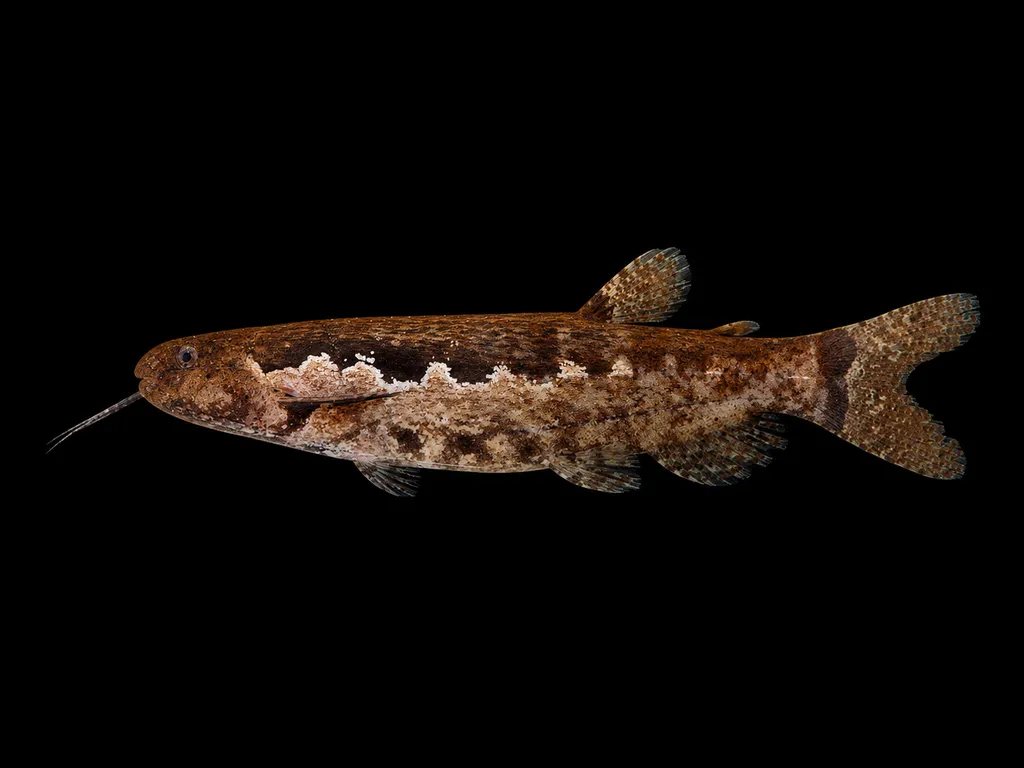 3.1 in (8 cm)14 gal (54 L)73–82°F (23–28°C)
Marbled helogenes
Helogenes marmoratus
3.1 in (8 cm) · 14 gal (54 L)
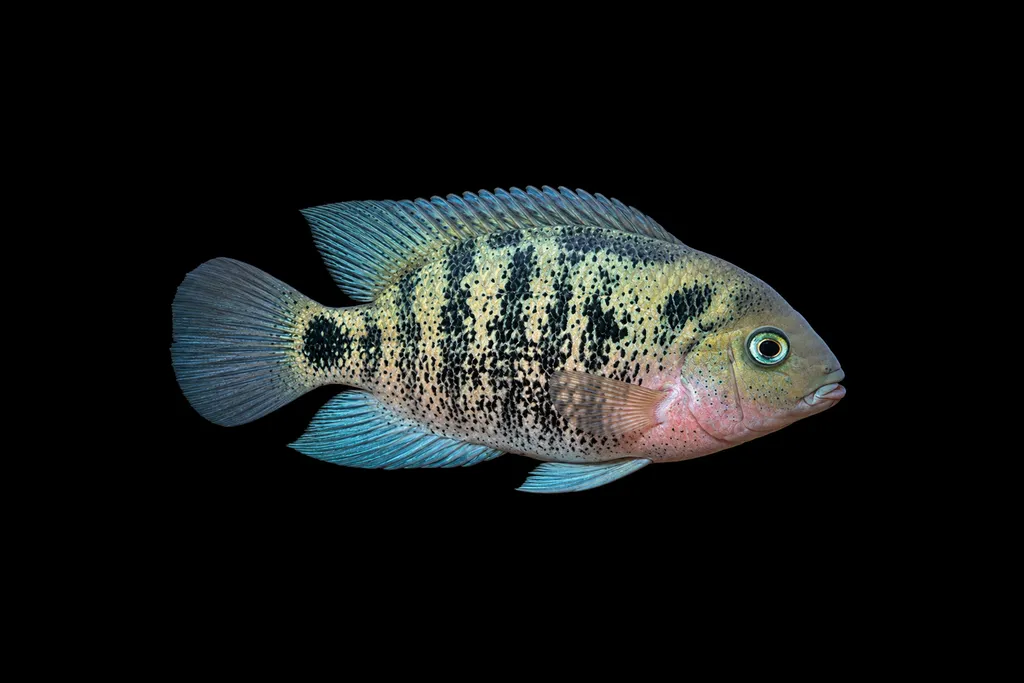 11.4 in (29 cm)119 gal (450 L)75–84°F (24–29°C)
Heterospila cichlid
Oscura heterospila
11.4 in (29 cm) · 119 gal (450 L)
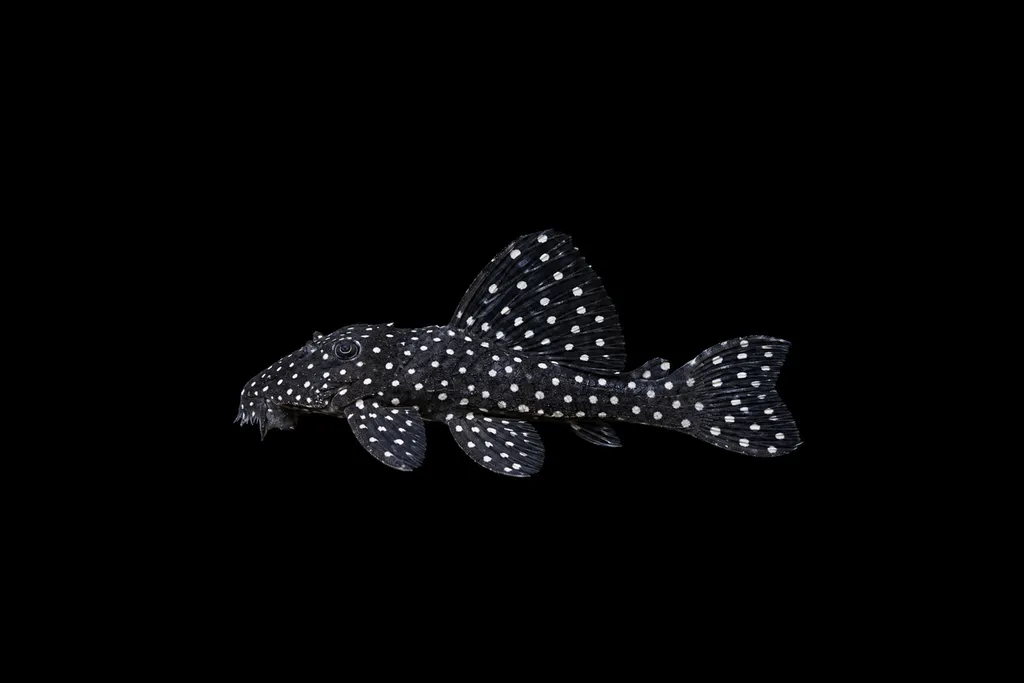 9.8 in (25 cm)66 gal (250 L)79–86°F (26–30°C)
Vampire pleco (L029)
Leporacanthicus galaxias
9.8 in (25 cm) · 66 gal (250 L)
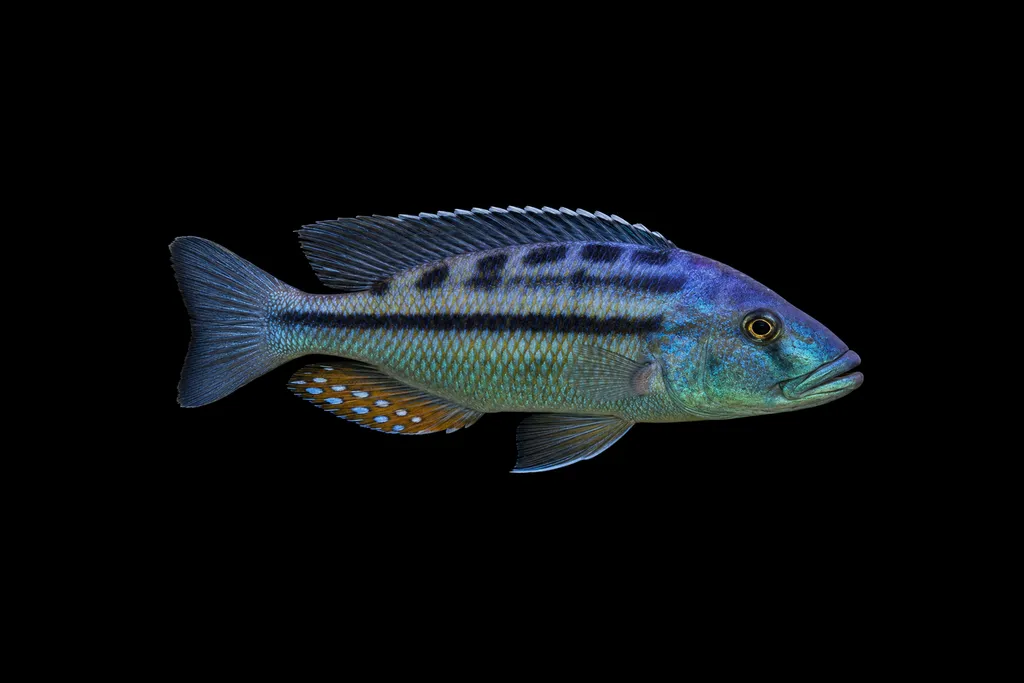 11.6 in (29.5 cm)159 gal (600 L)75–81°F (24–27°C)
Spothead tyrant hap
Tyrannochromis maculiceps
11.6 in (29.5 cm) · 159 gal (600 L)
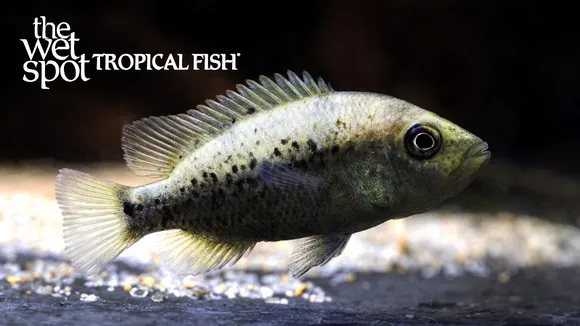 8.7 in (22 cm)79 gal (300 L)75–84°F (24–29°C)
Barton's cichlid
Herichthys bartoni
8.7 in (22 cm) · 79 gal (300 L)
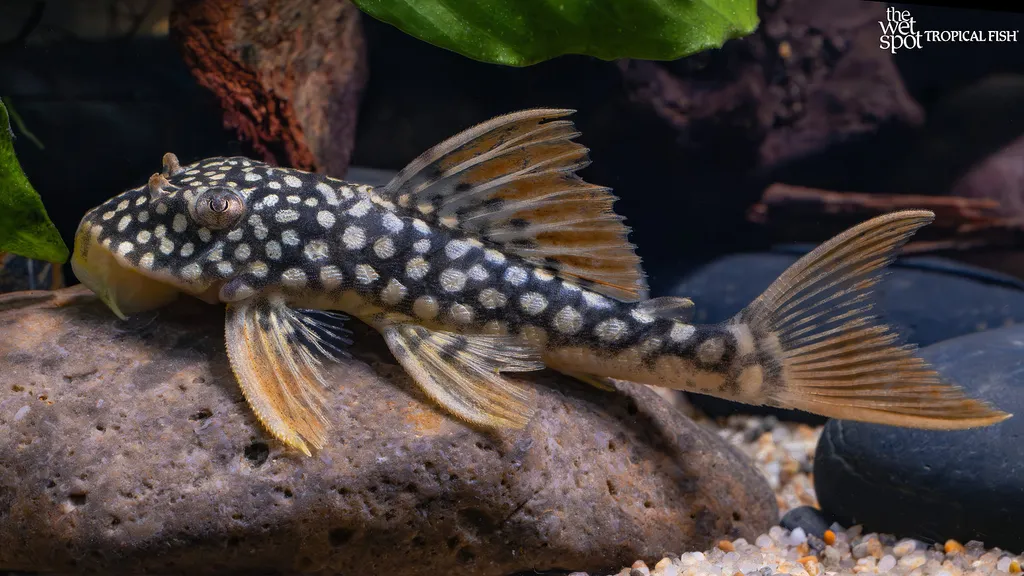 13.8 in (35 cm)106 gal (400 L)79–86°F (26–30°C)
Sunshine pleco (L014)
Scobinancistrus aureatus
13.8 in (35 cm) · 106 gal (400 L)