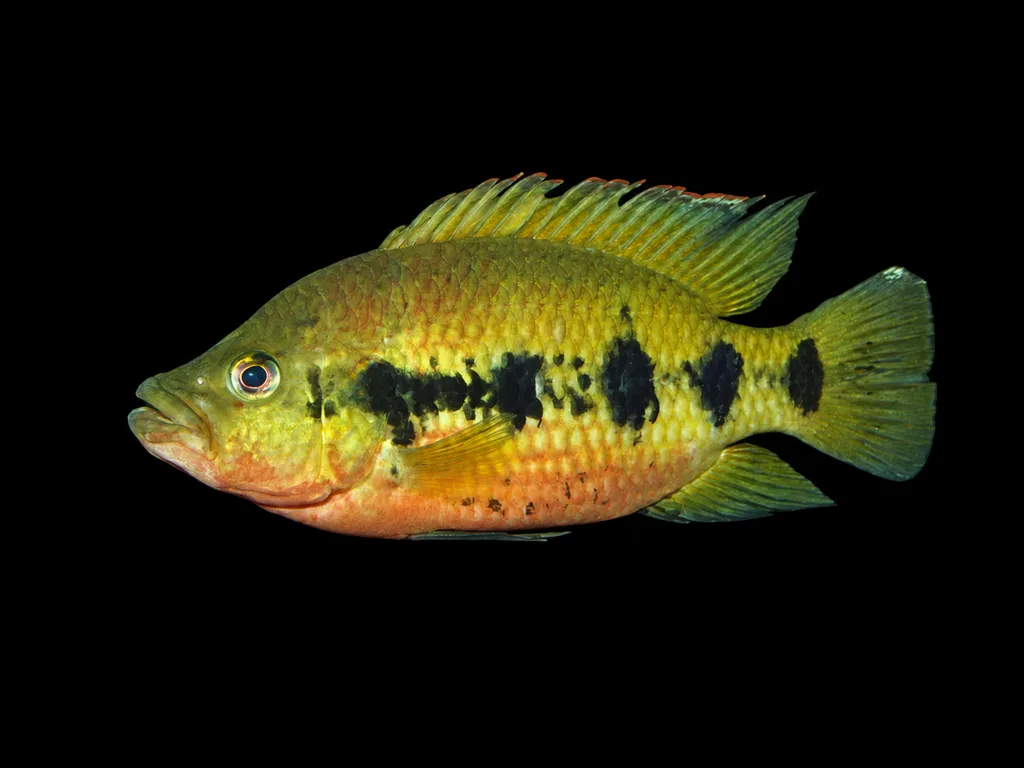
Banded jewelfish
Hemichromis fasciatus
Also known as Hemichromis frempongi, Five-spot jewel
FreshwaterFish
Care at a glance
- Temperature
- 73–81°F
- 23–27°C
- pH
- 6.5–7.8
- Adult size
- 9.8 in
- 25 cm
- Minimum tank
- 119 gal
- 450 L
- Temperament
- Aggressive
- Social behavior
- Solitary
- Tankmates
- With caution
- Swim level
- Bottom
- Diet
- Carnivore
- Difficulty
- Medium
- Breeding
- Substrate spawner · Medium
- Rarity
- Rare
- Family
- Cichlidae
- Origin
- West Africa, Senegal to Ghana
Overview
The banded jewelfish is the big, predatory member of the jewel cichlid group. It behaves more like a Central American guapote than the small red jewels, and it is no beginner's fish.
Did you know
The jewel cichlids, the banded jewelfish among them, split into two camps in 2022. The small, fiery red species went to the new genus Rubricatochromis. The larger banded predators like this one stayed in Hemichromis, holding both the old name and the bigger teeth.
Caring for the banded jewelfish
Give a banded jewelfish at least 119 gal (450 L), with a strong lid and solid decor. It is not fussy about layout, but expect it to rearrange things. Use driftwood, rock caves and some hardy or artificial plants for sturdy cover. This gives smaller fish shelter and gives the jewel a territory to claim.
Recreate its home water with a temperature of 73 to 81°F (23 to 27°C) and a pH of 6.5 to 7.8. Feed meaty foods such as prawn, mussel, earthworms and quality pellets.
It is powerful and aggressive, so keep it as a single fish or a bonded pair and never crowd it. It hunts along the bottom and will eat smaller fish. Choose tank mates with real caution, since only large, robust species stand a chance. A species tank is often the safest option.
It is a substrate spawner that forms pairs. Breeding it is of moderate difficulty.
Good to know
The banded jewelfish, Hemichromis fasciatus, is a member of the cichlid family. It is a true fish-eater, with a large mouth and strong teeth.
In the wild
The banded jewelfish ranges widely across the rivers, lakes and lagoons of West Africa, from Senegal down to Ghana. It hunts in warm, often soft to neutral water.
Common questions
What size tank does a banded jewelfish need?
A banded jewelfish needs at least 119 gal (450 L). It spends most of its time in the bottom.
What temperature and pH does a banded jewelfish need?
A banded jewelfish is comfortable at 73–81°F (23–27°C) with a pH of 6.5–7.8.
What does a banded jewelfish eat?
A banded jewelfish is a predator that eats meaty foods. Offer it prawn, mussel, earthworms and quality pellets.
How big does a banded jewelfish get?
An adult banded jewelfish reaches about 9.8 in (25 cm).
Related species
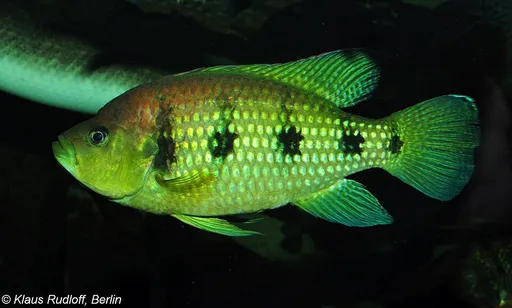 6.3 in (16 cm)29 gal (110 L)75–82°F (24–28°C)
Banded jewel cichlid
Hemichromis elongatus
6.3 in (16 cm) · 29 gal (110 L)
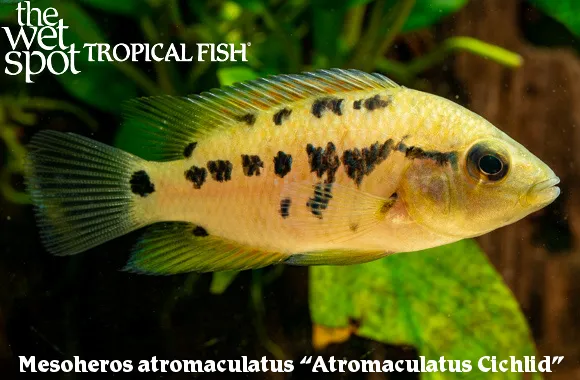 9.8 in (25 cm)106 gal (400 L)75–84°F (24–29°C)
Atromaculatus cichlid
Mesoheros atromaculatus
9.8 in (25 cm) · 106 gal (400 L)
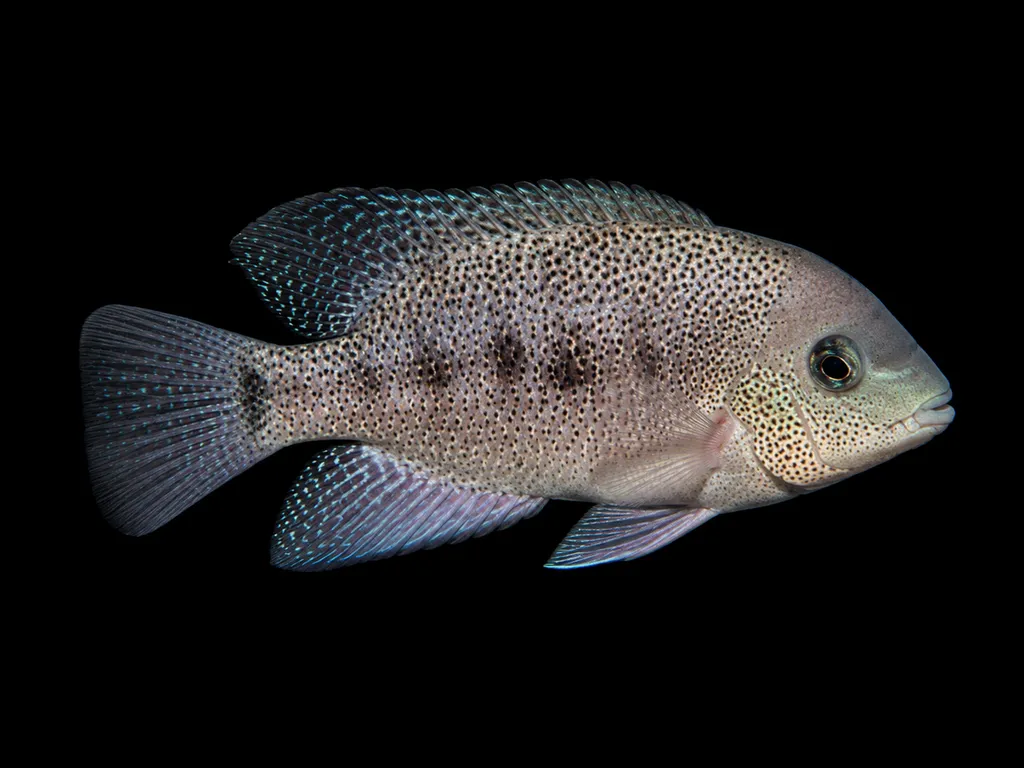 9.8 in (25 cm)106 gal (400 L)75–84°F (24–29°C)
Freckled rheoheros
Rheoheros lentiginosus
9.8 in (25 cm) · 106 gal (400 L)
 9.8 in (25 cm)106 gal (400 L)75–81°F (24–27°C)
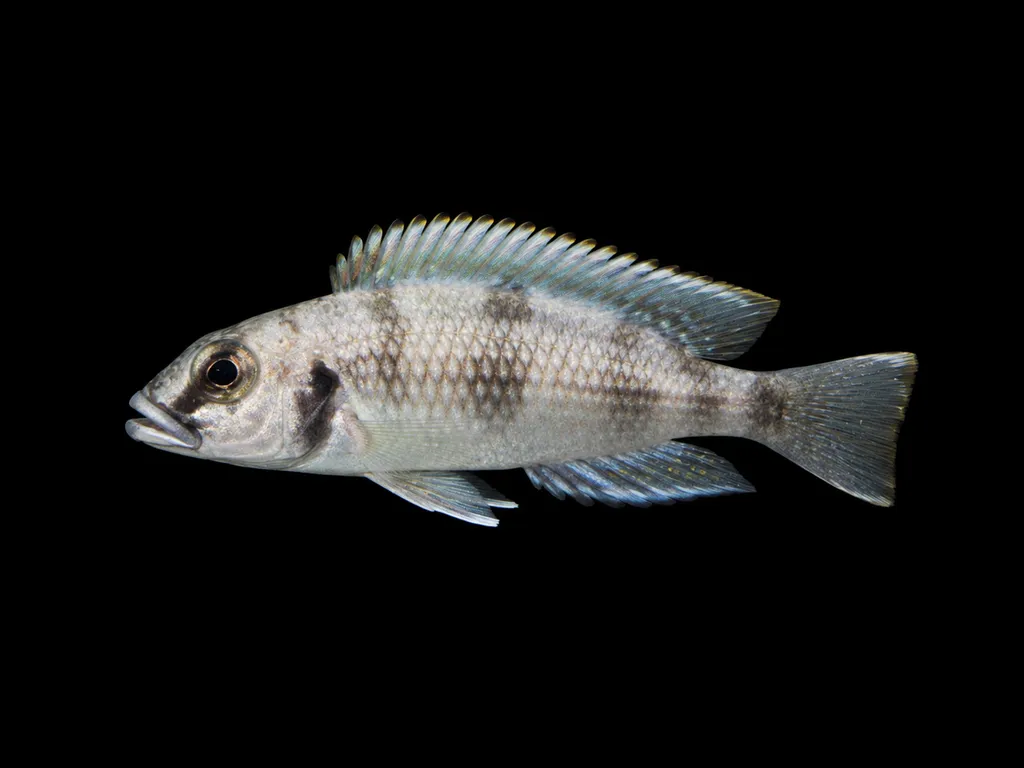
Lemaire's lamprologus
Lamprologus lemairii
9.8 in (25 cm) · 106 gal (400 L)
 9.8 in (25 cm)159 gal (600 L)75–81°F (24–27°C)
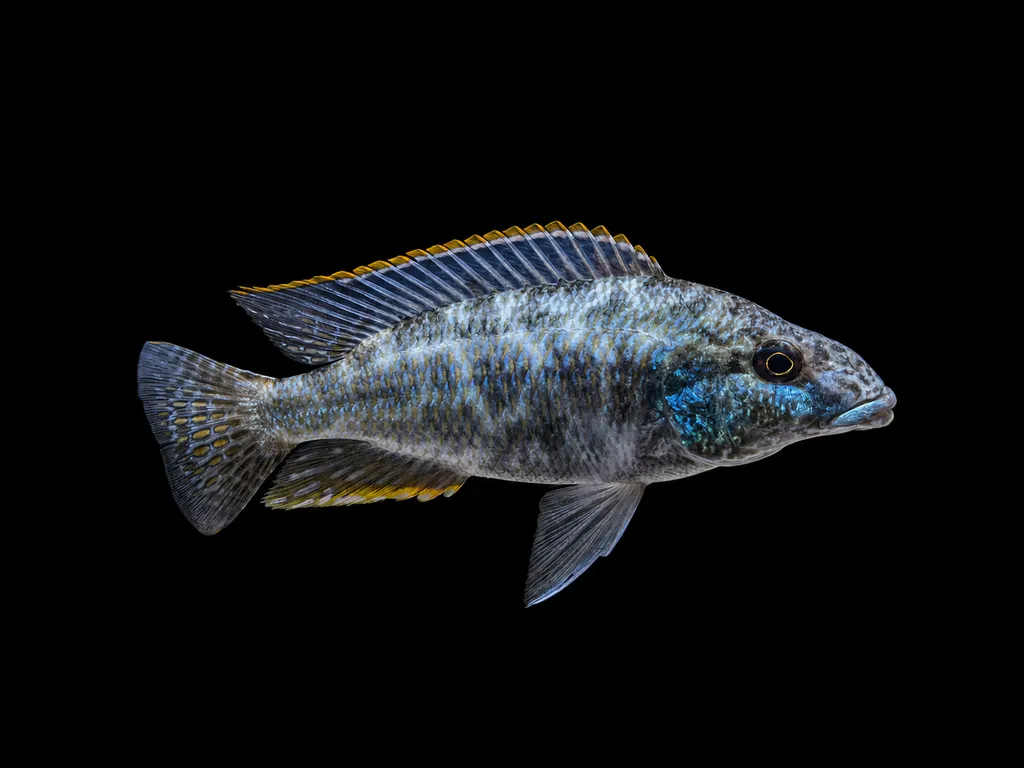
Linn's hap
Nimbochromis linni
9.8 in (25 cm) · 159 gal (600 L)
 9.8 in (25 cm)132 gal (500 L)75–84°F (24–29°C)
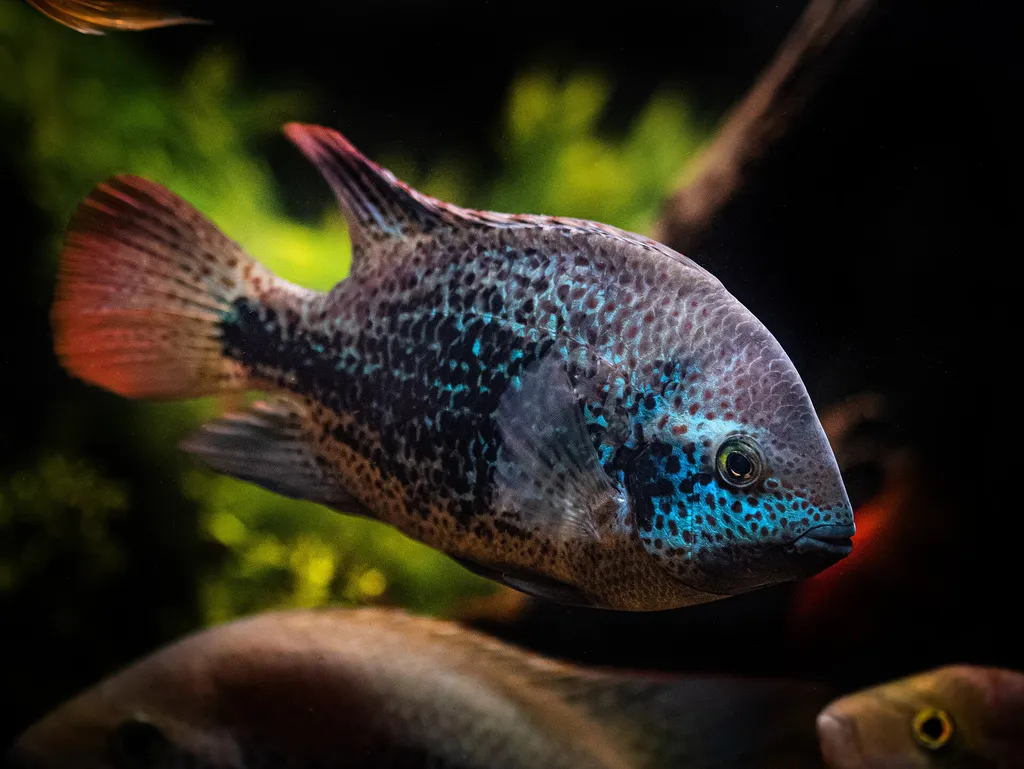
Oaxaca vieja
Vieja zonata
9.8 in (25 cm) · 132 gal (500 L)