Asian bumblebee catfish
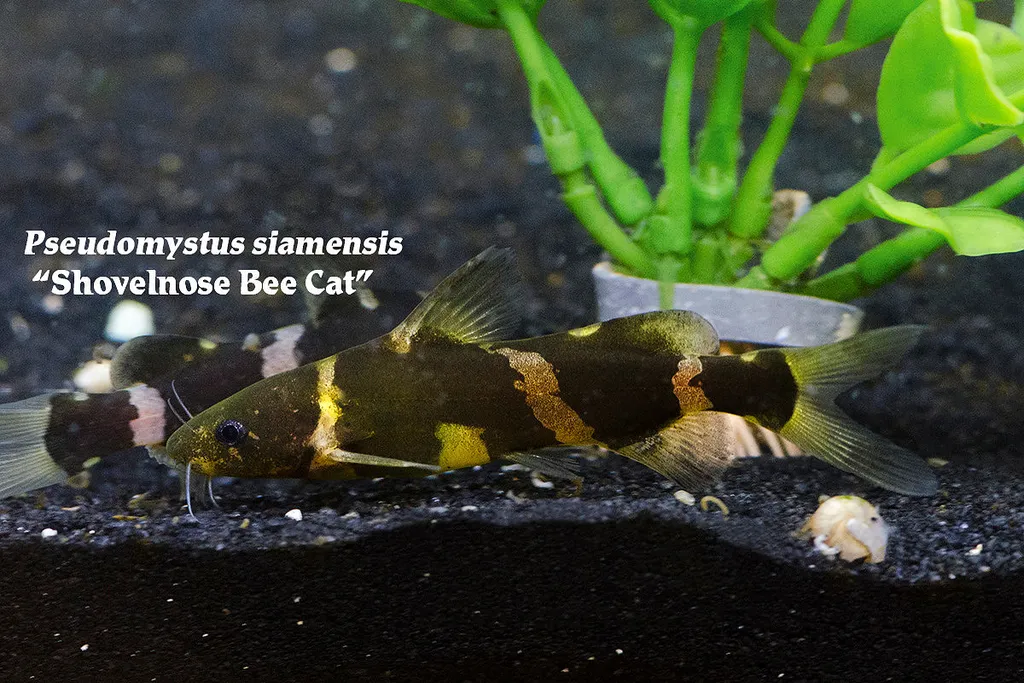
Pseudomystus siamensis
Also known as Shovelnose Bee Cat
FreshwaterFish
Care at a glance
- Temperature
- 68–79°F
- 20–26°C
- pH
- 6.0–7.5
- Adult size
- 5.9 in
- 15 cm
- Minimum tank
- 30 gal
- 115 L
- Temperament
- Mostly peaceful
- Social behavior
- Solitary
- Tankmates
- With caution
- Swim level
- Bottom
- Difficulty
- Medium
- Breeding
- No record
- Rarity
- Rare
- Family
- Bagridae
- Origin
- Thailand, Laos, Cambodia, Vietnam
Overview
The Asian bumblebee catfish is a nocturnal, territorial loner that is best kept as a single specimen. It is calm toward larger, mid-water tankmates but squabbles with other bottom-dwellers and its own kind, and it will eat any fish small enough to swallow, so avoid slim tetras, small rasboras, and shrimp. Good companions are sturdy, active fish at least half its size that live higher in the tank. Give it caves, pipes, or wood to claim as a daytime retreat, and feed meaty sinking foods after dark, such as frozen prawn, mussel, and earthworms. It hunts by scent, so it adapts well to prepared foods. Aim for a tank of around 115 liters or larger.
In the wild
This catfish is native to the Mekong region across Thailand, Laos, Cambodia, and Vietnam, where it lives in slow-moving rivers, canals, and seasonally flooded forest. The water is warm, soft, and slightly acidic to neutral, so keep it around 20 to 26 C with a pH between 6 and 7.5. Furnish the tank with plenty of shaded cover, driftwood, roots, and dense planting around the edges, over a soft substrate. Gentle flow and subdued lighting encourage it to leave its hiding spot and forage in the evening.
Good to know
The Asian bumblebee catfish is a member of Bagridae, the naked or bagrid catfishes, and grows to around 15 cm. Its common name comes from the bold dark and pale yellow banding that breaks up its outline among roots and leaf litter, though the pattern fades with age and mood. Like most bagrids it has strong, mildly venomous fin spines that can snag a net, so it should be handled with care. It is a slow-growing, long-lived fish, and there are no reliable records of it breeding in home aquariums.
Did you know
The bold black and yellow bands that give the Asian bumblebee catfish its name are camouflage rather than warning colours, helping it blend into a tangle of sunken roots and shadow while it waits for night to hunt.
Common questions
What size tank does an Asian bumblebee catfish need?
An Asian bumblebee catfish needs at least 30 gal (115 L). It spends most of its time in the bottom.
What temperature and pH does an Asian bumblebee catfish need?
An Asian bumblebee catfish is comfortable at 68–79°F (20–26°C) with a pH of 6.0–7.5.
How big does an Asian bumblebee catfish get?
An adult Asian bumblebee catfish reaches about 5.9 in (15 cm).
Related species
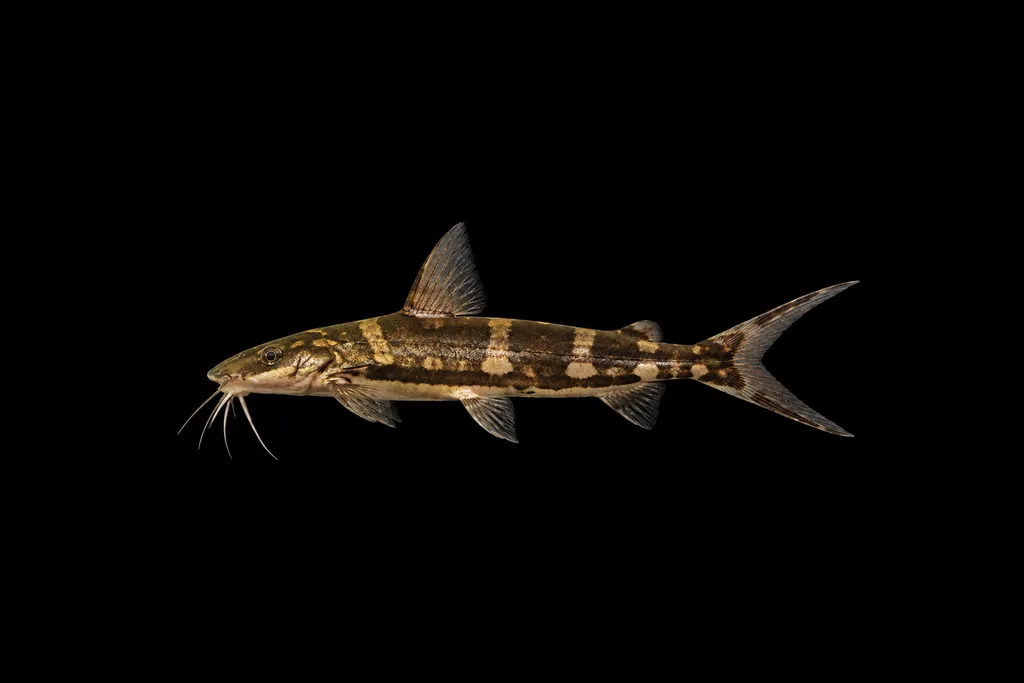 5.5 in (14 cm)42 gal (160 L)73–81°F (23–27°C)
Borneo scissortail catfish
Pseudomystus stenogrammus
5.5 in (14 cm) · 42 gal (160 L)
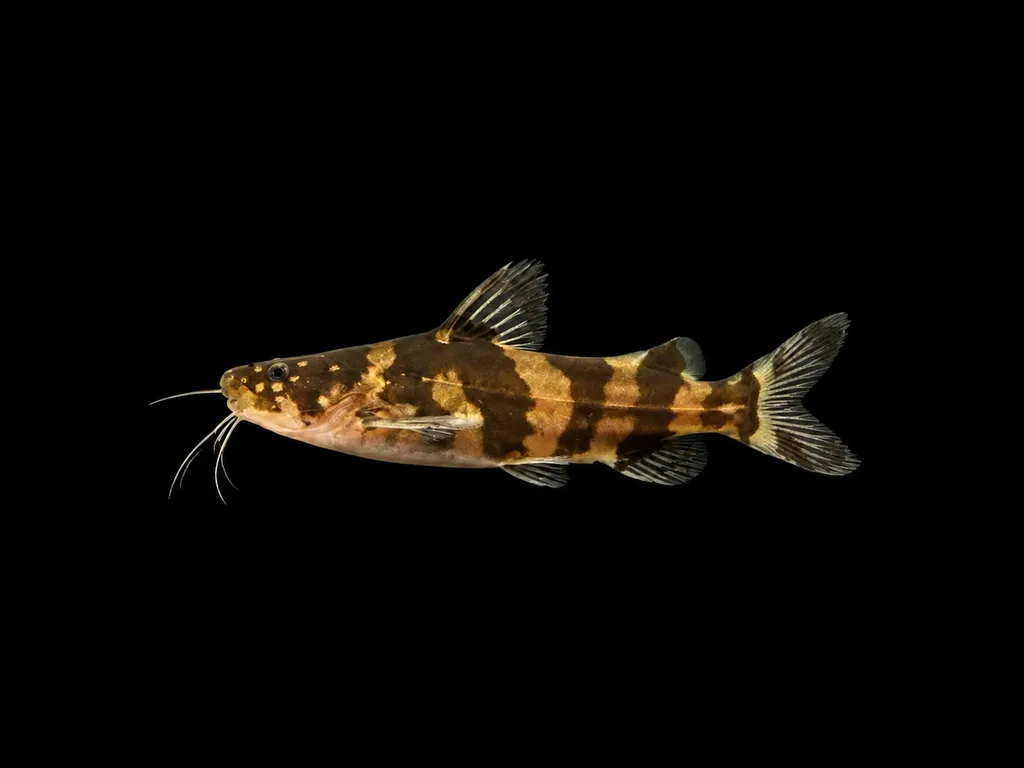 2.6 in (6.5 cm)29 gal (110 L)73–81°F (23–27°C)
Tiger stripe bee catfish
Pseudomystus heokhuii
2.6 in (6.5 cm) · 29 gal (110 L)
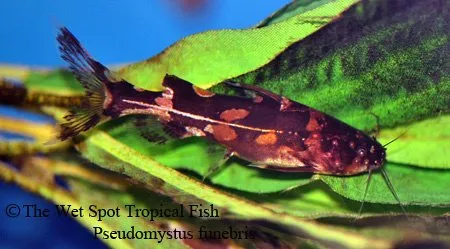 2.4 in (6 cm)29 gal (110 L)73–81°F (23–27°C)
Borneo hornet catfish
Pseudomystus funebris
2.4 in (6 cm) · 29 gal (110 L)
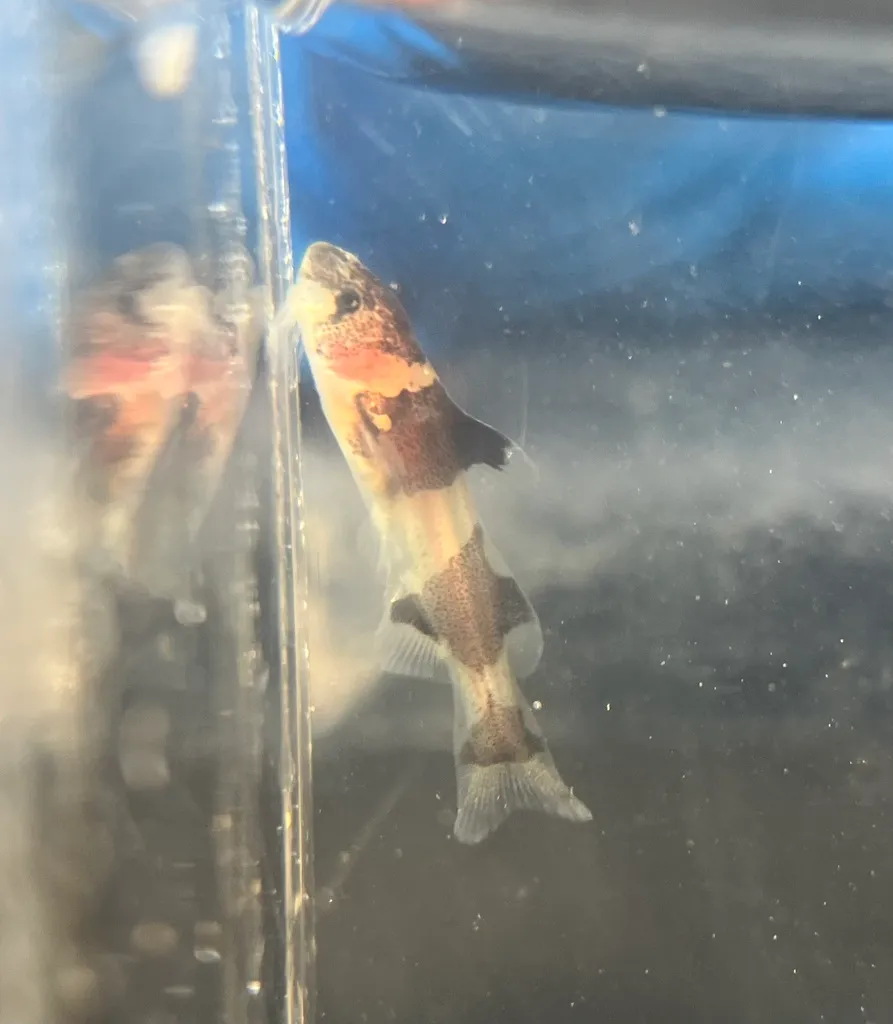 2.4 in (6 cm)20 gal (75 L)70–77°F (21–25°C)
Dwarf bumblebee catfish
Pseudomystus leiacanthus
2.4 in (6 cm) · 20 gal (75 L)
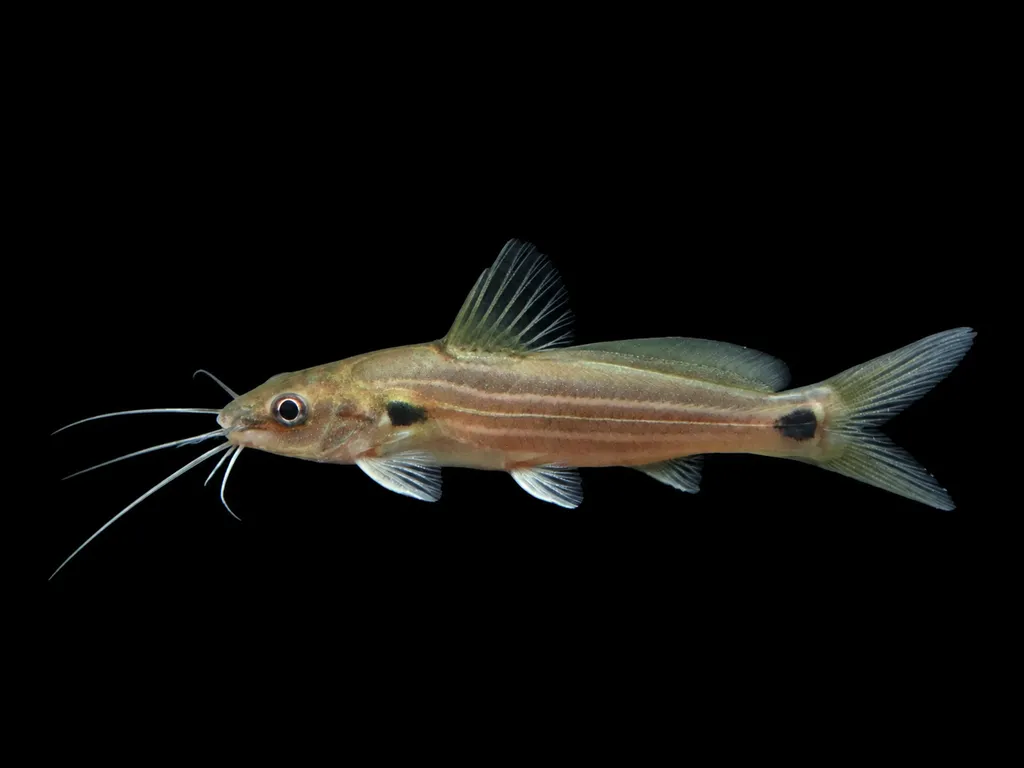 5.9 in (15 cm)66 gal (250 L)73–81°F (23–27°C)
Meetan catfish
Mystus rufescens
5.9 in (15 cm) · 66 gal (250 L)
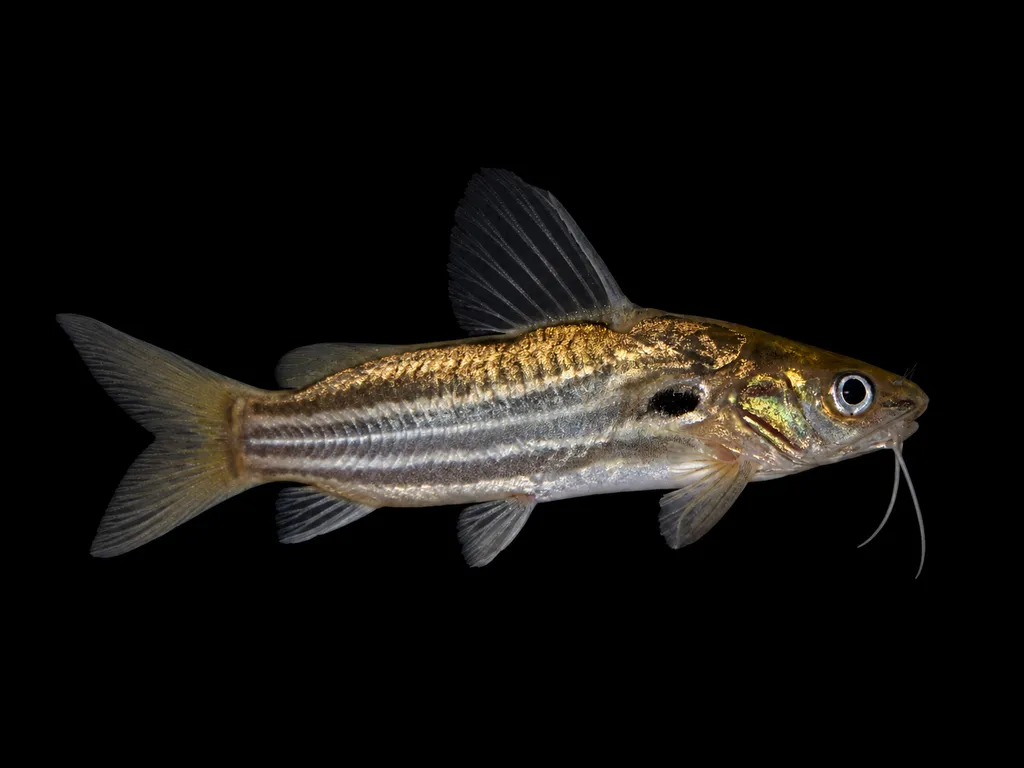 7.1 in (18 cm)42 gal (160 L)73–81°F (23–27°C)
Golden soldier catfish
Mystus tengara
7.1 in (18 cm) · 42 gal (160 L)