Elephant ear mushroom
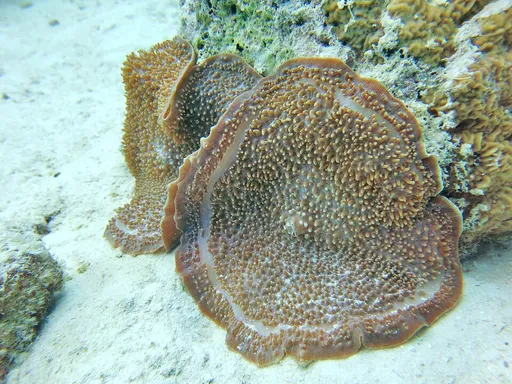
Amplexidiscus fenestrafer
Also known as Giant Cup Mushroom, Giant Elephant Ear, Giant Disc Anemone, Giant Mushroom Anemone
SaltwaterCoral
Care at a glance
- Temperature
- 75–81°F
- 24–27°C
- pH
- 8.1–8.4
- Adult size
- 13.8 in
- 35 cm
- Minimum tank
- 20 gal
- 75 L
- Temperament
- Aggressive
- Social behavior
- Solitary
- Tankmates
- With caution
- Swim level
- Bottom
- Difficulty
- Medium
- Breeding
- Medium
- Rarity
- Common
- Reef safe
- Reef safe
- Family
- Discosomidae
- Origin
- Indo-Pacific reefs, in shallow, often turbid lagoons and tide pools, from Southeast Asia to Australia
Overview
This is the giant of the mushroom corallimorphs and a genuine predator rather than just a passive filter feeder. Small fish and shrimp that land on the disc, including unwary clownfish, can trigger it to fold shut around them within seconds and slowly digest them, so it needs real distance from nano fish, cleaner shrimp and other small livestock rather than a spot in a busy community reef. It is otherwise easy to keep and only needs a light supplemental feeding of a piece of fish, shrimp or clam every couple of weeks, and it will not sting or chemically bother neighboring corals as long as they are far enough away not to be brushed by the disc. Best kept as a specimen piece with open space around it instead of mixed into a tank with small fish or shrimp.
In the wild
Amplexidiscus fenestrafer lives on shallow, often turbid Indo-Pacific reef flats and lagoons, from Southeast Asia to Australia, typically from the shallows down to about 18 m, where it sits as a solitary, saucer shaped disc on rock or rubble. In the aquarium it does well under moderate to fairly strong light, roughly 150 to 300 PAR, with gentle, indirect flow rather than a direct blast. Give it a low, open spot on the sandbed or lower rockwork with generous clearance on all sides, both because a healthy disc can open to 30 cm or more across and because of what it is capable of catching when fully open.
Good to know
Amplexidiscus is a monotypic genus, meaning fenestrafer is the only species in it, and it sits in the corallimorph family Discosomatidae alongside Discosoma and Rhodactis. Its name translates roughly to enfolding plate, describing how the wide, flat oral disc can fold inward and seal shut around whatever settles on it. Like other mushroom corallimorphs it hosts zooxanthellae and gets most of its everyday energy from light, which is why it does not need to catch prey often to stay healthy.
Did you know
Despite looking and acting like a sea anemone right down to luring and swallowing small fish, Amplexidiscus fenestrafer is not an anemone at all but a corallimorph, and it can seal its disc shut around prey in well under three seconds, fast enough to catch a curious clownfish that gets too close.
Common questions
What size tank does an Elephant ear mushroom need?
An Elephant ear mushroom needs at least 20 gal (75 L). It spends most of its time in the bottom.
What temperature and pH does an Elephant ear mushroom need?
An Elephant ear mushroom is comfortable at 75–81°F (24–27°C) with a pH of 8.1–8.4.
How big does an Elephant ear mushroom get?
An adult Elephant ear mushroom reaches about 13.8 in (35 cm).
Related species
 5.9 in (15 cm)11 gal (40 L)75–81°F (24–27°C)
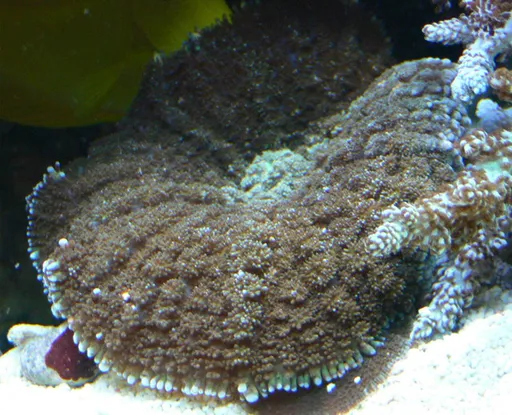
Hairy mushroom
Rhodactis
5.9 in (15 cm) · 11 gal (40 L)
 5.9 in (15 cm)11 gal (40 L)75–81°F (24–27°C)
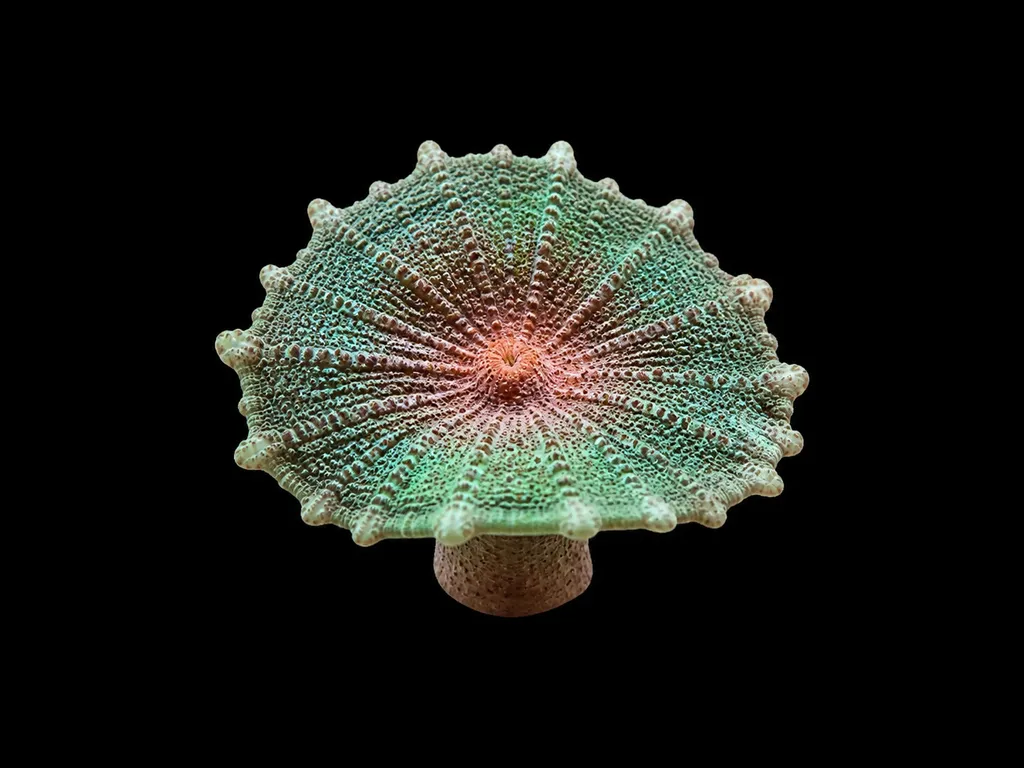
Umbrella mushroom
Discosoma neglecta
5.9 in (15 cm) · 11 gal (40 L)
 3.9 in (10 cm)11 gal (40 L)75–81°F (24–27°C)
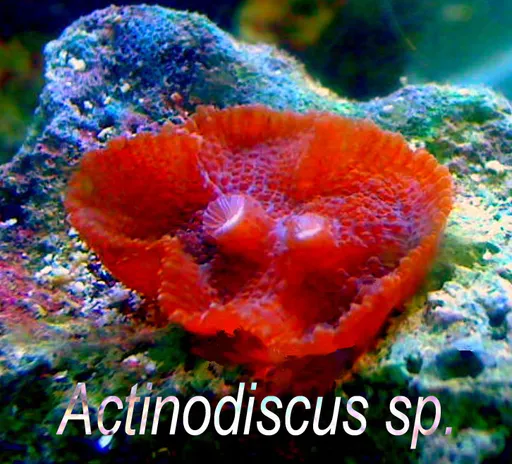
Mushroom coral
Discosoma
3.9 in (10 cm) · 11 gal (40 L)
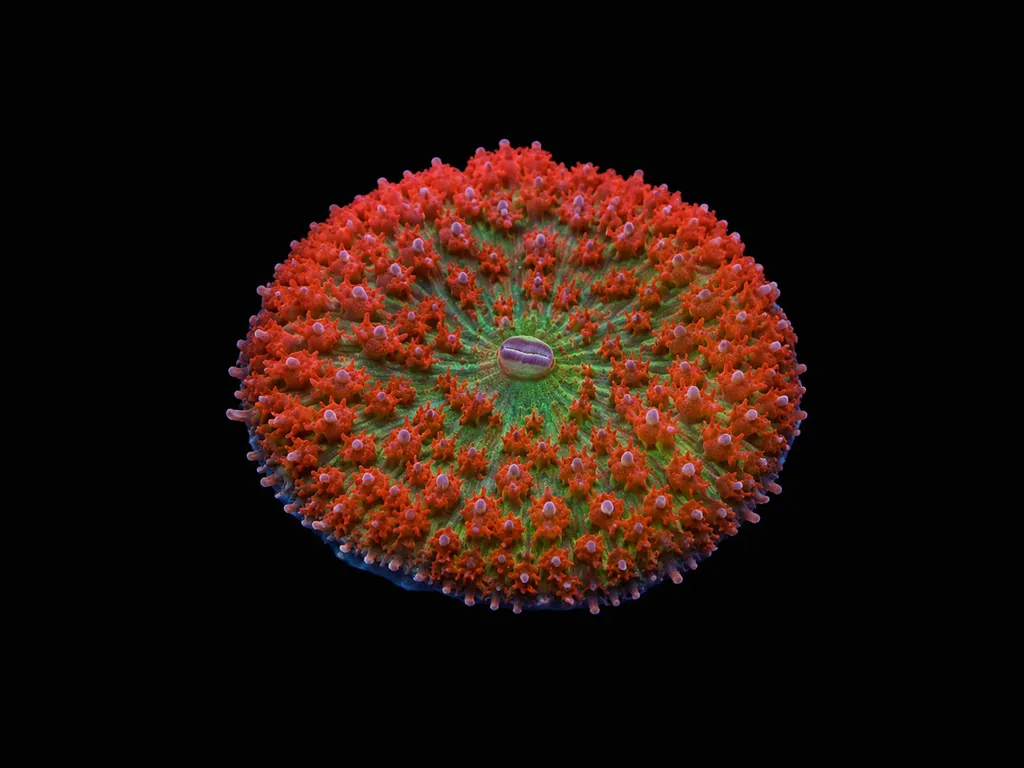 3.9 in (10 cm)11 gal (40 L)75–81°F (24–27°C)
St. Thomas mushroom
Rhodactis osculifera
3.9 in (10 cm) · 11 gal (40 L)
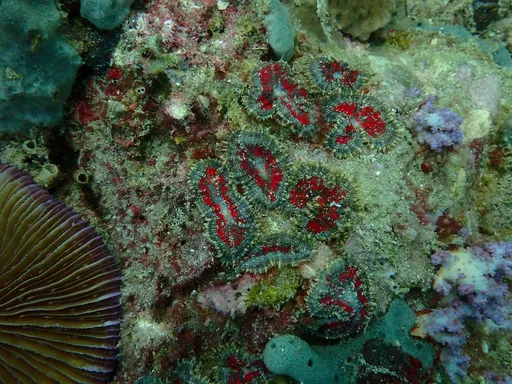 3.1 in (8 cm)11 gal (40 L)75–81°F (24–27°C)
Bullseye mushroom
Rhodactis inchoata
3.1 in (8 cm) · 11 gal (40 L)
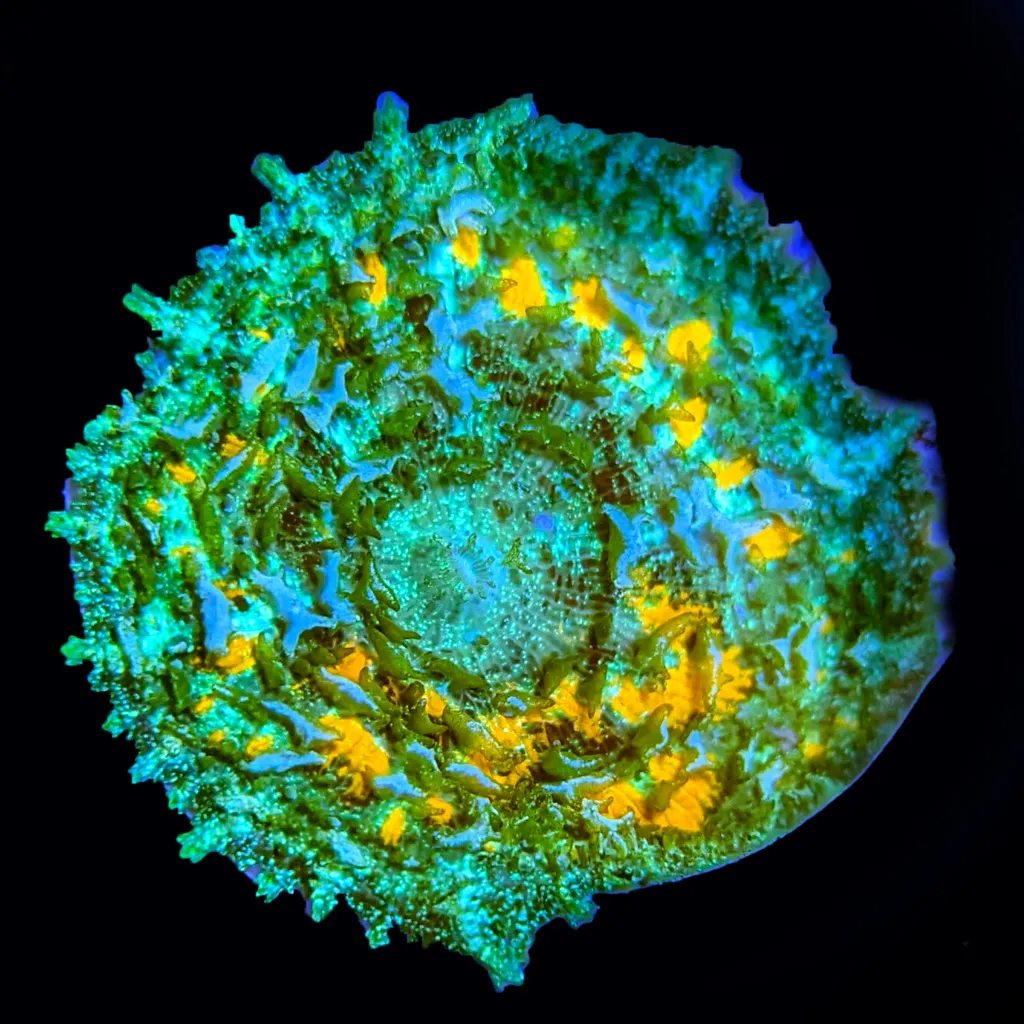 2 in (5 cm)11 gal (40 L)75–81°F (24–27°C)
Carlgren's mushroom
Discosoma carlgreni
2 in (5 cm) · 11 gal (40 L)